Results by title
991 books match the query 'Writing' and 20 start with h
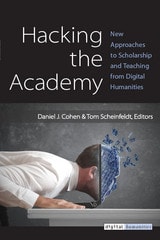
Hacking the Academy
New Approaches to Scholarship and Teaching from Digital HumanitiesDaniel J. Cohen and Tom Scheinfeldt, Editors
University of Michigan Press, 2013
On May 21, 2010, Daniel J. Cohen and Tom Scheinfeldt posted the following provocative questions online:
“Can an algorithm edit a journal? Can a library exist without books? Can students build and manage their own learning management platforms? Can a conference be held without a program? Can Twitter replace a scholarly society?”
As recently as the mid-2000s, questions like these would have been unthinkable. But today serious scholars are asking whether the institutions of the academy as they have existed for decades, even centuries, aren’t becoming obsolete. Every aspect of scholarly infrastructure is being questioned, and even more importantly, being hacked. Sympathetic scholars of traditionally disparate disciplines are canceling their association memberships and building their own networks on Facebook and Twitter. Journals are being compiled automatically from self-published blog posts. Newly minted PhDs are forgoing the tenure track for alternative academic careers that blur the lines between research, teaching, and service. Graduate students are looking beyond the categories of the traditional CV and building expansive professional identities and popular followings through social media. Educational technologists are “punking” established technology vendors by rolling out their own open source infrastructure.
Here, in Hacking the Academy, Daniel J. Cohen and Tom Scheinfeldt have gathered a sampling of the answers to their initial questions from scores of engaged academics who care deeply about higher education. These are the responses from a wide array of scholars, presenting their thoughts and approaches with a vibrant intensity, as they explore and contribute to ongoing efforts to rebuild scholarly infrastructure for a new millennium.
Handbook for Science Public Information Officers
W. Matthew Shipman
University of Chicago Press, 2015
W. Matthew Shipman’s Handbook for Science Public Information Officers covers all aspects of communication strategy and tactics for members of this growing specialty. It includes how to pitch a story, how to train researchers to navigate interviews, how to use social media effectively, and how to respond to a crisis. The handbook offers a wealth of practical advice while teaching science PIOs how to think critically about what they do and how they do it, so that they will be prepared to take advantage of any situation, rather than being overwhelmed by it.
For all science communicators—whether they’re starting their careers, crossing over from journalism or the research community, or professional communicators looking to hone their PIO skills—Shipman’s Handbook for Science Public Information Officers will become their go-to reference.
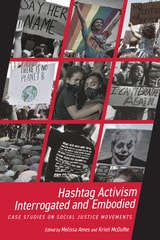
Hashtag Activism Interrogated and Embodied
Case Studies on Social Justice Movementsedited by Melissa Ames & Kristi McDuffie
Utah State University Press, 2022
The chapters capture twenty-first-century digital activism unfolding in different social and geopolitical climates. Delving into hashtag activism in various forms (tweets, memes, and personal narratives) and spaces (Twitter, Facebook, and in-person protests), these chapters reveal how participants question and construct online and offline identities and imagined and actualized communities. They also showcase the complicated ways hashtag activism intersects with consumer, popular, and celebrity cultures.
Hashtag Activism Interrogated and Embodied calls for broader inclusion in what is considered hashtag activism, such as digital fandom, how hashtags are co-opted for nefarious purposes, the effects of anti-activism, and the role of journalism and the media. It will appeal to a range of disciplines including rhetoric and composition, internet studies, communication studies, media studies, feminist studies, affect studies, cultural studies, technical communication, and sociology.
Contributors: Robert Barry, André Brock, Elizabeth Buchanan, Rosemary Clark-Parsons, Gabriel I. Green, Neha Gupta, Jeffrey J. Hall, Kyesha Jennings, Morgan K. Johnson, Salma Kalim, Megan McIntyre, Sean Milligan, Avishek Ray, Sarah Riddick, Stephanie Vie, Erin B. Waggoner, Holly M. Wells, William I. Wolff
Hearing Things
Voice and Method in the Writing of Stanley CavellTimothy Gould
University of Chicago Press, 1998
Gould argues that a tension between voice and method unites Cavell's broad and often perplexing range of interests. From Wittgenstein to Thoreau, from Shakespeare to the movies, and from opera to Freud, Gould reveals the connection between the voice within Cavell's writing and the voices Cavell appeals to through the methods of ordinary language philosophy. Within Cavell's extraordinary productivity lies a new sense of philosophical method based on elements of the act of reading. Hearing Things is both an important study of Cavell's work and a major contribution to the construction of American philosophy.
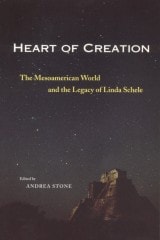
Heart of Creation
The Mesoamerican World and the Legacy of Linda ScheleEdited by Andrea Stone
University of Alabama Press, 2002
This accessible, state-of-the-art review of Mayan hieroglyphics and cosmology also serves as a tribute to one of the field's most noted pioneers.
The core of this book focuses on the current study of Mayan hieroglyphics as inspired by the recently deceased Mayanist Linda Schele. As author or coauthor of more than 200 books or articles on the Maya, Schele served as the chief disseminator of knowledge to the general public about this ancient Mesoamerican culture, similar to the way in which Margaret Mead introduced anthropology and the people of Borneo to the English-speaking world.
Twenty-five contributors offer scholarly writings on subjects ranging from the ritual function of public space at the Olmec site and the gardens of the Great Goddess at Teotihuacan to the understanding of Jupiter in Maya astronomy and the meaning of the water throne of Quirigua Zoomorph P. The workshops on Maya history and writing that Schele conducted in Guatemala and Mexico for the highland people, modern descendants of the Mayan civilization, are thoroughly addressed as is the phenomenon termed "Maya mania"—the explosive growth of interest in Maya epigraphy, iconography, astronomy, and cosmology that Schele stimulated. An appendix provides a bibliography of Schele's publications and a collection of Scheleana, written memories of "the Rabbit Woman" by some of her colleagues and students.
Of interest to professionals as well as generalists, this collection will stand as a marker of the state of Mayan studies at the turn of the 21st century and as a tribute to the remarkable personality who guided a large part of that archaeological research for more than two decades.
Hidden Inequities in Labor-Based Contract Grading
Ellen C. Carillo
Utah State University Press, 2021
Current Arguments in Composition Series
The Hidden Inequities in Labor-Based Contract Grading intervenes in the increasingly popular practice of labor-based grading by expanding the scope of this assessment practice to include students who are disabled and multiply marginalized. Through the lens of disability studies, the book critiques the assumption that labor is a neutral measure by which to assess students and explores how labor-based grading contracts put certain groups of students at a disadvantage. Ellen C. Carillo offers engagement-based grading contracts as an alternative that would provide a more equitable assessment model for students of color, those with disabilities, and students who are multiply marginalized.
This short book explores the history of labor-based grading contracts, reviews the scholarship on this assessment tool, highlights the ways in which it normalizes labor as an unbiased tool, and demonstrates how to extend the conversation in new and generative ways both in research and in classrooms. Carillo encourages instructors to reflect on their assessment practices by demonstrating how even assessment methods that are designed through a social-justice lens may unintentionally privilege some students over others.

Hired Pens
Professional Writers in America’s Golden Age of PrintRonald Weber
Ohio University Press, 1997
Just as mass-market magazines and cheap books have played important roles in the creation of an American identity, those skilled craftsmen (and women) whose careers are the subjects of Ronald Weber’s narrative profoundly influenced the outlook and strategies of the high-culture writers who are generally the focus of literary studies.
Hired Pens, a history of the writing profession in the United States, recognizes the place of independent writers who wrote for their livelihood from the 1830s and 1840s, with the first appearance of a broad-based print culture, to the 1960s.
Many realist authors began on this American Grub Street. Jack London turned out hackwork for any paying market he could find, while Scott Fitzgerald’s stories in slick magazines in the 1920s and early ’30s established his name as a writer.
From Edgar Allen Poe’s earliest forays into writing for pay to Sylvia Plath’s attempts to produce fiction for mass-circulation journals, Hired Pens documents without agenda the evolution of professional writing in all its permutations—travel accounts, sport, popular biography and history, genre and series fiction—and the culture it fed.
History as a Kind of Writing
Textual Strategies in Contemporary French HistoriographyPhilippe Carrard
University of Chicago Press, 2017
Carrard’s work here is expansive—examining the conventions historians draw on to produce their texts and casting light on views put forward by literary theorists, theorists of history, and historians themselves. Ranging from discussions of lengthy dissertations on 1960s social and economic history to a more contemporary focus on events, actors, memory, and culture, the book digs deep into the how of history. How do historians arrange their data into narratives? What strategies do they employ to justify the validity of their descriptions? Are actors given their own voice? Along the way, Carrard also readdresses questions fundamental to the field, including its necessary membership in the narrative genre, the presumed objectivity of historiographic writing, and the place of history as a science, distinct from the natural and theoretical sciences.
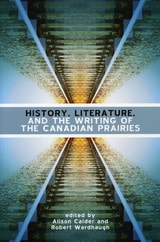
History, Literature and the Writing of the Canadian Prairies
Alison Calder
University of Manitoba Press, 2005
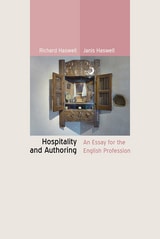
Hospitality and Authoring
An Essay for the English ProfessionRichard Haswell
Utah State University Press, 2015
Hospitality and Authoring, a sequel to the Haswells’ 2010 volume Authoring, attempts to open the path for hospitality practice in the classroom, making a strong argument for educational use and offering an initial map of the territory for teachers and authors.
Hospitality is a social and ethical relationship not only between host and guest but also between writer and reader or teacher and student. Hospitality initiates, maintains, and completes acts of authoring. This extended essay explores the ways that a true hospitable classroom community can be transformed through assigned reading, one-on-one conferencing, interpretation, syllabus, reading journals, topic choice, literacy narrative, writing centers, program administration, teacher training, and many other passing habitations.
Hospitality and Authoring strives to offer a few possibilities of change to help make college an institution where singular students and singular teachers create a room to learn with room to learn.
Houston, We Have a Narrative
Why Science Needs StoryRandy Olson
University of Chicago Press, 2015
That’s a huge mistake, says Randy Olson: Hollywood has a lot to teach scientists about how to tell a story—and, ultimately, how to do science better. With Houston, We Have a Narrative, he lays out a stunningly simple method for turning the dull into the dramatic. Drawing on his unique background, which saw him leave his job as a working scientist to launch a career as a filmmaker, Olson first diagnoses the problem: When scientists tell us about their work, they pile one moment and one detail atop another moment and another detail—a stultifying procession of “and, and, and.” What we need instead is an understanding of the basic elements of story, the narrative structures that our brains are all but hardwired to look for—which Olson boils down, brilliantly, to “And, But, Therefore,” or ABT. At a stroke, the ABT approach introduces momentum (“And”), conflict (“But”), and resolution (“Therefore”)—the fundamental building blocks of story. As Olson has shown by leading countless workshops worldwide, when scientists’ eyes are opened to ABT, the effect is staggering: suddenly, they’re not just talking about their work—they’re telling stories about it. And audiences are captivated.
Written with an uncommon verve and enthusiasm, and built on principles that are applicable to fields far beyond science, Houston, We Have a Narrative has the power to transform the way science is understood and appreciated, and ultimately how it’s done.
How I Became the Kind of Writer I Became
An Experiment in AutoethnographyCharles Bazerman
University Press of Colorado, 2024
How Knowledge Moves
Writing the Transnational History of Science and TechnologyEdited by John Krige
University of Chicago Press, 2019
This specialized knowledge is located at multiple sites and moves across borders via a dazzling array of channels, embedded in heads and hands, in artifacts, and in texts. In the United States, it shapes policies for visas, export controls, and nuclear weapons proliferation; in Algeria, it enhances the production of oranges by colonial settlers; in Vietnam, it facilitates the exploitation of a river delta. In India it transforms modes of agricultural production. It implants American values in Latin America. By concentrating on the conditions that allow for knowledge movement, these essays explore travel and exchange in face-to-face encounters and show how border-crossings mobilize extensive bureaucratic technologies.
How Writing Came About
By Denise Schmandt-Besserat
University of Texas Press, 1996
Top 100 Books on Science, American Scientist, 2001
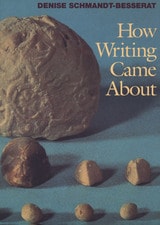
In 1992, the University of Texas Press published Before Writing, Volume I: From Counting to Cuneiform and Before Writing, Volume II: A Catalog of Near Eastern Tokens. In these two volumes, Denise Schmandt-Besserat set forth her groundbreaking theory that the cuneiform script invented in the Near East in the late fourth millennium B.C.—the world's oldest known system of writing—derived from an archaic counting device.
How Writing Came About draws material from both volumes to present Schmandt-Besserat's theory for a wide public and classroom audience. Based on the analysis and interpretation of a selection of 8,000 tokens or counters from 116 sites in Iran, Iraq, the Levant, and Turkey, it documents the immediate precursor of the cuneiform script.
How Writing Faculty Write
Strategies for Process, Product, and ProductivityChristine E. Tulley
Utah State University Press, 2018
Tulley illuminates a long-unstudied corner of the discipline: the writing habits of theorists, researchers, and teachers of writing. Her interviewees speak candidly about overcoming difficulties in their writing processes on a daily basis, using strategies for getting started and restarted, avoiding writer’s block, finding and using small moments of time, and connecting their writing processes to their teaching. How Writing Faculty Write will be of significant interest to students and scholars across the spectrum—graduate students entering the discipline, new faculty and novice scholars thinking about their writing lives, mid-level and senior faculty curious about how scholars research and write, historians of rhetoric and composition, and metadisciplinary scholars.
How to Create a Universe
Jakob Ion Wille, Simon Jon Andreasen, and Gunnar Wille
University of Westminster Press, 2025
How to Draw a Circle
On Reading and WritingDan Beachy-Quick
University of Michigan Press, 2024
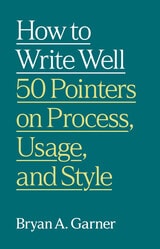
How to Write Well
50 Pointers on Process, Usage, and StyleBryan A. Garner
University of Chicago Press, 2027
Stop worshipping Strunk and White. Start writing well, with 50 tips and techniques from language expert Bryan A. Garner.
For decades, people looking for a concise guide to English-language writing turned to The Elements of Style by William Strunk Jr. and E. B. White. That slim book has been used by everyone from high school and college students to professionals seeking quick advice on usage, grammar, and form. But The Elements of Style hasn’t been updated in more than a quarter century, and it no longer reflects the way good writers work or what they most need to know, especially in the age of generative AI.
How to Write Well: 50 Pointers on Process, Usage, and Style is the modern, evidence-based alternative. Leading language and writing expert Bryan A. Gamer distills a lifetime of teaching and research into 50 compact pointers for modern writers seeking to produce clear, accurate, and lively prose. You’ll learn how strong writers think, how they turn ideas into blueprints, and how they draft, revise, and tighten with ruthless selectivity. You’ll also encounter lucid guidance on grammar and punctuation that corrects Strunk & White’s famous blunders, including shaky treatment of passive voice and a fixation on trivia over substance.
How to Write Well presents a start-to-finish method: mindset, habits, process, and the concrete techniques that produce clean, forceful writing. Unlike The Elements of Style, this book doesn’t pretend your draft magically appears on the page. It shows you how to generate ideas, structure them, and build a repeatable process for everything you write—from emails and memos to articles, briefs, and books. And while emphasizing the mind and the voice of the writer, it also offers advice on working intelligently with AI while keeping full editorial control.
If you’re serious about writing, Garner’s How to Write Well is the indispensable style book you need now.
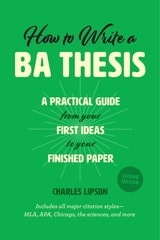
How to Write a BA Thesis, Second Edition
A Practical Guide from Your First Ideas to Your Finished PaperCharles Lipson
University of Chicago Press, 2018
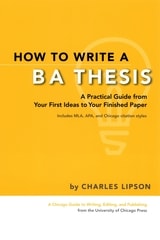
How to Write a BA Thesis
A Practical Guide from Your First Ideas to Your Finished PaperCharles Lipson
University of Chicago Press, 2005
This book offers step-by-step advice on how to turn a vague idea into a clearly defined proposal, then a draft paper, and, ultimately, a polished thesis. Lipson also tackles issues beyond the classroom-from good work habits to coping with personal problems that interfere with research and writing.
Filled with examples and easy-to-use highlighted tips, the book also includes handy time schedules that show when to begin various tasks and how much time to spend on each. Convenient checklists remind students which steps need special attention, and a detailed appendix, filled with examples, shows how to use the three main citation systems in the humanities and social sciences: MLA, APA, and Chicago.
How to Write a BA Thesis will help students work more comfortably and effectively-on their own and with their advisers. Its clear guidelines and sensible advice make it the perfect text for thesis workshops. Students and their advisers will refer again and again to this invaluable resource. From choosing a topic to preparing the final paper, How to Write a BA Thesis helps students turn a daunting prospect into a remarkable achievement.