Results by title
101 books match the query 'environment' and 5 start with h

Heredity, Environment, and Personality
A Study of 850 Sets of TwinsBy John C. Loehlin and Robert C. Nichols
University of Texas Press, 1976
This volume reports on a study of 850 pairs of twins who were tested to determine the influence of heredity and environment on individual differences in personality, ability, and interests. It presents the background, research design, and procedures of the study, a complete tabulation of the test results, and the authors’ extensive analysis of their findings. Based on one of the largest studies of twin behavior conducted in the twentieth century, the book challenges a number of traditional beliefs about genetic and environmental contributions to personality development.
The subjects were chosen from participants in the National Merit Scholarship Qualifying Test of 1962 and were mailed a battery of personality and interest questionnaires. In addition, parents of the twins were sent questionnaires asking about the twins’ early experiences. A similar sample of nontwin students who had taken the merit exam provided a comparison group. The questions investigated included how twins are similar to or different from nontwins, how identical twins are similar to or different from fraternal twins, how the personalities and interests of twins reflect genetic factors, how the personalities and interests of twins reflect early environmental factors, and what implications these questions have for the general issue of how heredity and environment influence the development of psychological characteristics. In attempting to answer these questions, the authors shed light on the importance of both genes and environment and form the basis for different approaches in behavior genetic research.

Hidden Voices of the Land
Spirituality and the Environment in AfricaEdited by Anika Wilson
University of Wisconsin Press, 2027
This volume explores sacred sites in Africa and the ways that African knowledge has been and can be applied to mounting environmental issues. Together, the essays yield not a singular paradigm but rather an ethics of engagement common to the continent: a respect for the claims and rightful presence of nonhumans, a patience for unpredictability, and a sense of humility in decentering both humanity and Western knowledge. The contributions in this volume thus collectively move toward a record of African perspectives and experiences of the environment and the many roles played by nonhuman entities in a variety of African communities. As the contributors demonstrate, successfully accessing vernacular environmentalism in Africa requires acknowledging the complex interplay of agents, including spirits. Hidden Voices of the Land challenges scholars to take Indigenous African epistemologies, cosmologies, and spiritualities seriously in the context of ongoing ecological crises and the looming threat of global climate change.

Histories of Technology, the Environment, and Modern Britain
Edited by Jon Agar and Jacob Ward
University College London, 2018
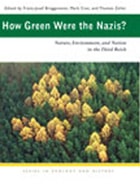
How Green Were the Nazis?
Nature, Environment, and Nation in the Third ReichFranz-Josef Brüggemeier
Ohio University Press, 2005
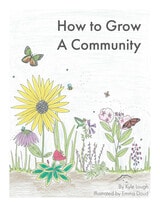
How to Grow a Community
Kyle Lough
Michigan Publishing Services, 2023
The objective was to create a book that uses the topic of urban gardening to teach young readers about the importance of environmental stewardship— respecting and caring for Earth and the diversity of life it sustains.
Through art and science, we can better understand complex environmental issues like access to food and water, loss of biodiversity, and land-use. Any reader, of any age, can make a difference in their community through forming stronger connections with people and the earth.