Results by title
28164 books match the query 'History' and 906 start with h
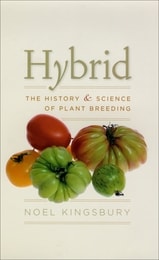
Hybrid
The History and Science of Plant BreedingNoel Kingsbury
University of Chicago Press, 2009
Disheartened by the shrink-wrapped, Styrofoam-packed state of contemporary supermarket fruits and vegetables, many shoppers hark back to a more innocent time, to visions of succulent red tomatoes plucked straight from the vine, gleaming orange carrots pulled from loamy brown soil, swirling heads of green lettuce basking in the sun.
With Hybrid, Noel Kingsbury reveals that even those imaginary perfect foods are themselves far from anything that could properly be called natural; rather, they represent the end of a millennia-long history of selective breeding and hybridization. Starting his story at the birth of agriculture, Kingsbury traces the history of human attempts to make plants more reliable, productive, and nutritious—a story that owes as much to accident and error as to innovation and experiment. Drawing on historical and scientific accounts, as well as a rich trove of anecdotes, Kingsbury shows how scientists, amateur breeders, and countless anonymous farmers and gardeners slowly caused the evolutionary pressures of nature to be supplanted by those of human needs—and thus led us from sparse wild grasses to succulent corn cobs, and from mealy, white wild carrots to the juicy vegetables we enjoy today. At the same time, Kingsbury reminds us that contemporary controversies over the Green Revolution and genetically modified crops are not new; plant breeding has always had a political dimension.
A powerful reminder of the complicated and ever-evolving relationship between humans and the natural world, Hybrid will give readers a thoughtful new perspective on—and a renewed appreciation of—the cereal crops, vegetables, fruits, and flowers that are central to our way of life.
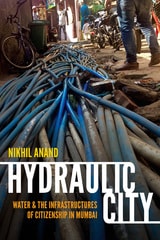
Hydraulic City
Water and the Infrastructures of Citizenship in MumbaiNikhil Anand
Duke University Press, 2017
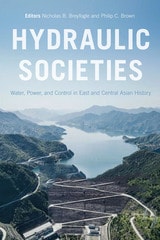
Hydraulic Societies
Water, Power, and Control in East and Central Asian HistoryNicholas B. Breyfogle
Oregon State University Press, 2023
Hydraulic Societies explores the linked themes of water, power, state-building, and hydraulic control. Bringing together a range of ecological, geographical, chronological, and methodological perspectives, the essays in this book address the how humans have long harnessed water and sought to contain its destructive power for political, economic and social ends. Water defines every aspect of life and remains at the center of human activity: in irrigation and agriculture; waste and sanitation; drinking and disease; floods and droughts; religious beliefs and practices; fishing and aquaculture; travel and discovery; scientific study; water pollution and conservation; multi-purpose dam building; boundaries and borders; politics and economic life; and wars and diplomacy.
From the earliest large irrigation works thousands of years ago, control over water has involved control over people, as the essays in this volume reflect. The intersections of water and political, economic, and social power historically span international as well as domestic politics and operate at scales ranging from the local to the global. The authors consider the role of water in national development schemes, water distribution as a tool of political power, international disputes over waterways and water supplies, and the place of water in armed conflicts. They explore the ways in which political power and social hierarchies have themselves been defined and redefined by water and its control, how state leaders legitimized their rule both culturally and economically through the control of water, and how water management schemes were a means to impose and refine colonial power.
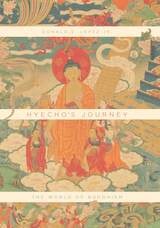
Hyecho's Journey
The World of BuddhismDonald S. Lopez Jr.
University of Chicago Press, 2017
With Hyecho’s Journey, eminent scholar of Buddhism Donald S. Lopez Jr. re-creates Hyecho’s trek. Using the surviving fragments of Hyecho’s travel memoir, along with numerous other textual and visual sources, Lopez imagines the thriving Buddhist world the monk explored. Along the way, Lopez introduces key elements of Buddhism, including its basic doctrines, monastic institutions, works of art, and the many stories that have inspired Buddhist pilgrimage. Through the eyes of one remarkable Korean monk, we discover a vibrant tradition flourishing across a vast stretch of Asia. Hyecho’s Journey is simultaneously a rediscovery of a forgotten pilgrim, an accessible primer on Buddhist history and doctrine, and a gripping, beautifully illustrated account of travel in a world long lost.

Hypertension
A SymposiumElexious Bell
University of Minnesota Press, 1951
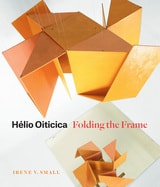
Hélio Oiticica
Folding the FrameIrene V. Small
University of Chicago Press, 2016
From Oiticica’s late 1950s experiments with painting and color to his mid-1960s wearable Parangolés, Small traces a series of artistic procedures that foreground the activation of the spectator. Analyzing works, propositions, and a wealth of archival material, she shows how Oiticica’s practice recast—in a sense “folded”—Brazil’s utopian vision of progress as well as the legacy of European constructive art. Ultimately, the book argues that the effectiveness of Oiticica’s participatory works stems not from a renunciation of art, but rather from their ability to produce epistemological models that reimagine the traditional boundaries between art and life.