Results by title
3703 books match the query '19th Century' and 102 start with h
Herman Melville's Whaling Years
Wilson Heflin
Vanderbilt University Press, 2004
During his time in the Pacific, Melville served on three whaling ships, as well as on a U.S. Navy man-of-war. As a deserter from one whaleship, he spent four weeks among the cannibals of Nukahiva in the Marquesas, seeing those islands in a relatively untouched state before they were irrevocably changed by French annexation in 1842. Rebelling against duty on another ship, he was held as a prisoner in a native calaboose in Tahiti. He prowled South American ports while on liberty, hunted giant tortoises in the Galapagos Islands, and explored the islands of Eimeo (Moorea) and Maui. He also saw the Society and Sandwich (Hawaiian) Islands when the Western missionary presence was at its height.
Heflin combed the logbooks of any ship at sea at the time of Melville's voyages and examined nineteenth-century newspaper items, especially the marine intelligence columns, for mention of Melville's vessels. He also studied British consular records pertaining to the mutiny aboard the Australian whaler Lucy Ann, an insurrection in which Melville participated and which inspired his second novel, Omoo.
Distilling the life's work of a leading Melville expert into book form for the first time, this scrupulously edited volume is the most in-depth account ever published of Melville's years on whaleships and how those singular experiences influenced his writing.
Herman Melville
Among the MagazinesGraham Thompson
University of Massachusetts Press, 2018
What I feel most moved to write, that is banned,—it will not pay. Yet, altogether, write the other way I cannot. Herman Melville wrote these words as he struggled to survive as a failing novelist. Between 1853 and 1856, he did write “the other way,” working exclusively for magazines. He earned more money from his stories than from the combined sales of his most well known novels, Moby-Dick, Pierre, and The Confidence-Man.
In Herman Melville Graham Thompson examines the author's magazine work in its original publication context, including stories that became classics, such as “Bartelby, the Scrivener” and “Benito Cereno,” alongside lesser-known work. Using a concept he calls “embedded authorship,” Thompson explores what it meant to be a magazine writer in the 1850s and discovers a new Melville enmeshed with forgotten materials, editors, writers, and literary traditions. He reveals how Melville responded to the practical demands of magazine writing with dazzling displays of innovation that reinvented magazine traditions and helped create the modern short story.

Herndon on Lincoln
LettersWilliam H. Herndon, edited by Douglas L. Wilson and Rodney O. Davis
University of Illinois Press, 2019
Herndon's Informants
Letters, Interviews, and Statements about Abraham LincolnEdited by Douglas L. Wilson and Rodney O. Davis
University of Illinois Press, 2020
More than 600 letters and interviews providing information about Abraham Lincoln's prepolitical and prelegal careers are included in this volume, a priceless collection never before available in one place.
Women to whom Lincoln proposed marriage, political allies and adversaries, judges and fellow attorneys, longtime comrades, erstwhile friends--all speak out here in words first gathered by William H. Herndon, Lincoln's law partner, between 1865 and 1890. Historian David Herbert Donald has called Herndon's materials "the basic source for Abraham Lincoln's early years."
Some of those Herndon questioned were illiterate; others could read but barely write. Completion of this undertaking took the editors to three major collections for the mammoth task of transcribing documents that often were nearly illegible.
Invaluable to Lincoln scholars and intriguing to anyone curious about Lincoln and his times, the book includes an introduction, scholarly annotations, a registry of the informants, and a detailed topical index.
Hidden Hands
Working-Class Women and Victorian Social-Problem FictionPatricia E. Johnson
Ohio University Press, 2001
Tracing the Victorian crisis over the representation of working-class women to the 1842 Parliamentary bluebook on mines, with its controversial images of women at work, Hidden Hands argues that the female industrial worker became even more dangerous to represent than the prostitute or the male radical because she exposed crucial contradictions between the class and gender ideologies of the period and its economic realities.
Drawing on the recent work of feminist historians, Patricia Johnson lays the groundwork for a reinterpretation of Victorian social-problem fiction that highlights its treatment of issues that particularly affected working-class women: sexual harassment; the interconnections between domestic ideology and domestic violence; their relationships to male-dominated working-class movements such as Luddism, Chartism, and unionism; and their troubled connection to middle-class feminism.
Uncovering a series of images in Victorian fiction ranging from hot-tempered servants and sexually harassed factory girls to working-class homemakers pictured as beaten dogs, Hidden Hands demonstrates that representations of working-class women, however marginalized or incoherent, reveal the very contradictions they are constructed to hide and that the dynamics of these representations have broad implications both for other groups, such as middle-class women, and for the emergence of working-class women as writers themselves.
Hidden Out in the Open
Spanish Migration to the United States (1875-1930)Phylis Cancilla Martinelli
University Press of Colorado, 2018
The chapters in this volume are geographically wide-ranging, reflecting the transnational nature of the Spanish diaspora in the Americas, encompassing networks that connected Spain, Cuba, Latin American countries, the United States, and American-controlled territories in Hawai’i and Panama. The geographic diversity reveals the different jobs immigrants engaged in, from construction gangs in the Panama Canal to mining crews in Arizona and West Virginia. Contributors analyze the Spanish experience in the United States from a variety of perspectives, discussing rural and urban enclaves, the role of the state, and the political mobilization of migrants, using a range of methodological approaches that examine ethnicity, race, gender, and cultural practices through the lenses of sociology, history, and cultural studies.
The mention of the Spanish influence in the United States often conjures up images of conquistadores and padres of old. Forgotten in this account are the Spanish immigrants who reached American shores in the late nineteenth and early twentieth centuries. Hidden Out in the Open reveals the role of the modern migration of Spaniards in this "land of immigrants" and rectifies the erasure of Spain in the American narrative. The book will be of interest to scholars and students of US history and the history of modern Spain and Europe, as well as those interested ethnic and migration/diaspora studies, Hispanic/Latino studies, and the study of working class and radicalism.
Contributors: Brian D. Bunk, Christopher J. Castañeda, Thomas Hidalgo, Beverly Lozano, Phylis Cancilla Martinelli, Gary R. Mormino, George E. Pozzetta†, Ana Varela-Lago.
Hidden Worlds
Revisiting the Mennonite Migrants of the 1870sRoyden Loewen
University of Manitoba Press, 2001
Hidden in Plain Sight
Concealing Enslavement in American Visual CultureRachel Stephens
University of Arkansas Press, 2023
In Hidden in Plain Sight: Concealing Enslavement in American Visual Culture, Rachel Stephens addresses an enormous body of material by tracing themes of concealment and silence through paintings, photographs, and ephemera, connecting long overlooked artworks with both the abolitionist materials to which they were responding and archival research across a range of southern historical narratives.
Stephens begins her fascinating study with an examination of the ways that slavery was visually idealized and defended in antebellum art. She then explores the tyranny—especially that depicted in art—enacted by supporters of enslavement, introduces a range of ways that artwork depicting slavery was tangibly concealed, considers photographs of enslaved female caretakers with the white children they reared, and investigates a printmaker’s confidential work in support of the Confederacy. Finally, she delves into an especially pernicious group of proslavery artists in Richmond, Virginia.
Reading visual culture as a key element of the antebellum battle over slavery, Hidden in Plain Sight complicates the existing narratives of American art and history.
Hideous Characters and Beautiful Pagans
Performing Jewish Identity on the Antebellum American StageHeather S. Nathans
University of Michigan Press, 2017
Using an eclectic range of sources including theatrical reviews, diaries, letters, cartoons, portraiture, tax records, rumors flying around the tavern, and more, Heather S. Nathans has listened for the echoes of vanished audiences who witnessed and responded to these stereotypes onstage, from the earliest appearance of Shylock on an American stage in 1752 to Jewish theater artists on the eve of the Civil War. The book integrates social, political, and cultural histories, with an examination of those texts (both dramatic and literary) that shaped the stage Jew.
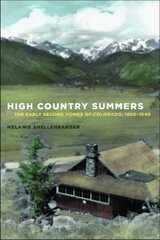
High Country Summers
The Early Second Homes of Colorado, 1880–1940Melanie Shellenbarger
University of Arizona Press, 2012
High Country Summers considers the emergence of the “summer home” in Colorado’s Rocky Mountains as both an architectural and a cultural phenomenon. It offers a welcome new perspective on an often-overlooked dwelling and lifestyle. Writing with affection and insight, Melanie Shellenbarger shows that Colorado’s early summer homes were not only enjoyed by the privileged and wealthy but crossed boundaries of class, race, and gender. They offered their inhabitants recreational and leisure experiences as well as opportunities for individual re-invention—and they helped shape both the cultural landscapes of the American West and our ideas about it.
Shellenbarger focuses on four areas along the Front Range: Rocky Mountain National Park and its easterly gateway town, Estes Park; “recreation residences” in lands managed by the US Forest Service; Lincoln Hills, one of only a few African-American summer home resorts in the United States; and the foothills west of Denver that drew Front Range urbanites, including Denver’s social elite. From cottages to manor houses, the summer dwellings she examines were home to governors and government clerks; extended families and single women; business magnates and Methodist ministers; African-American building contractors and innkeepers; shop owners and tradespeople. By returning annually, Shellenbarger shows, they created communities characterized by distinctive forms of kinship.
High Country Summers goes beyond history and architecture to examine the importance of these early summer homes as meaningful sanctuaries in the lives of their owners and residents. These homes, which embody both the dwelling (the house itself) and dwelling (the act of summering there), resonate across time and place, harkening back to ancient villas and forward to the present day.
High Stakes of Identity
Gambling in the Life and Literature of Nineteenth-Century RussiaIan M. Helfant
Northwestern University Press, 2002
During the reigns of Alexander I and Nicholas I, Ian Helfant argues, gambling became an essential proving-ground and symbolic locus for noble identity in Russia--a way for the nobility to assert its values (fearlessness, disdain for money, implacable self-possession, deification of whim and will, and stylish performance) against nineteenth-century economics and bourgeois sentimentality. In <i>The High Stakes of Identity</i> Helfant's twin concerns are to analyze the structural components of the myth of the noble "beau joueur" and to show how gambling performances in society and in literature reciprocally reinforced, complicated, and eventually disintegrated its mystique.
Using a broad variety of sources--memoiristic, epistolary, journalistic, legal, fictional, theatrical--Helfant reconstructs both the prevalence and the particular codes of gambling's cultural system in the first few decades of the nineteenth century. These codes allow him to interpret the iconoclastic performances of truly legendary gamblers and to assess the importance and purpose of gambling in works ranging from Pushkin's "Queen of Spades" to Lermontov's "Masquerade." Throughout, Helfant gives voice to the rich variety of discourses, from tsarist laws to moralistic tracts, that came to bear on the culture of gambling in the 1830s and eventually led to its displacement as the key marker of nobility.

Hippolyte Bayard and the Invention of Photography
Karen Hellman
J. Paul Getty Trust, The, 2024
Hippolyte Bayard (1801–1887) is often characterized as an underdog in the early history of photography. From the outset, his contribution to the invention of the medium was eclipsed by others such as Louis-Jacques-Mandé Daguerre (1787–1851) and William Henry Fox Talbot (1800–1877). However, Bayard had an undeniable role in the birth of photography and its subsequent evolution into a form of art. He was a pioneer in artistic style, innovator in terms of practice, and teacher of the next generation of photographers.
Alongside an exploration of Bayard’s decades-long career and lasting impact, this volume presents—for the first time in print—some of the earliest photographs in existence. An album containing nearly 200 images, 145 of those by or attributed to Bayard, is among the Getty Museum’s rarest and most treasured photographic holdings. Few prints have ever been seen in person due to the extreme light sensitivity of Bayard’s experimental processes, making this an essential reference for scholars and enthusiasts of the very beginning of photography.
This volume is published to accompany an exhibition on view at the J. Paul Getty Museum at the Getty Center from April 9 to July 7, 2024.

Hired Pens
Professional Writers in America’s Golden Age of PrintRonald Weber
Ohio University Press, 1997
Just as mass-market magazines and cheap books have played important roles in the creation of an American identity, those skilled craftsmen (and women) whose careers are the subjects of Ronald Weber’s narrative profoundly influenced the outlook and strategies of the high-culture writers who are generally the focus of literary studies.
Hired Pens, a history of the writing profession in the United States, recognizes the place of independent writers who wrote for their livelihood from the 1830s and 1840s, with the first appearance of a broad-based print culture, to the 1960s.
Many realist authors began on this American Grub Street. Jack London turned out hackwork for any paying market he could find, while Scott Fitzgerald’s stories in slick magazines in the 1920s and early ’30s established his name as a writer.
From Edgar Allen Poe’s earliest forays into writing for pay to Sylvia Plath’s attempts to produce fiction for mass-circulation journals, Hired Pens documents without agenda the evolution of professional writing in all its permutations—travel accounts, sport, popular biography and history, genre and series fiction—and the culture it fed.
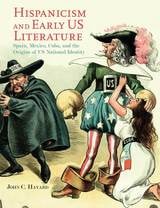
Hispanicism and Early US Literature
Spain, Mexico, Cuba, and the Origins of US National IdentityJohn C. Havard
University of Alabama Press, 2018
Revealing how Spain, Mexico, and Cuba helped shape the literary origins of American national identity.
In Hispanicism and Early US Literature, author John C. Havard posits that representations of Spain, Spanish America, Spanishness, and Spanish Americanness are integral elements in the evolution of early national and antebellum US literature. He argues that Spanish-speaking countries have long held a broad fascination for Americans and that stock narratives regarding these peoples were central to the period’s US literature.
Beginning with the work of eighteenth-century literary nationalists such as Joel Barlow, US literature has been drawn to reflect on Spain and Spanish America. Such reflection was often inspired by geopolitical conflicts such as US expansion into Spanish Louisiana and the US-Mexican War. Havard terms the discourse emerging from these reflections “Hispanicism.” This discourse was used to portray the dominant viewpoint of classical liberalism that propounded an American exceptionalism premised on the idea that Hispanophone peoples were comparatively lacking the capacity for self-determination, hence rationalizing imperialism. On the conservative side were warnings against progress through conquest.
Havard delves into selected works of early national and antebellum literature on Spain and Spanish America to illuminate US national identity. Poetry and novels by Joel Barlow, James Fenimore Cooper, and Herman Melville are mined to further his arguments regarding identity, liberalism, and conservatism. Understudied authors Mary Peabody Mann and José Antonio Saco are held up to contrast American and Cuban views on Hispanicism and Cuban annexation as well as to develop the focus on nationality and ideology via differences in views on liberalism.
More than just a work of literary criticism, there is a substantial amount of cultural and political history discussed. Havard’s use of archival sources such as political articles and personal correspondence elucidates not just literary genres and movements such as early national epic poetry, abolitionist fiction, and the American Renaissance, but also US prominent culture.
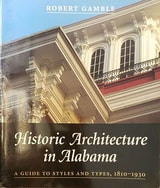
Historic Architecture in Alabama
A Guide to Styles and Types, 1810-1930Robert S. Gamble
University of Alabama Press, 2001
Discover the stories behind Alabama’s timeless structures.
Robert Gamble outlines in detail the primary architectural currents and styles that have surfaced in Alabama over the years and defined the state's built landscape. The structures and styles, all well-illustrated,range from folk houses and early settlement buildings to railway terminals, churches, libraries, municipal and university buildings, palatial private mansions, and modest homes. Structures from every period and every major stylistic era—Federal, Greek Revival, Gothic Revival, Italianate, Romanesque and Mission Revival, and the Richardsonian—are documented meticulously, along with examples of early—Modern buildings, including Alabama's only Frank Lloyd Wright structure and skyscrapers from the Chicago school.
More than 200 photographs, supplemented by sketches, plans, and etchings, provide the general reader and the design professional with images of Alabama architecture in all its variety and range. Many illustrations offer rare views of buildings long since demolished. A substantial glossary of architectural terms and a thorough bibliography enhance this standard sure to be welcomed anew by any lover of old buildings, whether weekend rambler or serious student.
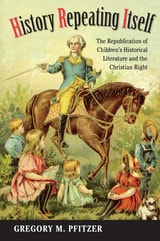
History Repeating Itself
The Republication of Children's Historical Literature and the Christian RightGregory M. Pfitzer
University of Massachusetts Press, 2014
Recently publishers on the Christian Right have been reprinting nineteenth-century children's history books and marketing them to parents as “anchor texts” for homeschool instruction. Why, Gregory M. Pfitzer asks, would books written more than 150 years ago be presumed suitable for educating twenty-first-century children? The answer, he proposes, is that promoters of these recycled works believe that history as a discipline took a wrong turn in the early twentieth century, when progressive educators introduced social studies methodologies into public school history classrooms, foisting upon unsuspecting and vulnerable children ideologically distorted history books.
In History Repeating Itself, Pfitzer tests these assertions by scrutinizing and contextualizing the original nineteenth-century texts on which these republications are based. He focuses on how the writers borrowed from one another to produce works that were similar in many ways yet differed markedly in terms of pedagogical strategy and philosophy of history. Pfitzer demonstrates that far from being non-ideological, these works were rooted in intense contemporary debates over changing conceptions of childhood.
Pfitzer argues that the repurposing of antiquated texts reveals a misplaced resistance to the idea of a contested past. He also raises essential philosophical questions about how and why curricular decisions are shaped by the “past we choose to remember” on behalf of our children.
History and Myth in Romanian Consciousness
Lucian Boia
Central European University Press, 2001
There is a considerable difference between real history and discourse history - this book stems from this idea. The author points out that history is constantly reconstructed, adapted and sometimes mythified from the perspective of the present day, of present states of mind and ideologies. Boia closely examines the process of historical culture and conscience in nineteenth and twentieth century Romania, particularly concentrating on the impact of the national ideology on history. Based upon his findings, the author identifies several key mythical configurations and analyses the manner in which Romanians have reconstituted their own highly ideologized history over the last two centuries.
The strength of History and Myth in Romanian Consciousness lies in the author's ability to fully deconstruct the entire Romanian historiographic system and demonstrate the increasing acuteness of national problems in general, and in particular the exploitation of history to support national ideology.
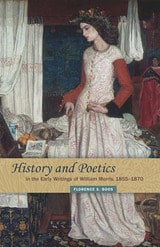
History and Poetics in the Early Writings of William Morris, 1855–1870
Florence S. Boos
The Ohio State University Press, 2015
Boos’s study is the first to utilize surviving original manuscripts, periodical publications, and poems unpublished during Morris’s lifetime. History and Poetics in the Early Writings of William Morris, 1855–1870traces Morris’s literary evolution through his juvenile poems; the essays, poems, and prose romances of the Oxford and CambridgeMagazine; the startlingly original verses of The Defence of Guenevere; and the ten years of experimentation that preceded his two best-known epics, The Life and Deathof Jason and The Earthly Paradise. This book explores the young poet’s successive efforts to find a balancing ethical framework through poetry—a framework that was at once a motivation for action and a template for authentic, shared popular art, one that reemerges forcefully in his later work.
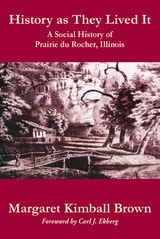
History as They Lived It
A Social History of Prairie du Rocher, IllinoisMargaret Kimball Brown, Foreword by Carl J. Ekberg
Southern Illinois University Press, 2005
“History as They Lived It deserves to be placed within the rich context of Illinois Country historiography going back more than a century. . . . It brings together the fully ripened thoughts of a mature scholar at the very moment that students of the Illinois Country need such a book.”—from the foreword by Carl J. Ekberg
Settled in 1722, Prairie du Rocher was at the geographic center of a French colony in the Mississippi Valley, which also included other villages in what is now Illinois and Missouri: Cahokia, Kaskaskia, Fort de Chartres, St. Philippe, Ste. Genevieve, and St. Louis. Located in an alluvial valley near towering limestone bluffs, which inspired the village’s name—French for “prairie of the rock”— Prairie du Rocher is the only one of the seven French colonial villages that still exists today as a small compact community.
The village of Prairie du Rocher endured governance by France, Great Britain, Virginia, and the Illinois territory before Illinois became a state in 1818. Despite these changes, the villagers persisted in maintaining the community and its values. Margaret Kimball Brown looks at one of the oldest towns in the region through the lenses of history and anthropology, utilizing extensive research in archives and public records to give historians, anthropologists, and general readers a lively depiction of this small community and its people.

History of Nineteeth-Century Russian Literature
Volume I: The Romantic PeriodDmitrij Tschizewskij
Vanderbilt University Press, 1974

History's Babel
Scholarship, Professionalization, and the Historical Enterprise in the United States, 1880 - 1940Robert B. Townsend
University of Chicago Press, 2012
History's Erratics
Irish Catholic Dissidents and the Transformation of American Capitalism, 1870-1930David M. Emmons
University of Illinois Press, 2024
As Ice Age glaciers left behind erratics, so the external forces of history tumbled the Irish into America. Existing both out of time and out of space, a diverse range of these Roman-Catholic immigrants saw their new country in a much different way than did the Protestants who settled and claimed it. These erratics chose backward looking tradition and independence over assimilation and embraced a quintessentially Irish form of subversiveness that arose from their culture, faith, and working-class outlook. David M. Emmons draws on decades of research and thought to plumb the mismatch of values between Protestant Americans hostile to Roman Catholicism and the Catholic Irish strangers among them. Joining ethnicity and faith to social class, Emmons explores the unique form of dissidence that arose when Catholic Irish workers and their sympathizers rejected the beliefs and symbols of American capitalism.
A vibrant and original tour de force, History’s Erratics explores the ancestral roots of Irish nonconformity and defiance in America.
History's Shadow
Native Americans and Historical Consciousness in the Nineteenth CenturySteven Conn
University of Chicago Press, 2004
History's Shadow traces the struggle of Americans trying to understand the people who originally occupied the continent claimed as their own. Steven Conn considers how the question of the Indian compelled Americans to abandon older explanatory frameworks for sovereignty like the Bible and classical literature and instead develop new ones. Through their engagement with Native American language and culture, American intellectuals helped shape and define the emerging fields of archaeology, ethnology, linguistics, and art. But more important, the questions posed by the presence of the Indian in the United States forced Americans to confront the meaning of history itself, both that of Native Americans and their own: how it should be studied, what drove its processes, and where it might ultimately lead. The encounter with Native Americans, Conn argues, helped give rise to a distinctly American historical consciousness.
A work of enormous scope and intellect, History's Shadow will speak to anyone interested in Native Americans and their profound influence on our cultural imagination.

Hold Dear, As Always
Jette, a German Immigrant Life in LettersAdolf E. Schroeder and Carla Schulz-Geisberg
University of Missouri Press, 1988
Henriette Geisberg Bruns was twenty-three when she arrived in 1836 at the isolated Westphalia Settlement in central Missouri with her husband, baby son, two brothers, and a maid. Jette, as she was known to her family and friends, had not come to America by inclination, but from duty. Her husband Bernhard, a physician, had fallen victim to the emigration fever sweeping Germany in the 1830s and was convinced that he could provide a better life for his family in the American Free States where land was plentiful, the soil was fertile, and taxes were low. Born into a large, prosperous, closely knit family, Jette had set out for the New World reluctantly; but once in Missouri, she was determined not to give up and go back home, as a neighboring family did.
Although she maintained her resolve, this collection of letters written to her family in Germany shows that her life in America was often beset by deprivation, disease, and loneliness. Jette had been persuaded to emigrate for the sake of her children’s future; however, of the ten born in central Missouri, five died in childhood, three within three weeks in September and October 1841.Despite the family responsibilities and the hardships she faced in Missouri, Jette maintained a lively interest in American political and social life. For fifteen years in Westphalia and almost fifty in Jefferson City and St. Louis, she observed and offered astute—if sometimes acerbic—commentary on the historic as well as the daily events of nineteenth-century life. Left destitute by the death of her husband, who had served as mayor of Jefferson City during the Civil War, she opened a boarding-house in her home across from the state capitol to support her own children and those of her brother. There the German radicals in state government gathered to argue and debate.This rare collection of personal family letters, combined with an autobiographical sketch Jette wrote after the Civil War, illuminates the experience of one immigrant woman in a land that was always foreign to her.
Holy Nation
The Transatlantic Quaker Ministry in an Age of RevolutionSarah Crabtree
University of Chicago Press, 2015
Holy Nation convincingly shows that ideals and actions were inseparable for the Society of Friends, yielding an account of Quakerism that is simultaneously a history of the faith and its adherents and a history of its confrontations with the wider world. Ultimately, Crabtree argues, the conflicts experienced between obligations of church and state that Quakers faced can illuminate similar contemporary struggles.
Home Economics
Domestic Fraud in Victorian EnglandRebecca Stern
The Ohio State University Press, 2008
In Home Economics: Domestic Fraud in Victorian England, Rebecca Stern establishes fraud as a basic component of the Victorian popular imagination, key to its intimate, as well as corporate, systems of exchange. Although Victorian England is famous for revering the domestic realm as a sphere separate from the market and its concerns, actual households were hardly isolated havens of fiscal safety and innocence. Rather, the Victorian home was inevitably a marketplace, a site of purchase, exchange, and employment in which men and women hired or worked as servants, contracted marriages, managed children, and obtained furniture, clothing, food, and labor. Alongside the multiplication of joint-stock corporations and the rise of a credit-based economy, which dramatically increased fraud in the Victorian money market, the threat of swindling affected both actual household commerce and popular conceptions of ostensibly private, more emotive forms of exchange. Working with diverse primary material, including literature, legal cases, newspaper columns, illustrations, ballads, and pamphlets, Stern argues that the climate of fraud permeated Victorian popular ideologies about social transactions. Beyond providing a history of cases and categories of domestic deceit, Home Economics illustrates the diverse means by which Victorian culture engaged with, refuted, celebrated, represented, and consumed swindling in familial and other household relationships.
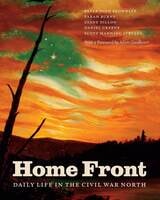
Home Front
Daily Life in the Civil War NorthPeter John Brownlee, Sarah Burns, Diane Dillon, Daniel Greene, and Scott Manning Stevens
University of Chicago Press, 2013
Home Front: Daily Life in the Civil War North reveals this side of the war as it happened, comprehensively examining the visual culture of the Northern home front. Through contributions from leading scholars from across the humanities, we discover how the war influenced household economies and the cotton economy; how the absence of young men from the home changed daily life; how war relief work linked home fronts and battle fronts; why Indians on the frontier were pushed out of the riven nation’s consciousness during the war years; and how wartime landscape paintings illuminated the nation’s past, present, and future.
A companion volume to a collaborative exhibition organized by the Newberry Library and the Terra Foundation for American Art, Home Front is the first book to expose the visual culture of a world far removed from the horror of war yet intimately bound to it.
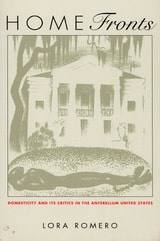
Home Fronts
Domesticity and Its Critics in the Antebellum United StatesLora Romero
Duke University Press, 1997
Romero remaps the literary landscape of the last century by looking at the operations of domesticity on the frontier as well as within the middle-class home and by reconsidering such crucial (if sometimes unexpected) sites for the workings of domesticity as social reform movements, African-American activism, and homosocial high culture. In the process, she indicts theories of the nineteenth century based on binarisms and rigidity while challenging models of power and resistance based on the idea that "culture" has the capacity to either free or enslave. Through readings of James Fenimore Cooper, Catherine Beecher, Harriet Beecher Stowe, Maria Stewart, and Nathaniel Hawthorne, Romero shows how the politics of culture reside in local formulations rather than in essential and ineluctable political structures.

Home Material
Ohio's Nineteenth-Century Regional Women's FictionSandra Parker
University of Wisconsin Press, 1998
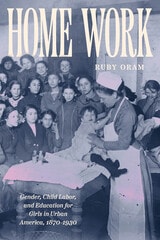
Home Work
Gender, Child Labor, and Education for Girls in Urban America, 1870–1930Ruby Oram
University of Chicago Press, 2025
In Home Work, historian Ruby Oram tells the story of how middle-class, white women reformers lobbied the state to implement various public education reforms to shape the lives of girls and women in industrial cities between 1870 and 1930. Women such as Jane Addams and Florence Kelley used education reform to target working-class communities and advocate for their middle-class ideals of girlhood and femininity, which could vary depending on the racial or socio-economic backgrounds of the girls. For example, reformers generally encouraged white girls to care for their future families, while pushing Black girls toward becoming domestic workers in others’ homes. Using Chicago as a case study, Oram also explores how many of the reforms sought by white women were in response to evolving anxieties about immigration, health, and sexual delinquency.
An illuminating addition to the history of urban education in America, Home Work enriches our understanding of educational inequality in twentieth-century schools.
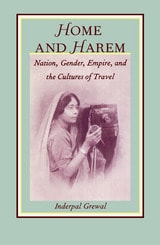
Home and Harem
Nation, Gender, Empire and the Cultures of TravelInderpal Grewal
Duke University Press, 1996
In her look at England, Grewal draws on nineteenth-century aesthetics, landscape art, and debates about women’s suffrage and working-class education to show how all social classes, not only the privileged, were educated and influenced by imperialist travel narratives. By examining diverse forms of Indian travel to the West and its colonies and focusing on forms of modernity offered by colonial notions of travel, she explores how Indian men and women adopted and appropriated aspects of European travel discourse, particularly the set of oppositions between self and other, East and West, home and abroad.
Rather than being simply comparative, Home and Harem is a transnational cultural study of the interaction of ideas between two cultures. Addressing theoretical and methodological developments across a wide range of fields, this highly interdisciplinary work will interest scholars in the fields of postcolonial and cultural studies, feminist studies, English literature, South Asian studies, and comparative literature.
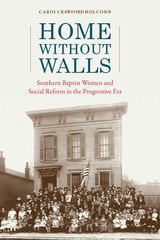
Home without Walls
Southern Baptist Women and Social Reform in the Progressive EraCarol Crawford Holcomb
University of Alabama Press, 2020
The Woman’s Missionary Union (WMU), founded in 1888, carved out a uniquely feminine space within the Southern Baptist Convention during the tumultuous years of the Progressive Era when American theologians were formulating the social gospel. These women represented the Southern Baptist elite and as such had the time to read, write, and discuss ideas with other Southern progressives. They rubbed shoulders with more progressive Methodist and Presbyterian women in clubs and ecumenical missionary meetings. Baptist women studied the missionary publications of these other denominations and adopted ideas for a Southern Baptist audience.
Home without Walls: Southern Baptist Women and Social Reform in the Progressive Era shows how the social attitudes of women were shaped at the time. By studying primary documents—including personal letters, official exchanges and memoranda, magazine publications, newsletters, and editorials—Carol Crawford Holcomb uncovers ample evidence that WMU leaders, aware of the social gospel and sympathetic to social reform, appropriated the tools of social work and social service to carry out their missionary work.
Southern Baptist women united to build a financial empire that would sustain the Southern Baptists through the Great Depression and beyond. Their social attitudes represented a kaleidoscope of contrasting opinions. By no stretch of the imagination could WMU leaders be characterized as liberal social gospel advocates. However, it would also be wrong to depict them as uniformly hostile to progressivism or ignorant of contemporary theological ideas. In the end, they were practical feminists in their determination to provide a platform for women’s views and a space for women to do meaningful work.
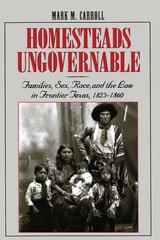
Homesteads Ungovernable
Families, Sex, Race, and the Law in Frontier Texas, 1823-1860By Mark M. Carroll
University of Texas Press, 2001
When he settled in Mexican Texas in 1832 and began courting Anna Raguet, Sam Houston had been separated from his Tennessee wife Eliza Allen for three years, while having already married and divorced his Cherokee wife Tiana and at least two other Indian "wives" during the interval. Houston's political enemies derided these marital irregularities, but in fact Houston's legal and extralegal marriages hardly set him apart from many other Texas men at a time when illicit and unstable unions were common in the yet-to-be-formed Lone Star State.
In this book, Mark Carroll draws on legal and social history to trace the evolution of sexual, family, and racial-caste relations in the most turbulent polity on the southern frontier during the antebellum period (1823-1860). He finds that the marriages of settlers in Texas were typically born of economic necessity and that, with few white women available, Anglo men frequently partnered with Native American, Tejano, and black women. While identifying a multicultural array of gender roles that combined with law and frontier disorder to destabilize the marriages of homesteaders, he also reveals how harsh living conditions, land policies, and property rules prompted settling spouses to cooperate for survival and mutual economic gain. Of equal importance, he reveals how evolving Texas law reinforced the substantial autonomy of Anglo women and provided them material rewards, even as it ensured that cross-racial sexual relationships and their reproductive consequences comported with slavery and a regime that dispossessed and subordinated free blacks, Native Americans, and Tejanos.
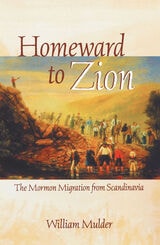
Homeward To Zion
The Mormon Migration from ScandinaviaWilliam Mulder
University of Minnesota Press, 2000
The classic history of this emblematic moment in U.S. immigration.
In the late nineteenth century, thirty thousand Mormons from Norway, Sweden, Denmark, and Finland immigrated to Utah, dissatisfied with conditions in their homelands. As their countrymen were farming rich fields in other parts of the United States, Scandinavian Mormons were making their way to Salt Lake City. Homeward to Zion tracks this movement from northern Europe to the western desert, examining the Mormon recruiting efforts in Scandinavia as well as the arduous journey across the Great Plains. Mulder draws extensively from personal narratives of these immigrants to relate their pioneering experience and their role in the history of Scandinavian migration and of the settlement of the American West.
Homo Aestheticus
The Invention of Taste in the Democratic AgeLuc Ferry
University of Chicago Press, 1993
Ferry's treatise begins in the mid-1600s with the simultaneous invention of the notions of taste (the essence of art as subjective pleasure) and modern democracy (the idea of the State as a consensus among individuals). He explores the differences between subjectivity and individuality by examining aesthetic theory as developed first by Kant's predecessors and then by Kant, Hegel, Nietzsche, and proponents of the avant-garde. Ferry discerns two "moments" of the avant-garde aesthetic: the hyperindividualistic iconoclasm of creating something entirely new, and the hyperrealistic striving to achieve an extraordinary truth. The tension between these two, Ferry argues, preserves an essential element of the Enlightenment concern for reconciling the subjective and the objective—a problem that is at once aesthetic, ethical, and political.
Rejecting postmodern proposals for either a radical break with or return to tradition, Ferry embraces a postmodernism that recasts Enlightenment notions of value as a new intersubjectivity. His original analysis of the growth and decline of the twentieth-century avant-garde movement sheds new light on the connections between aesthetics, ethics, and political theory.
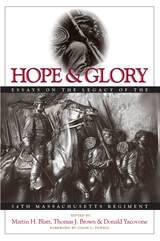
Hope and Glory
Essays on the Legacy of the 54th Massachusetts RegimentMartin H. Blatt
University of Massachusetts Press, 2009
The monument by Augustus Saint-Gaudens to Robert Gould Shaw and the 54th Massachusetts Regiment, located on Boston Common, stands at a symbolic crossroads of American history. A reminder of the nation's ongoing struggle over race, it captures the Civil War's higher purpose—the end of slavery—and memorializes those black soldiers and white officers who made common cause in the service of freedom. The monument and the saga of the 54 th Massachusetts remain powerful touchstones, inspiring enduring meditations such as Robert Lowell's poem “For the Union Dead” and the popular film Glory.
This volume brings together the best scholarship on the history of the 54th, the formation of collective memory and identity, and the ways Americans have responded to the story of the regiment and the Saint-Gaudens monument. Contributors use the historical record and popular remembrance of the 54th as a lens for examining race and community in the United States. The essays range in time from the mid-nineteenth century to the present and encompass history, literature, art, music, and popular culture.
In addition to the editors and Colin Powell, who writes about the memory and example of the 54th in his own career, contributors include Stephen Belyea, David W. Blight, Thomas Cripps, Kathryn Greenthal, James Oliver Horton, Edwin S. Redkey, Marilyn Richardson, Kirk Savage, James Smethurst, Cathy Stanton, Helen Vendler, Denise Von Glahn, and Joan Waugh.
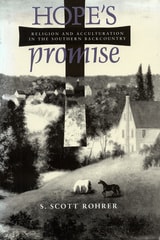
Hope's Promise
Religion and Acculturation in the Southern BackcountryS. Scott Rohrer
University of Alabama Press, 2013
In Hope's Promise, Scott Rohrer dissects the internal workings of the ecumenical Moravian movement at Wachovia—how this disparate group of pilgrims hailing from many countries (Germany, Ireland, Scandinavia, England) and different denominations (Lutheran, Reformed, Methodist, Anglican) yielded their ethnicities as they became, above all, a people of faith. By examining the "open" farm congregations of Hope, Friedberg, and Friedland, Rohrer offers a sensitive portrayal of their evangelical life and the momentous cultural changes it wrought: the organization of tight-knit congregations bound by "heart religion;" the theology of the new birth; the shape of religious discipline; the sacrament of communion; and the role of music. Drawing on courthouse documents and church records, Rohrer carefully demonstrates how various groups began to take on traits of the others. He also illustrates how evangelical values propelled interaction with the outside world—at the meetinghouse and the frontier store, for example—and fostered even more collective and accelerated change.
As the Moravians became ever more "American" and "southern," the polyglot of ethnicities that was Wachovia would, under the unifying banner of evangelicalism, meld into one of the most sophisticated religious communities in early America.
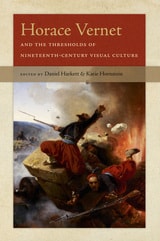
Horace Vernet and the Thresholds of Nineteenth-Century Visual Culture
Edited by Daniel Harkett and Katie Hornstein
Dartmouth College Press, 2017

Horse-Drawn Days
A Century of Farming with HorsesJerry Apps
Wisconsin Historical Society Press, 2010
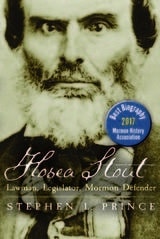
Hosea Stout
Lawman, Legislator, Mormon DefenderStephen L. Prince
Utah State University Press, 2016
Stout joined the Mormons in Missouri in 1838 and followed them to Nauvoo, where he rose quickly to become a top leader in the Nauvoo Legion and chief of police, a position he also held at Winter Quarters. He became the first attorney general for the Territory of Utah, was elected to the Utah Territorial Legislature, and served as regent for the University of Deseret (which later became the University of Utah) and as judge advocate of the Nauvoo Legion in Utah. In 1862, Stout was appointed US attorney for the Territory of Utah by President Abraham Lincoln. In 1867, he became city attorney of Salt Lake City and he was elected to the Utah House of Representatives in 1881.
But Stout’s history also had its troubled moments. Known as a violent man and aggressive enforcer, he was often at the center of controversy during his days on the police force and was accused of having a connection with deaths in Nauvoo and Utah. Ultimately, however, none of these allegations ever found traction, and the leaders of the LDS community, especially Brigham Young, saw to it that Stout was promoted to roles of increasing responsibility throughout his life. When he died in 1889, Hosea Stout left a complicated legacy of service to his state, his church, and the members of his faith community.
Hotel London
How Victorian Commercial Hospitality Shaped a Nation and Its StoriesBarbara Black
The Ohio State University Press, 2019
Incorporating the works of Oscar Wilde, Henry James, Wilkie Collins, Arnold Bennett, Florence Marryat, and Marie Belloc Lowndes, as well as contemporary depictions of the hotels in Mad Men,American Horror Story, and The Grand Budapest Hotel, Black examines how the hotel supported a corporate identity that would ultimately assist in the rise of modern capitalist structures and the middle class. In this way, Hotel London exposes the aggravations of class stratifications through the operations of status inside hotel life, giving a unique perspective on Victorian London that could only come from the stories of a hotel.
House and Street
The Domestic World of Servants and Masters in Nineteenth-Century Rio de JaneiroBy Sandra Lauderdale Graham
University of Texas Press, 1992
During the later half of the nineteenth century, a majority of Brazilian women worked, most as domestic servants, either slave or free. House and Street re-creates the working and personal lives of these women, drawing on a wealth of documentation from archival, court, and church records.
Lauderdale Graham traces the intricate and ambivalent relations that existed between masters and servants. She shows how for servants the house could be a place of protection—as well as oppression—while the street could be dangerous—but also more autonomous. She integrates her discoveries with larger events taking place in Rio de Janeiro during the period, including the epidemics of the 1850s, the abolition of slavery, the demolition of slums, and major improvements in sanitation during the first decade of the 1900s.
How Russia Learned to Write
Literature and the Imperial Table of RanksIrina Reyfman
University of Wisconsin Press, 2021
Irina Reyfman illuminates the surprisingly diverse effects of the Table of Ranks on writers, their work, and literary culture in Russia. From Sumarokov and Derzhavin in the eighteenth century through Pushkin, Gogol, Dostoevsky, and poets serving in the military in the nineteenth, state service affected the self-images of writers and the themes of their creative output. Reyfman also notes its effects on Russia’s atypical course in the professionalization and social status of literary work.
How They Lived
The Everyday Lives of Hungarian Jews, 1867–1940András Koerner
Central European University Press, 2015

How Women Must Write
Inventing the Russian Woman PoetOlga Peters Hasty
Northwestern University Press, 2019
In How Women Must Write, Olga Peters Hasty takes us from an emphatically male Romantic age to a modernist period preoccupied with women’s creativity but also with its containment. In late nineteenth and early twentieth-century Russia, the woman poet was invented: by women poets themselves, by readers who projected gender biases into their poems, and by male poets who wrote posing as women. Examining Karolina Pavlova and Evdokiia Rostopchina, who inspired those writing after them, as well as two women invented by men, Cherubina de Gabriak and Briusov’s Nelli, and challenges to male authority by Marina Tsvetaeva and Anna Akhmatova, this book shows women as purposeful actors realizing themselves creatively and advancing the woman poet’s cause. It will appeal to the general reader and to specialists in Russian literature, women’s studies, and cultural history.

How the Earth Feels
Geological Fantasy in the Nineteenth-Century United StatesDana Luciano
Duke University Press, 2024

How the Russians Read the French
Lermontov, Dostoevsky, TolstoyPriscilla Meyer
University of Wisconsin Press, 2008
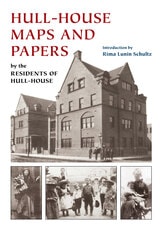
Hull-House Maps and Papers
A Presentation of Nationalities and Wages in a Congested District of Chicago, Together with Comments and Essays on Problems Growing Out of the Social ConditionsBy the Residents of Hull-House
University of Illinois Press, 2007
Inspired by their Progressive Era faith in social science solutions to society’s problems, the residents of Hull-House collaborated on this work of sociology based on their experiences as residents of Chicago’s Near West Side. The contributors to this book believed that an enlightened citizenry could be mobilized for reform, and that by publishing maps with explicit information about the wages and conditions of the working poor in Chicago’s Nineteenth Ward they would educate the public and inspire reforms.
In addition to Jane Addams’s own prefatory note and paper on the role of social settlements in the labor movement, contributors provided detailed, real-world analyses of the Chicago Jewish ghetto, garment workers and the sweatshops, child labor, immigrant neighborhoods in the vicinity of Hull-House, and local charities. This edition also contains eight color reproductions of the original Hull-House neighborhood maps. The year 2006 marks the one hundred and eleventh anniversary of the publication of Hull-House Maps and Papers, and the volume remains a dramatic statement about the residents’ shared values as well as a major influence on subsequent social surveys.
Hungarian Culture and Politics in the Habsburg Monarchy 1711-1848
Gábor Vermes
Central European University Press, 2014
Hurrah for Hampton!
Black Red Shirts in South Carolina during ReconstructionEdmund L. Drago
University of Arkansas Press, 1999
This post-revisionist study examines the motives and the concerns of the ex-slaves in South Carolina who supported a movement that eventually led to white supremacy.
Although most freedmen throughout the states of the former Confederacy were Republicans loyal to the party of the Federal government that had emancipated them, they were factions of African-American voters who aligned themselves with local white Democratic leaders. one such group of black conservatives joined the “Red Shirts,” white paramilitary clubs that attempted to restore antebellum values in electing former Confederate general Wade Hampton governor of South Carolina in 1876.
Drago’s fine analysis recovers and explains this lost aspect of Southern black history. Drawing on primary sources that include testimonies of several black Red Shirts before a Congressional investigation of the election and eleven slave narratives, he de-romanticizes the black experience by examining the relationship between black initiative and southern paternalism.