Results by title
1415 books match the query 'Medical' and 73 start with h
History, Medicine, and the Traditions of Renaissance Learning
Nancy G. Siraisi
University of Michigan Press, 2007
A path-breaking work at last available in paper, History, Medicine, and the Traditions of Renaissance Learning is Nancy G. Siraisi’s examination of the intersections of medically trained authors and history from 1450 to 1650. Rather than studying medicine and history as separate traditions, Siraisi calls attention to their mutual interaction in the rapidly changing world of Renaissance erudition. With remarkably detailed scholarship, Siraisi investigates doctors’ efforts to explore the legacies handed down to them from ancient medical and anatomical writings.
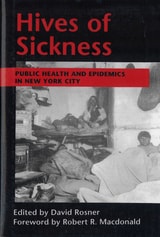
Hives of Sickness
Public Health and Epidemics in New York CityRosner, David
Rutgers University Press, 1995
An 1865 report on public health in New York painted a grim picture of "high brick blocks and closely-packed houses . . . literally hives of sickness" propagating epidemics of cholera, smallpox, typhoid, typhus, and yellow fever, which swept through the whole city. In this stimulating collection of essays, nine historians of American medicine explore New York's responses to its public health crises from colonial times to the present. The essays illustrate the relationship between the disease environment of New York and changes in housing, population, social conditions, and the success of medical science, linking such factors to New York's experiences with smallpox, polio, and AIDS.
The volume is essential reading for anyone interested in American public health and the social history of New York.
The contributors are Ronald Bayer, Elizabeth Blackmar, Gretchen A. Condran, Elizabeth Fee, Daniel M. Fox, Evelynn M. Hammonds, Alan M. Kraut, Judith Walzer Leavitt, and Naomi Rogers. David Rosner is a professor of history at Baruch College and The Graduate School of the City University of New York. Robert R. Macdonald is the director of the Museum of the City of New York.
A publication of the Museum of the City of New York
Choice Reviews 1995 November
This is one of a series of books focusing on the impact of disease intended to enhance the understanding of both past and present regarding reactions to periodic epidemics. Robert B. Macdonald, director of the Museum of the City of New York, which supports this series, states: "The individual and collective responses to widespread sickness are mirrors to the cultural, religious, economic, political, and social histories of cities and nations." Rosner selected eight renowned and respected individuals to describe the reactions and responses to smallpox, polio, and AIDS epidemics in New York City since 1860, and the efforts of officials and professionals to deal with the impact of disease. Essayists present disease broadly from economic, social, political, and health perspectives. Causes of epidemics include the expected and usual: thousands of immigrants pouring into the city, inadequate water and food supplies, lack of sewage disposal, unemployment leading to poverty. An unexpected cause was the avarice of real estate investors, inexorably driving up housing costs.
Highly recommended for all students of history, public health, health policy, and sociology. Upper-division undergraduate through professional. Copyright 1999 American Library Association
Homeland Maternity
US Security Culture and the New Reproductive RegimeNatalie Fixmer-Oraiz
University of Illinois Press, 2019

Homicidal Insanity, 1800-1985
Janet Colaizzi, with a foreword by Jonas R. Rappeport
University of Alabama Press, 1989
Where madness meets the law, history leaves no easy verdict.
Homicidal insanity has remained a vexation to both the psychiatric and legal professions despite the panorama of scientific and social change during the past 200 years. The predominant opinion today among psychiatrists is that no correlation exists between dangerousness and specific mental disorders. But for generation after generation, psychiatrists have reported cases of insane homicide that were clinically similar. Although psychiatric theory changed and psychiatric nosology was inconsistent, the mental phenomena psychiatrists identified in such cases remained the same. The central thesis of Homicidal Insanity is that as psychiatric theory changed, psychiatrists regarded these phenomena variously as symptoms of mental disease or the disease in itself. It is possible to trace these phenomena throughout the history of Anglo-American psychiatric theory and practice. A secondary thesis of the book is that psychiatrists have used these phenomena as predictors and markers in the practical matters of preventing insane homicide and of testifying in the courts to defend the irresponsible and expose the culpable.
For 200 years, scientific and philosophical disagreement raised controversy and brought the issues to public attention. Still, to this day no rational method exists to discriminate the dangerous from the harmless in matters of involuntary commitment, nor insanity from crime in the courts.
Hospital Time
Amy Hoffman
Duke University Press, 1997
Hoffman became central to Riegle’s caregiving when he asked her to be his health-care proxy, and although she willingly chose to do this, she explores her conflicting feelings about herself in this role and about her involvement with Riegle and his grueling struggle with hospitalization, illness, and, finally, death. She tells of the waves of grief that echoed throughout her life, awakening memories of other losses, entering her dreams and fantasies, and altering her relationships with friends, family, and even total strangers.
Hoffman’s memoir gives voice to the psychological and emotional havoc AIDS creates for those in the difficult role of caring for the terminally ill and it gives recognition to the role that lesbians continue to play in the AIDS emergency. A foreword by Urvashi Vaid, former executive director of the National Gay and Lesbian Task Force, offers a meditation on the politics of AIDS and the role of family in the lives of lesbians and gay men.
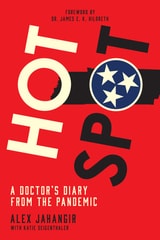
Hot Spot
A Doctor's Diary From the PandemicDr. Alex Jahangir
Vanderbilt University Press, 2022
What followed was a year of unprecedented challenge and scrutiny. Jahangir, who immigrated to the US from Iran at age six, grew up in Nashville. He thought he knew the city well. But the pandemic laid bare ethnic, racial, and cultural tensions that daily threatened to derail what should have been a collective effort to keep residents healthy and safe.
Hot Spot is Jahangir's narrative of the first year of COVID, derived from his op notes (the journal-like entries surgeons often keep following operations) and expanded to include his personal reflections and a glimpse into the inner sanctums of city and state governance in crisis.
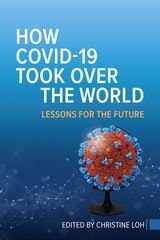
How COVID-19 Took Over the World
Lessons for the FutureEdited by Christine Loh
Hong Kong University Press, 2023
The pandemic left disorder and crises in its wake everywhere it struck. Drawing on disciplines including public health, politics, and socioeconomics, this book tracks the spread of COVID-19 to weave a coherent picture that explains how scientists learned about the virus, how authorities reacted around the world, and how different societies coped.
Written by a leading team of public health, policy, and economics experts, How COVID-19 Took Over the World provides an in-depth analysis of various countries’ responses to the pandemic, as well as suggestions to increase the capability to fight future pandemics. The first part of the book provides an overview of global governance and international cooperation, the economic and social consequences of the outbreak, and breakthroughs in mathematical modeling and COVID-19 vaccines. The second part of the book examines and compares specific countries and regions through the lens of good governance, social contract, and political trust.
How COVID-19 Took Over the World is essential for anyone seeking to learn from the impact of COVID-19, particularly professionals and policymakers, as well as those with a general interest in governance and pandemics.
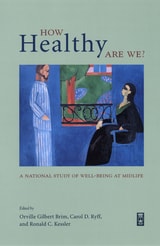
How Healthy Are We?
A National Study of Well-Being at MidlifeEdited by Orville Gilbert Brim, Carol D. Ryff, and Ronald C. Kessler
University of Chicago Press, 2003
The MacArthur Foundation addressed these questions head-on by funding a landmark study known as "Midlife in the U.S.," or MIDUS. For the first time in a single study, researchers were able to integrate epidemiological, sociological, and psychological assessments, as well as innovative new measures to evaluate how work and family life influence each other.
How Healthy Are We? presents the key findings from the survey in three sections: physical health, quality of life and psychological well-being, and the contexts (family, work) of the midlife. The topics covered by almost forty scholars in a wide variety of fields are vast, including everything from how health and well-being vary with socioeconomic standing, gender, race, or region of the country to how middle-aged people differ from younger or older adults in their emotional experience and quality of life. This health—the study measures not only health-the absence of illness—but also reports on the presence of wellness in middle-aged Americans.
The culmination of a decade and a half of research by leading scholars, How Healthy Are We? will dramatically alter the way we think about health in middle age and the factors that influence it. Researchers, policymakers, and others concerned about the quality of midlife in contemporary America will welcome its insights.
* Having a good life means having good relationships with others to almost 70% of those surveyed. Less than 40% mentioned their careers.
* Reports of disruptive daily stressors vary by age, with young adults and those in midlife experiencing more than those in later adulthood.
* Men have higher assessments of their physical and mental health than woman until the age of 60.

How Many Doctors Do We Need?
Duncan Yaggy and Patricia Hodgson, eds.
Duke University Press, 1986
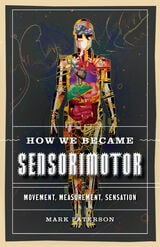
How We Became Sensorimotor
Movement, Measurement, SensationMark Paterson
University of Minnesota Press, 2021
An engrossing history of the century that transformed our knowledge of the body’s inner senses
The years between 1833 and 1945 fundamentally transformed science’s understanding of the body’s inner senses, revolutionizing fields like philosophy, the social sciences, and cognitive science. In How We Became Sensorimotor, Mark Paterson provides a systematic account of this transformative period, while also demonstrating its substantial implications for current explorations into phenomenology, embodied consciousness, the extended mind, and theories of the sensorimotor, the body, and embodiment.
Each chapter of How We Became Sensorimotor takes a particular sense and historicizes its formation by means of recent scientific studies, case studies, or coverage in the media. Ranging among a diverse array of sensations, including balance, fatigue, pain, the “muscle sense,” and what Maurice Merleau-Ponty termed “motricity,” Paterson’s analysis moves outward from the familiar confines of the laboratory to those of the industrial world and even to wild animals and their habitats. He uncovers important stories, such as how forgotten pain-measurement schemes transformed criminology, or how Penfield’s outmoded concepts of the sensory and motor homunculi of the brain still mar psychology textbooks.
Complete with original archival research featuring illustrations and correspondence, How We Became Sensorimotor shows how the shifting and sometimes contested historical background to our understandings of the senses are being extended even today.
How We Die Now
Intimacy and the Work of DyingKarla Erickson
Temple University Press, 2013
How the Clinic Made Gender
The Medical History of a Transformative IdeaSandra Eder
University of Chicago Press, 2022
Today, a world without “gender” is hard to imagine. Gender is at the center of contentious political and social debates, shapes policy decisions, and informs our everyday lives. Its formulation, however, is lesser known: Gender was first used in clinical practice. This book tells the story of the invention of gender in American medicine, detailing how it was shaped by mid-twentieth-century American notions of culture, personality, and social engineering.
Sandra Eder shows how the concept of gender transformed from a pragmatic tool in the sex assignment of children with intersex traits in the 1950s to an essential category in clinics for transgender individuals in the 1960s. Following gender outside the clinic, she reconstructs the variable ways feminists integrated gender into their theories and practices in the 1970s. The process by which ideas about gender became medicalized, enforced, and popularized was messy, and the route by which gender came to be understood and applied through the treatment of patients with intersex traits was fraught and contested. In historicizing the emergence of the sex/gender binary, Eder reveals the role of medical practice in developing a transformative idea and the interdependence between practice and wider social norms that inform the attitudes of physicians and researchers. She shows that ideas like gender can take on a life of their own and may be used to question the normative perceptions they were based on. Illuminating and deeply researched, the book closes a notable gap in the history of gender and will inspire current debates on the relationship between social norms and medical practice.
How the Clinic Made Gender
The Medical History of a Transformative IdeaSandra Eder
University of Chicago Press, 2022
This is an auto-narrated audiobook edition of this book.
An eye-opening exploration of the medical origins of gender in modern US history.
Today, a world without “gender” is hard to imagine. Gender is at the center of contentious political and social debates, shapes policy decisions, and informs our everyday lives. Its formulation, however, is lesser known: Gender was first used in clinical practice. This book tells the story of the invention of gender in American medicine, detailing how it was shaped by mid-twentieth-century American notions of culture, personality, and social engineering.
Sandra Eder shows how the concept of gender transformed from a pragmatic tool in the sex assignment of children with intersex traits in the 1950s to an essential category in clinics for transgender individuals in the 1960s. Following gender outside the clinic, she reconstructs the variable ways feminists integrated gender into their theories and practices in the 1970s. The process by which ideas about gender became medicalized, enforced, and popularized was messy, and the route by which gender came to be understood and applied through the treatment of patients with intersex traits was fraught and contested. In historicizing the emergence of the sex/gender binary, Eder reveals the role of medical practice in developing a transformative idea and the interdependence between practice and wider social norms that inform the attitudes of physicians and researchers. She shows that ideas like gender can take on a life of their own and may be used to question the normative perceptions they were based on. Illuminating and deeply researched, the book closes a notable gap in the history of gender and will inspire current debates on the relationship between social norms and medical practice.
How to Make a Vaccine
An Essential Guide for COVID-19 and BeyondJohn Rhodes
University of Chicago Press, 2021
As the COVID-19 pandemic has affected every corner of the world, changing our relationship to our communities, to our jobs, and to each other, the most pressing question has been—when will it end? Researchers around the globe are urgently trying to answer this question by racing to test and distribute a vaccine that could end the greatest public health threat of our time. In How to Make a Vaccine, an expert who has firsthand experience developing vaccines tells an optimistic story of how three hundred years of vaccine discovery and a century and a half of immunology research have come together at this powerful moment—and will lead to multiple COVID-19 vaccines.
Dr. John Rhodes draws on his experience as an immunologist, including working alongside a young Anthony Fauci, to unravel the mystery of how vaccines are designed, tested, and produced at scale for global deployment. Concise and accessible, this book describes in everyday language how the immune system evolved to combat infection, how viruses responded by evolving ways to evade our defenses, and how vaccines do their work. That history, and the pace of current research developments, make Rhodes hopeful that multiple vaccines will protect us. Today the complex workings of the immune system are well understood. The tools needed by biomedical scientists stand ready to be used, and more than 160 vaccine candidates have already been produced. But defeating COVID-19 won’t be the end of the story: Rhodes describes how discoveries today are also empowering scientists to combat future threats to global health, including a recent breakthrough in the development of genetic vaccines, which have never before been used in humans.
As the world prepares for a vaccine, Rhodes offers a current and informative look at the science and strategies that deliver solutions to the crisis.
How to Respond Better to the Next Pandemic
Remedying Institutional FailuresAllen Buchanan, with contributions by Cécile Fabre and Sir Paul Tucker
University of Utah Press, 2024
In How to Respond Better to the Next Pandemic Allen Buchanan argues that, contrary to widespread opinion, the primary cause of flawed COVID-19 policy was not defective leadership, but rather institutional failure. Decisions were made through processes that lacked the most basic safeguards against the large-institution “yes-man” and group-think phenomena and included virtually no provisions for holding decision makers accountable. More fundamentally, policy makers did not fulfill the crucial duty to provide plausible public justifications for their decisions. They disguised the fact that scientific opinion was divided on the appropriateness of the policies they endorsed and labeled those who disagreed with them as anti-scientific. In some cases, they responded to criticism, not by engaging it on the issues, but by branding their critics as quacks.
Human Adaptation and Accommodation
A. Roberto Frisancho
University of Michigan Press, 1993

Human Fertility
Henri Leridon
University of Chicago Press, 1977
The book begins with a readable, authoritative review of human fertility in its natural state. Leridon summarizes and evaluates current knowledge, drawing together rare statistical data on physiological variables as well as demographic treatments of these data. After discussing the classical framework used by demographers, Leridon undertakes a "microdemographic" analysis in which he focuses on the individual and explicates the biological processes through which social, psychological, and economic factors affect fertility. He isolates its components—fecundability, intrauterine mortality, the physiological nonsusceptible period, and sterility—then reviews the composite effect of variation in any one component.
Leridon considers situations of controlled fertility: contraception, abortion, and sterilization. The author also presents valuable new data from his own investigations of varying risks of intrauterine mortality. Finally, he shows how the previous approaches can be complemented by the use of mathematical models.
Human
Voices of Tomorrow’s DoctorsEdited by Tolu Kehinde
Dartmouth College Press, 2019
Humanizing Brain Tumors
Strategies for You and Your PhysicianEdited by Jonathan A. Forbes, Abdelkader Mahammedi, and Soma Sengupta
University of Minnesota Press, 2022
Humanizing Brain Tumors details the lived experiences of patients and their loved ones, from the presentation of symptoms to diagnosis and treatment. These nine test cases and the accompanying compendium offer insight and guidance to anyone living with, caring for, or treating those with brain tumors. Written with a humanistic, yet realistic touch, the authors have created a resource that reminds readers of the important partnership between doctors, patients, and caregivers.
This collection delves into our modern understanding of brain tumors, using clinical presentation to illustrate the patient experience and summarize methods of treatment. Imagery, including both MRI scans and medical illustrations, facilitates a vivid description of neuroanatomy. Providing a concise description of modern forms of treatment for patients affected with brain tumors, this book presents a patient-centric perspective.
Humanizing Brain Tumors will appeal to the hundreds of thousands of patients and their loved ones who are affected by brain tumors every year.
Hunger
The Biology and Politics of StarvationJohn R. Butterly and Jack Shepherd
Dartmouth College Press, 2010
Hurt
The Inspiring, Untold Story of Trauma CareCatherine Musemeche
Dartmouth College Press, 2016

Hypertension
A SymposiumElexious Bell
University of Minnesota Press, 1951