Results by title
3258 books match the query 'Performing Arts' and 90 start with h
Hollywood Shutdown
Production, Distribution, and Exhibition in the Time of COVIDBy Kate Fortmueller
University of Texas Press, 2021
By March 2020, the spread of COVID-19 had reached pandemic proportions, forcing widespread shutdowns across industries, including Hollywood. Studios, networks and production companies, and the thousands of workers who make film and television possible, were forced to adjust their time-honored business and labor practices. In this book, Kate Fortmueller asks what happened when the coronavirus closed Hollywood.
Hollywood Shutdown examines how the COVID-19 pandemic affected film and television production, influenced trends in distribution, reshaped theatrical exhibition, and altered labor practices. From January movie theater closures in China to the bumpy September release of Mulan on the Disney+ streaming platform, Fortmueller probes various choices made by studios, networks, unions and guilds, distributors, and exhibitors during the evolving crisis. In seeking to explain what happened in the first nine months of 2020, this book also considers how the pandemic will transform Hollywood practices in the twenty-first century.
Hollywood Speaks
Deafness and the Film Entertainment IndustryJohn S. Schuchman
University of Illinois Press, 1988
a remarkable book. Schuchman's inquiry into how deafness has been treated in
movies provides us with yet another window onto social history in addition to
a fresh angle from which to view Hollywood. Moreover, he joins the ranks of
the few scholars who have made use of Hollywood studio archives."
-- Thomas Cripps, author of Slow Fade to Black: The Negro in American
Film, 1900-1942
Hollywood TV
The Studio System in the FiftiesBy Christopher Anderson
University of Texas Press, 1994
The 1950s was one of the most turbulent periods in the history of motion pictures and television. During the decade, as Hollywood's most powerful studios and independent producers shifted into TV production, TV replaced film as America's principal postwar culture industry.
This pioneering study offers the first thorough exploration of the movie industry's shaping role in the development of television and its narrative forms. Drawing on the archives of Warner Bros. and David O. Selznick Productions and on interviews with participants in both industries, Christopher Anderson demonstrates how the episodic telefilm series, a clear descendant of the feature film, became and has remained the dominant narrative form in prime-time TV.
This research suggests that the postwar motion picture industry was less an empire on the verge of ruin—as common wisdom has it—than one struggling under unsettling conditions to redefine its frontiers. Beyond the obvious contribution to film and television studies, these findings add an important chapter to the study of American popular culture of the postwar period.
Hollywood Unions
Kate Fortmueller
Rutgers University Press, 2025
Hollywood at the Intersection of Race and Identity
Delia Malia Caparoso Konzett
Rutgers University Press, 2020
Hollywood in Havana
US Cinema and Revolutionary Nationalism in Cuba before 1959Megan Feeney
University of Chicago Press, 2018
Megan Feeney argues that the freedom fighting extolled in American World War II dramas and the rebellious values and behaviors seen in postwar film noir helped condition Cuban audiences to expect and even demand purer forms of Cuban democracy and national sovereignty. At the same time, influential Cuban intellectuals worked to translate Hollywood ethics into revolutionary rhetoric—which, ironically, led to pointed critiques and subversions of the US presence in Cuba. Hollywood in Havana not only expands our notions of how American cinema was internalized around the world—it also broadens our view of the ongoing history of US-Cuban interactions, both cultural and political.
Hollywood in San Francisco
Location Shooting and the Aesthetics of Urban DeclineBy Joshua Gleich
University of Texas Press, 2018
One of the country’s most picturesque cities and conveniently located just a few hours’ drive from Hollywood, San Francisco became the most frequently and extensively filmed American city beyond the production hubs of Los Angeles and New York in the three decades after World War II. During those years, the cinematic image of the city morphed from the dreamy beauty of Vertigo to the nightmarish wasteland of Dirty Harry, although San Francisco itself experienced no such decline. This intriguing disconnect gives impetus to Hollywood in San Francisco, the most comprehensive study to date of Hollywood’s move from studio to location production in the postwar era.
In this thirty-year history of feature filmmaking in San Francisco, Joshua Gleich tracks a sea change in Hollywood production practices, as location shooting overtook studio-based filming as the dominant production method by the early 1970s. He shows how this transformation intersected with a precipitous decline in public perceptions of the American city, to which filmmakers responded by developing a stark, realist aesthetic that suited America’s growing urban pessimism and superseded a fidelity to local realities. Analyzing major films set in San Francisco, ranging from Dark Passage and Vertigo to The Conversation, The Towering Inferno, and Bullitt, as well as the TV show The Streets of San Francisco, Gleich demonstrates that the city is a physical environment used to stage urban fantasies that reveal far more about Hollywood filmmaking and American culture than they do about San Francisco.
Hollywood on Location
An Industry HistoryGleich, Joshua
Rutgers University Press, 2019
Hollywood on the Hudson
Film and Television in New York from Griffith to SarnoffKoszarski, Richard
Rutgers University Press, 2008
Hollywood's African American Films
The Transition to SoundRyan Friedman
Rutgers University Press, 2011
Hollywood's Hawaii
Race, Nation, and WarDelia Malia Caparoso Konzett
Rutgers University Press, 2017
Delia Malia Caparoso Konzett highlights films that mirror the cultural and political climate of the country over more than a century—from the era of U.S. imperialism on through Jim Crow racial segregation, the attack on Pearl Harbor and WWII, the civil rights movement, the contemporary articulation of consumer and leisure culture, as well as the buildup of the modern military industrial complex. Focusing on important cultural questions pertaining to race, nationhood, and war, Konzett offers a unique view of Hollywood film history produced about the national periphery for mainland U.S. audiences. Hollywood’s Hawaii presents a history of cinema that examines Hawaii and the Pacific and its representations in film in the context of colonialism, war, Orientalism, occupation, military buildup, and entertainment.
Hollywood's Italian American Filmmakers
Capra, Scorsese, Savoca, Coppola, and TarantinoJonathan J. Cavallero
University of Illinois Press, 2011
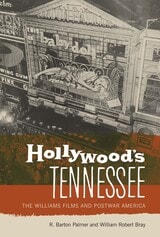
Hollywood's Tennessee
The Williams Films and Postwar AmericaBy R. Barton Palmer and William Robert Bray
University of Texas Press, 2009
No American dramatist has had more plays adapted than Tennessee Williams, and few modern dramatists have witnessed as much controversy during the adaptation process. His Hollywood legacy, captured in such screen adaptations as A Streetcar Named Desire, Cat on a Hot Tin Roof, and Suddenly, Last Summer, reflects the sea change in American culture in the mid-twentieth century. Placing this body of work within relevant contexts ranging from gender and sexuality to censorship, modernism, art cinema, and the Southern Renaissance, Hollywood's Tennessee draws on rarely examined archival research to recast Williams's significance.
Providing not only cultural context, the authors also bring to light the details of the arduous screenwriting process Williams experienced, with special emphasis on the Production Code Administration—the powerful censorship office that drew high-profile criticism during the 1950s—and Williams's innovative efforts to bend the code. Going well beyond the scripts themselves, Hollywood's Tennessee showcases findings culled from poster and billboard art, pressbooks, and other production and advertising material. The result is a sweeping account of how Williams's adapted plays were crafted, marketed, and received, as well as the lasting implications of this history for commercial filmmakers and their audiences.

Hollywood's Unofficial Film Corps
American Jewish Moviemakers and the War EffortMichael Berkowitz
University of Wisconsin Press, 2025
Hollywood’s Unofficial Film Corps shows that Rosten, Schulberg, and others—including Garson Kanin, George Cukor, Stanley Kramer, and Jules Buck—created movies that were both entertaining and politically expeditious for US war aims. At the same time, in an effort to unify the American public, they avoided focusing on the fate of European Jews, even while addressing racism and antisemitism in the United States. Jewish themes were often downplayed, and Jewish directors, writers, and other contributors frequently went uncredited. As Berkowitz writes, “Rosten’s cohort changed feature films forever.” Thanks to his research, we now have a better understanding of how and why.
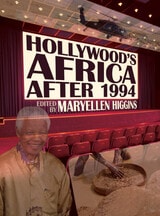
Hollywood’s Africa after 1994
MaryEllen Higgins
Ohio University Press, 2012
Hollywood’s Africa after 1994 investigates Hollywood’s colonial film legacy in the postapartheid era, and contemplates what has changed in the West’s representations of Africa. How do we read twenty-first-century projections of human rights issues—child soldiers, genocide, the exploitation of the poor by multinational corporations, dictatorial rule, truth and reconciliation—within the contexts of celebrity humanitarianism, “new” military humanitarianism, and Western support for regime change in Africa and beyond? A number of films after 1994, such as Black Hawk Down, Hotel Rwanda, Blood Diamond, The Last King of Scotland, The Constant Gardener, Shake Hands with the Devil, Tears of the Sun, and District 9, construct explicit and implicit arguments about the effects of Western intervention in Africa. Do the emphases on human rights in the films offer a poignant expression of our shared humanity? Do they echo the colonial tropes of former “civilizing missions?” Or do human rights violations operate as yet another mine of sensational images for Hollywood’s spectacular storytelling?
The volume provides analyses by academics and activists in the fields of African studies, English, film and media studies, international relations, and sociology across continents. This thoughtful and highly engaging book is a valuable resource for those who seek new and varied approaches to films about Africa.
Contributors
Harry Garuba and Natasha Himmelman
Margaret R. Higonnet, with Ethel R. Higgonet
Joyce B. Ashuntantang
Kenneth W. Harrow
Christopher Odhiambo
Ricardo Guthrie
Clifford T. Manlove
Earl Conteh-Morgan
Bennetta Jules-Rosette, J. R. Osborn, and Lea Marie Ruiz-Ade
Christopher Garland
Kimberly Nichele Brown
Jane Bryce
Iyunolu Osagie
Dayna Oscherwitz
Home Movies and Other Necessary Fictions
Michelle Citron
University of Minnesota Press, 1998
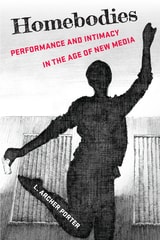
Homebodies
Performance and Intimacy in the Age of New MediaL. Archer Porter
University of Michigan Press, 2026
Homebodies: Performance and Intimacy in the Age of New Media sheds light on a fascinating yet often overlooked phenomenon: how ordinary people transform their private lives into captivating performances for the digital stage. Focusing on home dance videos shared on Instagram from 2010 to 2020, the book explores the delicate art of "intimaesthetics"—the aestheticization of intimacy through the interplay of body, space, and media—and the paradox of the homebody. These seemingly spontaneous performances reveal how users craft images of closeness and authenticity, drawing audiences into a curated version of their domestic lives. Yet, Porter argues, these intimate portrayals exist within a larger system of platform control, algorithmic surveillance, and the commodification of personal expression.
Porter utilizes hand-drawn illustrations in place of screenshots, which reflects their commitment to critiquing the exploitative dynamics of digital visibility while respecting the personal nature of the media studied. By examining the intersection of personal agency, algorithmic control, and the commodification of authenticity, Homebodies provides a nuanced understanding of how technology redefines intimacy, identity, and creativity in the twenty-first century.
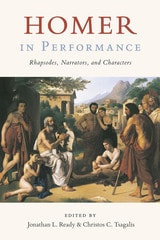
Homer in Performance
Rhapsodes, Narrators, and CharactersEdited by Jonathan L. Ready and Christos C. Tsagalis
University of Texas Press, 2018
Before they were written down, the poems attributed to Homer were performed orally, usually by rhapsodes (singers/reciters) who might have traveled from city to city or enjoyed a position in a wealthy household. Even after the Iliad and the Odyssey were committed to writing, rhapsodes performed the poems at festivals, often competing against each other. As they recited the epics, the rhapsodes spoke as both the narrator and the characters. These different acts—performing the poem and narrating and speaking in character within it—are seldom studied in tandem. Homer in Performance breaks new ground by bringing together all of the speakers involved in the performance of Homeric poetry: rhapsodes, narrators, and characters.
The first part of the book presents a detailed history of the rhapsodic performance of Homeric epic from the Archaic to the Roman Imperial periods and explores how performers might have shaped the poems. The second part investigates the Homeric narrators and characters as speakers and illuminates their interactions. The contributors include scholars versed in epigraphy, the history of art, linguistics, and performance studies, as well as those capable of working with sources from the ancient Near East and from modern Russia. This interdisciplinary approach makes the volume useful to a spectrum of readers, from undergraduates to veteran professors, in disciplines ranging from classical studies to folklore.

Hong Kong Connections
Transnational Imagination in Action CinemaMeaghan Morris, Siu-Leung Li, and Stephen Chan Ching-kiu, eds.
Duke University Press, 2005
Hong Kong Connections brings leading film scholars together to explore the circulation of Hong Kong cinema in Japan, Korea, India, Australia, France, and the United States, as well as its links with Taiwan, Singapore, and the Chinese mainland. In the process, this collection examines diverse cultural contexts for action cinema’s popularity and the problems involved in the transnational study of globally popular forms, suggesting that in order to grasp the history of Hong Kong action cinema’s influence we need to bring out the differences as well as the links that constitute popularity.
Contributors. Nicole Brenez, Stephen Chan Ching-kiu, Dai Jinhua, David Desser, Laleen Jayamanne, Kim Soyoung, Siu Leung Li, Adrian Martin, S. V. Srinivas, Stephen Teo, Valentina Vitali, Paul Willemen, Rob Wilson, Wong Kin-yuen, Kinnia Yau Shuk-ting, Yung Sai-shing

Hong Kong New Wave Cinema (1978-2000)
Pak Tong Cheuk
Intellect Books, 2008
Drawing on the auteur and genre theories, Pak Tong Cheuk here examines the cinematic style and aesthetics of New Wave directors, most of whom were educated at British and U.S. film schools. In addition to investigating the narrative content, structure, and mise-en-scène of individual films, this volume traces the overall development of the film and television industries in Hong Kong in the 1960s and 1970s. Cheuk’s intriguing study of the rise and fall of Hong Kong’s golden age of film establishes the New Wave as an era of great historical significance for scholars of cinema, popular culture, and the arts.
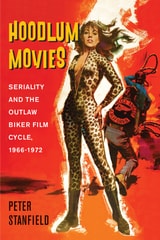
Hoodlum Movies
Seriality and the Outlaw Biker Film Cycle, 1966-1972Stanfield, Peter
Rutgers University Press, 2018
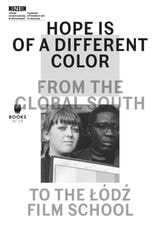
Hope Is of a Different Color
From the Global South to the Lodz Film SchoolEdited by Magda Lipska and Monika Talarczyk
Museum of Modern Art in Warsaw, 2020
As Poland’s second-largest city, Łódź was a hub for international students who studied in Poland from the mid-1960s to 1989. The Łódź Film School, a member of CILECT since 1955, was a favored destination, with students from Africa, Latin America, and the Middle East accounting for one-third of its international student body. Despite the school’s international reputation, the experience of its filmmakers from the Global South is little known beyond Poland.
Hope Is of a Different Color addresses the history of student exchanges between the Global South and the Polish People’s Republic during the Cold War. It sheds light on the experiences and careers of a generation of young filmmakers at Łódź, many of whom went on to achieve success as artists in their home countries, and provides insight into emerging areas of research and race relations in Central and Eastern Europe. The essays reflect on these issues from multiple perspectives, considering sociology, political science, art, and film history. The book also features previously unpublished photographs and film stills from private archives along with visual and written material collected at the Łódź Film School.
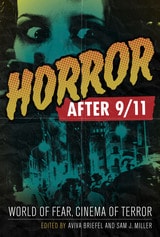
Horror after 9/11
World of Fear, Cinema of TerrorEdited by Aviva Briefel and Sam J. Miller
University of Texas Press, 2011
Horror films have exploded in popularity since the tragic events of September 11, 2001, many of them breaking box-office records and generating broad public discourse. These films have attracted A-list talent and earned award nods, while at the same time becoming darker, more disturbing, and increasingly apocalyptic. Why has horror suddenly become more popular, and what does this say about us? What do specific horror films and trends convey about American society in the wake of events so horrific that many pundits initially predicted the death of the genre? How could American audiences, after tasting real horror, want to consume images of violence on screen?
Horror after 9/11 represents the first major exploration of the horror genre through the lens of 9/11 and the subsequent transformation of American and global society. Films discussed include the Twilight saga; the Saw series; Hostel; Cloverfield; 28 Days Later; remakes of The Texas Chainsaw Massacre, Dawn of the Dead, and The Hills Have Eyes; and many more. The contributors analyze recent trends in the horror genre, including the rise of 'torture porn,' the big-budget remakes of classic horror films, the reinvention of traditional monsters such as vampires and zombies, and a new awareness of visual technologies as sites of horror in themselves. The essays examine the allegorical role that the horror film has held in the last ten years, and the ways that it has been translating and reinterpreting the discourses and images of terror into its own cinematic language.
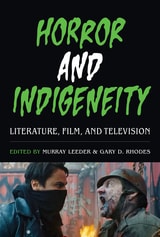
Horror and Indigeneity
Literature, Film, and TelevisionEdited by Murray Leeder and Gary D. Rhodes
University of Texas Press, 2026
A collection of essays about Indigeneity and horror in cinema, literature, and beyond.
How did Indigeneity come to be horrifying? Think of the “Indian burial ground” trope, a staple of 1970s horror cinema, not to mention decades of Western films and fictions that made “savage Indians” the face of fear in popular culture. Can horror do something else in the hands of Indigenous people? Creators such as Eden Robinson and Jeff Barnaby have self-consciously turned to horror to tell new kinds of stories, stories that question who is a monster and what constitutes the monstrous.
Horror and Indigeneity explores representations of Indigenous people in settler horror texts and in the growing corpus of horror by Indigenous writers and filmmakers. Widely spanning time periods and media, the contributors to this edited volume address themes such as cannibalism, eco-horror, historical trauma, and contemporary antiracism as they relate to classical horror cinema and recent works such as The Dead Can’t Dance, Lovecraft Country, and Stephen Graham Jones’s The Only Good Indians. Also featuring interviews with Jones and director T. J. Cuthand, Horror and Indigeneity rethinks the terror of the Other in potent and provocactive terms.
Horror to the Extreme
Changing Boundaries in Asian CinemaEdited by Jinhee Choi and Mitsuyo Wada-Marciano
Hong Kong University Press, 2009
Hot Feet and Social Change
African Dance and Diaspora CommunitiesEdited by Kariamu Welsh, Esailama Diouf, and Yvonne Daniel
University of Illinois Press, 2019
Contributors: Ausettua Amor Amenkum, Abby Carlozzo, Steven Cornelius, Yvonne Daniel, Charles “Chuck” Davis, Esailama G. A. Diouf, Indira Etwaroo, Habib Iddrisu, Julie B. Johnson, C. Kemal Nance, Halifu Osumare, Amaniyea Payne, William Serrano-Franklin, and Kariamu Welsh
Hot Wind, Boiling Rain
Scary Stories for Strong HeartsLynette Ford
Parkhurst Brothers, Inc., 2015
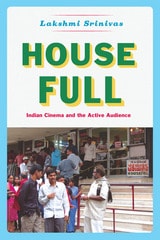
House Full
Indian Cinema and the Active AudienceLakshmi Srinivas
University of Chicago Press, 2016
With House Full, Lakshmi Srinivas takes readers deep into the moviegoing experience in India, showing us what it’s actually like to line up for a hot ticket and see a movie in a jam-packed theater with more than a thousand seats. Building her account on countless trips to the cinema and hundreds of hours of conversation with film audiences, fans, and industry insiders, Srinivas brings the moviegoing experience to life, revealing a kind of audience that, far from passively consuming the images on the screen, is actively engaged with them. People talk, shout, whistle, cheer; others sing along, mimic, or dance; at times audiences even bring some of the ritual practices of Hindu worship into the cinema, propitiating the stars onscreen with incense and camphor. The picture Srinivas paints of Indian filmgoing is immersive, fascinating, and deeply empathetic, giving us an unprecedented understanding of the audience’s lived experience—an aspect of Indian film studies that has been largely overlooked.
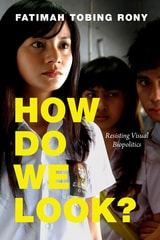
How Do We Look?
Resisting Visual BiopoliticsFatimah Tobing Rony
Duke University Press, 2022
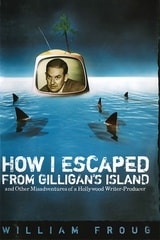
How I Escaped from Gilligan's Island
And Other Misadventures of a Hollywood Writer-ProducerWilliam Froug
University of Wisconsin Press, 2005
In the early 1950s writers were leaving radio en masse to try their hand at another promising medium—television. William Froug was in the thick of that exodus, a young man full of ideas in a Hollywood bursting with opportunities. In his forty-year career Froug would write and/or produce many of the shows that America has grown up with. From the drama of Playhouse 90 and the mind-bending premises of The Twilight Zone to the escapist scenarios of Adventures in Paradise, Gilligan’s Island, Bewitched, and Charlie’s Angels, Froug played a role in shaping his trade. He crossed paths with some of the memorable personalities in the industry, including Jack Benny, Lucille Ball, Agnes Moorehead, Elizabeth Montgomery, Robert Blake, Rod Serling, Gene Roddenberry, Aaron Spelling, and Sherwood Schwartz.
Froug reveals a post-WWII America giddy with the success of its newest medium—yet sobered at moments by strikes and union politics, McCarthyism and anti-Semitism. It was a world of hastily written scripts, sudden firings, thwarted creativity, and fickle tastes. And yet, while clearly exasperated with many aspects of Hollywood, Froug was a man utterly in his element, his frustration with the industry ultimately eclipsed by his dedication to his craft.
How Scripts are Made
Inga Karetnikova
Southern Illinois University Press, 1990
Inga Karetnikova’s method is that of the art teacher: she asks students to study great works in detail, to analyze them, and then to create their own. She stresses that her examination is "interested only in how the scripts are written and what makes them work, not in a cultural or scholarly examination of them." Karetnikova analyzes eight screenplays—TheGodfather, Rashomon, La Strada, Bicycle Thief, Nosferatu, The Servant, Viridiana, Notorious—anda novel written in screenplay form, Kiss of the Spider Woman. Each serves as an example of a particular aspect of screenplay writing: composing scripts, developing characters, constructing suspense, adapting literature to cinematic space and time, and weaving details and motifs within a script.
Karetnikova urges film students to work on their own screenplays while studying her book, reading the suggested scripts and viewing the films based on them to get the most from her method. She provides a series of exercises for each chapter to help students master the skills of composing and writing film treatments, developing screen stories and their characters, organizing scenes, and writing dialogue. Each of the exercises has worked successfully in her own screenplay-writing classes.
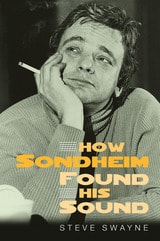
How Sondheim Found His Sound
Steve Swayne
University of Michigan Press, 2010
---Richard Crawford, author of America's Musical Life: A History
"Sondheim's career and music have never been so skillfully dissected, examined, and put in context. With its focus on his work as composer, this book is surprising and welcome."
---Theodore S. Chapin, President and Executive Director, The Rodgers & Hammerstein Organization
"What a fascinating book, full of insights large and small. An impressive analysis and summary of Sondheim's many sources of inspiration. All fans of the composer and lovers of Broadway in general will treasure and frequently refer to Swayne's work."
---Tom Riis, Joseph Negler Professor of Musicology and Director of the American Music Research Center, University of Colorado
Stephen Sondheim has made it clear that he considers himself a "playwright in song." How he arrived at this unique appellation is the subject of How Sondheim Found His Sound---an absorbing study of the multitudinous influences on Sondheim's work.
Taking Sondheim's own comments and music as a starting point, author Steve Swayne offers a biography of the artist's style, pulling aside the curtain on Sondheim's creative universe to reveal the many influences---from classical music to theater to film---that have established Sondheim as one of the greatest dramatic composers of the twentieth century.
Sondheim has spoken often and freely about the music, theater, and films he likes, and on occasion has made explicit references to how past works crop up in his own work. He has also freely acknowledged his eclecticism, seeing in it neither a curse nor a blessing but a fact of his creative life.
Among the many forces influencing his work, Sondheim has readily pointed to a wide field: classical music from 1850 to 1950; the songs of Tin Pan Alley, Broadway, and Hollywood; the theatrical innovations of Oscar Hammerstein II and his collaborators; the cinematic elements found in certain film schools; and the melodramatic style of particular plays and films. Ultimately, Sondheim found his sound by amalgamating these seemingly disparate components into his unique patois.
How Sondheim Found His Sound is the first book to provide an overview of his style and one of only a few to account for these various components, how they appear in Sondheim's work, and how they affect his musical and dramatic choices.
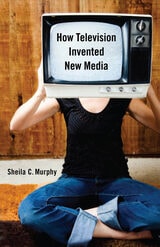
How Television Invented New Media
Murphy, Sheila C
Rutgers University Press, 2011
Now if I just remembered where I put that original TV play device--the universal remote control . . .
Television is a global industry, a medium of representation, an architectural component of space, and a nearly universal frame of reference for viewers. Yet it is also an abstraction and an often misunderstood science whose critical influence on the development, history, and diffusion of new media has been both minimized and overlooked. How Television Invented New Media adjusts the picture of television culturally while providing a corrective history of new media studies itself.
Personal computers, video game systems, even iPods and the Internet built upon and borrowed from television to become viable forms. The earliest personal computers, disguised as video games using TV sets as monitors, provided a case study for television's key role in the emergence of digital interactive devices. Sheila C. Murphy analyzes how specific technologies emerge and how representations, from South Park to Dr. Horrible's Sing-Along-Blog, mine the history of television just as they converge with new methods of the making and circulation of images. Past and failed attempts to link television to computers and the Web also indicate how services like Hulu or Netflix On-Demand can give rise to a new era for entertainment and program viewing online. In these concrete ways, television's role in new and emerging media is solidified and finally recognized.
How to Be an Intellectual in the Age of TV
The Lessons of Gore VidalMarcie Frank
Duke University Press, 2005
Frank highlights the connections between Vidal’s attitudes toward TV, sex, and American politics as they have informed his literary and political writings and screen appearances. She deftly situates his public persona in relation to those of Andy Warhol, Jacqueline Susann, Mary McCarthy, Susan Sontag, and others. By describing Vidal’s shrewd maneuvering between different media, Frank suggests that his career offers a model to aspiring public intellectuals and a refutation to those who argue that electronic media have eviscerated public discourse.
How to Create a Universe
Jakob Ion Wille, Simon Jon Andreasen, and Gunnar Wille
University of Westminster Press, 2025
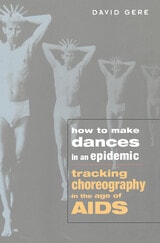
How to Make Dances in an Epidemic
Tracking Choreography in the Age of AIDSDavid Gere
University of Wisconsin Press, 2004
David Gere, who came of age as a dance critic at the height of the AIDS epidemic, offers the first book to examine in depth the interplay of AIDS and choreography in the United States, specifically in relation to gay men. The time he writes about is one of extremes. A life-threatening medical syndrome is spreading, its transmission linked to sex. Blame is settling on gay men. What is possible in such a highly charged moment, when art and politics coincide?
Gere expands the definition of choreography to analyze not only theatrical dances but also the protests conceived by ACT-UP and the NAMES Project AIDS quilt. These exist on a continuum in which dance, protest, and wrenching emotional expression have become essentially indistinguishable. Gere offers a portrait of gay male choreographers struggling to cope with AIDS and its meanings.
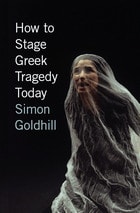
How to Stage Greek Tragedy Today
Simon Goldhill
University of Chicago Press, 2007
In crisp and spirited prose, Goldhill explains how Aeschylus, Euripides, and Sophocles conceived their works in performance and then summarizes everything we know about how their tragedies were actually staged. The heart of his book tackles the six major problems facing any company performing these works today: the staging space and concept of the play; the use of the chorus; the actor’s role in an unfamiliar style of performance; the place of politics in tragedy; the question of translation; and the treatment of gods, monsters, and other strange characters of the ancient world. Outlining exactly what makes each of these issues such a pressing difficulty for modern companies, Goldhill provides insightful solutions drawn from his nimble analyses of some of the best recent productions in the United States, Britain, and Continental Europe.
One of the few experts on both Greek tragedy and contemporary performance, Goldhill uses his unique background and prodigious literary skill to illuminate brilliantly what makes tragedy at once so exciting and so tricky to get right. The result will inspire and enlighten all directors and performers—not to mention the growing audiences—of ancient Greek theater.
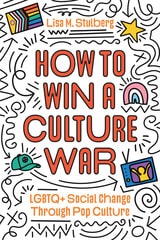
How to Win a Culture War
LGBTQ+ Social Change Through Pop CultureLisa M. Stulberg
University of Chicago Press, 2026
How elite athletes and entertainment industry movers and shakers work to win the culture war for LGBTQ+ social justice.
The unquestionable runaway television hit of late 2025 was Crave/HBO Max’s Heated Rivalry, a show that tells the love story of two queer ice hockey players. This show—and the wider social context around it—would have been unthinkable without the courageous writing, art, and advocacy of previous generations of LGBTQ+ people and their allies in the entertainment industry. In How to Win a Culture War, sociologist Lisa M. Stulberg argues that, despite substantial barriers, past and current creatives and athletes are changing American culture through their contributions to arts, sports, and politics.
Stulberg conducted in-depth interviews with 170 culture workers—including television, film, and theater actors and creators; musicians; elite athletes; and activists over the span of 14 years. These include stars such as Will & Grace's Eric McCormack, Orange Is the New Black’s Lea DeLaria, Olympic diver Greg Louganis, and several former NFL players, as well as the TV and movie writers, producers, and directors behind some of pop culture’s boldest moves. These culture makers take six primary steps toward LGBTQ+ social change: they become visible, use available platforms, change their workplaces, overachieve, become normal, and stay queer. In this work, they are opening up the culture, changing hearts and minds, and building community, even amid a fresh round of ruthless political attacks on LGBTQ+ people.
Providing rich behind-the-scenes insight and cultural material, Stulberg outlines an urgently needed playbook for how to win a culture war.
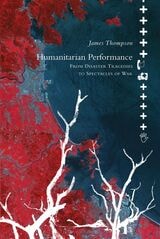
Humanitarian Performance
From Disaster Tragedies to Spectacles of WarJames Thompson
Seagull Books, 2026
A groundbreaking lens on humanitarianism, which reframes global humanitarian responses to war and disaster through performance studies, revealing how aid, media, and public attention transform crisis into spectacle on a world stage.
As the world is challenged by a state of constant conflict and by disasters, both natural and manmade, support communities endeavour through humanitarianism to overcome human suffering and help to build more peaceful and safe futures. Humanitarian Performance argues that the humanitarian project—from its history and rationale to its contemporary practice—can be productively explored through the critical lens of performance studies. Using the outpouring of international support for projects to benefit survivors of the Asian tsunami, the War in Kosovo, and the crisis in Darfur as case studies, this timely volume explores humanitarian attention to these narratives and the stories of tragedy and survival that emerge. With the peculiar focus and international audiences that the media brings to local tragedies, these contemporary disasters—and the humanitarianism that they elicit—become a performance on the world stage.
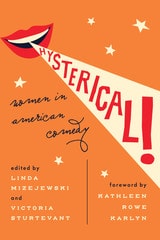
Hysterical!
Women in American ComedyEdited by Linda Mizejewski and Victoria Sturtevant; foreword by Kathleen Rowe Karlyn
University of Texas Press, 2017
Ideal for classroom use, this anthology of original essays by the leading authorities on women’s comedy surveys the disorderly, subversive, and unruly performances of women comics from silent film to contemporary multimedia
Winner, Susan Koppleman Award for Best Anthology, Multi-Authored, or Edited Book in Feminist Studies, Popular and American Culture Associations (PACA), 2017
Amy Schumer, Samantha Bee, Mindy Kaling, Melissa McCarthy, Tig Notaro, Leslie Jones, and a host of hilarious peers are killing it nightly on American stages and screens large and small, smashing the tired stereotype that women aren’t funny. But today’s funny women aren’t a new phenomenon—they have generations of hysterically funny foremothers. Fay Tincher’s daredevil stunts, Mae West’s linebacker walk, Lucille Ball’s manic slapstick, Carol Burnett’s athletic pratfalls, Ellen DeGeneres’s tomboy pranks, Whoopi Goldberg’s sly twinkle, and Tina Fey’s acerbic wit all paved the way for contemporary unruly women, whose comedy upends the norms and ideals of women’s bodies and behaviors.
Hysterical! Women in American Comedy delivers a lively survey of women comics from the stars of the silent cinema up through the multimedia presences of Tina Fey and Lena Dunham. This anthology of original essays includes contributions by the field’s leading authorities, introducing a new framework for women’s comedy that analyzes the implications of hysterical laughter and hysterically funny performances. Expanding on previous studies of comedians such as Mae West, Moms Mabley, and Margaret Cho, and offering the first scholarly work on comedy pioneers Mabel Normand, Fay Tincher, and Carol Burnett, the contributors explore such topics as racial/ethnic/sexual identity, celebrity, stardom, censorship, auteurism, cuteness, and postfeminism across multiple media. Situated within the main currents of gender and queer studies, as well as American studies and feminist media scholarship, Hysterical! masterfully demonstrates that hysteria—women acting out and acting up—is a provocative, empowering model for women’s comedy.