Results by title
4127 books match the query 'Science' and 129 start with h
High Plains Horticulture
A HistoryJohn F. Freeman
University Press of Colorado, 2008
High-Energy Radiation from Magnetized Neutron Stars
Peter Mészáros
University of Chicago Press, 1992
Higher and Colder
A History of Extreme Physiology and ExplorationVanessa Heggie
University of Chicago Press, 2019
Unlike most books on modern biomedicine, Higher and Colder focuses on fieldwork, expeditions, and exploration, and in doing so provides a welcome alternative to laboratory-dominated accounts of the history of modern life sciences. Though centered on male-dominated practices—science and exploration—it recovers the stories of women’s contributions that were sometimes accidentally, and sometimes deliberately, erased. Engaging and provocative, this book is a history of the scientists and physiologists who face challenges that are physically demanding, frequently dangerous, and sometimes fatal, in the interest of advancing modern science and pushing the boundaries of human ability.
Highland Sanctuary
Environmental History in Tanzania’s Usambara MountainsChristopher A. Conte
Ohio University Press, 2004
Hijacked Brains
The Experience and Science of Chronic AddictionHenrietta Robin Barnes
Dartmouth College Press, 2015
Historic Illinois from the Air
David Buisseret
University of Chicago Press, 1990

Historical Atlases
The First Three Hundred Years, 1570-1870Walter Goffart
University of Chicago Press, 2003
Beginning in the sixteenth century, and continuing down to the late nineteenth, Walter Goffart discusses milestones in the origins of historical atlases as well as individual maps illustrating historical events in alternating, paired chapters. He focuses on maps of the medieval period because the development of maps for history hinged particularly on portrayals of this segment of the postclassical, "modern" past. Goffart concludes the book with a detailed catalogue of more than 700 historical maps and atlases produced from 1570 to 1870.
Historical Atlases will immediately take its place as the single most important reference on its subject. Historians of cartography, medievalists, and anyone seriously interested in the role of maps in portraying history will find it invaluable.

Historical and Philosophical Perspectives of Science
Roger H. Stuewer, Editor
University of Minnesota Press, 1970
Historical and Philosophical Perspectives of Science was first published in 1970. Minnesota Archive Editions uses digital technology to make long-unavailable books once again accessible, and are published unaltered from the original University of Minnesota Press editions.
The series of essays published in this book, which is Volume V of the Minnesota Studies in the Philosophy of Science, are (with the exception of two essays) based on papers presented or discussed at a conference devoted to exploring the relationships between the history and the philosophy of science, held at the University of Minnesota in the fall of 1969. In a forward Peter Caws notes that the conference grew out of the deliberations of subcommittee of the U.S. National Committee for the International Union of History and Philosophy of Science.
The contributors are Herbert Feigl, Ernan McMullin, Wesley C. Salmon, Peter Archinstein, Arnold Thackray, Mary Hesse, Edward Rosen, Paul K. Feyerabend, Erwin N. Hiebert, Gerd Buchdahl, Roger H. Stuewer, Howard Stein, and Kenneth F. Schaffner. Some of the papers draw philosophical conclusions from examples in the history of science; others point out the significance of philosophical insights for a study of the history of science; still others explore special aspects of the history or philosophy of science.
Historicity of Nature
Essays on Science and TheologyWolfhart Pannenberg
Templeton Press, 2008
Known as one of the most outstanding theologians of the twentieth century, Wolfhart Pannenberg is also considered a great interdisciplinary thinker. Now, essays and articles on science and theology that are central to understanding Pannenberg's theories have been collected into one volume.
Niels Henrik Gregersen, a former student of Pannenberg and now professor of systematic theology at Copenhagen University, has compiled the writings in four sections: Methodology, Creation and Nature's Historicity, Religion and Anthropology, and Meaning and Metaphysics. Included in this volume are:
•Translations of Pannenberg's principled argument for the consonance between science and religion, including contingency and laws of nature, field theories and space-time, and divine action•Translations of Pannenberg's theory of theology as a rational hypothetical science, including his discussions with leading British and American scholars such as A. N. Whitehead, John Cobb, and Langdon Gilkey
•Previously unpublished articles on the problems between science and theology in the course of modern history, explaining why chance may be more important for theology than design
•Translations of seminal articles that articulate Pannenberg's understanding of the role of religion in human nature
•One of the few theological articles on aggression as a psychological and social phenomenon
With this collection, the essays of this important contemporary theologian and his illuminating views are presented in one convenient volume.
Histories of Scientific Observation
Edited by Lorraine Daston and Elizabeth Lunbeck
University of Chicago Press, 2010
Observation is the most pervasive and fundamental practice of all the modern sciences, both natural and human. Its instruments include not only the naked senses but also tools such as the telescope and microscope, the questionnaire, the photographic plate, the notebook, the glassed-in beehive, and myriad other ingenious inventions designed to make the invisible visible, the evanescent permanent, the abstract concrete. Yet observation has almost never been considered as an object of historical inquiry in itself. This wide-ranging collection offers the first examination of the history of scientific observation in its own right, as both epistemic category and scientific practice.
Histories of Scientific Observation features engaging episodes drawn from across the spectrum of the natural and human sciences, ranging from meteorology, medicine, and natural history to economics, astronomy, and psychology. The contributions spotlight how observers have scrutinized everything—from seaweed to X-ray radiation, household budgets to the emotions—with ingenuity, curiosity, and perseverance verging on obsession. This book makes a compelling case for the significance of the long, surprising, and epistemologically significant history of scientific observation, a history full of innovations that have enlarged the possibilities of perception, judgment, and reason.
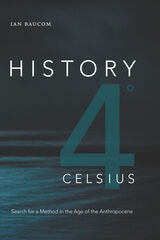
History 4° Celsius
Search for a Method in the Age of the AnthropoceneIan Baucom
Duke University Press, 2020
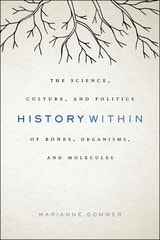
History Within
The Science, Culture, and Politics of Bones, Organisms, and MoleculesMarianne Sommer
University of Chicago Press, 2016
Our interpretation of gene sequences, like our interpretation of other historical evidence, inevitably tells a story laden with political and moral values. Focusing on the work of Henry Fairfield Osborn, Julian Sorell Huxley, and Luigi Luca Cavalli-Sforza in paleoanthropology, evolutionary biology, and human population genetics, History Within asks how the sciences of human origins, whether through the museum, the zoo, or the genetics lab, have shaped our idea of what it means to be human. How have these biologically based histories influenced our ideas about nature, society, and culture? As Marianne Sommer shows, the stories we tell about bones, organisms, and molecules often change the world.

History and the Climate Crisis
Environmental History in the ClassroomKate Hawkey
University College London, 2023
History education has a key contribution to make in developing a deeper understanding of the current environmental crisis, but its role is too often overlooked. When embedded in the school curriculum, environmental history adds crucial layers of knowledge to the learning from other subjects and can enable students to make their own informed contributions to one of the most pressing concerns of the twenty-first century.
History and the Climate Crisis provides much-needed environmental knowledge, an area that is new for most history teachers. The author considers the disciplinary and pedagogical challenges and demonstrates how including an environmental focus can strengthen students’ disciplinary knowledge. She also builds her argument through many examples and offers practical strategies for use in classrooms, including developed inquiries suitable for the secondary history curriculum. The book focuses on environmental history within a strong subject-bound curriculum and will be relevant to teachers, academics, and policymakers in the United Kingdom and internationally.
History as Art and as Science
Twin Vistas on the PastH. Stuart Hughes
University of Chicago Press, 1975
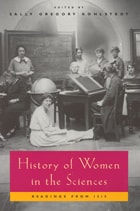
History of Women in the Sciences
Readings from IsisEdited by Sally Gregory Kohlstedt
University of Chicago Press, 2000
This book features some of the most influential and pioneering studies of women in the sciences, with a special focus on patterns of education, access, barriers, and opportunities for women's work in science. Spanning the 17th through the 20th centuries, the book demonstrates the meaning and power of gender experienced by women in the sciences.
Individual chapters focus on exceptional women whose unusual initiativee and particular circumstance led them to engage in science: Laura Bassi, Nettie Stevens, Maria Winkelmann, and others. Chapters on women's access to science discuss collaboration with family members in the domestic sphere, the impact of primers and popular science writing, and formal education in public schools and advanced research institutions. There are examinations of the reasons for clusters of women working in "female friendly" sciences such as botany and physiology in the 19th century and astronomy in the U.S. during the early 20th century.
This important and useful book provides a thoughtful and detailed overview for scholars and students in the history of science, as well as for feminist historians, scientists, and others who who want a comparative and historical analysis of women in the sciences.
Contributors include Janet Browne, Paula Findlen, Peggy Aldrich Kidwell, Ann Hibner Koblitz, M. Susan Lindee, Carolyn Merchant, Margaret W. Rossiter, Londa Schiebinger, Nancy Leys Stepan, and Deborah Jean Warner.

History of the Chemical Laboratory of the University of Michigan, 1856-1916
Edward D. Campbell
University of Michigan Press, 1916
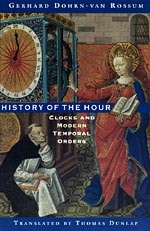
History of the Hour
Clocks and Modern Temporal OrdersGerhard Dohrn-van Rossum
University of Chicago Press, 1996
"In tracing the evolution of time consciousness with scholarship and skill . . . Dohrn-van Rossum evokes the many ways that the small moments of life have come to be reckoned with the passage of time."—Dava Sobel, Civilization
"Dohrn-van Rossum paints a highly nuanced picture of time's conquest of modern life."—Steven Lagerfeld, Wilson Quarterly
"This book is definitive in showing the clock's pervasive influence over European society."—Virginia Quarterly Review
"[A] delightful, excellently translated history."—Choice
"Dohrn-van Rossum has produced a persuasive and brilliantly documented new understanding of how modern time-consciousness arose."—Owen Gingerich, Nature

Hitler's Geographies
The Spatialities of the Third ReichEdited by Paolo Giaccaria and Claudio Minca
University of Chicago Press, 2016
With Hitler’s Geographies, editors Paolo Giaccaria and Claudio Minca examine the variety of ways in which spatial theory evolved and was translated into real-world action under the Third Reich. They have gathered an outstanding collection by leading scholars, presenting key concepts and figures as well exploring the undeniable link between biopolitical power and spatial expansion and exclusion.
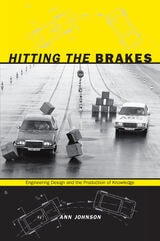
Hitting the Brakes
Engineering Design and the Production of KnowledgeAnn Johnson
Duke University Press, 2009
The development of antilock braking systems (ABS) provides an ideal case study for examining the process of engineering design because it presented an array of common difficulties faced by engineers in research and development. ABS did not develop predictably. Research and development took place in both the public and private sectors and involved individuals working in different disciplines, languages, institutions, and corporations. Johnson traces ABS development from its first patents in the 1930s to the successful 1978 market introduction of integrated ABS by Daimler and Bosch. She examines how a knowledge community first formed around understanding the phenomenon of skidding, before it turned its attention to building instruments to measure, model, and prevent cars’ wheels from locking up. While corporations’ accounts of ABS development often present a simple linear story, Hitting the Brakes describes the full social and cognitive complexity and context of engineering design.
Holding On to Reality
The Nature of Information at the Turn of the MillenniumAlbert Borgmann
University of Chicago Press, 1999
"[Borgmann] has offered a stunningly clear definition of information in Holding On to Reality. . . . He leaves room for little argument, unless one wants to pose the now vogue objection: I guess it depends on what you mean by nothing."—Paul Bennett, Wired
"A superb anecdotal analysis of information for a hype-addled age."—New Scientist
"This insightful and poetic reflection on the changing nature of information is a wonderful antidote to much of the current hype about the 'information revolution.' Borgmann reminds us that whatever the reality of our time, we need 'a balance of signs and things' in our lives."—Margaret Wertheim, LA Weekly
Holistic Darwinism
Synergy, Cybernetics, and the Bioeconomics of EvolutionPeter Corning
University of Chicago Press, 2005
Homesick
Nicholas Shapiro
Duke University Press, 2025
Hope for a Heated Planet
How Americans Are Fighting Global Warming and Building a Better FutureMusil, Robert K
Rutgers University Press, 2009
Musil draws on personal experience and compelling data in this practical and rigorous analysis of the causes and cures for global warming. The book presents all the players in the most pressing challenge facing society today, from the massive fossil fuel lobby to the enlightened corporations that are joining the movement to "go green." Musil thoroughly explains the tremendous potential of renewable energy sources-wind, solar, and biofuel-and the startling conclusions of experts who say society can do away entirely with fossil fuels. He tells readers about the engaged politicians, activists, religious groups, and students who are already working together against climate change.
But the future depends, Musil insists, on what changes ordinary citizens make. Through personal choices and political engagement, he shows how readers can cut carbon emissions and create green communities where they live. With practical and realistic solutions, Hope for a Heated Planet inspires readers to be accountable and enables them to usher in an age of sustainability for future generations.
Hope on Earth
A ConversationPaul R. Ehrlich and Michael Charles Tobias
University of Chicago Press, 2014
Both Ehrlich and Tobias argue that we are on the verge of environmental catastrophe, as the human population continues to grow without restraint and without significant attempts to deal with overconsumption and the vast depletion of resources and climate problems it creates. Though their views are sympathetic, they differ in their approach and in some key moral stances, giving rise to a heated and engaging dialogue that opens up dozens of new avenues of exploration. They both believe that the impact of a human society on its environment is the direct result of its population size, and through their dialogue they break down the complex social problems that are wrapped up in this idea and attempts to overcome it, hitting firmly upon many controversial topics such as circumcision, religion, reproduction, abortion, animal rights, diet, and gun control. For Ehrlich and Tobias, ethics involve not only how we treat other people directly, but how we treat them and other organisms indirectly through our effects on the environment. University of California, Berkeley professor John Harte joins the duo for part of the conversation, and his substantial expertise on energy and climate change adds a crucial perspective to the discussion of the impact of population on global warming.
This engaging and timely book invites readers into an intimate conversation with some of the most eminent voices in science as they offer a powerful and approachable argument that the ethical and scientific issues involved in solving our environmental crisis are deeply intertwined, while offering us an optimistic way forward. Hope on Earth is indeed a conversation we should all be having.
Horizons of Cosmology
Joseph Silk
Templeton Press, 2009
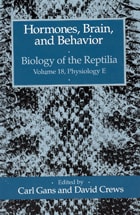
Hormones, Brain, and Behavior
Edited by Carl Gans and David Crews
University of Chicago Press, 1992
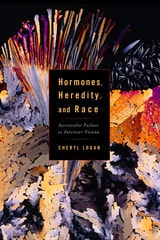
Hormones, Heredity, and Race
Spectacular Failure in Interwar ViennaCheryl A. Logan
Rutgers University Press, 2013
Paul Kammerer had spent years gathering zoological evidence on whether environmental change could alter heredity, using his research as the scientific foundation for a new kind of eugenics—one that challenged the racism growing in mainstream eugenics. By 1918, he drew on the pioneering research of two colleagues who studied how secretions shaped sexual attributes to argue that hormones could alter genes. After 1920, Julius Tandler employed a similar concept to restore the health and well-being of Vienna's war-weary citizens. Both men rejected the rigidly acting genes of the new genetics and instead crafted a biology of flexible heredity to justify eugenic reforms that respected human rights. But the interplay of science and personality with the social and political rise of fascism and with antisemitism undermined their ideas, leading to their spectacular failure.
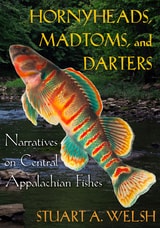
Hornyheads, Madtoms, and Darters
Narratives on Central Appalachian FishesStuart A. Welsh
Ohio University Press, 2023
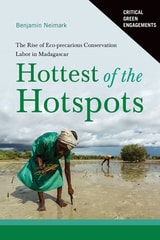
Hottest of the Hotspots
The Rise of Eco-precarious Conservation Labor in MadagascarBenjamin Neimark
University of Arizona Press, 2023
This book details the rollout of market conservation programs, including the finding of drugs from nature—or “bioprospecting”—biodiversity offsetting, and the selling of blue carbon credits from mangroves. It documents the tensions that exist at the local level, as many of these programs incorporate populations highly dependent on the same biodiversity now turned into global commodities for purposes of saving it. Proponents of market conservation mobilize groups of ecologically precarious workers, or the local “eco-precariat,” who do the hidden work of collecting and counting species, monitoring and enforcing the vital biodiversity used in everything from drug discovery to carbon sequestration and large mining company offsets.
Providing a voice for those community workers many times left out of environmental policy discussions, this volume proposes critiques that aim to build better conservation interventions with perspectives of the local eco-precariat.
Houston, We Have a Narrative
Why Science Needs StoryRandy Olson
University of Chicago Press, 2015
That’s a huge mistake, says Randy Olson: Hollywood has a lot to teach scientists about how to tell a story—and, ultimately, how to do science better. With Houston, We Have a Narrative, he lays out a stunningly simple method for turning the dull into the dramatic. Drawing on his unique background, which saw him leave his job as a working scientist to launch a career as a filmmaker, Olson first diagnoses the problem: When scientists tell us about their work, they pile one moment and one detail atop another moment and another detail—a stultifying procession of “and, and, and.” What we need instead is an understanding of the basic elements of story, the narrative structures that our brains are all but hardwired to look for—which Olson boils down, brilliantly, to “And, But, Therefore,” or ABT. At a stroke, the ABT approach introduces momentum (“And”), conflict (“But”), and resolution (“Therefore”)—the fundamental building blocks of story. As Olson has shown by leading countless workshops worldwide, when scientists’ eyes are opened to ABT, the effect is staggering: suddenly, they’re not just talking about their work—they’re telling stories about it. And audiences are captivated.
Written with an uncommon verve and enthusiasm, and built on principles that are applicable to fields far beyond science, Houston, We Have a Narrative has the power to transform the way science is understood and appreciated, and ultimately how it’s done.
How Animals Grieve
Barbara J. King
University of Chicago Press, 2013
How Climate Change Comes to Matter
The Communal Life of FactsCandis Callison
Duke University Press, 2014
The disparate efforts of these groups illuminate the challenge of maintaining fidelity to scientific facts while transforming them into ethical and moral calls to action. Callison investigates the different vernaculars through which we understand and articulate our worlds, as well as the nuanced and pluralistic understandings of climate change evident in different forms of advocacy. As she demonstrates, climate change offers an opportunity to look deeply at how issues and problems that begin in a scientific context come to matter to wide publics, and to rethink emerging interactions among different kinds of knowledge and experience, evolving media landscapes, and claims to authority and expertise.
How Does Germline Regenerate?
Kate MacCord
University of Chicago Press, 2024
Scientists have long held that we have two kinds of cells—germ and soma. Make a change to germ cells—say using genome editing—and that change will appear in the cells of future generations. Somatic cells are “safe” after such tampering; modify your skin cells, and your future children’s skin cells will never know. And, while germ cells can give rise to new generations (including all of the somatic cells in a body), somatic cells can never become germ cells. How did scientists discover this relationship and distinction between somatic and germ cells—the so-called Weismann Barrier—and does it actually exist? Can somatic cells become germ cells in the way germ cells become somatic cells? That is, can germ cells regenerate from somatic cells even though conventional wisdom denies this possibility? Covering research from the late nineteenth century to the 2020s, historian and philosopher of science Kate MacCord explores how scientists came to understand and accept the dubious concept of the Weismann Barrier and what profound implications this convenient assumption has for research and policy, from genome editing to stem cell research, and much more.
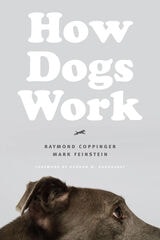
How Dogs Work
Raymond Coppinger and Mark Feinstein
University of Chicago Press, 2015
Approaching dogs as a biological species rather than just as pets, Coppinger and Feinstein accessibly synthesize decades of research and field experiments to explain the evolutionary foundations underlying dog behaviors. They examine the central importance of the shape of dogs: how their physical body (including the genes and the brain) affects behavior, how shape interacts with the environment as animals grow, and how all of this has developed over time. Shape, they tell us, is what makes a champion sled dog or a Border collie that can successfully herd sheep. Other chapters in How Dogs Work explore such mysteries as why dogs play; whether dogs have minds, and if so what kinds of things they might know; why dogs bark; how dogs feed and forage; and the influence of the early relationship between mother and pup. Going far beyond the cozy lap dog, Coppinger and Feinstein are equally fascinated by what we can learn from the adaptations of dogs, wolves, coyotes, jackals, dingoes, and even pumas in the wild, as well as the behavior of working animals like guarding and herding dogs.
We cherish dogs as family members and deeply value our lengthy companionship with them. But, isn’t it time we knew more about who Fido and Trixie really are? How Dogs Work will provide some keys to unlocking the origins of many of our dogs' most common, most puzzling, and most endearing behaviors.
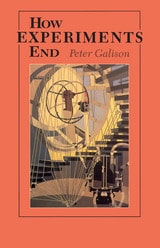
How Experiments End
Peter Galison
University of Chicago Press, 1987
"Anyone who is seriously concerned with understanding how research is done should read this. There have been many books on one or another part of its subject matter but few giving such insights into how the research is done and how the consensus of discovery is arrived at."—Frank Close, New Scientist
"[Galison] is to be congratulated on producing a masterpiece in the field."—Michael Redhead, Synthese
"How Experiments End is a major historical work on an exciting topic."—Andy Pickering, Isis
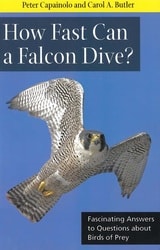
How Fast Can A Falcon Dive?
Fascinating Answers to Questions about Birds of PreyCapainolo, Peter
Rutgers University Press, 2010
From stories of red-tailed hawks making their homes on the ledges of Manhattan skyscrapers to their role in protecting California's vineyards from flocks of grape-loving starlings, How Fast Can a Falcon Dive? explores how these avian predators interact with people and with their environment.
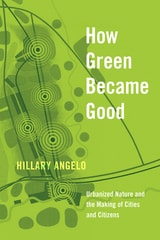
How Green Became Good
Urbanized Nature and the Making of Cities and CitizensHillary Angelo
University of Chicago Press, 2021
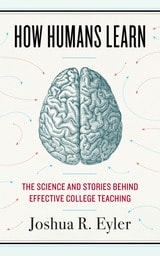
How Humans Learn
The Science and Stories behind Effective College TeachingJoshua R. Eyler
West Virginia University Press, 2018
Even on good days, teaching is a challenging profession. One way to make the job of college instructors easier, however, is to know more about the ways students learn. How Humans Learn aims to do just that by peering behind the curtain and surveying research in fields as diverse as developmental psychology, anthropology, and cognitive neuroscience for insight into the science behind learning.
The result is a story that ranges from investigations of the evolutionary record to studies of infants discovering the world for the first time, and from a look into how our brains respond to fear to a reckoning with the importance of gestures and language. Joshua R. Eyler identifies five broad themes running through recent scientific inquiry—curiosity, sociality, emotion, authenticity, and failure—devoting a chapter to each and providing practical takeaways for busy teachers. He also interviews and observes college instructors across the country, placing theoretical insight in dialogue with classroom experience.

How Knowledge Moves
Writing the Transnational History of Science and TechnologyEdited by John Krige
University of Chicago Press, 2019
This specialized knowledge is located at multiple sites and moves across borders via a dazzling array of channels, embedded in heads and hands, in artifacts, and in texts. In the United States, it shapes policies for visas, export controls, and nuclear weapons proliferation; in Algeria, it enhances the production of oranges by colonial settlers; in Vietnam, it facilitates the exploitation of a river delta. In India it transforms modes of agricultural production. It implants American values in Latin America. By concentrating on the conditions that allow for knowledge movement, these essays explore travel and exchange in face-to-face encounters and show how border-crossings mobilize extensive bureaucratic technologies.
How Large Is God
The Voices of Scientists and TheologiansJohn Marks Templeton
Templeton Press, 1998
This new collection of essays reveals how very little we know about God and fundamental spiritual principles. In recent years, scientific research has revealed that the universe is staggering in size and intricacy, and some scientists are now suggesting that our definition of God is much too small. Nine distinguished scholars and scientists present their varied views on the dimensions of God.
Edited by philanthropist John Marks Templeton, this fascinating and challenging book continues the exploration of theological and philosophical implications of the momentous and accelerating scientific discoveries of our times.
How Life Began
Evolution's Three GenesesAlexandre Meinesz
University of Chicago Press, 2008
How Life Began elucidates three origins, or geneses, of life—bacteria, nucleated cells, and multicellular organisms—and shows how evolution has sculpted life to its current biodiversity through four main events—mutation, recombination, natural selection, and geologic cataclysm. As an ecologist who specializes in algae, the first organisms to colonize Earth, Meinesz brings a refreshingly novel voice to the history of biodiversity and emphasizes here the role of unions in organizing life. For example, the ingestion of some bacteria by other bacteria led to mitochondria that characterize animal and plant cells, and the chloroplasts of plant cells.
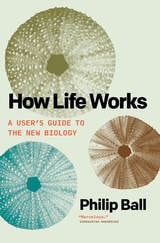
How Life Works
A User’s Guide to the New BiologyPhilip Ball
University of Chicago Press, 2023
“Ball’s marvelous book is both wide-ranging and deep. . . . I could not put it down.”—Siddhartha Mukherjee, author of The Song of the Cell and the Pulitzer Prize–winning The Emperor of All Maladies
A new, cutting-edge vision of biology that revises our understanding of what life itself is, how to enhance it, and what possibilities it offers.
Biology is undergoing a quiet but profound transformation. Several aspects of the standard picture of how life works—the idea of the genome as a blueprint, of genes as instructions for building an organism, of proteins as precisely tailored molecular machines, of cells as entities with fixed identities, and more—have been exposed as incomplete, misleading, or wrong.
In How Life Works, Philip Ball explores the new biology, revealing life to be a far richer, more ingenious affair than we had guessed. Ball explains that there is no unique place to look for an answer to this question: life is a system of many levels—genes, proteins, cells, tissues, and body modules such as the immune system and the nervous system—each with its own rules and principles. How Life Works explains how these levels operate, interface, and work together (most of the time).
With this knowledge come new possibilities. Today we can redesign and reconfigure living systems, tissues, and organisms. We can reprogram cells, for instance, to carry out new tasks and grow into structures not seen in the natural world. As we discover the conditions that dictate the forms into which cells organize themselves, our ability to guide and select the outcomes becomes ever more extraordinary. Some researchers believe that ultimately we will be able to regenerate limbs and organs, and perhaps even create new life forms that evolution has never imagined.
Incorporating the latest research and insights, How Life Works is a sweeping journey into this new frontier of the life sciences, a realm that will reshape our understanding of life as we know it.
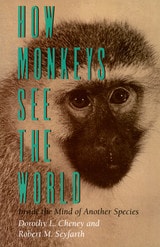
How Monkeys See the World
Inside the Mind of Another SpeciesDorothy L. Cheney and Robert M. Seyfarth
University of Chicago Press, 1990
"This reviewer had to be restrained from stopping people in the street to urge them to read it: They would learn something of the way science is done, something about how monkeys see their world, and something about themselves, the mental models they inhabit."—Roger Lewin, Washington Post Book World
"A fascinating intellectual odyssey and a superb summary of where science stands."—Geoffrey Cowley, Newsweek
"A once-in-the-history-of-science enterprise."—Duane M. Rumbaugh, Quarterly Review of Biology

How Oceans Become
Histories and Futures of the High Seas and Deep OceansThomas Brandt, Knut Ove Eliassen, Mats Ingulstad, Gard Paulsen
University of Chicago Press, 0
An anthology grounded in the idea that oceans are human realities, shaped by human interests, interactions, and technologies.
Historically and geographically diverse, oceans exist in the plural. Oceans become oceans through how they are represented, what resources they are deemed to hold, and the regulatory governance to which they are subjected. These are the three key components of “ocean making” this volume employs to shed light on the complex issues facing ocean governance today.
The anthology reaches back to the oceans of the early modern European expansion and up to the current concerns of anthropogenic changes and resource depletion. Chapters address activities and regulatory concerns regarding maritime transport, fisheries, deep-sea mining, wave energy, and whaling, and span from the southern oceans around Antarctica to the current shedding of the icy mantle of the Arctic Ocean. By drawing together scholars from a wide range of disciplines—including history, comparative literature, media studies, political science, law, and anthropology—How Oceans Become opens a multi-layered, interdisciplinary approach to studying the oceans’ entanglements with human cultures and societies.
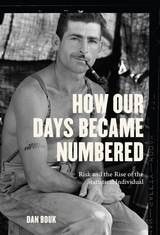
How Our Days Became Numbered
Risk and the Rise of the Statistical IndividualDan Bouk
University of Chicago Press, 2015
How Our Days Became Numbered tells a story of corporate culture remaking American culture--a story of intellectuals and professionals in and around insurance companies who reimagined Americans' lives through numbers and taught ordinary Americans to do the same. Making individuals statistical did not happen easily. Legislative battles raged over the propriety of discriminating by race or of smoothing away the effects of capitalism's fluctuations on individuals. Meanwhile, debates within companies set doctors against actuaries and agents, resulting in elaborate, secretive systems of surveillance and calculation.
Dan Bouk reveals how, in a little over half a century, insurers laid the groundwork for the much-quantified, risk-infused world that we live in today. To understand how the financial world shapes modern bodies, how risk assessments can perpetuate inequalities of race or sex, and how the quantification and claims of risk on each of us continue to grow, we must take seriously the history of those who view our lives as a series of probabilities to be managed.
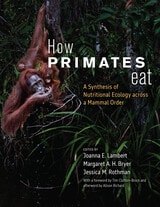
How Primates Eat
A Synthesis of Nutritional Ecology across a Mammal OrderEdited by Joanna E. Lambert, Margaret A. H. Bryer, and Jessica M. Rothman
University of Chicago Press, 2024
What do we mean when we say that a diet is nutritious? Why can some animals get all the energy they need from eating leaves while others would perish on such a diet? Why don’t mountain gorillas eat fruit all day as chimpanzees do? Answers to these questions about food and feeding are among the many tasty morsels that emerge from this authoritative book. Informed by the latest scientific tools and millions of hours of field and laboratory work on species across the primate order and around the globe, this volume is an exhaustive synthesis of our understanding of what, why, and how primates eat. State-of-the-art information presented at physiological, behavioral, ecological, and evolutionary scales will serve as a road map for graduate students, researchers, and practitioners as they work toward a holistic understanding of life as a primate and the urgent conservation consequences of diet and food availability in a changing world.
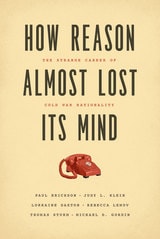
How Reason Almost Lost Its Mind
The Strange Career of Cold War RationalityPaul Erickson, Judy L. Klein, Lorraine Daston, Rebecca Lemov, Thomas Sturm, and Michael D. Gordin
University of Chicago Press, 2013

How Science Enriches Theology
Benedict M. Ashley
St. Augustine's Press, 2012
In a time when the relation of theology to science is in question, due in part to the unwitting fideism of religious fundamentalists and, conversely, as a result of the equally fundamentalist diatribes of the so-called “New Atheists,” How Science Enriches Theology provides a much-needed demonstration of the possibility and necessity for dialogue and integration between the two perspectives or fields of inquiry. Far from being in the unhappy throes of divorce, theology and science must renew their common commitment to the use of reason! This work is written by two formidable thinkers who have each written extensively on the foundations of natural science and related issues – including the inherently evolutionary nature and development of the cosmos. Now they team up to show the fruitful impact of science on theology as a use of reason in the service of Christian faith.
In its philosophical or ‘cenoscopic’ foundations, science can support the truths of monotheistic faith and provide a corrective to both materialist and spiritualist forms of monism. Meanwhile, with the advance of science in the modern sense, the special sciences as ‘ideoscopic,’ we can see not only the traces of God’s existence, but of the Trinitarian nature of God, the Divine Persons of the Godhead, as proposed in Christian faith.
Make no mistake, the authors are sure to uphold the indemonstrability of Christian-specific doctrines, such as the Trinity and the Incarnation; but, with Augustine and Aquinas, they affirm that creation is rife with traces of the divine. The validity of theology does not reduce to the deliverances of the modern sciences, but the latter can undoubtedly aid the person of faith in the “evolution” of his or her theological understanding and embrace of faith as beyond – but not contrary to – reason properly exercised. For example, the immensity and depth of our universe, as indicated alike by relativity theory and quantum theory, along with the biological, chemical, and physical diversity and dynamic stability contained within the universe’s vast limits, enrich our understanding of God the Father. Our universe’s order, uniqueness, and intelligibility suggest how we may better understand the Divine Logos, Jesus Christ. While further the evolution, freedom, and plenitude of the cosmos reveal the character of God the Holy Spirit.
In How Science Enriches Theology, Ashley and Deely present a veritably “theosemiotic picture” of the universe, and one which avoids the naïve reductionisms of mind to matter, culture to society, biology to physics, and cenoscopic to ideoscopic science. But not only do the authors of this stellar book explore the diverse riches of creation’s many nooks and crannies; they do not balk at concluding with the speculative but inevitable question, Where is creation headed?, while also providing a tentative answer to how we might reconcile the inevitable consequences of the Second Law of Thermodynamics with the Book of Revelation’s eschatological promise of a New Heavens and a New Earth.
How Science Takes Stock
The Story of Meta-AnalysisMorton Hunt
Russell Sage Foundation, 1997
How Scientific Practices Matter
Reclaiming Philosophical NaturalismJoseph Rouse
University of Chicago Press, 2002
Rouse begins with a detailed critique of modern thought on naturalism, from Neurath and Heidegger to Charles Taylor, Thomas Kuhn, and W. V. O. Quine. He identifies two constraints central to a philosophically robust naturalism: it must impose no arbitrarily philosophical restrictions on science, and it must shun even the most subtle appeals to mysterious or supernatural forces. Thus a naturalistic approach requires philosophers to show that their preferred conception of nature is what scientific inquiry discloses, and that their conception of scientific understanding is itself intelligible as part of the natural world. Finally, Rouse draws on feminist science studies and other recent work on causality and discourse to demonstrate the crucial role that closer attention to scientific practice can play in reclaiming naturalism.
A bold and ambitious book, How Scientific Practices Matter seeks to provide a viable—yet nontraditional—defense of a naturalistic conception of philosophy and science. Its daring proposals will spark much discussion and debate among philosophers, historians, and sociologists of science.