Results by title
1861 books match the query 'Social life and customs' and 57 start with h
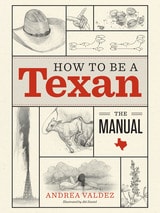
How to Be a Texan
The ManualBy Andrea Valdez
University of Texas Press, 2016
There are certain things every Texan should know how to do and say, whether your Lone Star roots reach all the way back to the 1836 Republic or you were just transplanted here yesterday. Some of these may be second nature to you, but others . . . well, maybe it wouldn’t hurt to have a few handy hints if, say, branding the herd or hosting a tamalada aren’t your usual pastimes. That’s where How to Be a Texan can help.
In a friendly, lighthearted style, Andrea Valdez offers illustrated, easy-to-follow steps for dozens of authentic Texas activities and sayings. In no time, you’ll be talking like a Texan and dressing the part; hunting, fishing, and ranching; cooking your favorite Texas dishes; and dancing cumbia and two-step. You’ll learn how to take a proper bluebonnet photo and build a Día de los Muertos altar, and you’ll have a bucket list of all the places Texans should visit in their lifetime. Not only will you know how to do all these things, you’ll finish the book with a whole new appreciation for what it means to be a Texan and even more pride in saying “I’m from Texas” anywhere you wander in the world.
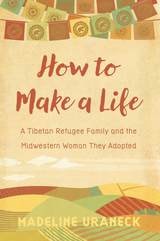
How to Make a Life
A Tibetan Refugee Family and the Midwestern Woman They AdoptedMadeline Uraneck
Wisconsin Historical Society Press, 2018
When Madeline Uraneck said hello to the Tibetan woman cleaning her office cubicle, she never imagined the moment would change her life. After learning that Tenzin Kalsang had left her husband and four children behind in a Tibetan refugee settlement in India to try to forge a better life for them, Madeline took on the task of helping her apply for US visas. When the family reunited in their new Midwestern home, Madeline became swept up in their lives, from homework and soccer games to family dinners and shared holiday traditions. By reaching out, she found more than she bargained for—a family who welcomed her as their own and taught her more than she offered them.
An evocative blend of immersion journalism and memoir, How to Make a Life shares the immigration story of a Tibetan refugee family who crossed real and cultural bridges to make a life in Madison, Wisconsin, with the assistance of the Midwestern woman they befriended. From tales of escaping Tibet over the Himalayas, to striking a balance between old traditions with new, to bridging divides one friendly gesture at a time, readers will expand their understanding of family, culture, and belonging.
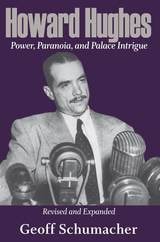
Howard Hughes
Power, Paranoia, and Palace Intrigue, Revised and ExpandedGeoff Schumacher
University of Nevada Press, 2020
Although the public viewed Hughes as a heroic and independent-minded trailblazer, behind closed doors he suffered from germophobia, obsessive-compulsive disorder, and an addiction to painkillers. He became paranoid and reclusive, surrounding himself with a small cadre of loyal caretakers. As executives battled each other over his empire, Hughes’ physical and mental health deteriorated to the point where he lost control of his business affairs.
This second edition includes more insider details on Hughes’ personal interactions with actresses, journalists, and employees. New chapters provide insights into Hughes’s involvement with the mob, his ownership and struggles as the majority shareholder of TWA and the wide-ranging activities of Hughes Aircraft Company, Hughes’s critical role in the Glomar Explorer CIA project (a deep-sea drillship platform built to recover the Soviet submarine K-129), and more. Based on in-depth interviews with individuals who knew and worked with Hughes, this fascinating biography provides a colorful and comprehensive look at Hughes—from his life and career to his final years and lasting influence. This penetrating depiction of the man behind the curtain demonstrates Hughes’s legacy, and enduring impact on popular culture.
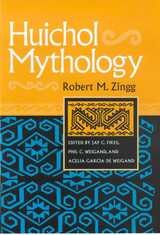
Huichol Mythology
Robert M. Zingg; Edited by Jay C. Fikes, Phil C. Weigand, and Acelia García de Weigand
University of Arizona Press, 2004
Zingg was the first professional anthropologist to study the Huichol, and his generosity toward them and political advocacy on their behalf allowed him to overcome tribal sanctions against divulging secrets to outsiders. He is fondly remembered today by some Huichols who were children when he lived among them. Zingg recognized that the alternation between dry and wet seasons pervades Huichol myth and ritual as it does their subsistence activities, and his arrangement of the texts sheds much light on Huichol tradition. The volume contains both aboriginal myths that attest to the abiding Huichol obligation to serve ancestors who control nature and its processes, and Christian-inspired myths that document the traumatic effect that silver mining and Franciscan missions had on Huichol society.
First published in 1998 in a Spanish-language edition, Huichol Mythology is presented here for the first time in English, with more than 40 original photographs by Zingg accompanying the text. For this volume, the editors provide a meticulous historical account of Huichol society from about 200 A.D. through the colonial era, enabling readers to fully grasp the significance of the myths free of the sensationalized interpretations found in popular accounts of the Huichol. Zingg’s compilation is a landmark work, indispensable to the study of mythology, Mexican Indians, and comparative religion.
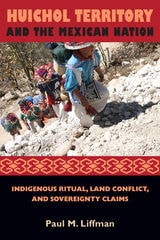
Huichol Territory and the Mexican Nation
Indigenous Ritual, Land Conflict, and Sovereignty ClaimsPaul M. Liffman
University of Arizona Press, 2011
Liffman writes that “the cultural grounds for territorial claims were what the people I wanted to study wanted me to work on.” Based on six years of collaboration with a land-rights organization, interviews, and participant observation in meetings, ceremonies, and extended stays on remote rancherías, Huichol Territory and the Mexican Nation analyzes the sites where people define Huichol territory. The book’s innovative structure echoes Huichols’ own approach to knowledge and examines the nation and state, not just the community. Liffman’s local, regional, and national perspective informs every chapter and expands the toolkit for researchers working with indigenous communities. By describing Huichols’ ceremonially based placemaking to build a theory of “historical territoriality,” he raises provocative questions about what “place” means for native peoples worldwide.
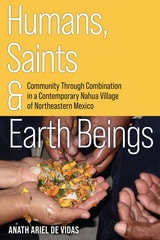
Humans, Saints, and Earth Beings
Community Through Combination in a Contemporary Nahua Village of Northeastern MexicoAnath Ariel De Vidas
University Press of Colorado, 2025
In her work, Ariel de Vidas demonstrates how villagers blend traditional earth-based rituals with Catholic practices, creating a sophisticated system of coexistence between humans and nonhuman entities. These ritual combinations serve as the primary mechanism for social production, cultural continuity, and political authority. The book challenges conventional anthropological binaries of tradition versus modernity and continuity versus acculturation through “thick” ethnographic descriptions that focus on the ethics of coexistence among humans themselves as well as between humans and the peculiar nonhuman inhabitants of their environment.
Originally published in Spanish as Combinar para convivir (2021), Humans, Saints, and Earth Beings contributes to contemporary theoretical discussions about Indigenous ontologies, ritual practice, and social cohesion. It offers crucial insights into how rural communities worldwide might navigate the tensions between maintaining cultural particularities and participating in broader social transformations, making it essential reading for anthropologists, Latin American studies scholars, and anyone interested in Indigenous resilience and adaptation.
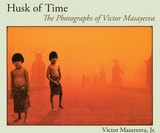
Husk of Time
The Photographs of Victor MasayesvaVictor Masayesva, Jr.; Introduction by Beverly R. Singer
University of Arizona Press, 2006