Results by title
1927 books match the query 'Technology & Engineering' and 65 start with h

How to Communicate in Business
A handbook for engineersDavid Silk
The Institution of Engineering and Technology, 1995
How to Do Things with Sensors
Jennifer Gabrys
University of Minnesota Press, 2019
An investigation of how-to guides for sensor technologies
Sensors are increasingly common within citizen-sensing and DIY projects, but these devices often require the use of a how-to guide. From online instructional videos for troubleshooting sensor installations to handbooks for using and abusing the Internet of Things, the how-to genres and formats of digital instruction continue to expand and develop. As the how-to proliferates, and instructions unfold through multiple aspects of technoscientific practices, Jennifer Gabrys asks why the how-to has become one of the prevailing genres of the digital. How to Do Things with Sensors explores the ways in which things are made do-able with and through sensors and further considers how worlds are made sense-able and actionable through the instructional mode of citizen-sensing projects.
Forerunners: Ideas First
Short books of thought-in-process scholarship, where intense analysis, questioning, and speculation take the lead
How to Lie with Maps
Mark Monmonier
University of Chicago Press, 1996
The second edition is updated with the addition of two new chapters, 10 color plates, and a new foreword by renowned geographer H. J. de Blij. One new chapter examines the role of national interest and cultural values in national mapping organizations, including the United States Geological Survey, while the other explores the new breed of multimedia, computer-based maps.
To show how maps distort, Monmonier introduces basic principles of mapmaking, gives entertaining examples of the misuse of maps in situations from zoning disputes to census reports, and covers all the typical kinds of distortions from deliberate oversimplifications to the misleading use of color.
"Professor Monmonier himself knows how to gain our attention; it is not in fact the lies in maps but their truth, if always approximate and incomplete, that he wants us to admire and use, even to draw for ourselves on the facile screen. His is an artful and funny book, which like any good map, packs plenty in little space."—Scientific American
"A useful guide to a subject most people probably take too much for granted. It shows how map makers translate abstract data into eye-catching cartograms, as they are called. It combats cartographic illiteracy. It fights cartophobia. It may even teach you to find your way. For that alone, it seems worthwhile."—Christopher Lehmann-Haupt, The New York Times
". . . witty examination of how and why maps lie. [The book] conveys an important message about how statistics of any kind can be manipulated. But it also communicates much of the challenge, aesthetic appeal, and sheer fun of maps. Even those who hated geography in grammar school might well find a new enthusiasm for the subject after reading Monmonier's lively and surprising book."—Wilson Library Bulletin
"A reading of this book will leave you much better defended against cheap atlases, shoddy journalism, unscrupulous advertisers, predatory special-interest groups, and others who may use or abuse maps at your expense."—John Van Pelt, Christian Science Monitor
"Monmonier meets his goal admirably. . . . [His] book should be put on every map user's 'must read' list. It is informative and readable . . . a big step forward in helping us to understand how maps can mislead their readers."—Jeffrey S. Murray, Canadian Geographic
How to Lie with Maps, Third Edition
Mark Monmonier
University of Chicago Press, 2018
Fully updated for the digital age, this new edition of How to Lie with Maps examines the myriad ways that technology offers new opportunities for cartographic mischief, deception, and propaganda. While retaining the same brevity, range, and humor as its predecessors, this third edition includes significant updates throughout as well as new chapters on image maps, prohibitive cartography, and online maps. It also includes an expanded section of color images and an updated list of sources for further reading.

Human Factors for Engineers
Carl Sandom
The Institution of Engineering and Technology, 2004
Human Machine Collaboration and Interaction for Smart Manufacturing
Automation, robotics, sensing, artificial intelligence, 5G, IoTs and BlockchainWai Yie Leong
The Institution of Engineering and Technology, 2022

Human Monitoring, Smart Health and Assisted Living
Techniques and technologiesSauro Longhi
The Institution of Engineering and Technology, 2017
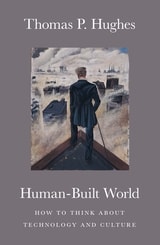
Human-Built World
How to Think about Technology and CultureThomas P. Hughes
University of Chicago Press, 2004
Hughes draws on an enormous range of literature, art, and architecture to explore what technology has brought to society and culture, and to explain how we might begin to develop an "ecotechnology" that works with, not against, ecological systems. From the "Creator" model of development of the sixteenth century to the "big science" of the 1940s and 1950s to the architecture of Frank Gehry, Hughes nimbly charts the myriad ways that technology has been woven into the social and cultural fabric of different eras and the promises and problems it has offered. Thomas Jefferson, for instance, optimistically hoped that technology could be combined with nature to create an Edenic environment; Lewis Mumford, two centuries later, warned of the increasing mechanization of American life.
Such divergent views, Hughes shows, have existed side by side, demonstrating the fundamental idea that "in its variety, technology is full of contradictions, laden with human folly, saved by occasional benign deeds, and rich with unintended consequences." In Human-Built World, he offers the highly engaging history of these contradictions, follies, and consequences, a history that resurrects technology, rightfully, as more than gadgetry; it is in fact no less than an embodiment of human values.

Human-Robot Collaboration
Unlocking the potential for industrial applicationsZoe Doulgeri
The Institution of Engineering and Technology, 2023
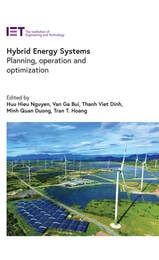
Hybrid Energy Systems
Planning, operation and optimizationHuu Hieu Nguyen
The Institution of Engineering and Technology, 2026

Hydrogen Passivation and Laser Doping for Silicon Solar Cells
Brett Hallam
The Institution of Engineering and Technology, 2021

Hydrogen Production, Separation and Purification for Energy
Angelo Basile
The Institution of Engineering and Technology, 2017

Hydrogen Technologies for Energy
Daniele Candelaresi
The Institution of Engineering and Technology, 2025

Hydrogen from Seawater Splitting
Technology and outlookAbhijit Ray
The Institution of Engineering and Technology, 2024

Hypertext and the Female Imaginary
Jaishree K. Odin
University of Minnesota Press, 2010
Investigating the work of Trinh T. Minh-ha, Judy Malloy, Shelley Jackson, Stephanie Strickland, and M. D. Coverly, Odin demonstrates how these writers apply hypertextual strategies to subversively convey difference. Through her readings of various transformative hypertext narratives by women writers/artists, she pursues the question of what constitutes empowering descriptions of the world in a technology-mediated culture where the dominant discourse is turning everything into the same.
Using feminist as well as postcolonial perspectives, she explores the embodied state of the human as reflected in critically aware contemporary narratives and examines how these works consider what it means to be human in the twenty-first century.