Results by title
4413 books match the query 'Anthropology' and 154 start with h
Hope Is Cut
Youth, Unemployment, and the Future in Urban EthiopiaDaniel Mains
Temple University Press, 2013
How do ambitious young men grapple with an unemployment rate in urban Ethiopia hovering around fifty percent? Urban, educated, and unemployed young men have been the primary force behind the recent unrest and revolutions in North Africa and the Middle East. Daniel Mains' detailed and moving ethnographic study, Hope is Cut, examines young men's struggles to retain hope for the future in the midst of economic uncertainty and cultural globalization.
Through a close ethnographic examination of young men's day-to-day lives Hope is Cut explores the construction of optimism through activities like formal schooling, the consumption of international films, and the use of khat, a mild stimulant.
Mains also provides a consideration of social theories concerning space, time, and capitalism. Young men here experience unemployment as a problem of time—they often congregate on street corners, joking that the only change in their lives is the sun rising and setting. Mains addresses these factors and the importance of reciprocity and international migration as a means of overcoming the barriers to attaining aspirations.
Hopis and the Counterculture
Traditionalism, Appropriation, and the Birth of a Social FieldBrian D. Haley
University of Arizona Press, 2024
Exploring the new social field that developed to spread these ideas, Hopis and the Counterculture meticulously traces the trajectories of figures such as Ammon Hennacy, Craig Carpenter, Frank Waters, and the Firesign Theatre, among others. Drawing on insights into the interplay between primitivism, radicalism, stereotyping, and identity, Haley expands on concepts from scholars such as Roy Harvey Pearce’s notion of “isolated radicals” and Jonathan Friedman’s observations regarding the ascendancy of primitivism amid global crises. Haley scrutinizes the roles played by non-Hopi actors and the timing behind the widespread popularization of Hopi religious practices.
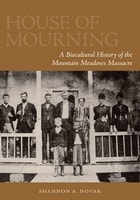
House of Mourning
A Biocultural History of the Mountain Meadows MassacreShannon A Novak
University of Utah Press, 2008
On September 11, 1857, some 120 men, women, and children from the Arkansas hills were murdered in the remote desert valley of Mountain Meadows, Utah. This notorious massacre was, in fact, a mass execution: having surrendered their weapons, the victims were bludgeoned to death or shot at point-blank range. The perpetrators were local Mormon militiamen whose motives have been fiercely debated for 150 years.
In House of Mourning, Shannon A. Novak goes beyond the question of motive to the question of loss. Who were the victims at Mountain Meadows? How had they settled and raised their families in the American South, and why were they moving west once again? What were they hoping to find or make for themselves at the end of the trail? By integrating archival records and oral histories with the first analysis of skeletal remains from the massacre site, Novak offers a detailed and sensitive portrait of the victims as individuals, family members, cultural beings, and living bodies.
The history of the massacre has often been treated as a morality tale whose chief purpose was to vilify (or to glorify) some collective body. Resisting this tendency to oversimplify the past, Novak explores Mountain Meadows as a busy and dangerous intersection of cultural and material forces in antebellum America. House of Mourning is a bold experiment in a new kind of history, the biocultural analysis of complex events.
Winner of the Society for Historical Archaeology James Deetz Book Award.

House of Plenty
The Rise, Fall, and Revival of Luby's CafeteriasBy Carol Dawson and Carol Johnston
University of Texas Press, 2006
Violet Crown Award, Writers League of Texas, 2007
Citation, San Antonio Conservation Society, 2009
Scarred by the deaths of his mother and sisters and the failure of his father's business, a young man dreamed of making enough money to retire early and retreat into the secure world that his childhood tragedies had torn from him. But Harry Luby refused to be a robber baron. Turning totally against the tide of avaricious capitalism, he determined to make a fortune by doing good. Starting with that unlikely, even naive, ambition in 1911, Harry Luby founded a cafeteria empire that by the 1980s had revenues second only to McDonald's. So successfully did Luby and his heirs satisfy the tastes of America that Luby's became the country's largest cafeteria chain, creating more millionaires per capita among its employees than any other corporation of its size. Even more surprising, the company stayed true to Harry Luby's vision for eight decades, making money by treating its customers and employees exceptionally well.
Written with the sweep and drama of a novel, House of Plenty tells the engrossing story of Luby's founding and phenomenal growth, its long run as America's favorite family restaurant during the post-World War II decades, its financial failure during the greed-driven 1990s when non-family leadership jettisoned the company's proven business model, and its recent struggle back to solvency. Carol Dawson and Carol Johnston draw on insider stories and company records to recapture the forces that propelled the company to its greatest heights, including its unprecedented practices of allowing store managers to keep 40 percent of net profits and issuing stock to all employees, which allowed thousands of Luby's workers to achieve the American dream of honestly earned prosperity. The authors also plumb the depths of the Luby's drama, including a hushed-up theft that split the family for decades; the 1991 mass shooting at the Killeen Luby's, which splattered the company's good name across headlines nationwide; and the rapacious over-expansion that more than doubled the company's size in nine years (1987-1996), pushed it into bankruptcy, and drove president and CEO John Edward Curtis Jr. to violent suicide.
Disproving F. Scott Fitzgerald's adage that "there are no second acts in American lives," House of Plenty tells the epic story of an iconic American institution that has risen, fallen, and found redemption—with no curtain call in sight.
Household Chores and Household Choices
Theorizing the Domestic Sphere in Historical ArchaeologyEdited by Kerri S. Barile and James C. Brandon
University of Alabama Press, 2004
Discusses the concepts of “home,” “house,” and “household” in past societies
Because archaeology seeks to understand past societies, the concepts of "home," "house," and "household" are important. Yet they can be the most elusive of ideas. Are they the space occupied by a nuclear family or by an extended one? Is it a built structure or the sum of its contents? Is it a shelter against the elements, a gendered space, or an ephemeral place tied to emotion? We somehow believe that the household is a basic unit of culture but have failed to develop a theory for understanding the diversity of households in the historic (and prehistoric) periods.
In an effort to clarify these questions, this volume examines a broad range of households—a Spanish colonial rancho along the Rio Grande, Andrew Jackson's Hermitage in Tennessee, plantations in South Carolina and the Bahamas, a Colorado coal camp, a frontier Arkansas farm, a Freedman's Town eventually swallowed by Dallas, and plantations across the South—to define and theorize domestic space. The essays devolve from many disciplines, but all approach households from an archaeological perspective, looking at landscape analysis, excavations, reanalyzed collections, or archival records. Together, the essays present a body of knowledge that takes the identification, analysis, and interpretation of households far beyond current conceptions.

Household Economy at Wall Ridge
A Fourteenth-Century Central Plains Farmstead in the Missouri ValleyEdited by Stephen C. Lensink, Joseph A. Tiffany, and Shirley J. Schermer
University of Utah Press, 2020
Household Economy at Wall Ridge tells the story of a Native American household that occupied a lodge on the eastern Plains border during the early 1300s AD. Contributors use cutting-edge methods and the site’s unparalleled archaeological record to shed light on the daily technological, subsistence, and dietary aspects of the occupants’ lives. This work represents the first comprehensive study of a prehistoric Central Plains household in over half a century.
The research covers archaeobotany, zooarchaeology, dating, ceramics, lithics, bone and shell tools, diet, climate, ecology, and more. The study of plant and animal usage from the lodge stands as a tour de force of analytical methods, including stable isotope data that permit the discovery of dietary items missed by traditional studies. Many of these items have never been reported before from Central Plains sites. The book firmly sets the site’s occupancy at AD 1305, with a margin of error of only a few years. This result, based on high-precision dating methods, exceeds in accuracy all previously dated Plains lodges and provides a temporal backdrop for evaluating household activities.
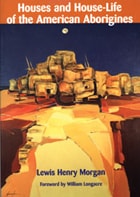
Houses and House-Life of the American Aborigines
Lewis Henry Morgan
University of Utah Press, 2003
A classic, available again.
Lewis Henry Morgan (1818–1881) was trained as a lawyer, but in the second part of his life he focused his attention on the emerging science of ethnography.
Covering areas of North and Central America, Morgan’s last book, Houses and House-Life of the American Aborigines was the first to regard a set of problems that is still currently debated: what does domestic architecture show anthropologists and archaeologists about social organization, and how does social organization combine with a system of production technology and ecological adjustment to influence domestic and public architecture? As William Longacre makes clear in the new introduction, the development of anthropological archaeology was profoundly affected by this book, and its impact continues to resonate.
Demonstrating a lack of ethnocentrism rare for his day, Morgan gathered most of his own data from the field and from a gigantic correspondence. The result is a lively, readable work that is still fascinating and instructive today.
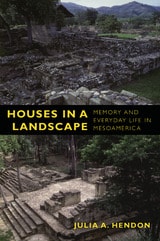
Houses in a Landscape
Memory and Everyday Life in MesoamericaJulia A. Hendon
Duke University Press, 2010
Hendon conducted research on three contemporaneous Native American civilizations that flourished from the seventh century through the eleventh CE: the Maya kingdom of Copan, the hilltop center of Cerro Palenque, and the dispersed settlement of the Cuyumapa valley. She analyzes domestic life in these societies, from cooking to crafting, as well as public and private ritual events including the ballgame. Combining her findings with a rich body of theory from anthropology, history, and geography, she explores how objects—the things people build, make, use, exchange, and discard—help people remember. In so doing, she demonstrates how everyday life becomes part of the social processes of remembering and forgetting, and how “memory communities” assert connections between the past and the present.
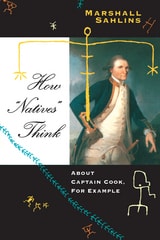
How "Natives" Think
About Captain Cook, For ExampleMarshall Sahlins
University of Chicago Press, 1995
In recent years, these questions have arisen in debates over the death and deification of Captain James Cook on Hawai'i Island in 1779. Did the Hawaiians truly receive Cook as a manifestation of their own god Lono? Or were they too pragmatic, too worldly-wise to accept the foreigner as a god? Moreover, can a "non-native" scholar give voice to a "native" point of view? In his 1992 book The Apotheosis of Captain Cook, Gananath Obeyesekere used this very issue to attack Sahlins's decades of scholarship on Hawaii. Accusing Sahlins of elementary mistakes of fact and logic, even of intentional distortion, Obeyesekere portrayed Sahlins as accepting a naive, enthnocentric idea of superiority of the white man over "natives"—Hawaiian and otherwise. Claiming that his own Sri Lankan heritage gave him privileged access to the Polynesian native perspective, Obeyesekere contended that Hawaiians were actually pragmatists too rational and sensible to mistake Cook for a god.
Curiously then, as Sahlins shows, Obeyesekere turns eighteenth-century Hawaiians into twentieth-century modern Europeans, living up to the highest Western standards of "practical rationality." By contrast, Western scholars are turned into classic custom-bound "natives", endlessly repeating their ancestral traditions of the White man's superiority by insisting Cook was taken for a god. But this inverted ethnocentrism can only be supported, as Sahlins demonstrates, through wholesale fabrications of Hawaiian ethnography and history—not to mention Obeyesekere's sustained misrepresentations of Sahlins's own work. And in the end, although he claims to be speaking on behalf of the "natives," Obeyesekere, by substituting a home-made "rationality" for Hawaiian culture, systematically eliminates the voices of Hawaiian people from their own history.
How "Natives" Think goes far beyond specialized debates about the alleged superiority of Western traditions. The culmination of Sahlins's ethnohistorical research on Hawaii, it is a reaffirmation for understanding difference.
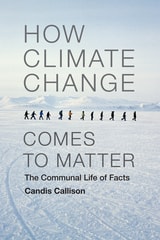
How Climate Change Comes to Matter
The Communal Life of FactsCandis Callison
Duke University Press, 2014
The disparate efforts of these groups illuminate the challenge of maintaining fidelity to scientific facts while transforming them into ethical and moral calls to action. Callison investigates the different vernaculars through which we understand and articulate our worlds, as well as the nuanced and pluralistic understandings of climate change evident in different forms of advocacy. As she demonstrates, climate change offers an opportunity to look deeply at how issues and problems that begin in a scientific context come to matter to wide publics, and to rethink emerging interactions among different kinds of knowledge and experience, evolving media landscapes, and claims to authority and expertise.
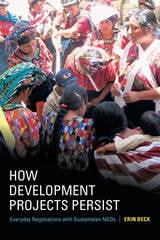
How Development Projects Persist
Everyday Negotiations with Guatemalan NGOsErin Beck
Duke University Press, 2017
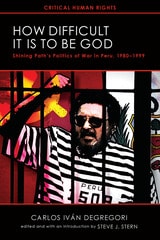
How Difficult It Is to Be God
Shining Path’s Politics of War in Peru, 1980–1999Carlos Iván Degregori; Edited and with an introduction by Steve J. Stern; Translated by Nancy Appelbaum, Joanna Drzewieniecki, Héctor Flores, Eric Hershberg, Judy Rein, Steve J. Stern, and Kimberly Theidon
University of Wisconsin Press, 2012
In How Difficult It Is to Be God, Carlos Iván Degregori—the world’s leading expert on Shining Path and the intellectual architect for Peru’s highly regarded Truth and Reconciliation Commission—elucidates the movement’s dynamics. An anthropologist who witnessed Shining Path’s recruitment of militants in the 1970s, Degregori grounds his findings in deep research and fieldwork. He explains not only the ideology and culture of revolution among the insurgents, but also their capacity to extend their influence to university youths, Indian communities, and competing social and political movements.
Making Degregori’s most important work available to English-language readers for the first time, this translation includes a new introduction by historian Steve J. Stern, who analyzes the author’s achievement, why it matters, and the debates it sparked. For anyone interested in Peru and Latin America’s age of “dirty war,” or in the comparative study of revolutions, Maoism, and human rights, this book will provide arresting new insights.
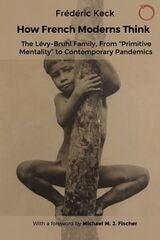
How French Moderns Think
The Lévy-Bruhl Family, From “Primitive Mentality” to Contemporary PandemicsFrédéric Keck
HAU, 2023
How French Moderns Think tells the story of the French sociological tradition through four generations of the Lévy-Bruhl family: Lucien, who founded the Institute of Ethnology at the University of Paris; his son Henri, who founded the Institute of Roman Law; his grandson Raymond, who took part in the creation of the National Institute of Statistics and Economic Studies; and his great-grandson Daniel, a vaccine specialist at the Institute of Public Health. This family history casts a new light on the philosophical debates about “primitive mentality” and the “savage mind.” By drawing on the expert knowledge inherent in this family genealogy, the articulation between the logical and the “pre-logical” is not a cognitive question but rather a problem of anticipating unpredictable events. By relating Lévy-Bruhl’s engagements from the Dreyfus Affair to the Minister of Armaments during the First World War, Keck narrates the confrontation of the socialist ideal of justice and truth with the French colonial experience and its transformations in global technologies preparing for pandemics.
How Humans Cooperate
Confronting the Challenges of Collective ActionRichard E. Blanton
University Press of Colorado, 2016
In How Humans Cooperate, Richard E. Blanton and Lane F. Fargher take a new approach to investigating human cooperation, developed from the vantage point of an "anthropological imagination." Drawing on the discipline’s broad and holistic understanding of humans in biological, social, and cultural dimensions and across a wide range of temporal and cultural variation, the authors unite psychological and institutional approaches by demonstrating the interplay of institution building and cognitive abilities of the human brain.
Blanton and Fargher develop an approach that is strongly empirical, historically deep, and more synthetic than other research designs, using findings from fields as diverse as neurobiology, primatology, ethnography, history, art history, and archaeology. While much current research on collective action pertains to local-scale cooperation, How Humans Cooperate puts existing theories to the test at larger scales in markets, states, and cities throughout the Old and New Worlds.
This innovative book extends collective action theory beyond Western history and into a broadly cross-cultural dimension, places cooperation in the context of large and complex human societies, and demonstrates the interplay of collective action and aspects of human cognitive ability. By extending the scope and content of collective action theory, the authors find a fruitful new path to understanding human cooperation.
How Is It Between Us?
Relational Ethics and Care for the WorldJarrett Zigon
HAU, 2024
In How Is It Between Us?, Jarrett Zigon puts anthropology and phenomenological hermeneutics in conversation to develop a new theory of relational ethics. This relational ethics takes place in the between, the interaction not just between people, but all existents. Importantly, this theory is utilized as a framework for considering some of today’s most pressing ethical concerns—for example, living in a condition of post-truth and worlds increasingly driven by algorithms and data extraction, various and competing calls for justice, and the ethical demands of the climate crisis. Written by one of the preeminent contributors to the anthropology of ethics, this is a ground-breaking book within that literature, developing a robust and systematic ethical theory to think through contemporary ethical problems.
How Lifeworlds Work
Emotionality, Sociality, and the Ambiguity of BeingMichael Jackson
University of Chicago Press, 2017
In How Lifeworlds Work, Jackson draws on years of ethnographic fieldwork in West Africa to highlight the dynamic quality of human relationships and reinvigorate the study of kinship and ritual. How, he asks, do we manage the perpetual process of accommodation between social norms and personal emotions, impulses, and desires? How are these two dimensions of lived reality joined, and how are the dual imperatives of individual expression and collective viability managed? Drawing on the pragmatist tradition, psychology, and phenomenology, Jackson offers an unforgettable, beautifully written account of how we make, unmake, and remake, our lifeworlds.
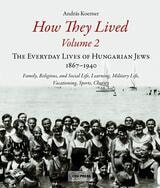
How They Lived 2
The Everyday Lives of Hungarian Jews, 1867-1940: Family, Religious, and Social Life, Learning, Military Life, Vacationing, Sports, CharityAndrás Koerner
Central European University Press, 2017
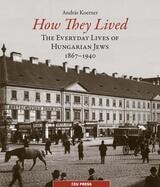
How They Lived
The Everyday Lives of Hungarian Jews, 1867–1940András Koerner
Central European University Press, 2015
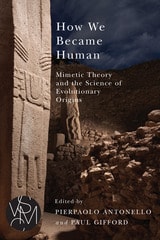
How We Became Human
Mimetic Theory and the Science of Evolutionary OriginsPierpaolo Antonello
Michigan State University Press, 2015

How Would You Like to Pay?
How Technology Is Changing the Future of MoneyBill Maurer
Duke University Press, 2015
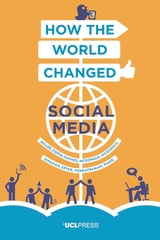
How the World Changed Social Media
Daniel Miller, Elisabetta Costa, Nell Haynes, Tom McDonald, Razvan Nicolescu, Jolynna Sinanan, Juliano Spyer, Shriram Venkatraman, and Xinyuan Wang,
University College London, 2016
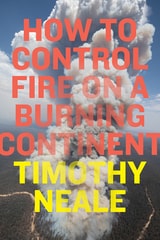
How to Control Fire on a Burning Continent
Timothy Neale
Duke University Press, 2026
Each year, Australia faces increasingly unprecedented wildfires, marked both by their scale and by the intense public disagreements about their political, cultural, and ecological causes. How to Control Fire on a Burning Continent is a critical and ethnographic exploration of wildfire management in Australia and the technoscientific systems of control that shape its current and future possibilities. Timothy Neale observes how two seemingly opposing forces—an entrenched sense of crisis and widespread normalization—combine to form an apparatus of institutional fire management that increasingly centers technical control and militarization. While sympathetic to the double binds many fire management professionals find themselves in, Neale ties contemporary wildfire problems to ongoing colonization and Indigenous dispossession, exploring Indigenous-led land management and cultural burning as a practical assertion of sovereignty. Through dialogue and collaboration with professional fire managers and Indigenous environmental stewards, Neale calls for a collective movement beyond control thinking by fostering new alliances and modes of coping with, rather than commanding, our flammable world.
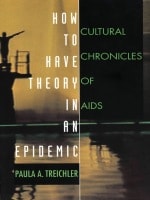
How to Have Theory in an Epidemic
Cultural Chronicles of AIDSPaula A. Treichler
Duke University Press, 1999
“AIDS is more than an epidemic disease,” Treichler writes, “it is an epidemic of meanings.” Exploring how such meanings originate, proliferate, and take hold, her essays investigate how certain interpretations of the epidemic dominate while others are obscured. They also suggest ways to understand and choose between overlapping or competing discourses. In her coverage of roughly fifteen years of the AIDS epidemic, Treichler addresses a range of key issues, from biomedical discourse and theories of pathogenesis to the mainstream media’s depictions of the crisis in both developed and developing countries. She also examines representations of women and AIDS, treatment issues, and the role of activism in shaping the politics of the epidemic. Linking the AIDS tragedy to a uniquely broad spectrum of contemporary theory and culture, this collection concludes with an essay on the continued importance of theoretical thought for untangling the sociocultural phenomena of AIDS—and for tackling the disease itself.
With an exhaustive bibliography of critical and theoretical writings on HIV and AIDS, this long-awaited volume will be essential to all those invested in studying the course of AIDS, its devastating medical effects, and its massive impact on contemporary culture. It should become a standard text in university courses dealing with AIDS in biomedicine, sociology, anthropology, gay and lesbian studies, women’s studies, and cultural and media studies.
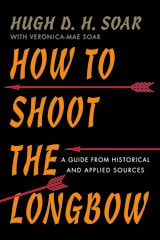
How to Shoot the Longbow
A Guide from Historical and Applied SourcesHugh D. H. Soar
Westholme Publishing, 2015
“Soar’s book [The Crooked Stick] is indispensible.”—Bernard Cornwell, New York Times bestselling author
Relying on more than fifty years’ experience in archery, historian Hugh D. H. Soar reflects on how the longbow was drawn and shot across the centuries through examining the design of the bow and early literature about the bow, combined with his and his colleagues’ applied knowledge using replica bows. No complete medieval longbow has survived, but those found aboard the Tudor warship Mary Rose provide the best archaeological evidence to the possible construction of the medieval bow. Contemporary treatises written about the proper manner of shooting the bow, together with the resurgence in interest and construction of replica bows beginning in the late sixteenth century that form part of the author’s collection provide the basis for this work. How to Shoot the Longbow: A Guide from Historical and Applied Sources is a fascinating and practical look at the use of a legendary invention.
How “Indians” Think
Colonial Indigenous Intellectuals and the Question of Critical Race TheoryGonzalo Lamana
University of Arizona Press, 2019
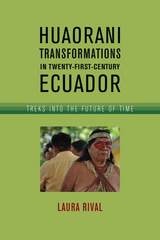
Huaorani Transformations in Twenty-First-Century Ecuador
Treks into the Future of TimeLaura Rival
University of Arizona Press, 2016
Rival’s intimate knowledge of Huaorani culture spans twenty-five years. Here in a collection of broad-ranging essays, she offers a fascinating and provocative study. The first section, “Among Forest Beings,” shows that the Huaorani have long adapted to life in the tropical rain forest with minimal reliance on horticulture, yet have developed a complex relationship with plants. In “In the Longhouse,” the second section, Rival focuses on the intimate relations that create human persons and enact kinship relations. She also discusses women’s lives and perspectives. The third section, “In the Midst of Enemies,” considers how Huaorani society fits in larger political and economic contexts, illustrating how native values shape their encounters with oil companies, the state, and other external forces. Rival carefully analyzes insider/outsider dialectics wherein Huaorani people re-create meaningful and valued worlds in the face of alien projects, such as petroleum development, carbon trading, or intercultural education.
Capitalizing on the author’s decades-long study and interactions in the community, Huaorani Transformations in Twenty-First-Century Ecuador brings new insights to the Huaorani’s unique way of relating to humans, to other-than-humans, and to the forest landscape they have inhabited for centuries.
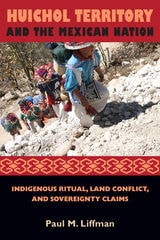
Huichol Territory and the Mexican Nation
Indigenous Ritual, Land Conflict, and Sovereignty ClaimsPaul M. Liffman
University of Arizona Press, 2011
Liffman writes that “the cultural grounds for territorial claims were what the people I wanted to study wanted me to work on.” Based on six years of collaboration with a land-rights organization, interviews, and participant observation in meetings, ceremonies, and extended stays on remote rancherías, Huichol Territory and the Mexican Nation analyzes the sites where people define Huichol territory. The book’s innovative structure echoes Huichols’ own approach to knowledge and examines the nation and state, not just the community. Liffman’s local, regional, and national perspective informs every chapter and expands the toolkit for researchers working with indigenous communities. By describing Huichols’ ceremonially based placemaking to build a theory of “historical territoriality,” he raises provocative questions about what “place” means for native peoples worldwide.
Human Adaptation and Accommodation
A. Roberto Frisancho
University of Michigan Press, 1993
Human Dispersal, Human Evolution, and the Sea
The Palaeolithic Seafaring DebateJohn F. Cherry
University Press of Colorado, 2025
Exploring the data in detail, the authors here show how a complex series of interrelated problems has tended to be treated in reductionist or overly simplistic terms. Cherry and Leppard elucidate this complexity by bringing to bear perspectives from archaeology, ecology, and evolutionary biology. They demonstrate not only that a series of unique circumstances—evolutionary, behavioral, environmental, and economic—conspired to drive mass, ubiquitous global colonization over the last ten millennia; but also that earlier, sparser data provide real insight into key social and behavioral thresholds, even if there is little evidence to support the “oceans as highways” model for species other than our own.
A major intervention in this important debate, Human Dispersal, Human Evolution, and the Sea explains the deep significance of the problem and the profound implications for history, archaeology, and biological anthropology.
Human No More
Digital Subjectivities, Unhuman Subjects, and the End of AnthropologyNeil L. Whitehead
University Press of Colorado, 2012
Online worlds have recently thrown into question the traditional anthropological conception of place-based ethnography. They break definitions, blur distinctions, and force us to rethink the notion of the "subject." Human No More asks how digital cultures can be integrated and how the ethnography of both the "unhuman" and the "digital" could lead to possible reconfiguring the notion of the "human."
This provocative and groundbreaking work challenges fundamental assumptions about the entire field of anthropology. Cross-disciplinary research from well-respected contributors makes this volume vital to the understanding of contemporary human interaction. It will be of interest not only to anthropologists but also to students and scholars of media, communication, popular culture, identity, and technology.
Human Organizations and Social Theory
Pragmatism, Pluralism, and AdaptationMurray J. Leaf
University of Illinois Press, 2008
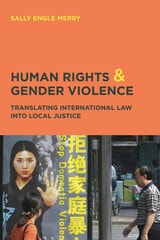
Human Rights and Gender Violence
Translating International Law into Local JusticeSally Engle Merry
University of Chicago Press, 2005
As an observer of UN diplomatic negotiations as well as the workings of grassroots feminist organizations in several countries, Sally Engle Merry offers an insider's perspective on how human rights law holds authorities accountable for the protection of citizens even while reinforcing and expanding state power. Providing legal and anthropological perspectives, Merry contends that human rights law must be framed in local terms to be accepted and effective in altering existing social hierarchies. Gender violence in particular, she argues, is rooted in deep cultural and religious beliefs, so change is often vehemently resisted by the communities perpetrating the acts of aggression.
A much-needed exploration of how local cultures appropriate and enact international human rights law, this book will be of enormous value to students of gender studies and anthropology alike.
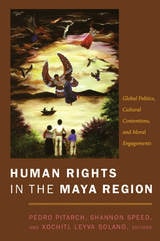
Human Rights in the Maya Region
Global Politics, Cultural Contentions, and Moral EngagementsPedro Pitarch, Shannon Speed, and Xochitl Leyva Solano, eds.
Duke University Press, 2008
The collection includes a reflection on the effects of truth-finding and documenting particular human rights abuses, a look at how Catholic social teaching validates the human rights claims advanced by indigenous members of a diocese in Chiapas, and several analyses of the limitations of human rights frameworks. A Mayan intellectual seeks to bring Mayan culture into dialogue with western feminist notions of women’s rights, while another contributor critiques the translation of the United Nations Declaration of Human Rights into Tzeltal, an indigenous language in Chiapas. Taken together, the essays reveal a broad array of rights-related practices and interpretations among the Mayan population, demonstrating that global-local-state interactions are complex and diverse even within a geographically limited area. So too are the goals of indigenous groups, which vary from social reconstruction and healing following years of violence to the creation of an indigenous autonomy that challenges the tenets of neoliberalism.
Contributors: Robert M. Carmack, Stener Ekern, Christine Kovic, Xochitl Leyva Solano, Julián López García, Irma Otzoy, Pedro Pitarch, Álvaro Reyes, Victoria Sanford, Rachel Sieder, Shannon Speed, Rodolfo Stavenhagen, David Stoll, Richard Ashby Wilson

Human Rights, Culture and Context
Anthropological PerspectivesRichard A. Wilson
Pluto Press, 1998
Human Rights
Concepts, Contests, ContingenciesAustin Sarat and Thomas R. Kearns, Editors
University of Michigan Press, 2002
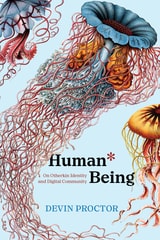
Human* Being
On Otherkin Identity and Digital CommunityDevin Proctor
Lever Press, 2026
Human* Being: On Otherkin Identity and Digital Community is an ethnographic exploration of the Otherkin—a technologically-mediated community of practice whose members identify as other-than-human—breaking down barriers of identity and calling into question assumptions about what it means to be a human. Based on a decade of ethnographic research, Human* Being examines Otherkin engagement with the techno-virtuality afforded by the internet—through chat forums, personal blogs, 3D virtual worlds, Facebook, YouTube, Tumblr, Discord, TikTok, and Reddit—troubling conventional notions about our relationships with the virtual and our understandings of the Self. The Otherkin represent a larger shift in body identity, shown by increasing numbers of people identifying as trans, nonbinary, fluid, and neurodiverse; bodies open to nuance, complication, and multiplicity. Devin Proctor closely examines internal community debates about the limits of non-human identity, avatar creation practices in virtual worlds to approximate inner realities, and the policing of identity constructs toward a stable definition of the phenomenon. However anomalistic, even fantastical they may seem, the Otherkin offer a window into our own complex notions of bodies, Selves, and technologies.
Humanae vitae, a generation later
Janet E Smith
Catholic University of America Press, 1991
Humane Development
Participation and Change Among the Sadama of EthiopiaJohn H. Hamer
University of Alabama Press, 1987
Humane Development seeks to show that the Sadama are a people quite adaptable to change on their own terms. According to their narrative history and from what is know from documents in recent times, individuals have often taken risks that have sometimes favored and at other times gone against the enhancement of their lifestyle.
Certainly people can, as the experience of the Sadama shows, effectively participate in change at the local level. They bring a vast experience to the challenge of choosing, and also a knowledge of the relationship between their environment, tools, and organization that has enabled them to survive through the millennia. When people are permitted to draw upon their heritage in making choices, they approach the changing situation with confidence. Moreover, the opportunity to choose among alternatives, rather than being subjected to an externally made choice, maximizes the possibility for innovation.
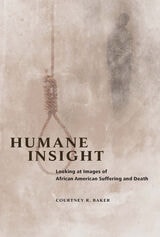
Humane Insight
Looking at Images of African American Suffering and DeathCourtney Baker
University of Illinois Press, 2017
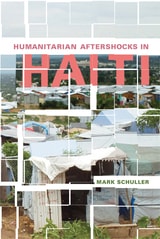
Humanitarian Aftershocks in Haiti
Schuller, Mark
Rutgers University Press, 2016
The 2010 earthquake in Haiti was one of the deadliest disasters in modern history, sparking an international aid response—with pledges and donations of $16 billion—that was exceedingly generous. But now, five years later, that generous aid has clearly failed. In Humanitarian Aftershocks in Haiti, anthropologist Mark Schuller captures the voices of those involved in the earthquake aid response, and they paint a sharp, unflattering view of the humanitarian enterprise.
Schuller led an independent study of eight displaced-persons camps in Haiti, compiling more than 150 interviews ranging from Haitian front-line workers and camp directors to foreign humanitarians and many displaced Haitian people. The result is an insightful account of why the multi-billion-dollar aid response not only did little to help but also did much harm, triggering a range of unintended consequences, rupturing Haitian social and cultural institutions, and actually increasing violence, especially against women. The book shows how Haitian people were removed from any real decision-making, replaced by a top-down, NGO-dominated system of humanitarian aid, led by an army of often young, inexperienced foreign workers. Ignorant of Haitian culture, these aid workers unwittingly enacted policies that triggered a range of negative results. Haitian interviewees also note that the NGOs “planted the flag,” and often tended to “just do something,” always with an eye to the “photo op” (in no small part due to the competition over funding). Worse yet, they blindly supported the eviction of displaced people from the camps, forcing earthquake victims to relocate in vast shantytowns that were hotbeds of violence.
Humanitarian Aftershocks in Haiti concludes with suggestions to help improve humanitarian aid in the future, perhaps most notably, that aid workers listen to—and respect the culture of—the victims of catastrophe.
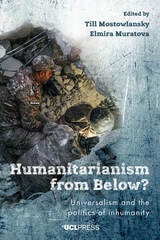
Humanitarianism from Below?
Universalism and the Politics of InhumanityEdited by Till Mostowlansky and Elmira Muratova
University College London, 2026
The first global comparative analysis of the role of humanitarianism from below in political and social change.
Drawing on original ethnographic and historical research, Humanitarianism from Below? addresses a wide audience of scholars and students in humanitarian and development studies, anthropology, and political science. Drawing from timely case studies on the war in Ukraine, the Ebola pandemic in West Africa, the 2023 Turkey-Syria earthquakes, and the global flows of aid from Arab states to the Persian Gulf, the book considers humanitarianism’s multiple histories and offers a profound reassessment of humanitarian pluralism today. It critically discusses humanitarianism as a historically, politically, and culturally contingent phenomenon that entails unequal relations of power and multiple forms of universalism, as well as issues of dehumanization and inhumanity.

Humanity's Last Stand
Confronting Global CatastropheMark Schuller
Rutgers University Press, 2021
Humanity’s Last Stand dares to ask these big questions, exploring the interconnections between climate change, global capitalism, xenophobia, and white supremacy. As it unearths how capitalism was born from plantation slavery and the slaughter of Indigenous people, it also invites us to imagine life after capitalism. The book teaches its readers how to cultivate an anthropological imagination, a mindset that remains attentive to local differences even as it identifies global patterns of inequality and racism.
Surveying the struggles of disenfranchised peoples around the globe from frontline communities affected by climate change, to #BlackLivesMatter activists, to Indigenous water protectors, to migrant communities facing increasing hostility, anthropologist Mark Schuller argues that we must develop radical empathy in order to move beyond simply identifying as “allies” and start acting as “accomplices.” Bringing together the insights of anthropologists and activists from many cultures, this timely study shows us how to stand together and work toward a more inclusive vision of humanity before it’s too late.
More information and instructor resources (https://humanityslaststand.org)
Humans and Other Animals
Cross-Cultural Perspectives on Human-Animal InteractionsSamantha Hurn
Pluto Press, 2012
Humans and Other Animals is about the myriad and evolving ways in which humans and animals interact, the divergent cultural constructions of humanity and animality found around the world, and individual experiences of other animals.
Samantha Hurn explores the work of anthropologists and scholars from related disciplines concerned with the growing field of anthrozoology. Case studies from a wide range of cultural contexts are discussed, and readers are invited to engage with a diverse range of human-animal interactions including blood sports (such as hunting, fishing and bull fighting), pet keeping and ‘petishism’, eco-tourism and wildlife conservation, working animals and animals as food. The idea of animal exploitation raised by the animal rights movements is considered, as well as the anthropological implications of changing attitudes towards animal personhood, and the rise of a posthumanist philosophy in the social sciences more generally.
Key debates surrounding these issues are raised and assessed and, in the process, readers are encouraged to consider their own attitudes towards other animals and, by extension, what it means to be human.
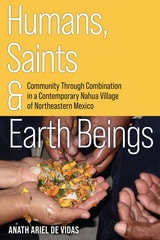
Humans, Saints, and Earth Beings
Community Through Combination in a Contemporary Nahua Village of Northeastern MexicoAnath Ariel De Vidas
University Press of Colorado, 2025
In her work, Ariel de Vidas demonstrates how villagers blend traditional earth-based rituals with Catholic practices, creating a sophisticated system of coexistence between humans and nonhuman entities. These ritual combinations serve as the primary mechanism for social production, cultural continuity, and political authority. The book challenges conventional anthropological binaries of tradition versus modernity and continuity versus acculturation through “thick” ethnographic descriptions that focus on the ethics of coexistence among humans themselves as well as between humans and the peculiar nonhuman inhabitants of their environment.
Originally published in Spanish as Combinar para convivir (2021), Humans, Saints, and Earth Beings contributes to contemporary theoretical discussions about Indigenous ontologies, ritual practice, and social cohesion. It offers crucial insights into how rural communities worldwide might navigate the tensions between maintaining cultural particularities and participating in broader social transformations, making it essential reading for anthropologists, Latin American studies scholars, and anyone interested in Indigenous resilience and adaptation.
Hunted
Predation and Pentecostalism in GuatemalaKevin Lewis O'Neill
University of Chicago Press, 2019
Hunted is based on more than ten years of fieldwork among these centers and the drug users that populate them. Over time, as Kevin Lewis O’Neill engaged both those in treatment and those who surveilled them, he grew increasingly concerned that he, too, had become a hunter, albeit one snatching up information. This thoughtful, intense book will reframe the arc of redemption we so often associate with drug rehabilitation, painting instead a seemingly endless cycle of hunt, capture, and release.
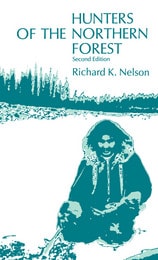
Hunters of the Northern Forest
Designs for Survival among the Alaskan KutchinRichard K. Nelson
University of Chicago Press, 1986
Hunting Tradition in a Changing World
Yup'ik Lives in Alaska TodayFienup-Riordan, Ann
Rutgers University Press, 2000
Hunting the Ethical State
The Benkadi Movement of Côte d'IvoireJoseph Hellweg
University of Chicago Press, 2011
In the 1990s a nationwide crime wave overtook Côte d’Ivoire. The Ivoirian police failed to control the situation, so a group of poor, politically marginalized, and mostly Muslim men took on the role of the people’s protectors as part of a movement they called Benkadi. These men were dozos—hunters skilled in ritual sacrifice—and they applied their hunting and occult expertise, along with the ethical principles implicit in both forms of knowledge, to the tracking and capturing of thieves. Meanwhile, as Benkadi emerged, so too did the ethnic, regional, and religious divisions that would culminate in Côte d’Ivoire’s 2002–07 rebellion.
Hunting the Ethical State reveals how dozos worked beyond these divisions to derive their new roles as enforcers of security from their ritual hunting ethos. Much as they used sorcery to shape-shift and outwit game, they now transformed into unofficial police, and their ritual networks became police bureaucracies. Though these Muslim and northern-descended men would later resist the state, Joseph Hellweg demonstrates how they briefly succeeded at making a place for themselves within it. Ultimately, Hellweg interprets Benkadi as a flawed but ingenious and thoroughly modern attempt by non-state actors to reform an African state.
Hustle Urbanism
Making Life Work in NairobiTatiana Thieme
University of Minnesota Press, 2025
Exploring hustle as a social, cultural, and economic phenomenon in contemporary Nairobi
In Nairobi’s underserved neighborhoods, “hustle” has emerged as both a vital survival strategy and a way of life for youth. Exploring the multiple meanings and manifestations of the hustle economy across different scenarios of provisioning, distribution, exchange, learning, and mobilizing, Hustle Urbanism draws on more than a decade of ethnographic engagement to center the logics, perspectives, and inventive strategies of a group of youth who constantly navigate job scarcity, inadequate basic services, and climate-induced harms.
Tatiana Thieme shows how young people develop tools of resistance against the legacies of colonial violence and uneven urban development while carving out spaces of opportunity for themselves and their peers. The stories she includes bring thick ethnographic detail and longitudinal perspective to the lives and livelihoods of youth whose diverse skill sets and knowledges span from circular economies and eco-activism to hip hop and local leadership. Filling a significant gap in both existing scholarship and popular discussion, Hustle Urbanism offers critical theorization of precarious urban environments and the affirmative modes of making life work in the city against the odds.
While Thieme cautions against fetishizing hustle as a form of social and economic uplift, she calls for a greater recognition of the ingenuity and skill involved in hustle urbanism, arguing that studying hustle narratives and practices opens up timely empirical and theoretical questions about overlapping urban struggles and possibilities that coexist in the everyday city.
Retail e-book files for this title are screen-reader friendly with images accompanied by short alt text and/or extended descriptions.
Hustling Is Not Stealing
Stories of an African Bar GirlJohn M. Chernoff
University of Chicago Press, 2003
In Hustling Is Not Stealing and its follow-up, Exchange Is Not Robbery, a chronicle of exploitation is transformed by verbal art into an ebullient comedy. In Hustling Is Not Stealing, Hawa is a playful warrior struggling against circumstances in Ghana and Togo. In Exchange Is Not Robbery, Hawa returns to her native Burkina Faso, where she achieves greater control over her life but faces new difficulties. As a woman making sacrifices to live independently, Hawa sees her own situation become more complex as she confronts an atmosphere in Burkina Faso that is in some ways more challenging than the one she left behind, and the moral ambiguities of her life begin to intensify.
Combining elements of folklore and memoir, Hawa’s stories portray the diverse social landscape of West Africa. Individually the anecdotes can be funny, shocking, or poignant; assembled together they offer a sweeping critical and satirical vision.