Results by title
28164 books match the query 'History' and 906 start with h
Hawaiian Blood
Colonialism and the Politics of Sovereignty and IndigeneityJ. Kauanui Kahaulani
Duke University Press, 2008
Kauanui provides an impassioned assessment of how the arbitrary correlation of ancestry and race imposed by the U.S. government on the indigenous people of Hawai‘i has had far-reaching legal and cultural effects. With the HHCA, the federal government explicitly limited the number of Hawaiians included in land provisions, and it recast Hawaiians’ land claims in terms of colonial welfare rather than collective entitlement. Moreover, the exclusionary logic of blood quantum has profoundly affected cultural definitions of indigeneity by undermining more inclusive Kanaka Maoli notions of kinship and belonging. Kauanui also addresses the ongoing significance of the 50-percent rule: Its criteria underlie recent court decisions that have subverted the Hawaiian sovereignty movement and brought to the fore charged questions about who counts as Hawaiian.
Hawaiian Music in Motion
Mariners, Missionaries, and MinstrelsJames Revell Carr
University of Illinois Press, 2014
Hawaii’s Past in a World of Pacific Islands
James M. Bayman
University Press of Colorado, 2013
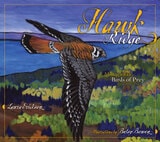
Hawk Ridge
Minnesota's Birds of PreyLaura Erickson
University of Minnesota Press, 2012
Was Caesar like the eagle because of his aquiline (from aquila, for “eagle” in Latin) nose, or does the eagle seem imperial because of his Caesar-like beak? Does the sharp vision of a “hawk-eyed” observer have any basis in nature? And what the heck is “kettling” to a bird-watcher, or, for that matter, a bird? Raptors have captured the imagination from time immemorial and have an especially rich history in Minnesota. The ancient peoples whose pictographs adorn the rock faces of Lake Superior’s North Shore may well have witnessed the first hawk movements along Lake Superior—the same annual migration that today draws as many as twenty thousand people to Duluth’s Hawk Ridge. These birds, passing through in astounding numbers, are among the hawks and accipiters, buteos and harriers, eagles and ospreys pictured and profiled in detail in this book.
Written by one of Minnesota’s best-known bird authorities, with images by one of the state’s favorite illustrators, Hawk Ridge is as fun as it is informative. It introduces the state’s raptors, from the rare visitor to the most familiar hawk, noting each species’ signature traits—osprey wings, for instance, are crooked to help them catch fish; vultures urinate on their legs to cool themselves—and their nesting, breeding, and migrating habits. Did you know that Sharp-shinned Hawks banded at Hawk Ridge have been found throughout Central America and even into South America, and also, in midwinter, in Wisconsin? Laura Erickson offers a broad perspective (a bird’s-eye view!), making sense of the raptor’s role in the larger ornithological scheme.
With descriptions of various species—and helpful distinctions between species, families, and orders—the book gives readers a clear idea of which raptors might be seen in Minnesota, when, where, and how often. It also includes a hawk migration primer that explains the movements that bring these birds in such awe-inspiring numbers to places like Hawk Ridge. Filled with curious facts and practical information for expert and amateur bird-watcher alike, the book is at once a guide to the hawks of Minnesota and a beautifully illustrated album of the most regal members of the avian kingdom.

Hawker Hunter
the story of a thoroughbredSreco Bradic
Amsterdam University Press, 2023
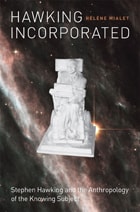
Hawking Incorporated
Stephen Hawking and the Anthropology of the Knowing SubjectHélène Mialet
University of Chicago Press, 2012
These days, the idea of the cyborg is less the stuff of science fiction and more a reality, as we are all, in one way or another, constantly connected, extended, wired, and dispersed in and through technology. One wonders where the individual, the person, the human, and the body are—or, alternatively, where they stop. These are the kinds of questions Hélène Mialet explores in this fascinating volume, as she focuses on a man who is permanently attached to assemblages of machines, devices, and collectivities of people: Stephen Hawking.
Drawing on an extensive and in-depth series of interviews with Hawking, his assistants and colleagues, physicists, engineers, writers, journalists, archivists, and artists, Mialet reconstructs the human, material, and machine-based networks that enable Hawking to live and work. She reveals how Hawking—who is often portrayed as the most singular, individual, rational, and bodiless of all—is in fact not only incorporated, materialized, and distributed in a complex nexus of machines and human beings like everyone else, but even more so. Each chapter focuses on a description of the functioning and coordination of different elements or media that create his presence, agency, identity, and competencies. Attentive to Hawking’s daily activities, including his lecturing and scientific writing, Mialet’s ethnographic analysis powerfully reassesses the notion of scientific genius and its associations with human singularity. This book will fascinate anyone interested in Stephen Hawking or an extraordinary life in science.
Hawthorne and Women
Engendering and Expanding the Hawthorne TraditionJohn L. Idol
University of Massachusetts Press, 1999
This collection of original essays presents a more complex and positive view of Hawthorne's attitudes toward women, demonstrating his recognition of the crucial role that women played--as critics, reviewers, readers, and authors--in building a national readership that made his writing career so successful.
The book begins with an examination of the influence exerted by the women in Hawthorne's immediate family. It goes on to explore his links to a broad range of women writers, as well as his attitudes toward the female characters he created. Among the authors discussed are Margaret Fuller, Harriet Beecher Stowe, Louisa May Alcott, Emily Dickinson, Sarah Orne Jewett, Willa Cather, Charlotte Perkins Gilman, George Eliot, Virginia Woolf, Flannery O'Connor, and Toni Morrison.
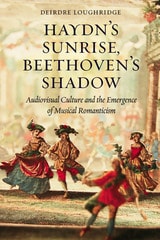
Haydn’s Sunrise, Beethoven’s Shadow
Audiovisual Culture and the Emergence of Musical RomanticismDeirdre Loughridge
University of Chicago Press, 2016
Deirdre Loughridge reveals that allusions in musical writings to optical technologies reflect their spread from fairgrounds and laboratories into public consciousness and a range of discourses, including that of music. She demonstrates how concrete points of intersection—composers’ treatments of telescopes and peepshows in opera, for instance, or a shadow-play performance of a ballad—could then fuel new modes of listening that aimed to extend the senses. An illuminating look at romantic musical practices and aesthetics, this book yields surprising relations between the past and present and offers insight into our own contemporary audiovisual culture.
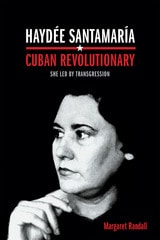
Haydée Santamaría, Cuban Revolutionary
She Led by TransgressionMargaret Randall
Duke University Press, 2015

Hayek and the Evolution of Capitalism
Naomi Beck
University of Chicago Press, 2018
Yet even among those who study his work in depth, few have looked closely at his use of ideas from evolutionary science to advance his vision of markets and society. With this book Naomi Beck offers the first full-length engagement with Hayek’s thought from this perspective. Hayek argued that the capitalism we see in advanced civilizations is an unintended consequence of group selection—groups that adopted free market behavior expanded more successfully than others. But this attempt at a scientific grounding for Hayek’s principles, Beck shows, fails to hold water, plagued by incoherencies, misinterpretations of the underlying science, and lack of evidence. As crises around the globe lead to reconsiderations of the place of capitalism, Beck’s excavation of this little-known strand of Hayek’s thought—and its failure—is timely and instructive.

Haywire
Discord in Maine's Logging Woods and the Unraveling of an IndustryAndrew Egan
University of Massachusetts Press, 2022
Logging in the northern forest has been romanticized, with images of log drives, plaid shirts, and bunkhouses in wide circulation. Increasingly dismissed as a quaint, rural pastime, logging remains one of the most dangerous jobs in the United States, with loggers occupying a precarious position amid unstable markets, expanding global competition, and growing labor discord. Examining a time of transition and decline in Maine’s forest economy, Andrew Egan traces pathways for understanding the challenges that have faced Maine’s logging community and, by extension, the state’s forestry sector, from the postwar period through today.
Seeking greater profits, logging companies turned their crews loose at midcentury, creating a workforce of independent contractors who were forced to purchase expensive equipment and compete for contracts with the mills. Drawing on his own experience with the region’s forest products industry, interviews with Maine loggers, media coverage, and court documents, Egan follows the troubled recent history of the industry and its battle for survival.
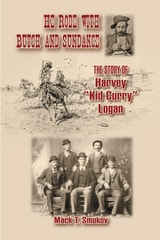
He Rode with Butch and Sundance
The Story of Harvey "Kid Curry" LoganMark T. Smokov
University of North Texas Press, 2012
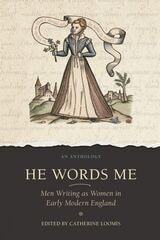
He Words Me
Men Writing as Women in Early Modern EnglandCatherine Loomis
Arizona Center for Medieval and Renaissance Studies, 2026
This anthology gives students and scholars access to a body of texts that provide a clearer understanding of what life was like for early modern women by presenting hundreds of little-known primary texts that contain details about early modern women’s work, relationships, emotional and intellectual development, friendships, and daily struggles. He Words Me brings together work from a variety of genres in which male authors adopt the voice of a female narrator and use that voice to provide intimate details about the lives of women.
These works introduce modern readers to less familiar genres, complement or contradict portrayals of women in canonical texts, and raise compelling questions about who speaks for women and when women can speak for themselves. Through these women’s voices, readers can encounter characters and experiences that will broaden their understanding of early modern English literature and culture, and of the history of women in the late sixteenth and early seventeenth centuries.
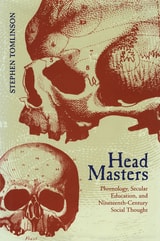
Head Masters
Phrenology, Secular Education, and Nineteenth-Century Social ThoughtStephen Tomlinson
University of Alabama Press, 2005
Head Masters challenges the assumption that phrenology—the study of the conformation of the skull as it relates to mental faculties and character—played only a minor and somewhat anecdotal role in the development of education. Stephen Tomlinson asserts instead that phrenology was a scientifically respectable theory of human nature, perhaps the first solid physiological psychology. He shows that the first phrenologists were among the most prominent scientists and intellectuals of their day, and that the concept was eagerly embraced by leading members of the New England medical community.
Following its progression from European theorists Franz-Joseph Gall, Johan Gasper Spurzheim, and George Combe to Americans Horace Mann and Samuel Gridley Howe, Tomlinson traces the origins of phrenological theory and examines how its basic principles of human classification, inheritance, and development provided a foundation for the progressive practices advocated by middle-class reformers such as Combe and Mann. He also elucidates the ways in which class, race, and gender stereotypes permeated 19th century thought and how popular views of nature, mind, and society supported a secular curriculum favoring the use of disciplinary practices based on physiology.
This study ultimately offers a reconsideration of the ideas and theories that motivated education reformers such as Mann and Howe, and a reassessment of Combe, who, though hardly known by contemporary scholars, emerges as one of the most important and influential educators of the 19th century.
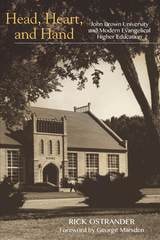
Head, Heart, and Hand
John Brown University and Modern Evangelical Higher EducationRick Ostrander
University of Arkansas Press, 2018
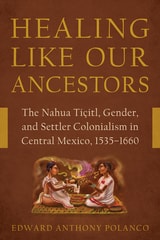
Healing Like Our Ancestors
The Nahua Tiçitl, Gender, and Settler Colonialism in Central Mexico, 1535–1660Edward Anthony Polanco
University of Arizona Press, 2024
Early colonial Spanish settlers defined, assessed, and admonished Nahua titiçih (healing specialists) and tiçiyotl (healing knowledge) in the process of building a society in Mexico that mirrored Iberia. Nevertheless, Nahua survivance (intergenerational knowledge transfer) has allowed communities to heal like their ancestors through changes and adaptations. Edward Anthony Polanco draws from diverse colonial primary sources, largely in Spanish and Nahuatl (the Nahua ancestral language), to explore how Spanish settlers framed titiçih, their knowledge, and their practices within a Western complex. Polanco argues for the usage of Indigenous terms when discussing Indigenous concepts and arms the reader with the Nahuatl words to discuss central Mexican Nahua healing. In particular, this book emphasizes the importance of women as titiçih and highlights their work as creators and keepers of knowledge. These vital Nahua perspectives of healing—and how they differed from the settler narrative—will guide community members as well as scholars and students of the history of science, Latin America, and Indigenous studies.
Healing Narratives
Women Writers Curing Cultural Dis-easeWilentz, Gay
Rutgers University Press, 2000

Healing Our Divided Society
Investing in America Fifty Years after the Kerner ReportFred Harris and Alan Curtis
Temple University Press, 2018
In 1968, the Kerner Commission concluded that America was heading toward “two societies, one black, one white—separate and unequal.” Today, America’s communities are experiencing increasing racial tensions and inequality, working-class resentment over the unfulfilled American Dream, white supremacy violence, toxic inaction in Washington, and the decline of the nation’s example around the world.
In Healing Our Divided Society, Fred Harris, the last surviving member of the Kerner Commission, along with Eisenhower Foundation CEO Alan Curtis, re-examine fifty years later the work still necessary towards the goals set forth in The Kerner Report. This timely volume unites the interests of minorities and white working- and middle-class Americans to propose a strategy to reduce poverty, inequality, and racial injustice. Reflecting on America’s urban climate today, this new report sets forth evidence-based policies concerning employment, education, housing, neighborhood development, and criminal justice based on what has been proven to work—and not work.
Contributors include: Oscar Perry Abello, Elijah Anderson, Anil N.F. Aranha, Jared Bernstein, Henry G. Cisneros, Elliott Currie, Linda Darling-Hammond, Martha F. Davis, E. J. Dionne, Jr., Marian Wright Edelman, Delbert S. Elliott, Carol Emig, Jeff Faux, Ron Grzywinski, Michael P. Jeffries, Lamar K. Johnson, Celinda Lake, Marilyn Melkonian, Gary Orfield, Diane Ravitch, Laurie Robinson, Herbert C. Smitherman, Jr., Joseph Stiglitz, Dorothy Stoneman, Kevin Washburn, Valerie Wilson, Gary Younge, Julian E. Zelizer, and the editors
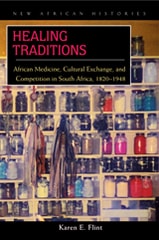
Healing Traditions
African Medicine, Cultural Exchange, and Competition in South Africa, 1820–1948Karen E. Flint
Ohio University Press, 2008
In August 2004, South Africa officially sought to legally recognize the practice of traditional healers. Largely in response to the HIV/AIDS pandemic, and limited both by the number of practitioners and by patients’ access to treatment, biomedical practitioners looked toward the country’s traditional healers as important agents in the development of medical education and treatment. This collaboration has not been easy. The two medical cultures embrace different ideas about the body and the origin of illness, but they do share a history of commercial and ideological competition and different relations to state power. Healing Traditions: African Medicine, Cultural Exchange, and Competition in South Africa, 1820–1948 provides a long-overdue historical perspective to these interactions and an understanding that is vital for the development of medical strategies to effectively deal with South Africa’s healthcare challenges.
Between 1820 and 1948 traditional healers in Natal, South Africa, transformed themselves from politically powerful men and women who challenged colonial rule and law into successful entrepreneurs who competed for turf and patients with white biomedical doctors and pharmacists. To understand what is “traditional” about traditional medicine, Flint argues that we must consider the cultural actors and processes not commonly associated with African therapeutics: white biomedical practitioners, Indian healers, and the implementing of white rule.
Carefully crafted, well written, and powerfully argued, Flint’s analysis of the ways that indigenous medical knowledge and therapeutic practices were forged, contested, and transformed over two centuries is highly illuminating, as is her demonstration that many “traditional” practices changed over time. Her discussion of African and Indian medical encounters opens up a whole new way of thinking about the social basis of health and healing in South Africa. This important book will be core reading for classes and future scholarship on health and healing in Africa.
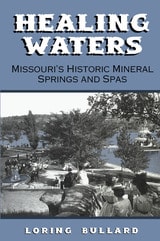
Healing Waters
Missouri's Historic Mineral Springs and SpasLoring Bullard
University of Missouri Press, 2004
By visiting the sites, gathering local historical accounts, interviewing local citizens, and photographing remaining artifacts, Bullard has done a masterful job in providing the answers to why these vibrant social centers came to be and why they faded.
Healing and Society in Medieval England
A Middle English Translation of the Pharmaceutical Writings of Gilbertus AnglicusFaye M. Getz
University of Wisconsin Press, 1991
Originally composed in Latin by Gilbertus Anglicus (Gilbert the Englishman), his Compendium of Medicine was a primary text of the medical revolution in thirteenth-century Europe. Composed mainly of medicinal recipes, it offered advice on diagnosis, medicinal preparation, and prognosis. In the fifteenth-century it was translated into Middle English to accommodate a widening audience for learning and medical “secrets.”
Faye Marie Getz provides a critical edition of the Middle English text, with an extensive introduction to the learned, practical, and social components of medieval medicine and a summary of the text in modern English. Getz also draws on both the Latin and Middle English texts to create an extensive glossary of little-known Middle English pharmaceutical and medical vocabulary.
Healing at the Periphery
Ethnographies of Tibetan Medicine in IndiaLaurent Pordié and Stephan Kloos, editors
Duke University Press, 2022
Contributors. Florian Besch, Calum Blaikie, Sienna R. Craig, Barbara Gerke, Isabelle Guérin, Kim Gutschow, Pascale Hancart Petitet, Stephan Kloos, Fernanda Pirie, Laurent Pordié
Healing the African Body
British Medicine in West Africa, 1800-1860John Rankin
University of Missouri Press, 2015
This timely book explores the troubled intertwining of religion, medicine, empire, and race relations in the early nineteenth century. John Rankin analyzes the British use of medicine in West Africa as a tool to usher in a “softer” form of imperialism, considers how British colonial officials, missionaries, and doctors regarded Africans, and explores the impact of race classification on colonial constructs.
Rankin goes beyond contemporary medical theory, examining the practice of medicine in colonial Africa as Britons dealt with the challenges of providing health care to their civilian employees, African soldiers, and the increasing numbers of freed slaves in the general population, even while the imperialists themselves were threatened by a lack of British doctors and western medicines. As Rankin writes, “The medical system sought to not only heal Africans but to ‘uplift’ them and make them more amenable to colonial control . . . Colonialism starts in the mind and can be pushed on the other solely through ideological pressure.”
Healing the Herds
Disease, Livestock Economies, and the Globalization of Veterinary MedicineKaren Brown
Ohio University Press, 2010
During the early 1990s, the ability of dangerous diseases to pass between animals and humans was brought once more to the public consciousness. These concerns continue to raise questions about how livestock diseases have been managed over time and in different social, economic, and political circumstances. Healing the Herds: Disease, Livestock Economies, and the Globalization of Veterinary Medicine brings together case studies from the Americas, western Europe, and the European and Japanese colonies to illustrate how the rapid growth of the international trade in animals through the nineteenth century engendered the spread of infectious diseases, sometimes with devastating consequences for indigenous pastoral societies. At different times and across much of the globe, livestock epidemics have challenged social order and provoked state interventions, often opposed by farmers and herders. The intensification of agriculture has transformed environments, with consequences for animal and human health.
But the last two centuries have also witnessed major changes in the way societies have conceptualized diseases and sought to control them. From the late nineteenth century, advances in veterinary technologies afforded veterinary scientists a new professional status and allowed them to wield greater political influence. While older methods have remained important to strategies of control and prevention, as demonstrated during the outbreak of foot-and-mouth disease in Britain in 2001, the rise of germ theories and the discovery of vaccines against some infections made it possible to move beyond the blunt tools of animal culls and restrictive quarantines of the past. Healing the Herds: Disease, Livestock Economies, and the Globalization of Veterinary Medicine offers a new and exciting comparative approach to the complex interrelationships of microbes, markets, and medicine in the global economy.
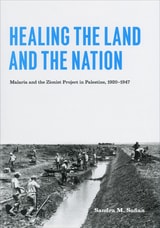
Healing the Land and the Nation
Malaria and the Zionist Project in Palestine, 1920-1947Sandra M. Sufian
University of Chicago Press, 2007
Taking its title from a Jewish public health mantra, Healing the Land and the Nation situates antimalarial medicine and politics within larger colonial histories. By analyzing the science alongside the politics of Jewish settlement, Sufian addresses contested questions of social organization and the effects of land reclamation upon the indigenous Palestinian population in a decidedly innovative way. The book will be of great interest to scholars of the Middle East, Jewish studies, and environmental history, as well as to those studying colonialism, nationalism, and public health and medicine.
Health Care Divided
Race and Healing a NationDavid Barton Smith
University of Michigan Press, 1999
Health Care for Some
Rights and Rationing in the United States since 1930Beatrix Hoffman
University of Chicago Press, 2012

Health Equity in Brazil
Intersections of Gender, Race, and PolicyKia Lilly Caldwell
University of Illinois Press, 2017
Health and Efficiency
Fatigue, the Science of Work, and the Making of the Working-Class BodySteffan Blayney
University of Massachusetts Press, 2022
A new model of health emerged in Britain between 1870 and 1939. Centered on the working body, organized around the concept of efficiency, and grounded in scientific understandings of human labor, scientists, politicians, and capitalists of the era believed that national economic productivity could be maximized by transforming the body of the worker into a machine. At the core of this approach was the conviction that worker productivity was intimately connected to worker health.
Under this new “science of work,” fatigue was seen as the ultimate pathology of the working-class body, reducing workers’ capacity to perform continued physical or mental labor. As Steffan Blayney shows, the equation between health and efficiency did not go unchallenged. While biomedical and psychological experts sought to render the body measurable, governable, and intelligible, ordinary men and women found ways to resist the logics of productivity and efficiency imposed on them, and to articulate alternative perspectives on work, health, and the body.
Health and Hygiene in Chinese East Asia
Policies and Publics in the Long Twentieth CenturyAngela Ki Che Leung and Charlotte Furth, eds.
Duke University Press, 2010
Contributors. Warwick Anderson, Charlotte Furth, Marta E. Hanson, Sean Hsiang-lin Lei, Angela Ki Che Leung, Shang-Jen Li, Yushang Li, Yi-Ping Lin, Shiyung Liu, Ruth Rogaski, Yen-Fen Tseng, Chia-ling Wu, Xinzhong Yu
Health in Ruins
The Capitalist Destruction of Medical Care at a Colombian Maternity HospitalCésar Ernesto Abadía-Barrero
Duke University Press, 2022
Health in a Fragile State
Science, Sorcery, and Spirit in the Lower CongoJohn M. Janzen
University of Wisconsin Press, 2019
Janzen explores the manner in which power and information, including science, are legitimized in the preservation and improvement of health. Institutional validity and knowledge empower citizens and health practitioners to gain the upper hand over the region's principal diseases, including malaria, tuberculosis, typhoid, and HIV/AIDS.
Health, Hygiene and Eugenics in Southeastern Europe to 1945
Christian Promitzer
Central European University Press, 2011
Health, Ritual, and Community in Ancient Greece
Calloway Scott
University of Wisconsin Press, 2027
At the heart of this book is a deceptively simple question: What does “health” mean? The answer, historian Calloway B. Scott shows, is culturally contingent, and in ancient Greece the concept went well beyond the proper functioning of an individual’s body. Rather, “health” (Greek hygieia) furnished a key discursive and ritual tool for civic cohesion, religious praxis, and even cultural identity. The all-important polis, central to ancient Greek social and political life, fundamentally depended on this conception of good health as a communal and religious phenomenon, and its ritualization informed relationships not just between individuals but also between communities of humans and between the human and divine realms.
Scott employs an impressive array of sources, from technical medical treatises to poetry to material remains and sanctuary sites, to explore the “body politic” of the ancient Greek world—and to query exactly what keeping that body healthy meant. Health, political identity, social relationships, and religious praxis were all deeply entwined; thus rites, rituals, and healing spaces were public, bringing people together in cohesive, coherent, and, ideally, healthy communities.

Healthcare in Ireland and Britain 1850-1970
Voluntary, regional and comparative perspectivesEdited by Donnacha Sean Lucey and Virginia Crossman
University of London Press, 2015
Hearing Difference
The Third Ear in Experimental, Deaf, and Multicultural TheaterKanta Kochhar-Lindgren
Gallaudet University Press, 2006
Kochhar-Lindgren then charts a genealogy of the theater of the third ear from the mid-1800s to the 1960s in examples ranging from Denis Diderot, the Symbolists, the Dadaists, Antonin Artaud, and others. She also analyzes the work of playwright Robert Wilson, the National Theatre of the Deaf, and Asian American director Ping Chong. She shows how the model of the third ear can address not only deaf performance but also multicultural performance, by analyzing the Seattle dance troupe Ragamala’s 2001 production of Transposed Heads, which melded classical South Indian use of mudras, or hand gestures, and ASL signing.
The shift in attention limned in Hearing Difference leads to a different understanding of the body, intersubjectivity, communication, and cross-cultural relations, confirming it as a critically important contribution to contemporary Deaf studies.

Hearing Happiness
Deafness Cures in HistoryJaipreet Virdi
University of Chicago Press, 2020
At the age of four, Jaipreet Virdi’s world went silent. A severe case of meningitis left her alive but deaf, suddenly treated differently by everyone. Her deafness downplayed by society and doctors, she struggled to “pass” as hearing for most of her life. Countless cures, treatments, and technologies led to dead ends. Never quite deaf enough for the Deaf community or quite hearing enough for the “normal” majority, Virdi was stuck in aural limbo for years. It wasn’t until her thirties, exasperated by problems with new digital hearing aids, that she began to actively assert her deafness and reexamine society’s—and her own—perception of life as a deaf person in America.
Through lyrical history and personal memoir, Hearing Happiness raises pivotal questions about deafness in American society and the endless quest for a cure. Taking us from the 1860s up to the present, Virdi combs archives and museums in order to understand the long history of curious cures: ear trumpets, violet ray apparatuses, vibrating massagers, electrotherapy machines, airplane diving, bloodletting, skull hammering, and many more. Hundreds of procedures and products have promised grand miracles but always failed to deliver a universal cure—a harmful legacy that is still present in contemporary biomedicine.
Weaving Virdi’s own experiences together with her exploration into the fascinating history of deafness cures, Hearing Happiness is a powerful story that America needs to hear.
Hearing Happiness
Deafness Cures in HistoryJaipreet Virdi
University of Chicago Press, 2020
This is an auto-narrated audiobook edition of this book.
Weaving together lyrical history and personal memoir, Virdi powerfully examines society’s—and her own—perception of life as a deaf person in America.
At the age of four, Jaipreet Virdi’s world went silent. A severe case of meningitis left her alive but deaf, suddenly treated differently by everyone. Her deafness downplayed by society and doctors, she struggled to “pass” as hearing for most of her life. Countless cures, treatments, and technologies led to dead ends. Never quite deaf enough for the Deaf community or quite hearing enough for the “normal” majority, Virdi was stuck in aural limbo for years. It wasn’t until her thirties, exasperated by problems with new digital hearing aids, that she began to actively assert her deafness and reexamine society’s—and her own—perception of life as a deaf person in America.
Through lyrical history and personal memoir, Hearing Happiness raises pivotal questions about deafness in American society and the endless quest for a cure. Taking us from the 1860s up to the present, Virdi combs archives and museums in order to understand the long history of curious cures: ear trumpets, violet ray apparatuses, vibrating massagers, electrotherapy machines, airplane diving, bloodletting, skull hammering, and many more. Hundreds of procedures and products have promised grand miracles but always failed to deliver a universal cure—a harmful legacy that is still present in contemporary biomedicine.
Weaving Virdi’s own experiences together with her exploration into the fascinating history of deafness cures, Hearing Happiness is a powerful story that America needs to hear.
Hearing the Hurt
Rhetoric, Aesthetics, and Politics of the New Negro MovementEric King Watts
University of Alabama Press, 2012
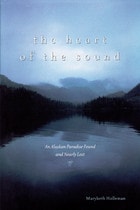
Heart Of The Sound
Marybeth Holleman
University of Utah Press, 2004
"You can’t step in the same river twice—although I once believed I could. I believed that the pieces of my life I had chosen, those I held close to my heart, would, once chosen and held, remain the same."—from the book
How does one recover from disaster? That question is at the heart of Marybeth Holleman’s lyrical, elegiac response to the repercussions of the Exxon Valdez oil spill that devastated Alaska’s Prince William Sound in 1989. Twining together the destruction of an ecosystem and the disintegration of her marriage, Holleman explores the resiliency of nature—both wild and human—and the ways in which that resiliency is tested. Like the oil that remains pooled beneath rocks years after the tanker spill, the emotional wounds of the past lie just below the surface. Recovery and restoration from the pain wrought by human hands does not come easily.
If much of nature writing is about the heart’s search for an unspoiled, perfect landscape, The Heart of the Sound is about what happens when the return-to-paradise fantasy is over and paradise is lost. In language rich with passion and hard-won insight, Holleman creates a captivating picture of a woman who found her Eden in the sweeping fjords of Alaska only to lose it to ecological tragedy. But somewhere within that loss, she finds herself.
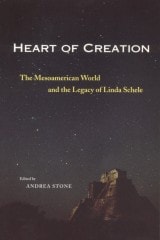
Heart of Creation
The Mesoamerican World and the Legacy of Linda ScheleEdited by Andrea Stone
University of Alabama Press, 2002
This accessible, state-of-the-art review of Mayan hieroglyphics and cosmology also serves as a tribute to one of the field's most noted pioneers.
The core of this book focuses on the current study of Mayan hieroglyphics as inspired by the recently deceased Mayanist Linda Schele. As author or coauthor of more than 200 books or articles on the Maya, Schele served as the chief disseminator of knowledge to the general public about this ancient Mesoamerican culture, similar to the way in which Margaret Mead introduced anthropology and the people of Borneo to the English-speaking world.
Twenty-five contributors offer scholarly writings on subjects ranging from the ritual function of public space at the Olmec site and the gardens of the Great Goddess at Teotihuacan to the understanding of Jupiter in Maya astronomy and the meaning of the water throne of Quirigua Zoomorph P. The workshops on Maya history and writing that Schele conducted in Guatemala and Mexico for the highland people, modern descendants of the Mayan civilization, are thoroughly addressed as is the phenomenon termed "Maya mania"—the explosive growth of interest in Maya epigraphy, iconography, astronomy, and cosmology that Schele stimulated. An appendix provides a bibliography of Schele's publications and a collection of Scheleana, written memories of "the Rabbit Woman" by some of her colleagues and students.
Of interest to professionals as well as generalists, this collection will stand as a marker of the state of Mayan studies at the turn of the 21st century and as a tribute to the remarkable personality who guided a large part of that archaeological research for more than two decades.

Heart of Palms
My Peace Corps Years in TranquillaMeredith W. Cornett
University of Alabama Press, 2014
A memoir of service, culture and transformation in a rural Panamanian village by a young American woman trained as a community forester for the Peace Corp.
In the storied fifty-year history of the US Peace Corps, Heart of Palms is the first Peace Corps memoir set in Panama, the slender isthmus that connects two continents and two oceans. In her memoir, Meredith Cornett transports readers to the remote village of Tranquilla, where dugout canoes are the mainstay of daily transportation, life and nature are permeated by witchcraft, and a restful night’s sleep may be disturbed by a raiding phalanx of army ants.
Cornett is sent to help counter the rapid deforestation that is destroying the ecosystem and livelihoods of the Panama Canal watershed region. Her first chapters chronicle her arrival and struggles not only with the social issues of language, loneliness, and insecurity, but also with the tragicomic basics of mastering open-fire cookery and intrusions by insects and poisonous snakes. As she grows to understand the region and its people, her keen eye discerns the overwhelming scope of her task. Unable to plant trees faster than they are lost, she writes with moving clarity about her sense of powerlessness.
Combating deforestation leads Cornett into an equally fierce battle against her own feelings of fear and isolation. Her journey to Panama becomes a parallel journey into herself. In this way, Heart of Palms is much more than a record of her Peace Corps service; it is also a moving environmental coming-of-age story and nuanced meditation on one village’s relationship to nature. When she returns home two years later, Cornett brings with her both skills and experience and a remarkable, newfound sense of confidence and mission.
Writing with rueful, self-deprecating humor, Cornett lets us ride along with her on a wave of naïve optimism, a wave that breaks not only on fear and intimidation, but also on tedium and isolation. Heart of Palms offers a bracing alternative to the romantic idealism common to Peace Corps memoirs and will be valued as a welcome addition to writing about the Peace Corps and environmental service.
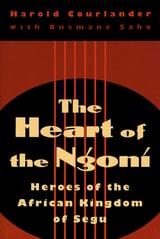
Heart of the Ngoni
Heroes of the African Kingdom of SeguHarold Courlander
University of Massachusetts Press, 1994
The heroic legends described here recreate the events and annals of the kingdom of Segu and of the Bambara tribe that formed a series of important city-states along the Niger River during the 17th century.
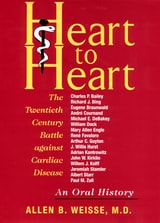
Heart to Heart
The Twentieth Century Battle against Cardiac Disease--An Oral HistoryWeisse, Allen B
Rutgers University Press, 2002
In Heart to Heart, Dr. Allen B. Weisse presents the first collection of in-depth conversations with some of the world's most renowned cardiologists and surgeons. Weisse's interviews bring a special vitality to the doctors' recollections of the people and events that influenced them, their motivations, their problems, their interactions with their contemporaries, and their hopes and beliefs for the future. Since not every doctor who has made important contributions to the treatment and prevention of heart disease could be interviewed for this volume, Weisse includes a biographical section listing other prominent cardiologists and surgeons as well as a list of recommended reading. This comprehensive history will be a resource for any student of cardiology or general medicine.

Heartbeat of Struggle
The Revolutionary Life of Yuri KochiyamaDiane C. Fujino
University of Minnesota Press, 2005
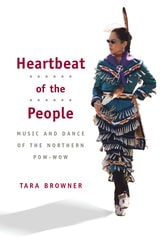
Heartbeat of the People
Music and Dance of the Northern Pow-wowTara Browner
University of Illinois Press, 2002

Heartland Heroes
Remembering World War IIKen Hatfield
University of Missouri Press, 2003
"War is about patriotism, about sacrifice, about conquering fear. And perhaps most of all, it's about the guy in the foxhole next to you, taking care of each other, protecting each other, loving each other; a camaraderie so intense only men who have been in combat can ever know what it's like. Yes, most of all, war is about love."
Heartland Heroes is a collection of remarkable stories from ordinary men and women who lived through extraordinary times. They resided in places like Lee’s Summit, Independence, and Kansas City, yet their experiences were very much like those of World War II veterans everywhere. Some were marines, nurses, or fighter pilots, others were simply civilians who lived through the war under the martial law imposed on the Hawaiian Islands after the attack on Pearl Harbor.
Heartless Immensity
Literature, Culture, and Geography in Antebellum AmericaAnne Baker
University of Michigan Press, 2010
Building on extensive archival research as well as insights from cultural geographers and theorists of nationhood, Heartless Immensity demonstrates that national expansion had a far more complicated, multifaceted impact on antebellum American culture than has previously been recognized. Baker shows that Americans developed a variety of linguistic strategies for imagining the form of the United States and its position in relation to other geopolitical entities. Comparisons
to European empires, biblical allusions, body politic metaphors, and metaphors derived from science all reflected—and often attempted to assuage—fears that the nation was becoming either monstrously large or else misshapen in ways that threatened cherished beliefs and national self-images.
Heartless Immensity argues that, in order to understand the nation’s shift from republic to empire and to understand American culture in a global context, it is first necessary to pay close attention to the processes by which the physical entity known as the United States came into being. This impressively thorough study will make a valuable contribution to the fields of American studies and literary studies.
Anne Baker is Assistant Professor of English at North Carolina State University.

Hearts and Minds
Bodies, Poetry, and Resistance in the Vietnam EraMichael Bibby
Rutgers University Press, 1996
The early 1960s to the mid-1970s was one of the most turbulent periods in American history. The U.S. military was engaged in its longest, costliest overseas conflict, while the home front was torn apart by riots, protests, and social activism. In the midst of these upheavals, an underground and countercultural press emerged, giving activists an extraordinary forum for a range of imaginative expressions. Poetry held a prominent place in this alternative media. The poem was widely viewed by activists as an inherently anti-establishment form of free expression, and poets were often in the vanguards of political activism.
Hearts and Minds is the first book-length study of the poems of the Black Liberation, Women's Liberation, and GI Resistance movements during the Vietnam era. Drawing on recent cultural and literary theories, Bibby investigates the significance of images, tropes, and symbols of human bodies in activist poetry. Many key political slogans of the period––"black is beautiful," "off our backs"––foreground the body. Bibby demonstrates that figurations of bodies marked important sites of social and political struggle.
Although poetry played such an important role in Vietnam-era activism, literary criticism has largely ignored most of this literature. Bibby recuperates the cultural-historical importance of Vietnam-era activist poetry, highlighting both its relevant contexts and revealing how it engaged political and social struggles that continue to motivate contemporary history. Arguing for the need to read cultural history through these "underground" texts, Hearts and Minds offers new grounds for understanding the recent history of American poetry and the role poetry has played as a medium of imaginative political expression.
Hearts of Gold
John Ernest
University of Delaware Press, 0