Results by title
4743 books match the query 'Religion' and 176 start with h
How America Met the Jews
Hasia R. Diner
SBL Press, 2017
Explore how American conditions and Jewish circumstances collided in the nineteenth and early twentieth centuries
In this new book award-winning author Hasia R. Diner explores the issues behind why European Jews overwhelmingly chose to move to the United States between the 1820s and 1920s. Unlike books that tend to romanticize American freedom as the force behind this period of migration or that tend to focus on Jewish contributions to America or that concentrate on how Jewish traditions of literacy and self-help made it possible for them to succeed, Diner instead focuses on aspects of American life and history that made it the preferred destination for 90 percent of European Jews.
Features:
- Examination of the realities of race, immigration, color, money, economic development, politics, and religion in America
- Exploration of an America agenda that sought out white immigrants to help stoke economic development and that valued religion as a force for morality

How Free Can Religion Be?
Randall P. Bezanson
University of Illinois Press, 2010
In tracking the evolution of the First Amendment's Free Exercise and Establishment Clause doctrine through Key Supreme Court decisions on religious freedom, legal scholar Randall P. Bezanson focuses on the court's shift from strict separation of church and state to a position where the government accommodates and even fosters religion. Beginning with samples from the latter half of the nineteenth century, the detailed case studies present new problems and revisit old ones as well: the purported belief of polygamy in the Mormon Church; state support for religious schools; the teaching of evolution and creationism in public schools; Amish claims for exemption from compulsory education laws; comparable claims for Native American religion in relation to drug laws; and rights of free speech and equal access by religious groups in colleges and public schools.
How It Is
The Native American Philosophy of V. F. CordovaV. F. Cordova; Edited by Kathleen Dean Moore, Kurt Peters, Ted Jojola, and Amber Lacy, with a Foreword by Linda Hogan
University of Arizona Press, 2007
In three parts, Cordova sets out a complete Native American philosophy. First she explains her own understanding of the nature of reality itself—the origins of the world, the relation of matter and spirit, the nature of time, and the roles of culture and language in understanding all of these. She then turns to our role as residents of the Earth, arguing that we become human as we deepen our relation to our people and to our places, and as we understand the responsibilities that grow from those relationships. In the final section, she calls for a new reverence in a world where there is no distinction between the sacred and the mundane.
Cordova clearly contrasts Native American beliefs with the traditions of the Enlightenment and Christianized Europeans (what she calls “Euroman” philosophy). By doing so, she leads her readers into a deeper understanding of both traditions and encourages us to question any view that claims a singular truth. From these essays—which are lucid, insightful, frequently funny, and occasionally angry—we receive a powerful new vision of how we can live with respect, reciprocity, and joy.
How John Works
Storytelling in the Fourth GospelDouglas Estes
SBL Press, 2016
Essential classroom resource for New Testament courses
In this book, a group of international scholars go in detail to explain how the author of the Gospel of John uses a variety of narrative strategies to best tell his story. More than a commentary, this book offers a glimpse at the way an ancient author created and used narrative features such as genre, character, style, persuasion, and even time and space to shape a dramatic story of the life of Jesus.
Features:
- An introduction to the Fourth Gospel through its narrative features and dynamics
- Fifteen features of story design that comprise the Gospel of John
- Short, targeted essays about how John works that can be used as starting points for the study of other Gospels/texts
How Large Is God
The Voices of Scientists and TheologiansJohn Marks Templeton
Templeton Press, 1998
This new collection of essays reveals how very little we know about God and fundamental spiritual principles. In recent years, scientific research has revealed that the universe is staggering in size and intricacy, and some scientists are now suggesting that our definition of God is much too small. Nine distinguished scholars and scientists present their varied views on the dimensions of God.
Edited by philanthropist John Marks Templeton, this fascinating and challenging book continues the exploration of theological and philosophical implications of the momentous and accelerating scientific discoveries of our times.
How Lifeworlds Work
Emotionality, Sociality, and the Ambiguity of BeingMichael Jackson
University of Chicago Press, 2017
In How Lifeworlds Work, Jackson draws on years of ethnographic fieldwork in West Africa to highlight the dynamic quality of human relationships and reinvigorate the study of kinship and ritual. How, he asks, do we manage the perpetual process of accommodation between social norms and personal emotions, impulses, and desires? How are these two dimensions of lived reality joined, and how are the dual imperatives of individual expression and collective viability managed? Drawing on the pragmatist tradition, psychology, and phenomenology, Jackson offers an unforgettable, beautifully written account of how we make, unmake, and remake, our lifeworlds.
How Political Parties Mobilize Religion
Lessons from Mexico and TurkeyLuis Felipe Mantilla
Temple University Press, 2021
Political mobilization tends to take different forms in contemporary Catholic- and Sunni-majority countries. Luis Felipe Mantilla attributes this dynamic to changes taking place in religious communities and the political institutions that govern religious political engagement.
In How Political Parties Mobilize Religion, Mantillaevenhandedly traces the emergence and success of religious parties in Mexico and Turkey, two countries shaped by assertive secular regimes. In doing so, he demonstrates that religious parties are highly responsive to political institutions, such as electoral laws, as well as to the structure of broader religious communities.
Whereas in both countries, the electoral success of religious mobilizers was initially a boon for democracy, in Mexico it was marred by political mismanagement and became entangled with persistent corruption and escalating violence. In Turkey, the democratic credentials of religious mobilizers were profoundly eroded as the government became increasingly autocratic, concentrating power in very few hands and rolling back basic liberal rights.
Mantilla investigates the role religious mobilization plays in the evolution of electoral politics and democratic institutions, and to what extent their trajectories reflect broader trends in political Catholicism and Islam.
How They Linger
Stories of Unforgettable SoulsDonald Davis
Parkhurst Brothers, Inc., 2024
Although everyone has a story, not everybody has a remarkable storyteller like Donald Davis to tell theirs.

How To Teach Your Children the Latin of the Church
Jack Clark
Catholic University of America Press, 2027
How We Became Human
Mimetic Theory and the Science of Evolutionary OriginsPierpaolo Antonello
Michigan State University Press, 2015
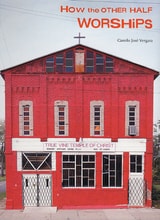
How the Other Half Worships
Camilo José Vergara
Rutgers University Press, 2005
Domestically and abroad, America is known as the richest country in the world. It is hard not to be impressed by the standard of living in the nation’s most affluent suburban and urban neighborhoods. Yet, scattered amid stretches that abound in wealth, the country is home to neighborhoods rife with violence, poverty, segregation, and decay. Within these blighted urban landscapes, however, there is at least one notable example of plenty: churches. They do not always appear as traditional houses of worship, but often emerge from the retrofitted shells of former storefronts, garages, factories, warehouses, domestic dwellings, and public institutions. Regardless of the façade, churches populate America’s poorest neighborhoods.
Bringing together more than 300 richly textured color photographs and a series of candid interviews with pastors, church officials, and congregation members, this extraordinary book explores the conditions, beliefs, and practices that shape the churches and the lives of the nation’s urban poor. Over a period of thirty years, sociologist and photographer Camilo José Vergara repeatedly visited these places of worship and the eclectic mix of buildings that house them. In twenty-one cities located in ten states across the country, photographic sequences coupled with insightful narrative show how ordinary structures assume, modify, and shed a religious character, how traditional churches—if they fail to adapt to new congregations—are demolished, and how new churches are designed and built from the ground up.
Vergara pays special attention to the objects, texts, and imagery that religious leaders make use of to create environments that inspire devotion. Pastors of developing congregations often arrive as crusaders, with missions that cannot be served by traditional religious iconography, and with budgets that force them to use inexpensive materials. In some cases, pastors bring objects of worship from their home towns in places such as Mexico, Puerto Rico, Africa, and the West Indies. Despite the idiosyncratic features and folk decoration that distinguish ghetto churches from one another, however, Vergara shows that, for the most part, they are driven by similar religious agendas. They tend to preach about resilience, avoid involving themselves in national and international events, and consider their truths to be absolute and eternal.
A powerful, poignant, and visually arresting portrait, How the Other Half Worships stands as a stark witness to how churches are being rebuilt in the dilapidated streets of America’s cities and how religion is being reinvented by the nation’s poor.
How the West Really Lost God
A New Theory of SecularizationMary Eberstadt
Templeton Press, 2014
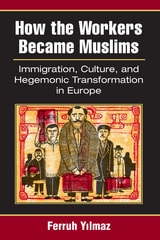
How the Workers Became Muslims
Immigration, Culture, and Hegemonic Transformation in EuropeFerruh Yilmaz
University of Michigan Press, 2016
Yilmaz’s primary case study is Danish immigration discourse, but his argument contextualizes his study in terms of questions of current concern across Europe, where right-wing groups that were long on the fringes of “legitimate” politics have managed to make significant gains with populations traditionally aligned with the Left. Specifically, Yilmaz argues that sociopolitical space has been transformed in the last three decades such that group classification has been destabilized to emphasize cultural rather than economic attributes.
According to this point-of-view, traditional European social and political splits are jettisoned for new “cultural” alliances pulling the political spectrum to the right, against the “corrosive” presence of Muslim immigrants, whose own social and political variety is flattened into an illusion of alien sameness.

Hugh Nibley
A Mormon ScholarJoseph M. Spencer
University of Illinois Press, 2027
Joseph M. Spencer examines Nibley’s theology, social criticism, and thought. Nibley’s elite academic training led to a long career at Brigham Young University. There he used ancient texts and comparative history to support his religious claims and confront modern culture and values. Spencer reveals Nibley as a serious thinker whose theology of grace buttressed the whole of his work. As he shows, readers misinterpret Nibley by seeing his scholarship as separate from his theology and social criticism, rather than as a unified project that emerged from the many streams of his wide-ranging thought.
Clear-eyed and accessible, Hugh Nibley provides a much-needed guide to the work of an important yet misunderstood theologian and intellectual.
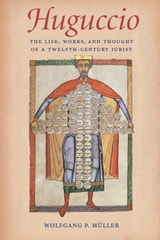
Huguccio
The Life, Works, and Thought of a Twelfth-Century JuristWolfgang Muller
Catholic University of America Press, 1994
This book provides the point of departure for anyone wishing to study Huguccio first-hand. It will be worthy reading for students of medieval canon law and an essential addition to all libraries supporting research in medieval studies.
Human Nature
Reflections on the Integration of Psychology and ChristianityMalcolm Jeeves
Templeton Press, 2006
College and university professors have been demanding that this book, out of print for several years, be made available again, as it is unique in its field. This new edition, which includes a new preface and guidance to current literature, offers a balanced study of the implications of scientific developments in psychology and neuroscience for traditional Christian beliefs.
Malcolm Jeeves, former editor-in-chief of Neuropsychologia, a leading international scientific journal in behavioral and cognitive neuroscience, explores the intersection of science and faith in defining what it means to be human. He reports on recent scientific research on consciousness and the link between mind, brain, and behavior. He examines issues such as determinism by indicating the possible relevance of chaos theory to enduring concerns about freedom and responsibility. He looks at similarities and differences between human nature and animal nature. He reexamines traditional dualist views of soul and body in the light of contemporary research on mind and brain and argues for a wholistic model. This leads to addressing questions such as: does spiritual awareness depend on the intactness of our brains or does spirituality stand apart from our biological substrate?
Jeeves' insightful analysis of the ways recent findings in psychology relate to certain Christian beliefs about people expands the global science religion dialogue.
Humanae Vitae, 50 Years Later
Embracing God's Vision for Marriage, Love, and Life; A CompendiumPreface by Most. Rev. Charles J. Chaput, OFM, Cap.
Catholic University of America Press, 2019
Humanae vitae, a generation later
Janet E Smith
Catholic University of America Press, 1991
Humble before the Void
A Western Astronomer, his Journey East, and a Remarkable Encounter Between Western Science and Tibetan BuddhismChris Impey
Templeton Press, 2014
“This book will provide readers with a greater awareness of the spirit of curiosity and inquiry that lies at the heart of the Buddhist tradition, as well as the fruitfulness of maintaining active communication between the Buddhist and scientific communities.” —from the Foreword by His Holiness the Dalai Lama
In Humble before the Void, Impey, a noted astronomer, educator, and author gives us a thoroughly absorbing and engaging account of his journey to Northern India to teach in the first-ever “Science for Monks” leadership program. The program was initiated by His Holiness the Dalai Lama to introduce science into the Tibetan Buddhist monastic tradition.
In a vivid and compelling narrative, Impey introduces us to a group of exiled Tibetan monks whose charm, tenacity and unbridled enthusiasm for learning is infectious. Impey marvels not only at their enthusiasm, but at their tireless diligence that allows the monks to painstakingly build intricate sand mandalas—that can be swept away in an instant. He observes them as they meticulously count galaxies and notes how their enthusiasm and diligence stands in contrast to many American students who are frequently turned off by science’s inability to deliver easy, immediate payoffs. Because the Buddhist monks have had a limited science education, Impey must devise creative pedagogy. His new students immediately take to his inspired teaching methods, whether it’s the use of balloons to demonstrate the Hubble expansion or donning an Einstein mask to explain the theory of relativity.
Humble before the Void also recounts Impey’s experiences outside the classroom, from the monks’ eagerness to engage in pick-up basketball games and stream episodes of hip American sitcoms to the effects on his relationship with the teenage son who makes the trip with him. Moments of profound serenity and beauty in the Himalayas are contrasted with the sorrow of learning that other monks have set themselves on fire to protest the Chinese oppression in Tibet.
At the end of the three week program, both the monks and Impey have gained a valuable education. While the monks have a greater understanding and appreciation of science, Impey has acquired greater self- knowledge and a deeper understanding of the nature of learning and teaching in the East and West. This understanding leads to a renewed enthusiasm for making his topic come alive for others.
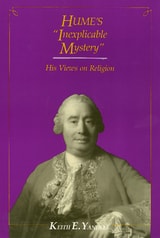
Hume's Inexplicable Mystery
His Views on ReligionKeith E. Yandell
Temple University Press, 1993
The eighteenth-century Scottish empiricist David Hume has been regarded as a notorious enemy of religion. Still, his discussion of religion is systematic, sophisticated, and sustained. Focusing mainly on two of Hume’s works, the relatively neglected Natural History of Religion and the more widely read Dialogues Concerning Natural Religion, Keith Yandell analyzes Hume’s treatment of a subject that he described as "a riddle, an enigma, an inexplicable mystery." In so doing, he explores the relationships between Hume’s philosophy of religion and his general philosophy.
Hume’s "evidentialism," applied to religion, can be summed up by saying that it is unreasonable to accept a religious belief unless one has evidence for it. Since it is also Hume’s view that there is no evidence for any religious belief, he concludes that no one is ever reasonable in accepting a religious belief. Yandell examines the explanations that Hume gave for such acceptance in Natural History of Religion. Addressing the Dialogues Concerning Natural Religion, he compares Hume’s views to those of such authors as Herbert of Cherbury and Bishop Joseph Butler, traces changes in Hume’s theory of meaning, and discusses the ontological and cosmological arguments and Hume’s treatment of the problem of evil. Yandell then considers other lesser known writings by Hume that are relevant to his philosophy of religion.
Humility
The Quiet VirtueEverett L. Worthington
Templeton Press, 2007
Humility is a virtue that can be difficult to describe because of its paradoxical nature: claiming authority about humility and claiming that one is humble both suggest a lack of humility. In Humility, Everett L.Worthington Jr. seeks a way around this paradox by looking to people who are considered by others to be humble. He suggests people as examples: Jesus, Siddhartha, Gandhi, Mother Teresa, and Martin Luther King Jr. He looks, too, at people whom he admires. He examines the characteristics of humility they share, and, in doing so, formulates a working understanding of humility.
Science has made few attempts to measure humility, Worthington points out, but those few studies do give a different, but complementary, perspective on humility than the wisdom of the ages. Humility may not be a skill we can learn, but people can be inspired to be humble. "Great people—and ordinary people acting nobly—can inspire us," Worthington writes. "When we catch the spirit, we can transfer that spirit from ourselves to others." Quotations interspersed throughout the book reinforce the message that the unassuming virtue of humility transforms lives.
Humor in the Midst of Mark
Jon Carman
SBL Press, 2025
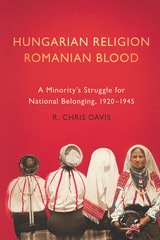
Hungarian Religion, Romanian Blood
A Minority's Struggle for National Belonging, 1920–1945R. Chris Davis
University of Wisconsin Press, 2019
Davis's highly illuminating example is the case of the little-known Moldavian Csangos, a Hungarian- and Romanian-speaking community of Roman Catholics in eastern Romania. During World War II, some in the Romanian government wanted to expel them. The Hungarian government saw them as Hungarians and wanted to settle them on lands confiscated from other groups. Resisting deportation, the clergy of the Csangos enlisted Romania's leading racial anthropologist, collected blood samples, and rewrote a millennium of history to claim Romanian origins and national belonging—thus escaping the discrimination and violence that devastated so many of Europe's Jews, Roma, Slavs, and other minorities. In telling their story, Davis offers fresh insight to debates about ethnic allegiances, the roles of science and religion in shaping identity, and minority politics past and present.
Hunted
Predation and Pentecostalism in GuatemalaKevin Lewis O'Neill
University of Chicago Press, 2019
Hunted is based on more than ten years of fieldwork among these centers and the drug users that populate them. Over time, as Kevin Lewis O’Neill engaged both those in treatment and those who surveilled them, he grew increasingly concerned that he, too, had become a hunter, albeit one snatching up information. This thoughtful, intense book will reframe the arc of redemption we so often associate with drug rehabilitation, painting instead a seemingly endless cycle of hunt, capture, and release.
Huxley's Church and Maxwell's Demon
From Theistic Science to Naturalistic ScienceMatthew Stanley
University of Chicago Press, 2014
Matthew Stanley explores the overlap and shift between theistic and naturalistic science through a parallel study of two major scientific figures: James Clerk Maxwell, a devout Christian physicist, and Thomas Henry Huxley, the iconoclast biologist who coined the word agnostic. Both were deeply engaged in the methodological, institutional, and political issues that were crucial to the theistic-naturalistic transformation. What Stanley’s analysis of these figures reveals is that the scientific naturalists executed a number of strategies over a generation to gain control of the institutions of scientific education and to reimagine the history of their discipline. Rather than a sudden revolution, the similarity between theistic and naturalistic science allowed for a relatively smooth transition in practice from the old guard to the new.
Hyecho's Journey
The World of BuddhismDonald S. Lopez Jr.
University of Chicago Press, 2017
With Hyecho’s Journey, eminent scholar of Buddhism Donald S. Lopez Jr. re-creates Hyecho’s trek. Using the surviving fragments of Hyecho’s travel memoir, along with numerous other textual and visual sources, Lopez imagines the thriving Buddhist world the monk explored. Along the way, Lopez introduces key elements of Buddhism, including its basic doctrines, monastic institutions, works of art, and the many stories that have inspired Buddhist pilgrimage. Through the eyes of one remarkable Korean monk, we discover a vibrant tradition flourishing across a vast stretch of Asia. Hyecho’s Journey is simultaneously a rediscovery of a forgotten pilgrim, an accessible primer on Buddhist history and doctrine, and a gripping, beautifully illustrated account of travel in a world long lost.