Results by title
101 books match the query '1933-1945' and 5 start with i
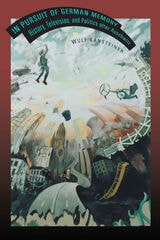
In Pursuit of German Memory
History, Television, and Politics after AuschwitzWulf Kansteiner
Ohio University Press, 2006
The collective memories of Nazism that developed in postwar Germany have helped define a new paradigm of memory politics. From Europe to South Africa and from Latin America to Iraq, scholars have studied the German case to learn how to overcome internal division and regain international recognition.
In Pursuit of German Memory: History, Television, and Politics after Auschwitz examines three arenas of German memory politics—professional historiography, national politics, and national public television—that have played key roles in the reinvention of the Nazi past in the last sixty years. Wulf Kansteiner shows that the interpretations of the past proposed by historians, politicians, and television producers reflect political and generational divisions and an extraordinary concern for Germany's image abroad. At the same time, each of these theaters of memory has developed its own dynamics and formats of historical reflection.
Kansteiner’s analysis of the German scene reveals a complex social geography of collective memory. In Pursuit of German Memory underscores the fact that German memories of Nazism, like many other collective memories, combine two seemingly contradictory qualities: They are highly mediated and part of a global exchange of images and story fragments but, at the same time, they can be reproduced only locally, in narrowly circumscribed networks of communication.

In Search of "Aryan Blood"
Serology in Interwar and National Socialist GermanyRachel E. Boaz
Central European University Press, 2012

In the House of the Hangman
The Agonies of German Defeat, 1943-1949Jeffrey K. Olick
University of Chicago Press, 2005
In the House of the Hangman chronicles this delicate process, exploring key debates about the Nazi past and German future during the later years of World War II and its aftermath. What did British and American leaders think had given rise to National Socialism, and how did these beliefs shape their intentions for occupation? What rhetorical and symbolic tools did Germans develop for handling the insidious legacy of Nazism? Considering these and other questions, Jeffrey K. Olick explores the processes of accommodation and rejection that Allied plans for a new German state inspired among the German intelligentsia. He also examines heated struggles over the value of Germany's institutional and political heritage. Along the way, he demonstrates how the moral and political vocabulary for coming to terms with National Socialism in Germany has been of enduring significance—as a crucible not only of German identity but also of contemporary thinking about memory and social justice more generally.
Given the current war in Iraq, the issues contested during Germany's abjection and reinvention—how to treat a defeated enemy, how to place episodes within wider historical trajectories, how to distinguish varieties of victimhood—are as urgent today as they were sixty years ago, and In the House of the Hangman offers readers an invaluable historical perspective on these critical questions.
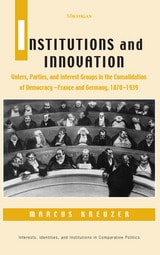
Institutions and Innovation
Voters, Parties, and Interest Groups in the Consolidation of Democracy - France and Germany, 1870-1939Marcus Kreuzer
University of Michigan Press, 2001
Institutions and Innovations analyzes the troubled history of French and German parties between 1870 and 1939 to develop a general explanation of how the development of responsive parties constitutes a key element for the consolidation of democracies, past and present. It explains why French parties responded more swiftly than German ones to very similar changes in their economic and political environments. The book demonstrates that the national differences in party responsiveness played a key role in the collapse of the German Weimar Republic (1918ñ1933) and in the survival of the French Third Republic (1870ñ1939). It addresses the general fates of French and German democracy by asking three specific questions: Why did German socialists reject Keynesianism while their French counterparts swiftly embraced it? Why did German liberals, compared to French ones, fail to modernize their logistical infrastructure and electioneering methods? Why were German conservatives less effective than French ones in fending off the challenge posed by fascist and peasant insurgent movements that arose in the 1920s and 1930s?
In answering these questions, the book engages new institutional theories and longstanding party literature to demonstrate that the electoral conduct of parties is structured in equal parts by socioeconomic and institutional constraints. The book's interdisciplinary focus sheds a critical light on the exceptionalism of purely historical accounts and reductionist and universal claims of ahistorical political science theories.
Marcus Kreuzer is Assistant Professor of Political Science, Villanova University.
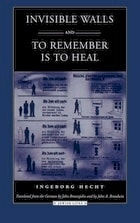
Invisible Walls and To Remember is to Heal
A German Family under the Nuremberg LawsIngeborg Hecht
Northwestern University Press, 1999
In Invisible Walls, Hecht writes of what it was like to live under these circumstances, sharing heartbreaking details of her personal life, including the loss of her daughter's father on the Russian front; the death of her own father after his deportation in 1944; and her fears of perishing coupled with the shame of faring better than most of her family and friends. This new volume adds the first translation of part of Hecht's second book, To Remember is to Heal, a collection of vignettes of encounters and experiences that resulted from the publication of the first.