Results by title
59 books match the query '1993-' and 6 start with i

Imperial Israel and the Palestinians
The Politics of ExpansionNur Masalha
Pluto Press, 2000
Masalha argues that the heart of the conflict between Zionist immigrants/settlers and the native Palestinians has always been about land, territory, demography and water. He documents how Israeli policy has made it a priority to expel the Palestinians, either by war or peaceful measures. But these imperialist tendencies are not restricted to extremist zealots. The author uncovers the expansionist policies found in Labour Zionism and Kookist ideology.
Chapters cover the Whole Land of Israel Movement, Zionist Revisionism and the Likud Party, Gush Emunim and the religious fundamentalists, parties and movements of the far right and the evolution of Israeli Jewish public attitudes since 1967.
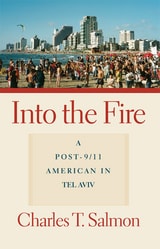
Into the Fire
A Post-9/11 American in Tel AvivCharles T. Salmon
Michigan State University Press, 2003
In the fall of 2001 Charles Salmon had a Fulbright fellowship in Israel. He was due to depart on September 12. Arriving in Israel a few weeks later, speaking no Hebrew and largely unfamiliar with Judaism and Israeli customs, he immersed himself in Israeli culture.
This collection of correspondence began as a weekly report to friends and was designed to offer an alternative to mainstream media. With the excitement of a tourist and the eagerness of an anthropologist, Salmon emerges as a modern Candide. He describes historical sites and a supermarket in Tel Aviv, discusses the differences between university students in Israel and America, and negotiates the purchase of food and the vagaries of the weather with humor and passion. The letters also discuss Israeli–Palestinian relations, and details terrorist events and responses to them.
This unique book focuses on how everyday hopes and fears transcend geopolitical boundaries and provides valuable lessons on how to thrive in these new and uncertain times.
Israel and Palestine
Competing HistoriesGreg Philo and Mike Berry
Pluto Press, 2006
Following on from their acclaimed book Bad News from Israel, Greg Philo and Mike Berry present a concise guide to the Israel-Palestine conflict. This uniquely accessible book will appeal to anyone looking for an approachable introduction. Uniquely, the authors show how there are many different, competing histories. They offer an overview of the wide range of contending viewpoints, and indicate those which are based on the most considered historical research.
The book covers key events in chronological order, in each case examining the varied historical accounts and presenting the beliefs of key thinkers across the ideological spectrum, from Edward Said to Binyamin Netanyahu. Starting the with emergence of the Zionist movement in the nineteenth century, and the figures who shaped it, the authors go on to cover the founding of Israel and its subsequent history, up to and including the 'roadmap for peace', the construction of the wall, the death of Arafat and the withdrawal from Gaza.
Israel and the Clash of Civilisations
Iraq, Iran and the Plan to Remake the Middle EastJonathan Cook
Pluto Press, 2008
Journalist Jonathan Cook explores Israel’s key role in persuading the Bush administration to invade Iraq, as part of a plan to remake the Middle East, and their joint determination to isolate Iran and prevent it from acquiring nuclear weapons that might rival Israel’s own.
This concise and clearly argued book makes the case that Israel's desire to be the sole regional power in the Middle East neatly chimed with Bush’s objectives in the “war on terror”.
Examining a host of related issues, from the ethnic cleansing of Palestinians to the role of Big Oil and the demonisation of the Arab world, Cook argues that the current chaos in the Middle East is the objective of the Bush administration – a policy that is equally beneficial to Israel.
Israel, Jordan, and Palestine
The Two-State ImperativeAsher Susser
Brandeis University Press, 2011
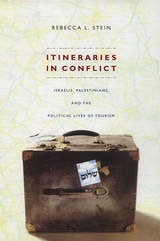
Itineraries in Conflict
Israelis, Palestinians, and the Political Lives of TourismRebecca L. Stein
Duke University Press, 2008
Combining vivid ethnographic detail, postcolonial theory, and readings of Israeli and Palestinian popular texts, Stein considers a broad range of Israeli leisure cultures of the Oslo period with a focus on the Jewish desires for Arab things, landscapes, and people that regional diplomacy catalyzed. Moving beyond conventional accounts, she situates tourism within a broader field of “discrepant mobility,” foregrounding the relationship between histories of mobility and immobility, leisure and exile, consumption and militarism. She contends that the study of Israeli tourism must open into broader interrogations of the Israeli occupation, the history of Palestinian dispossession, and Israel’s future in the Arab Middle East. Itineraries in Conflict is both a cultural history of the Oslo process and a call to fellow scholars to rethink the contours of the Arab-Israeli conflict by considering the politics of popular culture in everyday Israeli and Palestinian lives.