Results by title
1713 books match the query '21st century' and 63 start with i
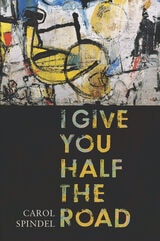
I Give You Half the Road
Carol Spindel
University of Wisconsin Press, 2021
Once considered the most stable country in West Africa, Ivory Coast was split by an armed rebellion in 2002 and endured a decade of instability and a violent conflict. Spindel provides an intimate glimpse into this turbulent period by weaving together the daily lives and paths of five neighbors. Their stories reveal Ivorians determined to reunite a divided country through reliance on mutual respect and obligation even while power-hungry politicians pursued xenophobic and anti-immigrant platforms for personal gain. Illuminating democracy as a fragile enterprise that must be continually invented and reinvented, I Give You Half the Road emphasizes the importance of connection, generosity, and forgiveness.
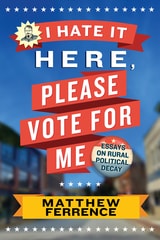
I Hate It Here, Please Vote for Me
Essays on Rural Political DecayMatthew Ferrence
West Virginia University Press, 2024
The Best Narrative & Biography Books of 2024, Selected by Porchlight
When a progressive college professor runs for the Pennsylvania House of Representatives in a deeply conservative rural district, he loses. That’s no surprise. But the story of how Ferrence loses and, more importantly, how American political narratives refuse to recognize the existence and value of nonconservative rural Americans offers insight into the political morass of our nation.
In essays focused on showing goats at the county fair, planting native grasses in the front lawn, the political power of poetry, and getting wiped out in an election, Ferrence offers a counter-narrative to stereotypes of monolithic rural American voters and emphasizes the way stories told about rural America are a source for the bitter divide between Red America and Blue America.
I Think Again of Those Ancient Chinese Poets
Tom Sexton
University of Alaska Press, 2010
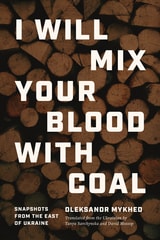
I Will Mix Your Blood with Coal
Snapshots from the East of UkraineOleksandr Mykhed, Tanya Savchynska, and David Mossop
Northwestern University Press, 2025
In 2014, the Russian army, with support from local militants, occupied parts of Ukraine’s two easternmost regions—once the beating industrial heart of the Soviet Union—where coal extraction has since exhausted both the human population and the natural resources. In late 2016, Oleksandr Mykhed set out on a research trip to explore the deep history and contested present of the area from the perspective of a fellow countryman who’d never been there.
Mykhed brings us on a painful yet hopeful journey across the Ukrainian east, sharing conversations with locals, snippets from archival documents, and the complicated perspectives of prominent cultural figures, such as writer Serhiy Zhadan, historian Olena Stiazhkina, and philosopher Ihor Kozlovsky, who was imprisoned and tortured for nearly two years.
I Will Mix Your Blood with Coal invites us to meet generations of coal miners. To learn about the Belgian and British investors who founded the east’s industrial cities. To remember the harrowing events of the First and Second World Wars and the incalculable brutality of Soviet history. To see the activists who are even now working to improve the country. To hear sweet memories of a lost utopia that never existed. Mykhed provides a unique portrait of life in the east during the war, before the full-scale invasion that would change everything.
I'll Tell You Mine
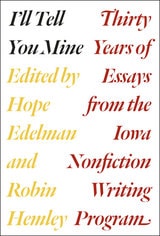
Thirty Years of Essays from the Iowa Nonfiction Writing ProgramEdited by Hope Edelman and Robin Hemley
University of Chicago Press, 2015
I’ll Tell You Mine is an extraordinary anthology, a book rooted in Iowa’s successful program that goes beyond mere celebration to present some of the best nonfiction writing of the past thirty years. Eighteen pieces produced by Iowa graduates exemplify the development of both the program and the field of nonfiction writing. Each is accompanied by commentary from the author on a challenging issue presented by the story and the writing process, including drafting, workshopping, revising, and listening to (or sometimes ignoring) advice. The essays are put into broader context by a prologue from Robert Atwan, founding editor of the Best American Essays series, who details the rise of nonfiction as a literary genre since the New Journalism of the 1960s.
Creative nonfiction is the fastest-growing writing concentration in the country, with more than one hundred and fifty programs in the United States. I’ll Tell You Mine shows why Iowa’s leads the way. Its insider’s view of the Iowa program experience and its wealth of groundbreaking nonfiction writing will entertain readers and inspire writers of all kinds.

INSIDE WEST VIRGINIA
PUBLIC POLICY PERSPECTIVES FOR THE 21ST CENTURYBRUCE KEITH
West Virginia University Press, 1999
Icons Axed, Freedoms Lost
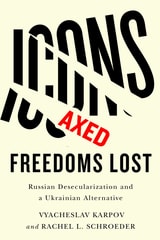
Russian Desecularization and a Ukrainian AlternativeVyacheslav Karpov
Rutgers University Press, 2025
Image
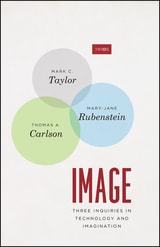
Three Inquiries in Technology and ImaginationMark C. Taylor, Mary-Jane Rubenstein, and Thomas A. Carlson
University of Chicago Press, 2021
Modern life is steeped in images, image-making, and attempts to control the world through vision. Mastery of images has been advanced by technologies that expand and reshape vision and enable us to create, store, transmit, and display images. The three essays in Image, written by leading philosophers of religion Mark C. Taylor, Mary-Jane Rubenstein, and Thomas A. Carlson, explore the power of the visual at the intersection of the human and the technological. Building on Heidegger’s notion that modern humanity aims to master the world by picturing or representing the real, they investigate the contemporary culture of the image in its philosophical, religious, economic, political, imperial, and military dimensions, challenging the abstraction, anonymity, and dangerous disconnection of contemporary images.
Taylor traces a history of capitalism, focusing on its lack of humility, particularly in the face of mortality, and he considers art as a possible way to reconnect us to the earth. Through a genealogy of iconic views from space, Rubenstein exposes the delusions of conquest associated with extraterrestrial travel. Starting with the pressing issues of surveillance capitalism and facial recognition technology, Carlson extends Heidegger’s analysis through a meditation on the telematic elimination of the individual brought about by totalizing technologies. Together, these essays call for a consideration of how we can act responsibly toward the past in a way that preserves the earth for future generations. Attending to the fragility of material things and to our own mortality, they propose new practices of imagination grounded in love and humility.
Images of Germany in American Literature
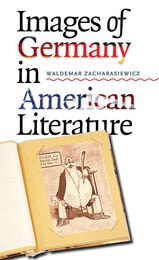
Waldemar Zacharasiewicz
University of Iowa Press, 2007
Starting with the notion of Germany as the ideal site for academic study and travel in the nineteenth century and concluding with the twentieth-century image of Germany as an aggressive country, this innovative work examines the ever-changing image of Germans and Germany in the writings of Louisa May Alcott, Samuel Clemens, Henry James, William James, George Santayana, W. E. B. Du Bois, John Dewey, H. L. Mencken, Katherine Anne Porter, Kay Boyle, Thomas Wolfe, Upton Sinclair, Gertrude Stein, Kurt Vonnegut, Thomas Pynchon, William Styron, Walker Percy, and John Hawkes, among others.
Imagining Extinction
The Cultural Meanings of Endangered SpeciesUrsula K. Heise
University of Chicago Press, 2016
Ursula K. Heise argues that understanding these stories and symbols is indispensable for any effective advocacy on behalf of endangered species. More than that, she shows how biodiversity conservation, even and especially in its scientific and legal dimensions, is shaped by cultural assumptions about what is valuable in nature and what is not. These assumptions are hardwired into even seemingly neutral tools such as biodiversity databases and laws for the protection of endangered species. Heise shows that the conflicts and convergences of biodiversity conservation with animal welfare advocacy, environmental justice, and discussions about the Anthropocene open up a new vision of multispecies justice. Ultimately, Imagining Extinction demonstrates that biodiversity, endangered species, and extinction are not only scientific questions but issues of histories, cultures, and values.

Imagining Persecution
Why American Christians Believe There Is a Global War against Their FaithJason Bruner
Rutgers University Press, 2021

Immanent Distance
Poetry and the Metaphysics of the Near at HandBruce Bond
University of Michigan Press, 2015
Immigration, Diversity, and Broadcasting in the United States 1990—2001
Vibert C. Cambridge
Ohio University Press, 2004
Impasse Poetics at the Nordic Oil Coast
Contemporary Petrofiction from Denmark and NorwayKarl Emil Rosenbaek Reetz
West Virginia University Press, 2026
Imperfect Fit
Aesthetic Function, Facture, and Perception in Art and Writing since 1950Allen Fisher
University of Alabama Press, 2016
Rethinking art, poetry, and perception through the creative disruptions of contemporary culture.
Imperfect Fit: Aesthetic Function, Facture, and Perception in Art and Writing since 1950 is an expansive and incisive examination of the patterns of connectedness in contemporary art and poetry. Allen Fisher—a highly accomplished poet, painter, critic, and art historian as well as a key figure in the British poetry revival of the 1960s and 1970s—has a close and discerning connection to his subjects.
In Imperfect Fit, Fisher focuses on the role of fracturing, ruptures, and breakages in many traditional ties between art and poetry, as well as the resulting use of collage and assemblage by practitioners of those arts. Fisher addresses, among other subjects, destruction as a signifier in twentieth-century art; the poetic employment of bureaucratic vocabularies and “business speak”; and the roles of public performance and memory loss in the fashioning of human knowledge and art.
Commonplace notions of coherence, logic, and truth are reimagined and deconstructed in this study, and Fisher concludes by suggesting that contemporary culture offers a particularly robust opportunity—and even necessity—to engage in the production of art as a pragmatic act. Scholars of art, poetry, and aesthetics will be engaged and challenged by this insightful work.
Implementing Inequality
The Invisible Labor of International DevelopmentRebecca Warne Peters
Rutgers University Press, 2020
Impossible Citizens
Dubai's Indian DiasporaNeha Vora
Duke University Press, 2013
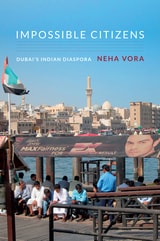
While their legal status defines them as perpetual outsiders, Indians are integral to the Emirati nation-state and its economy. At the same time, Indians—even those who have established thriving diasporic neighborhoods in the emirate—disavow any interest in formally belonging to Dubai and instead consider India their home. Vora shows how these multiple and conflicting logics of citizenship and belonging contribute to new understandings of contemporary citizenship, migration, and national identity, ones that differ from liberal democratic models and that highlight how Indians, rather than Emiratis, are the quintessential—yet impossible—citizens of Dubai.
In Her Place
Nashville Artists in the Twenty-First CenturyKathryn E. Delmez
Vanderbilt University Press, 2026
But isn’t that what it is to be Southern? Hasn’t life in the American South been a quagmire of contradictions from the very start?
The South has always been defined as much by what it isn’t as what it is, in much the same way that women have been defined by how they are not like men. The standard for an American artist—and perhaps for a person in general—seems to be a white, straight, cisgender man of vaguely Northern residence. Anything that deviates from that criteria needs to be justified, pointed out, turned into something exceptional in order to simply be visible. It is refreshing, then, that this exhibition does not wallow in the stagnant waters of Southern stereotypes. The artists of In Her Place are legion. They include a Tehran-born sculptor making vessels out of Tennessee red clay, an artist from Arkansas working with cardboard and references to unsettling histories, and a Nashville-born painter whose images of civil rights–era sit-ins read just as poignantly in 2026 as they would have in 1960.
If anything ties these artists together, it is not their gender or their location. It is their shared ingenuity and the comfort with which they subvert.
In Permanent Crisis
Ethnicity in Contemporary European Media and CinemaIpek A. Celik
University of Michigan Press, 2015
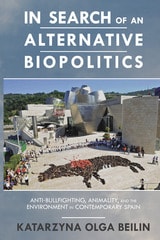
In Search of an Alternative Biopolitics
Anti-Bullfighting, Animality, and the Environment in Contemporary SpainKatarzyna Olga Beilin
The Ohio State University Press, 2015
Analyses of the synergy of press debates on bullfighting and the War on Terror, as well as media debates on King Juan Carlos’s hunt in Botswana and his resignation, reveal how the concepts structuring human/animal relations condition national biopolitics. Beilin traces a main principle, where sacrifice of some lives is deemed necessary for the sake of others, from bullfighting, through environmental destruction and immigration policies, to bioeconomy. Ultimately, In Search of an Alternative Biopolitics argues that to address ever-increasing threats of global warming and future catastrophes, we urgently need to redefine concepts structuring the human and the nonhuman realms.
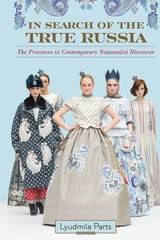
In Search of the True Russia
The Provinces in Contemporary Nationalist DiscourseLyudmila Parts
University of Wisconsin Press, 2020
Surveying a largely unexplored body of Russian journalism, literature, and film from the late twentieth and early twenty-first centuries, Parts finds that the harshest portrayals of the provinces arise within "high" culture. Popular culture, however, has increasingly turned from the newly prosperous, multiethnic, and westernized Moscow to celebrate the hinterlands as repositories of national traditions and moral strength. This change, she argues, has directed debate about Russia's identity away from its loss of imperial might and global prestige and toward a hermetic national identity based on the opposition of "us vs. us" rather than "us vs. them." She offers an intriguing analysis of the contemporary debate over what it means to be Russian and where "true" Russians reside.
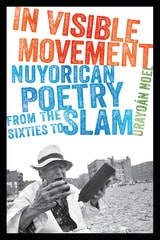
In Visible Movement
Nuyorican Poetry from the Sixties to SlamUrayoan Noel
University of Iowa Press, 2014
The first book-length study specifically devoted to Nuyorican poetry, In Visible Movement is unique in its historical and formal breadth, ranging from the foundational poets of the 1960s and 1970s to a variety of contemporary poets emerging in and around the Nuyorican Poets Cafe “slam” scene of the 1990s and early 2000s. It also unearths a largely unknown corpus of poetry performances, reading over forty years of Nuyorican poetry at the intersection of the printed and performed word, underscoring the poetry’s links to vernacular and Afro-Puerto Rican performance cultures, from the island’s oral poets to the New York sounds and rhythms of Latin boogaloo, salsa, and hip-hop. With depth and insight, Urayoán Noel analyzes various canonical Nuyorican poems by poets such as Pedro Pietri, Victor Hernández Cruz, Miguel Algarín, Miguel Piñero, Sandra María Esteves, and Tato Laviera. He discusses historically overlooked poets such as Lorraine Sutton, innovative poets typically read outside the Nuyorican tradition such as Frank Lima and Edwin Torres, and a younger generation of Nuyorican-identified poets including Willie Perdomo, María Teresa Mariposa Fernández, and Emanuel Xavier, whose work has received only limited critical consideration. The result is a stunning reflection of how New York Puerto Rican poets have addressed the complexity of identity amid diaspora for over forty years.

In a Fine Frenzy
Poets Respond to ShakespeareStarkey, David
University of Iowa Press, 2005
Showcasing poems by more than ninety contemporary American poets, In a Fine Frenzyreveals what Shakespeare’s poetic children have made of their inheritance. Particularly interested in Viola, Miranda, Prospero, Desdemona, Iago, Lear, Cordelia, Hamlet, Horatio, and Ophelia, the poets respond to the sonnets, the comedies, the tragedies, the romances, and, to a lesser degree, Shakespeare the man. In so doing they reveal the aspects of his work most currently captivating to modern writers.
Those who cherish Shakespeare’s mercurial wit will delight in the rapid shifts, from grief to hilarity, so characteristic of the bard himself. Comic poems about tragedies follow decidedly somber poems about comedies. Single poems contain multiple emotional twists and turns. Some pay homage; most interact directly with the original Shakespearean text. Collectively, they corroborate Ben Jonson's assertion that Shakespeare is “not of an age, but for all time.”
In the Event, Volume 19
Lloyd Pratt, special issue editor
Duke University Press, 0
One essay identifies flash points when “the event” has preoccupied Western thought from Plato to Freud. Others show how particular events—Hurricane Katrina, the Algerian War, the Haitian Revolution—betray the inadequacy of traditional nation-based frameworks for understanding the course of history. Media representations also are a central concern, as in one contributor’s analysis of how child abductions turn some (white girls’) bodies into events while other (brown girls’) bodies are denied that status. The final essay is a meditation on the end of the world that explores how the idea of the end as event transforms everyday language into cryptic signs.
Contributors: Andrew Aisenberg, Wai Chee Dimock, Jonathan Elmer, Akira Lippit, Lloyd Pratt,Rebecca Wanzo, Hayden White

In the Inner Sanctum
Behind the Scenes at Big FightsThomas Hauser
University of Arkansas Press, 2022
When Thomas Hauser was selected for induction into the International Boxing Hall of Fame in 2019, his relationship with Muhammad Ali was widely cited. But Ali was just one of the many fighters who have shared momentous times with Hauser. For decades, elite fighters like Evander Holyfield, Manny Pacquiao, Roy Jones Jr., Bernard Hopkins, Ricky Hatton, Kelly Pavlik, Sergio Martínez, Jermain Taylor, Miguel Cotto, Gennady Golovkin, and Canelo Álvarez have welcomed him into their dressing rooms to record their journeys on fight night.
Gathering and updating more than thirty essays from Hauser’s critically acclaimed yearly collections, In the Inner Sanctum celebrates these most dramatic hours in boxers’ lives. In each account, Hauser chronicles the very moment when a fighter’s physical well-being and financial future are on the line—when the fighter is most at risk and most alive.
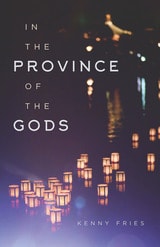
In the Province of the Gods
Kenny Fries
University of Wisconsin Press, 2021
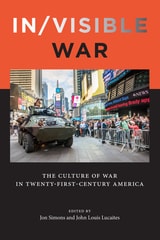
In/visible War
The Culture of War in Twenty-first-Century AmericaJon Simons and John Louis Lucaites
Rutgers University Press, 2017
Yet, the normalization of twenty-first century war also renders it highly visible. War is made visible through popular, commercial, mediated culture. The spectacle of war occupies the contemporary public sphere in the forms of celebrations at athletic events and in films, video games, and other media, coming together as MIME, the Military-Industrial-Media-Entertainment Network.
Inclined to Speak
An Anthology of Contemporary Arab American PoetryHayan Charara
University of Arkansas Press, 2008
India as Kingmaker
Status Quo or Revisionist PowerMichael O. Slobodchikoff and Aakriti A. Tandon
University of Michigan Press, 2022
As India finds itself in the envious position of kingmaker, both the status quo and revisionist major powers are jockeying for India’s support for either upholding or revising the current world order. Using India’s bilateral treaties as a proxy measure of the strength of its relationship with other major powers, Slobodchikoff and Tandon determine whether India will remain neutral in its foreign policy approach or adopt a more assertive role in shaping the future global order. This book provides an in-depth analysis of India’s bilateral ties with major powers that include the United States, Russia, China, Japan, as well as the European Union (including the United Kingdom, France, and Germany) and uses network analysis to study India’s foreign policy positions with other major powers.
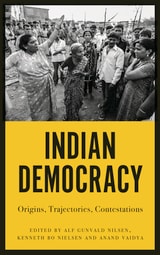
Indian Democracy
Origins, Trajectories, ContestationsEdited by Alf Gunvald Nilsen, Kenneth Bo Nielsen, and Anand Vaidya
Pluto Press, 2019
India’s pluralism has always posed a formidable challenge to its democracy, with many believing that a clash of identities based on region, language, caste, religion, ethnicity, and tribe would bring about its demise. With the meteoric rise to power of the Bharatiya Janata Party, the nation’s solidity is once again called into question: is Modi’s Hindu majoritarianism an anti-democratic attempt to transform India into a monolithic Hindu nation from which minorities and dissidents are forcibly excluded?
With examinations of the way that class and caste power shaped the making of India’s postcolonial democracy, the role of feminism, the media, and the public sphere in sustaining and challenging democracy, this book interrogates the contradictions at the heart of the Indian democratic project, examining its origins, trajectories, and contestations.
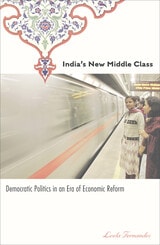
India’s New Middle Class
Democratic Politics in an Era of Economic ReformLeela Fernandes
University of Minnesota Press, 2006
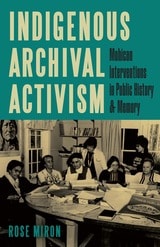
Indigenous Archival Activism
Mohican Interventions in Public History and MemoryRose Miron
University of Minnesota Press, 2024
Who has the right to represent Native history?
The past several decades have seen a massive shift in debates over who owns and has the right to tell Native American history and stories. For centuries, non-Native actors have collected, stolen, sequestered, and gained value from Native stories and documents, human remains, and sacred objects. However, thanks to the work of Native activists, Native history is now increasingly being repatriated back to the control of tribes and communities. Indigenous Archival Activism takes readers into the heart of these debates by tracing one tribe’s fifty-year fight to recover and rewrite their history.
Rose Miron tells the story of the Stockbridge-Munsee Mohican Nation and their Historical Committee, a group of mostly Mohican women who have been collecting and reorganizing historical materials since 1968. She shows how their work is exemplary of how tribal archives can be used strategically to shift how Native history is accessed, represented, written and, most importantly, controlled. Based on a more than decade-long reciprocal relationship with the Stockbridge-Munsee Mohican Nation, Miron’s research and writing is shaped primarily by materials found in the tribal archive and ongoing conversations and input from the Stockbridge-Munsee Historical Committee.
As a non-Mohican, Miron is careful to consider her own positionality and reflects on what it means for non-Native researchers and institutions to build reciprocal relationships with Indigenous nations in the context of academia and public history, offering a model both for tribes undertaking their own reclamation projects and for scholars looking to work with tribes in ethical ways.
Indigenous Poetics
Inés Hernández-Ávila
Michigan State University Press, 2025
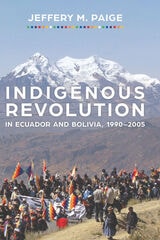
Indigenous Revolution in Ecuador and Bolivia, 1990–2005
Jeffery M. Paige
University of Arizona Press, 2020
Uprisings by indigenous peoples of Ecuador and Bolivia between 1990 and 2005 overthrew the five-hundred-year-old racial and class order inherited from the Spanish Empire. It started in Ecuador with the Great Indigenous Uprising, which was fought for cultural and economic rights. A few years later massive indigenous mobilizations began in Bolivia, culminating in 2005 with the election of Evo Morales, the first indigenous president.
Jeffrey M. Paige, an internationally recognized authority on the sociology of revolutionary movements, interviewed forty-five indigenous leaders who were actively involved in the uprisings. The leaders recount how peaceful protest and electoral democracy paved the path to power. Through the interviews, we learn how new ideologies of indigenous socialism drew on the deep commonalities between the communal dreams of their ancestors and the modern ideology of democratic socialism. This new discourse spoke to the people most oppressed by both withering racism and neoliberal capitalism.
Emphasizing mutual respect among ethnic groups (including the dominant Hispanic group), the new revolutionary dynamic proposes a communal worldview similar to but more inclusive than Western socialism because it adds indigenous cultures and nature in a spiritual whole. Although absent in the major revolutions of the past century, the themes of indigenous revolution—democracy, indigeneity, spirituality, community, and ecology—are critically important.
Paige’s interviews present the powerful personal experiences and emotional intensity of the revolutionary leadership. They share the stories of mass mobilization, elections, and indigenous socialism that created a new form of twenty-first-century revolution with far-reaching applications beyond the Andes.

Indiscreet Fantasies
Iberian Queer CinemaAndrés Lema-Hincapié
Bucknell University Press, 2021
Published by Bucknell University Press. Distributed worldwide by Rutgers University Press.
Indivisible
An Anthology of Contemporary South Asian American PoetryNeelanjana Banerjee
University of Arkansas Press, 2010

Infinity Diary
Cyril Wong
Seagull Books, 2020
Infrastructures of Apocalypse
American Literature and the Nuclear ComplexJessica Hurley
University of Minnesota Press, 2020
A new approach to the vast nuclear infrastructure and the apocalypses it produces, focusing on Black, queer, Indigenous, and Asian American literatures
Since 1945, America has spent more resources on nuclear technology than any other national project. Although it requires a massive infrastructure that touches society on myriad levels, nuclear technology has typically been discussed in a limited, top-down fashion that clusters around powerful men. In Infrastructures of Apocalypse, Jessica Hurley turns this conventional wisdom on its head, offering a new approach that focuses on neglected authors and Black, queer, Indigenous, and Asian American perspectives.
Exchanging the usual white, male “nuclear canon” for authors that include James Baldwin, Leslie Marmon Silko, and Ruth Ozeki, Infrastructures of Apocalypse delivers a fresh literary history of post-1945 America that focuses on apocalypse from below. Here Hurley critiques the racialized urban spaces of civil defense and reads nuclear waste as a colonial weapon. Uniting these diverse lines of inquiry is Hurley’s belief that apocalyptic thinking is not the opposite of engagement but rather a productive way of imagining radically new forms of engagement.
Infrastructures of Apocalypse offers futurelessness as a place from which we can construct a livable world. It fills a blind spot in scholarship on American literature of the nuclear age, while also offering provocative, surprising new readings of such well-known works as Atlas Shrugged, Infinite Jest, and Angels in America. Infrastructures of Apocalypse is a revelation for readers interested in nuclear issues, decolonial literature, speculative fiction, and American studies.
Inheriting the City
The Children of Immigrants Come of AgePhilip Kasinitz
Russell Sage Foundation, 2008
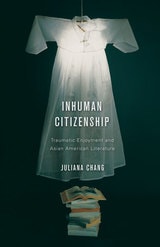
Inhuman Citizenship
Traumatic Enjoyment and Asian American LiteratureJuliana Chang
University of Minnesota Press, 2012
In Inhuman Citizenship, Juliana Chang claims that literary representations of Asian American domesticity may be understood as symptoms of America’s relationship to its national fantasies and to the “jouissance”—a Lacanian term signifying a violent yet euphoric shattering of the self—that both overhangs and underlies those fantasies. In the national imaginary, according to Chang, racial subjects are often perceived as the source of jouissance, which they supposedly embody through their excesses of violence, sexuality, anger, and ecstasy—excesses that threaten to overwhelm the social order.
To examine her argument that racism ascribes too much, rather than a lack of, humanity, Chang analyzes domestic accounts by Asian American writers, including Fae Myenne Ng’s Bone, Brian Ascalon Roley’s American Son, Chang-rae Lee’s Native Speaker, and Suki Kim’s The Interpreter. Employing careful reading and Lacanian psychoanalysis, Chang finds sites of excess and shock: they are not just narratives of trauma; they produce trauma as well. They render Asian Americans as not only the objects but also the vehicles and agents of inhuman suffering. And, claims Chang, these novels disturb yet strangely exhilarate the reader through characters who are objects of racism and yet inhumanly enjoy their suffering and the suffering of others.
Through a detailed investigation of “family business” in works of Asian American life, Chang shows that by identifying with the nation’s psychic disturbance, Asian American characters ethically assume responsibility for a national unconscious that is all too often disclaimed.

Innocent Eye
A Passionate Look at Contemporary ArtPatricia Rosoff
Tupelo Press, 2013
Innovative Women Poets
An Anthology of Contemporary Poetry and InterviewsElisabeth A. Frost
University of Iowa Press, 2007

Inside the Antisemitic Mind
The Language of Jew-Hatred in Contemporary GermanyMonika Schwarz-Friesel and Jehuda Reinharz
Brandeis University Press, 2017
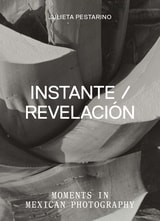
Instante/revelacion
Moments in Mexican PhotographyJulieta Pestarino
J. Paul Getty Trust, The, 2026
Presenting nearly 150 pictures made between 1920 and 2017, Instante/revelación highlights the work of thirteen renowned photographers who feature prominently in the history of the medium in Mexico, including Lola and Manuel Álvarez Bravo, Graciela Iturbide, and Pablo Ortiz Monasterio.
Through a dynamic selection of images, the publication explores some of the intertwined sociocultural forces that shape life and art in Mexico. Among the photographs are stunning presentations of landscapes, architecture, and flora and fauna from across the country; depictions of daily life; and portraits of esteemed Mexican artists and writers such as Diego Rivera, Frida Kahlo, and Octavio Paz. An illustrated essay examines the significant role photobooks and periodicals played in disseminating these images.
The photographers featured in this volume are linked by friendship, influence, and collaboration. Their works, when viewed together as a collective narrative, reveal the spirit of fruitful exchange that characterizes this exciting chapter in Mexico's photographic history.
This volume is published to accompany an exhibition on view at the J. Paul Getty Museum at the Getty Center from September 1, 2026, to January 3, 2027.
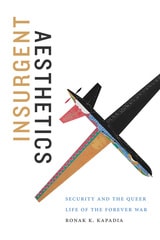
Insurgent Aesthetics
Security and the Queer Life of the Forever WarRonak K. Kapadia
Duke University Press, 2019
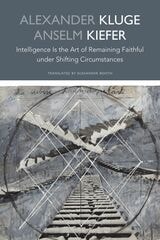
Intelligence Is the Art of Remaining Faithful under Shifting Circumstances
Alexander Kluge and Anselm Kiefer
Seagull Books, 2026
What holds us together in times of uncertainty? For decades, artist Anselm Kiefer and filmmaker-writer Alexander Kluge have explored this question—both as friends and collaborators. This latest volume is a bold and poetic exchange of images and texts in which they delve into the idea of reliability and its relationship to the four great forces that shape our lives: power, love, truth, and money.
Moving across history, myth, and the present day, Kiefer and Kluge ask: What is time? In a world of endless change, how do we hold on to what endures? Inspired by Hölderlin’s call “to remain faithful under shifting circumstances,” they use art to keep memory alive, invite the past into the present, and welcome the future before it arrives. Layered, provocative, and profoundly human, this new collaboration is a powerful meditation on what connects us—and what makes us endure.
Inter-imperiality
Vying Empires, Gendered Labor, and the Literary Arts of AllianceLaura Doyle
Duke University Press, 2020
International Trade in Services and Intangibles in the Era of Globalization
Edited by Marshall B. Reinsdorf and Matthew J. Slaughter
University of Chicago Press, 2009
Quantitative measures of international exchange have historically focused on trade in tangible products or capital. However, services have recently become a larger portion of developed economies and international trade, and will only increase in the future. In International Trade in Services and Intangibles in the Era of Globalization, Marshall Reinsdorf and Matthew J. Slaughter examine new and emerging patterns of trade, especially the growing importance of transactions involving services or intangible assets such as intellectual property.
A distinguished team of contributors analyzes the challenges involved in measuring trade in intangibles, the comparative advantages enjoyed by United States service industries, and the heightened international competition for jobs, capital investment, economic growth, and tax revenue that results from trade in services. This comprehensive volume will be necessary reading for scholars seeking to understand the rapidly changing global economy.
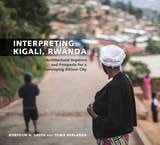
Interpreting Kigali, Rwanda
Architectural Inquiries and Prospects for a Developing African CityKorydon H. Smith
University of Arkansas Press, 2018
Interpreting Kigali, Rwanda explores the pressing challenges and opportunities to be found in planning, designing, and constructing a healthy, equitable, and sustainable city. Asking “what is an authentic-yet-modern, prosperous-yet-feasible African city, Rwandan city?” Smith, Berlanda, and colleagues conducted research on Rwandan activities of daily living and how these routines are connected to space-making practices and the Kinyarwanda terms that describe them.
Through a culturally informed view of urban and rural lifestyles and spaces, Interpreting Kigali, Rwanda presents principles and proposals for neighborhood development in the challenging context of Kigali’s informal settlements. With one billion people living in informal settlements worldwide, a number expected to double by 2030, the lessons learned in Rwanda provide a complex, fascinating, and urgent study for scholars and practitioners across disciplines and around the world.
Interspecies Politics
Nature, Borders, StatesRafi Youatt
University of Michigan Press, 2020
This book explores the ways that international politics is a form of interspecies politics, one that involves the interactions, ideas, and practices of multiple species, both human and nonhuman, to generate differences and create commonalities. While we frequently think of having an international politics “of” the environment, a deep and thoroughgoing anthropocentrism guides our idea of what political life can be, which prevents us from thinking about a politics “with” the environment. This anthropocentric assumption about politics drives both ecological degradation and deep forms of interhuman injustice and hierarchy.
Interspecies Politics challenges that assumption, arguing that a truly ecological account of interstate life requires us to think about politics as an activity that crosses species lines. It therefore explores a postanthropocentric account of international politics, focusing on a series of cases and interspecies practices in the American borderlands, ranging from the US-Mexico border in southern Texas, to Guantánamo Bay in Cuba, to Isle Royale, near the US-Canadian border. The book draws on international relations, environmental political theory, anthropology, and animal studies, to show how key international dimensions of states—sovereignty, territory, security, rights—are better understood as forms of interspecies assemblage that both generate new forms of multispecies inclusion, and structure forms of violence and hierarchy against human and nonhuman alike.