Results by title
69 books match the query 'American Culture' and 3 start with i
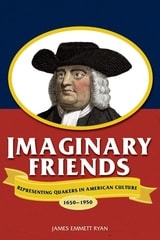
Imaginary Friends
Representing Quakers in American Culture, 1650–1950James Emmett Ryan
University of Wisconsin Press, 2009
Portrayals of Quakers—from dangerous and anarchic figures in seventeenth-century theological debates to moral exemplars in twentieth-century theater and film (Grace Kelly in High Noon, for example)—reflected attempts by writers, speechmakers, and dramatists to grapple with the troubling social issues of the day. As foils to more widely held religious, political, and moral values, members of the Society of Friends became touchstones in national discussions about pacifism, abolition, gender equality, consumer culture, and modernity.
Spanning four centuries, Imaginary Friends takes readers through the shifting representations of Quaker life in a wide range of literary and visual genres, from theological debates, missionary work records, political theory, and biography to fiction, poetry, theater, and film. It illustrates the ways that, during the long history of Quakerism in the United States, these “imaginary” Friends have offered a radical model of morality, piety, and anti-modernity against which the evolving culture has measured itself.
Winner, CHOICE Outstanding Academic Book Award
Imagining Literacy
Rhizomes of Knowledge in American Culture and LiteratureBy Ramona Fernandez
University of Texas Press, 2001
Defining the "common knowledge" a "literate" person should possess has provoked intense debate ever since the publication of E. D. Hirsch's controversial book Cultural Literacy: What Every American Needs to Know. Yet the basic concept of "common knowledge," Ramona Fernandez argues, is a Eurocentric model ill-suited to a society composed of many distinct cultures and many local knowledges.
In this book, Fernandez decodes the ideological assumptions that underlie prevailing models of cultural literacy as she offers new ways of imagining and modeling mixed cultural and non-print literacies. In particular, she challenges the biases inherent in the "encyclopedias" of knowledge promulgated by E. D. Hirsch and others, by Disney World's EPCOT Center, and by the Smithsonian Institution. In contrast to these, she places the writings of Zora Neale Hurston, Maxine Hong Kingston, Gloria Anzaldúa, and Leslie Marmon Silko, whose works model a cultural literacy that weaves connections across many local knowledges and many ways of knowing.
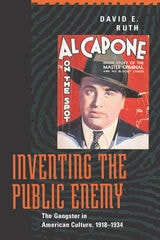
Inventing the Public Enemy
The Gangster in American Culture, 1918-1934David E. Ruth
University of Chicago Press, 1996
We see efficient criminal executives demonstrating the multifarious uses of organization; dapper, big-spending gangsters highlighting the promises and perils of the emerging consumer society; and gunmen and molls guiding an uncertain public through the shifting terrain of modern gender roles. In this fascinating study, Ruth reveals how the public enemy provides a far-ranging critique of modern culture.