266 books match the query 'Anecdotes' and 4 start with i
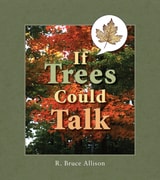
cover of If Trees Could Talk: Stories About Wisconsin Trees

If Trees Could Talk

Stories About Wisconsin Trees

R. Bruce Allison

Wisconsin Historical Society Press, 2009
Inside the pages of If Trees Could Talk, Allison gives readers aged 7 to 12 fascinating stories that introduce them to noteworthy trees, both past and present, across Wisconsin. From Kenosha's buried forest on the shores of Lake Michigan to the Wyalusing maple that saw the last of the passenger pigeons; from Aldo Leopold's "good oak" to the disappeared elms of State Street in Madison, these stories open up a fascinating ecological and social history of Wisconsin to young readers. Other stories showcase the state's history: readers will encounter Chief Black Hawk hiding in a hickory, Civil War soldiers enlisting for battle under "sign-up" trees, and trees used to hang criminals without a trial. They will also learn of large and unusual trees like the Columbus Cottonwood, which was over 26 feet around or, in the words of the author, so large that "it would take you and eight of your friends with your arms outstretched to reach all the way around it!"
 
Told in a compelling narrative style and supplemented with historic photographs and illustrations, these stories instill a sense of place and understanding of the rich heritage of our trees and forests. The book also carries an environmental message encouraging children to appreciate and manage natural resources wisely and respectfully. The highly accessible format includes a map of historic trees locations, a glossary of tree terms, a tree identification chart, and a list of suggested books and websites for further reading.
[more]
cover of In Another Time

In Another Time

Harold Schindler

Utah State University Press, 1998

An illustrated collection of historical articles originally published in the Salt Lake Tribune from 1993 to 1996, In
Another Time
provides both an entertaining introduction to Utah and a distinguished and popular historian's summary views of the state's peculiar history.

Another Time will entertain and inform newcomers seeking an introductory understanding of what has made Utah different, old hands wanting to know more about the rich complexity of the state's past, and anyone who enjoys well-told historical tales.

 

[more]
cover of Island Folk: The People of Isle Royale

Island Folk

The People of Isle Royale

Peter Oikarinen

University of Minnesota Press, 2008

The history of a working fishing community comes alive in this collection of stories from the people who made a life on Isle Royale. In Island Folk, candid photographs illuminate the dramatic and sometimes life-and-death experiences of the unique individuals who chose to live in this beautiful and isolated setting.

In this lively and charming book, find out how moose actually make their way to Isle Royale or what amount of food is necessary to survive a winter. Hear about the ships that sank in the tricky waters surrounding the island and the raw beauty of the landscape from those who know it intimately.

Recalled memories, honestly shared, tell a familiar tale of the ongoing transformation of the island from a quiet working fishing village to a national park haven for tourists who travel by boat or seaplane to experience a vanishing way of life.

Peter Oikarinen is a freelance writer and photographer who lives on Lake Superior on Michigan’s Keeweenaw Peninsula. He is the author of Armour: A Lake Superior Fisherman.
[more]
cover of It's Official!: The Real Stories behind Arkansas’s State Symbols

It's Official!

The Real Stories behind Arkansas’s State Symbols

David Ware

Butler Center for Arkansas Studies, 2015

Since Arkansas’s creation as an independent territory in 1819, its legislature has officially designated a wide assortment of symbols. Some of these refer to economic mainstays while others attest to the aspirations of those who saw a bright future for their extensive and varied community. This volume’s essays examine each of Arkansas’s officially designated symbols, outlining their genesis, their significance at the time of their adoption, and their place in modern Arkansas. Combining political narratives, natural history, and the occasional “shaggy dog” story, Ware makes a case for considering the symbols as useful keys to understanding both the Arkansas that has been and the one it hopes to be.
[more]