Results by title
855 books match the query 'Architecture' and 29 start with i
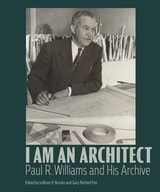
I Am an Architect
Paul R. Williams and His ArchiveLeRonn P. Brooks
J. Paul Getty Trust, The, 0
Discover the visionary legacy of the groundbreaking architect Paul R. Williams, FAIA, one of the most prolific Black architects of the 20th century.
Paul R. Williams (1894–1980), among the first Black members of the American Institute of Architects, was a defining force in shaping the city of Los Angeles and Southern California, yet his impact was undoubtedly global.
Threading together Williams’s biography, social histories of Los Angeles, and transformations in the profession, this richly researched monograph traces his remarkable career against the evolving landscape of Los Angeles and the wider architectural world.
- Presents the first research-driven monograph on preeminent architect Paul R. Williams.
- Features nearly 200 images, including many never-before published drawings, renderings, and archival materials.
- Williams’s expansive oeuvre spans everything from early residential commissions in the 1920s to civic, religious, commercial, and cultural landmarks that came to define Los Angeles’s identity at midcentury.
- Examines the intersection of race, space, and professional practice in twentieth-century American architecture.
- Highlights Williams’s commitment to designing for Black communities and advancing social change through architecture.
Step into the world of a visionary who transformed cities and challenged barriers—this volume invites you to get to know Paul R. Williams and the enduring power of architecture to shape society.
This volume is published to accompany an exhibition on view at the Fisher Museum of Art at the University of Southern California from August 18, 2026, to March 13, 2027, Los Angeles County Museum of Art from November 15, 2026, to May 31, 2027, and Getty Research Institute at the Getty Center from December 15, 2026, to March 14, 2027.
I Speak of the City
Mexico City at the Turn of the Twentieth CenturyMauricio Tenorio-Trillo
University of Chicago Press, 2013
Idea City
How to Make Boston More Livable, Equitable, and ResilientEdited by David Gamble, Foreword by Renée Loth
University of Massachusetts Press, 2023
Racial strife, increased social and economic discrimination, amplified political friction, and growing uncertainty around the impacts of the COVID-19 pandemic and climate change have laid bare many inequalities within the city of Boston. How will these disruptions and inequities influence the city’s future, especially as Boston celebrates its quadricentennial in 2030?
This collection of original essays addresses the many challenges Boston contends with in the twenty-first century and considers ways to improve the city for everyone. Presenting a range of perspectives written by area experts—academics, reflective practitioners, and policymakers—these essays tackle issues of resiliency, mobility, affordable housing, health outcomes, social equity, economic equality, zoning, regionalism, and more. Reflecting the diversity of the city and the challenges and opportunities Boston currently faces, Idea City will help readers think differently about their own areas of expertise and draw conclusions from urban regeneration work in other fields.
Images of the Canton Factories 1760–1822
Reading History in ArtPaul A. Van Dyke and Maria Kar-wing Mok
Hong Kong University Press, 2015
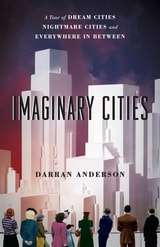
Imaginary Cities
A Tour of Dream Cities, Nightmare Cities, and Everywhere in BetweenDarran Anderson
University of Chicago Press, 2017
This book is about those cities. It’s neither a history of grand plans nor a literary exploration of the utopian impulse, but rather something different, hybrid, idiosyncratic. It’s a magpie’s book, full of characters and incidents and ideas drawn from cities real and imagined around the globe and throughout history. Thomas More’s allegorical island shares space with Soviet mega-planning; Marco Polo links up with James Joyce’s meticulously imagined Dublin; the medieval land of Cockaigne meets the hopeful future of Star Trek. With Darran Anderson as our guide, we find common themes and recurring dreams, tied to the seemingly ineluctable problems of our actual cities, of poverty and exclusion and waste and destruction. And that’s where Imaginary Cities becomes more than a mere—if ecstatically entertaining—intellectual exercise: for, as Anderson says, “If a city can be imagined into being, it can be re-imagined.” Every architect, philosopher, artist, writer, planner, or citizen who dreams up an imaginary city offers lessons for our real ones; harnessing those flights of hopeful fancy can help us improve the streets where we live.
Though it shares DNA with books as disparate as Calvino’s Invisible Cities and Jane Jacobs’s Death and Life of Great American Cities, there’s no other book quite like Imaginary Cities. After reading it, you’ll walk the streets of your city—real or imagined—with fresh eyes.
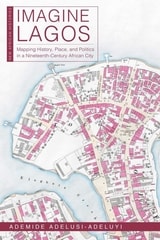
Imagine Lagos
Mapping History, Place, and Politics in a Nineteenth-Century African CityAdemide Adelusi-Adeluyi
Ohio University Press, 2024

Imaging the City
Art, Creative Practices and Media SpeculationsEdited by Steve Hawley, Edward Clift, and Kevin O'Brien
Intellect Books, 2016
Imagining the Penitentiary
Fiction and the Architecture of Mind in Eighteenth-Century EnglandJohn Bender
University of Chicago Press, 1987
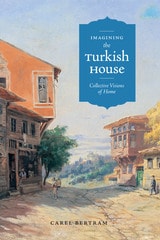
Imagining the Turkish House
Collective Visions of HomeBy Carel Bertram
University of Texas Press, 2008
"Houses can become poetic expressions of longing for a lost past, voices of a lived present, and dreams of an ideal future." Carel Bertram discovered this truth when she went to Turkey in the 1990s and began asking people about their memories of "the Turkish house." The fondness and nostalgia with which people recalled the distinctive wooden houses that were once ubiquitous throughout the Ottoman Empire made her realize that "the Turkish house" carries rich symbolic meaning. In this delightfully readable book, Bertram considers representations of the Turkish house in literature, art, and architecture to understand why the idea of the house has become such a potent signifier of Turkish identity.
Bertram's exploration of the Turkish house shows how this feature of Ottoman culture took on symbolic meaning in the Turkish imagination as Turkey became more Westernized and secular in the early decades of the twentieth century. She shows how artists, writers, and architects all drew on the memory of the Turkish house as a space where changing notions of spirituality, modernity, and identity—as well as the social roles of women and the family—could be approached, contested, revised, or embraced during this period of tumultuous change.
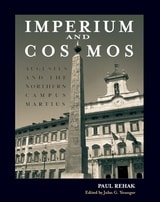
Imperium and Cosmos
Augustus and the Northern Campus MartiusPaul Rehak; Edited by John G. Younger
University of Wisconsin Press, 2006
Rehak closely examines the artistic imagery on these monuments, providing numerous illustrations, tables, and charts. In an analysis firmly contextualized by a thorough discussion of the earlier models and motifs that inspired these Augustan monuments, Rehak shows how the princeps used these on such an unprecedented scale as to truly elevate himself above the common citizen.
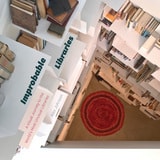
Improbable Libraries
A Visual Journey to the World's Most Unusual LibrariesAlex Johnson
University of Chicago Press, 2015
Public libraries are a cornerstone of modern civilization, yet like the books in them, libraries face an uncertain future in an increasingly digital world. Undaunted, librarians around the globe are thinking up astonishing ways of reaching those in reading need, whether by bike in Chicago, boat in Laos, or donkey in Colombia. Improbable Libraries showcases a wide range of unforgettable, never-before-seen images and interviews with librarians who are overcoming geographic, economic, and political difficulties to bring the written word to an eager audience. Alex Johnson charts the changing face of library architecture, as temporary pop-ups rub shoulders with monumental brick-and-mortar structures, and many libraries expand their mission to function as true community centers. To take just one example: the open-air Garden Library in Tel Aviv, located in a park near the city’s main bus station, supports asylum seekers and migrant workers with a stock of 3,500 volumes in sixteen different languages.
Beautifully illustrated with two hundred and fifty color photographs, Improbable Libraries offers a breathtaking tour of the places that bring us together and provide education, entertainment, culture, and so much more. From the rise of the egalitarian Little Free Library movement to the growth in luxury hotel libraries, the communal book revolution means you’ll never be far from the perfect next read.
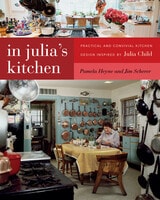
In Julia's Kitchen
Practical and Convivial Kitchen Design Inspired by Julia ChildPamela Heyne and Jim Scherer
University Press of New England, 2016
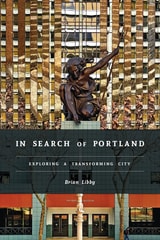
In Search of Portland
Exploring a Transforming CityBrian Libby
Oregon State University Press, 2026
“A good walking tour is not just about individual stops but the total experience of moving along a city’s streets, taking in a variety of neighborhoods, buildings, shops, parks, public art, and bridges: a chance to be the grand marshal in your own parade,” writes Brian Libby in the introduction of In Search of Portland. Starting from his 1997 home, the Empire Apartments at Southwest Eleventh Avenue and Jefferson Street, Libby shares one hundred fascinating points of interest through personal reflection, interviews, and anecdotal history.
The six excursions exploring Portland’s downtown, Old Town, and Pearl District not only focus on the city’s important landmarks and hidden gems but showcase an evolving city’s resilience and heart. Alongside his own experiences, Libby reveals how luminaries like Humphrey Bogart, Mark Rothko, Gus Van Sant, Vera Katz, and Bill Walton appreciated the City of Roses. From Pioneer Courthouse Square to the Crystal Ballroom, each location in the book celebrates the spirit of place in addition to its architecture.
More than a book about buildings, In Search of Portland reveals the stories behind the built landscape, the people, and the history that have created modern Portland.
In The Scheme Of Things
Alternative Thinking on the Practice of ArchitectureThomas R. Fisher Fisher
University of Minnesota Press, 2006
In each of the twelve essays that comprise this timely volume, Fisher addresses issues of vital concern to architects and students, offering hard-hitting criticism and proposing innovative and practical ideas for reform at the level of both the individual practitioner and the profession as a whole. Through his thoughtful and nuanced consideration of architecture’s ideological foundations and its relationship to ecology, politics, and technology, as well as his subtle understanding of the architect’s interior life, Fisher challenges the demoralized design community to recapture its historical role as steward and visionary of the public realm.
Thomas R. Fisher is dean of the College of Architecture and Landscape Architecture at the University of Minnesota and coeditor of Architectural Research Quarterly. His essays have appeared in Design Quarterly, Architectural Record, and other leading journals.
In the Land of the Patriarchs
Design and Contestation in West Bank SettlementsNoam Shoked
University of Texas Press, 2023
2024 On The Brinck Book Award and Lecture Series, University of New Mexico
2024 PROSE Award, Architecture–Urban Planning, Association of American Publishers
An on-the-ground account of the design and evolution of West Bank settlements, showing how one of the world’s most contested landscapes was produced by unexpected conflicts and collaborations among widely divergent actors.
Since capturing the West Bank in 1967, Israel has overseen the construction of scores of settlements across the territory’s rocky hilltops. The settlements are part of a fierce political conflict. But they are not just hotly contested political ventures. They are also something more everyday: residential architectural projects.
In the Land of the Patriarchs is an on-the-ground account of the design and evolution of West Bank settlements. Noam Shoked shows how settlements have been shaped not only by the decisions of military generals, high-profile politicians, and prominent architects but also by a wide range of actors, including real estate developers, environmental consultants, amateur archeologists, and Israelis who feel unserved by the country’s housing system. The patterns of design and construction they have inspired reflect competing worldviews and aesthetic visions, as well as everyday practices not typically associated with the politics of the Israeli occupation. Revealing the pragmatic choices and contingent circumstances that drive what appears to be a deliberately ideological landscape, Shoked demonstrates how unpredictable the transformation of political passion into brick and mortar can be.
Independent for Life
Homes and Neighborhoods for an Aging AmericaEdited by Henry Cisneros, Margaret Dyer-Chamberlain, and Jane Hickie
University of Texas Press, 2012
Do you want to age independently in your own home and neighborhood? Staying home, aging in place, is most people's preference, but most American housing and communities are not adapted to the needs of older people. And with the fastest population growth among people over 65, finding solutions for successful aging is important not only for individual families, but for our whole society. In Independent for Life, former HUD Secretary Henry Cisneros and a team of experts on aging, architecture, construction, health, finance, and politics assess the current state of housing and present new possibilities that realistically address the interrelated issues of housing, communities, services, and financial concerns.
Independent for Life covers a wide range of smart solutions, including remodeling current housing and building new homes for accessibility and safety, retrofitting existing neighborhoods to connect needed services and amenities, and planning new communities that work well for people of all ages. Case studies show how the proposals can be implemented. The authors offer action plans for working with policy makers at local, state, and national levels to address the larger issues of aging in place, including family financial security, real estate markets, and the limitations of public support. Lists of essential resources, including a detailed "to do" list of aging in place priorities and an individual home assessment, complete the volume.
Inland Empire
Settler Colonialism and Modern Architecture in Southern CaliforniaManuel Shvartzberg Carrió
Duke University Press, 2026
Inquiry into the Picturesque
Sidney K. Robinson
University of Chicago Press, 1991
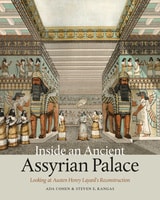
Inside an Ancient Assyrian Palace
Looking at Austen Henry Layard's ReconstructionAda Cohen and Steven E. Kangas
University Press of New England, 2016
Integrated Landscaping
Following Nature’s LeadLauren Chase-Rowell
University of New Hampshire Press, 2012
Most landscape manuals describe a linear sequence of processes: design, plant selection, installation, and ongoing maintenance. Integrated Landscaping is different. It uses natural ecosystems as models, taking a nonlinear, holistic approach that addresses these processes simultaneously. Integrated Landscaping treats each site as a system of plant and animal communities, considering their interrelationships with each other and their environment.
Integrated Landscaping: Following Nature's Lead is a valuable resource for anyone concerned with helping to shape the landscape we all share. When we see ourselves as part of the whole, we can see that what we do in places where we live, work, and play has a ripple effect far beyond the space each of us calls home.
Interpreting Environments
Tradition, Deconstruction, HermeneuticsBy Robert Mugerauer
University of Texas Press, 1995
In this pioneering book, Robert Mugerauer seeks to make deconstruction and hermeneutics accessible to people in the environmental disciplines, including architecture, planning, urban studies, environmental studies, and cultural geography.
Mugerauer demonstrates each methodology through a case study. The first study uses the traditional approach to recover the meaning of Jung's and Wittgenstein's houses by analyzing their historical, intentional contexts. The second case study utilizes deconstruction to explore Egyptian, French neoclassical, and postmodern attempts to use pyramids to constitute a sense of lasting presence. And the third case study employs hermeneutics to reveal how the American understanding of the natural landscape has evolved from religious to secular to ecological since the nineteenth century.
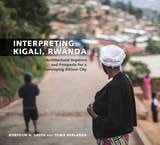
Interpreting Kigali, Rwanda
Architectural Inquiries and Prospects for a Developing African CityKorydon H. Smith
University of Arkansas Press, 2018
Interpreting Kigali, Rwanda explores the pressing challenges and opportunities to be found in planning, designing, and constructing a healthy, equitable, and sustainable city. Asking “what is an authentic-yet-modern, prosperous-yet-feasible African city, Rwandan city?” Smith, Berlanda, and colleagues conducted research on Rwandan activities of daily living and how these routines are connected to space-making practices and the Kinyarwanda terms that describe them.
Through a culturally informed view of urban and rural lifestyles and spaces, Interpreting Kigali, Rwanda presents principles and proposals for neighborhood development in the challenging context of Kigali’s informal settlements. With one billion people living in informal settlements worldwide, a number expected to double by 2030, the lessons learned in Rwanda provide a complex, fascinating, and urgent study for scholars and practitioners across disciplines and around the world.
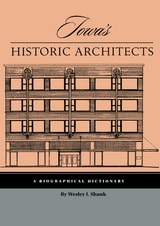
Iowa's Historic Architects
A Biographical DictionaryWesley I. Shank
University of Iowa Press, 1998
Among the prominent Iowa architects of the late nineteenth and early twentieth centuries were a remarkable few who had little training in architecture; their natural talents and their capacity for hard work made up for their lack of experience. Beginning in 1927, however, an Iowa architect had to meet state requirements of experience and training in order to practice. Shank includes an introduction to the history of the profession in Iowa: the development of professional education and training, the founding of professional societies and their roles, the different personalities and talents of the architects, the demography of architectural offices in the state, and the relative importance of Iowa architects both statewide and nationally.
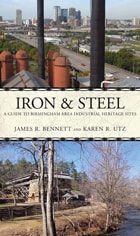
Iron and Steel
A Driving Guide to the Birmingham Area Industrial HeritageJames R. Bennett and Karen R. Utz
University of Alabama Press, 2010
This guidebook of historic iron-production sites is designed to give the reader a factual and illuminating look at the people and events that shaped Birmingham into one of America’s leading steel centers. Iron & Steel is heavily illustrated with both color and historical black-and-white photographs. It can be used while visiting parks or read as a coherent volume before or after a visit.
The book contains chapters devoted to the larger preserved sites open to the public, such as Sloss Furnaces National Historic Landmark and Tannehill Ironworks Historical State Park. It also highlights lesser-known, yet still accessible, sites such as Blocton Coke Ovens Park. The work provides easy-to-follow maps for every site as well as driving directions to the more remote locations, giving visitors easy access to all the notable iron and steel sites in Jefferson, Shelby, Tuscaloosa, and Bibb counties. Each chapter also includes a variety of historical information, with accompanying photographs, in order to present the reader with a detailed and comprehensive account of the Birmingham Iron and Steel District.
Featured sites include: Tannehill Ironworks Historical State Park; Shelby Ironworks Park; Billy Gould Coke Ovens Park; Brierfield Ironworks Historical State Park; Oxmoor Furnace Site; Irondale Furnace Park; Helena Rolling Mill Site; Red Mountain Park, Iron Ore Mines; Lewisburg Coke Ovens Park; Sloss Furnaces National Historic Landmark; Ruffner Mountain Nature Center; Blocton Coke Ovens Park; and Vulcan Park and Museum.
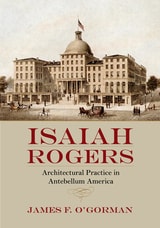
Isaiah Rogers
Architectural Practice in Antebellum AmericaJames F. O'Gorman
University of Massachusetts Press, 2015
When Isaiah Rogers died in 1869, the Cincinnati Daily Times noted that “in his profession he was, perhaps, better known than any other person in the country.” Yet until now there has been no study that fully examines his remarkable, influential, and instructive career. Based largely on Rogers's own diary, this book tells his story and adds much to our understanding of architectural practice in the United States before the Civil War.
In 1944 the distinguished historian Talbot Hamlin wrote of New York's Merchant Exchange (1836–42) that the building had “been so grandly conceived, so simply and directly planned, and so beautifully detailed . . . [that] the whole was welded inextricably into one powerful organic conception that shows Rogers as a great architect in the fullest sense of the word.” Rogers's Tremont House in Boston has been called the world's first modern hotel; it spawned many progeny, from his first Astor House in New York to his Burnet House in Cincinnati and beyond.
Rogers designed buildings from Maine to Georgia and from Boston to Chicago to New Orleans, supervising their construction while traveling widely to procure materials and workmen for the job. He finished his career as Architect of the Treasury Department during the Civil War. In this richly illustrated volume, James F. O'Gorman offers a deft portrait of an energetic practitioner at a key time in architectural history, the period before the founding of the American Institute of Architects in 1857.
Islamic Architecture on the Move
Motion and ModernityEdited by Christiane Gruber
Intellect Books, 2016
This book brings together scholars from architectural studies, design, art history, and other fields to challenge and expand concepts of Islamic architecture. Ranging from eighteenth-century Ottoman tents to manifestations of Islamic motifs in 1960s Hawaii, this richly illustrated volume raises key questions about Islamic architecture, and, more broadly, about how we can rethink our understanding of material, artistic, and cultural mobility in the modern world.
Israel as a Modern Architectural Experimental Lab, 1948-1978
Edited by Inbal Ben-Asher Gitler and Anat Geva
Intellect Books, 2019
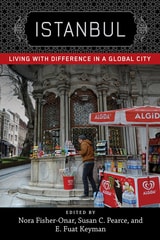
Istanbul
Living with Difference in a Global CityFisher-Onar, Nora
Rutgers University Press, 2018
Rather than exploring Istanbul as one place at one time, the contributors to this volume focus on the city’s experience of migration and globalization over the last two centuries. Asking what Istanbul teaches us about living with people whose hopes jostle with one’s own, contributors explore the rise, collapse, and fragile rebirth of cosmopolitan conviviality in a once and future world city. The result is a cogent, interdisciplinary exchange about an urban space that is microcosmic of dilemmas of diversity across time and space.
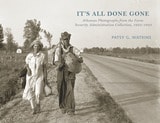
It's All Done Gone
Arkansas Photographs from the Farm Security Administration Collection, 1935-1943Patsy Watkins
University of Arkansas Press, 2018
Of the roughly one thousand FSA photographs taken in Arkansas, approximately two hundred have been selected for inclusion in this volume. Portraying workers picking cotton for five cents an hour, families evicted from homes for their connection with the Southern Tenant Farmers Union, and the effects of flood and drought that cruelly exacerbated the impact of economic disaster, these remarkable black-and-white images from Ben Shahn, Arthur Rothstein, Dorothea Lange, Walker Evans, Russell Lee, and other acclaimed photographers illustrate the extreme hardships that so many Arkansans endured throughout this era.
These powerful photographs continue to resonate, providing a glimpse of life in Arkansas that will captivate readers as they connect to a shared past.