Results by title
71 books match the query 'Armed Forces' and 4 start with i

Importing the European Army
The Introduction of European Military Techniques and Institutions in the Extra-European World, 1600-1914David B. Ralston
University of Chicago Press, 1996
Following the same format in his discussion of each country, Ralston makes this central theme in world history easily accessible to students while offering scholars a sophisticated understanding of the exact nature of the changes brought about by Europeanizing military reforms.
David B. Ralston, associate professor of history at the Massachusetts Institute of Technology, is the author of The Army of the Republic.
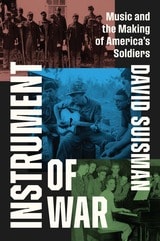
Instrument of War
Music and the Making of America's SoldiersDavid Suisman
University of Chicago Press, 2024
An original history of music in the lives of American soldiers.
Since the Civil War, music has coursed through the United States military. Soldiers have sung while marching, listened to records and armed forces radio, and packed the seats at large-scale USO shows. The bugle call “reveille” has roused soldiers in the morning, and “taps” has marked the end of a long day. Whether the sounds come from brass instruments, weary and homesick singers, or a pair of heavily used earbuds, where there has been war, there has been music, too.
Instrument of War is a first-of-its-kind study of music in the lives of American soldiers. Although musical activity has been part of war since time immemorial, the significance of the U.S. military as a musical institution has generally gone unnoticed. Historian David Suisman traces how the U.S. military has used—and continues to use—music to train soldiers and regulate military life, and how soldiers themselves have turned to music to cope with war’s emotional and psychological realities. Opening our ears to these practices, Suisman reveals how music has enabled more than a century and a half of American war-making. Instrument of War unsettles assumptions about music as a force of uplift and beauty, demonstrating how it has also been entangled in large-scale state violence.
From chanting “Sound off!” in basic training to switching on a phonograph or radio or cueing up an iPod playlist during a patrol, the sound of music has long resonated in soldiers’ wartime experiences. Now we all can finally hear it.
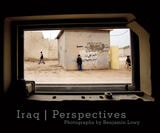
Iraq | Perspectives
Benjamin Lowy
Duke University Press, 2011
The Center for Documentary Studies / Honickman First Book Prize in Photography
Benjamin Lowy’s powerful and arresting color photographs, taken over a six-year period through Humvee windows and military-issue night vision goggles, capture the desolation of a war-ravaged Iraq as well as the tension and anxiety of both U.S. soldiers and Iraqi civilians. To photograph on the streets unprotected was impossible for Lowy, so he made images that illuminate this difficulty by shooting photographs through the windows and goggles meant to help him, and soldiers, to see. In doing so he provides us with a new way of looking at the war—an entirely different framework for regarding and thinking about the everyday activities of Iraqis in a devastated landscape and the movements of soldiers on patrol, as well as the alarm and apprehension of nighttime raids.
“Iraq was a land of blast walls and barbed wire fences. I made my first image of a concrete blast wall through the window of my armored car. These pictures show a fragment of Iraqi daily life taken by a transient passenger in a Humvee; yet they are a window to a world where work, play, tension, grief, survival, and everything in between are as familiar as the events of our own lives. . . . [In] the ‘Nightvision’ images . . . as soldiers weave through the houses and bedrooms of civilians during nighttime military raids, they encounter the faces of their suspects as well as bystanders, many of whom are parents protecting their children. . . . I hope that these images provide the viewer with momentary illumination of the fear and desperation that is war.”—Benjamin Lowy
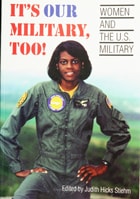
It's Our Military Too
Women and the U.S Militaryedited by Judith Hicks Stiehm
Temple University Press, 1996
In the last twenty-five years the U.S. military has seen the abolition of women's separate corps, the appointment of women generals, and an unprecedented increase in the ratio of women to men. Also, women are now permitted to serve on combat planes and ships. Despite these developments, most civilians know very little about women in the military.
This collection includes unusual accounts by women on active duty, retired officers, women who have worked for the armed forces in a civilian capacity, and civilian academics. The book offers insights on a variety of pressing issues including minority women, lesbians, combat, the role of gender in weapons design, and the changing mission of the military.
Through personal accounts and commentaries, this book dispels many of the myths about women and the military and explores the reasons for the persistence of misconceptions in the face of increased female participation. This comprehensive effort will be of interest to anyone who wants to know the truth about women in the armed forces and will be a wake-up call to women who feel that the military is irrelevant to them.
Contributors: Rhonda Cornum, Virginia Solms, Billie Mitchell, Connie L. Reeves, Brenda L. Moore, Nina Richman-Loo, Rachel Weber, Lucinda Joy Peach, M. C. Devilbiss, Carol Burke, Susan Jeffords, Miriam Cooke.