Results by title
197 books match the query 'Arts' and 10 start with i

I Am Here You Are Not I Love You
Andrew Topolski, Cindy Suffoletto, and Their Life in the ArtsAidan Ryan
University of Iowa Press, 2025
The book presents a critical reexamination of Andrew Topolski, an overlooked luminary of intermedia and postminimalism. In repositioning Topolski’s legacy and vast body of work, Ryan makes compelling findings about the interplay of talent, luck, and community support in the making or breaking of artistic careers. At the same time, the story shares the significant and never-before-seen body of work by Cindy Suffoletto, a talented and inventive artist little shown and never cataloged during her short life. Ultimately, Ryan argues that the time is right for both to take up a privileged place among the great artists of their generation.
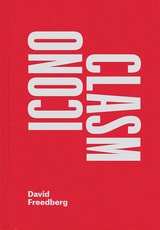
Iconoclasm
David Freedberg
University of Chicago Press, 2021
Freedberg combines fresh thinking with deep expertise to address the renewed significance of iconoclasm, its ideologies, and its impact. This volume also provides a supplement to Freedberg’s essay on idolatry and iconoclasm from his pathbreaking book, The Power of Images. Freedberg’s writings are of foundational importance to this discussion, and this volume will be a welcome resource for historians, museum professionals, international law specialists, preservationists, and students.
Imagination and the Arts in C.S. Lewis
Journeying to Narnia and Other WorldsPeter J. Schakel
University of Missouri Press, 2002
Imagination has long been regarded as central to C. S. Lewis's life and to his creative and critical works, but this is the first study to provide a thorough analysis of his theory of imagination, including the different ways he used the word and how those uses relate to each other. Peter Schakel begins by concentrating on the way reading or engaging with the other arts is an imaginative activity. He focuses on three books in which imagination is the central theme—Surprised by Joy, An Experiment in Criticism, and The Discarded Image—and shows the important role of imagination in Lewis's theory of education.
He then examines imagination and reading in Lewis's fiction, concentrating specifically on the Chronicles of Narnia, the most imaginative of his works. He looks at how the imaginative experience of reading the Chronicles is affected by the physical texture of the books, the illustrations, revisions of the texts, the order in which the books are read, and their narrative "voice," the "storyteller" who becomes almost a character in the stories.
Imagination and the Arts in C. S. Lewis also explores Lewis's ideas about imagination in the nonliterary arts. Although Lewis regarded engagement with the arts as essential to a well- rounded and satisfying life, critics of his work and even biographers have given little attention to this aspect of his life. Schakel reviews the place of music, dance, art, and architecture in Lewis's life, the ways in which he uses them as content in his poems and stories, and how he develops some of the deepest, most significant themes of his stories through them.
Schakel concludes by analyzing the uses and abuses of imagination. He looks first at "moral imagination." Although Lewis did not use this term, Schakel shows how Lewis developed the concept in That Hideous Strength and The Abolition of Man long before it became popularized in the 1980s and 1990s. While readers often concentrate on the Christian dimension of Lewis's works, equally or more important to him was their moral dimension.
Imagination and the Arts in C. S. Lewis will appeal to students and teachers of both children's literature and twentieth-century British writers. It will also be of value to readers who wish to compare Lewis's creations with more recent imaginative works such as the Harry Potter series.
In The Break
The Aesthetics Of The Black Radical TraditionFred Moten
University of Minnesota Press, 2003
Investigates the connections between jazz, sexual identity, and radical black politics
In his controversial essay on white jazz musician Burton Greene, Amiri Baraka asserted that jazz was exclusively an African American art form and explicitly fused the idea of a black aesthetic with radical political traditions of the African diaspora. In the Break is an extended riff on “The Burton Greene Affair,” exploring the tangled relationship between black avant-garde in music and literature in the 1950s and 1960s, the emergence of a distinct form of black cultural nationalism, and the complex engagement with and disavowal of homoeroticism that bridges the two. Fred Moten focuses in particular on the brilliant improvisatory jazz of John Coltrane, Ornette Coleman, Albert Ayler, Eric Dolphy, Charles Mingus, and others, arguing that all black performance—culture, politics, sexuality, identity, and blackness itself—is improvisation.
For Moten, improvisation provides a unique epistemological standpoint from which to investigate the provocative connections between black aesthetics and Western philosophy. He engages in a strenuous critical analysis of Western philosophy (Heidegger, Kant, Husserl, Wittgenstein, and Derrida) through the prism of radical black thought and culture. As the critical, lyrical, and disruptive performance of the human, Moten’s concept of blackness also brings such figures as Frederick Douglass and Karl Marx, Cecil Taylor and Samuel R. Delany, Billie Holiday and William Shakespeare into conversation with each other.
Stylistically brilliant and challenging, much like the music he writes about, Moten’s wide-ranging discussion embraces a variety of disciplines—semiotics, deconstruction, genre theory, social history, and psychoanalysis—to understand the politicized sexuality, particularly homoeroticism, underpinning black radicalism. In the Break is the inaugural volume in Moten’s ambitious intellectual project-to establish an aesthetic genealogy of the black radical tradition
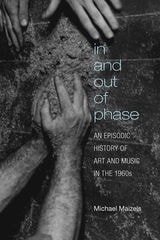
In and Out of Phase
An Episodic History of Art and Music in the 1960sMichael Maizels
University of Michigan Press, 2020
In and Out of Phase is the first sustained look at the creative interactions between artists and musicians of this era, looking at four pairs of creators who used process-oriented ideas and techniques in their music and art: Dan Flavin and La Monte Young; Sol LeWitt and Milton Babbitt; Richard Serra and Steve Reich; and Bruce Nauman and Meredith Monk. Maizels uncovers not just the social and intellectual connections between these two groups of creators, but illuminates how the focus on repetitive actions, pattern and process, and an emphasis on “surface” created mutual influence—and stylistic change—between music and art during this period. The book’s concluding chapter briefly addresses the enduring influence of the innovations of the 1960s on more recent works.
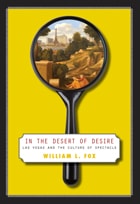
In the Desert of Desire
Las Vegas and the Culture of SpectacleWilliam L. Fox
University of Nevada Press, 2007
Las Vegas, says William Fox, is a pay-as-you-play paradise that succeeds in satisfying our fantasies of wealth and the excesses of pleasure and consumption that go with it. In this context, Fox examines how Las Vegas’s culture of spectacle has obscured the boundaries between high art and entertainment extravaganza, nature and fantasy, for-profit and nonprofit enterprises. His purview ranges from casino art galleries—including Steve Wynn’s private collection and a branch of the famed Guggenheim Museum—to the underfunded Las Vegas Art Museum; from spectacular casino animal collections like those of magicians Siegfried and Roy and Mandalay Bay’s Shark Reef exhibit to the city’s lack of support for a viable public zoo; from the environmental and psychological impact of lavish water displays in the arid desert to the artistic ambiguities intrinsic to Las Vegas’s floating world of showgirls, lapdancers, and ballet divas. That Las Vegas represents one of the world’s most opulent displays of private material wealth in all its forms, while providing miserly funding for local public amenities like museums and zoos, is no accident, Fox maintains. Nor is it unintentional that the city’s most important collections of art and exotic fauna are presented in the context of casino entertainment, part of the feast of sensation and excitement that seduces millions of visitors each year. Instead, this phenomenon shows how our insatiable modern appetite for extravagance and spectacle has diminished the power of unembellished nature and the arts to teach and inspire us, and demonstrates the way our society privileges private benefit over public good. Given that Las Vegas has been a harbinger of national cultural trends, Fox’s commentary offers prescient insight into the increasing commercialization of nature and culture across America.

InDEBTed to Intervene
Critical Lessons in Debt, Communication, Art, and Theoretical PracticeOliver Vodeb and Nikola Janovic Kolenc
Intellect Books, 2013
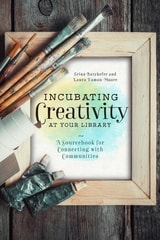
Incubating Creativity at Your Library
A Sourcebook for Connecting with CommunitiesLaura Damon-Moore
American Library Association, 2019
Creativity needs a platform. As technology consultant David Weinberger puts it, “A platform provides resources that lets other people build things.” The library is an ideal platform, and in this book Batykefer and Damon-Moore, creators of the Library as Incubator Project, share the experiences of numerous creative library workers and artists who are making it happen. Their stories will show you how to move beyond merely responding to community needs towards actively building a platform with your community. And best of all, you don’t need to start from scratch—rather, you amplify what’s already working. Filled with ideas and initiatives that can be customized to suit your library and its community, this book
- discusses the four elements (Resources, Invitations, Partnerships & Engagement, and Staff) and the two lenses (Community-Led and Evaluation) of the Creative Library platform;
- outlines six steps for surveying your community’s artistic landscape;
- gives methods for expanding partnerships and connections with individuals and organizations through exploration, hands-on learning, and engagement with the community;
- shares perspectives on the “ideal library” from several artists, with three examples of artist-in-residence programs;
- offers examples of community invitations in action, such as the Pittsburgh Fiberarts Guild workshops on creating flowers using recycled materials;
- shows how to use “orphan photos” from your archives for creative inspiration;
- advises on using qualitative evaluations to effectively “weed” your initiatives; and
- shares tips for encouraging library staff to express their creativity, turning avocations into library initiatives like Handmade Crafternoons, the Yahara Music Library, or BOOKLESS.
By building on existing elements at your library and filling in the gaps with community-driven additions, your library can be a space that cultivates creativity in both its users and staff.

Indecomposable Continuum
Topology and the Arts in JapanSteven C. Ridgely
University of Minnesota Press, 2027
Locating the diffusion of mathematical concepts into modern literature, experimental music, and critical theory in twentieth-century Japan
In Indecomposable Continuum, Steven C. Ridgely explores where theoretical mathematics meets culture in twentieth-century Japan, tracing how concepts from relativity theory and topology migrated into Japanese art and literature. Through readings of avant-garde fiction, experimental sound practices, and postmodern theory, Ridgely demonstrates how topology became a language for rethinking space and perception.
Ridgely focuses on abstract models such as the Klein bottle, non-Euclidean geometry, and the Lakes of Wada to reveal how Japanese artists and intellectuals like Yuasa Jōji, Inagaki Taruho, and Asada Akira transformed difficult mathematical ideas into powerful aesthetic and social imaginaries in surprising and clever ways. Rather than treating mathematics as separate from cultural studies, Ridgely positions topology itself as a cultural form whose abstractions generated new possibilities for artistic creation and theoretical inquiry in music, novels, and popular media.
Indecomposable Continuum demonstrates how Japanese artists made seemingly impossible abstractions accessible and compelling, revealing the unexpected creativity that emerged when modern mathematics entered the cultural sphere. In doing so, the book offers a fresh perspective on the relationship between scientific thought and artistic modernism in Japan.
Retail e-book files for this title are screen-reader friendly with images accompanied by short alt text and/or extended descriptions.
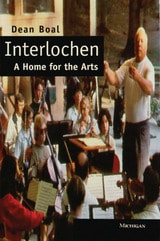
Interlochen
A Home for the ArtsDean Boal
University of Michigan Press, 1998