Results by title
81 books match the query 'Belonging' and 4 start with i
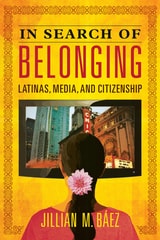
In Search of Belonging
Latinas, Media, and CitizenshipJillian M Baez
University of Illinois Press, 2018
Innovative and informed by a wealth of new evidence, In Search of Belonging answers important questions about the ways Latinas perform citizenship in today’s America.
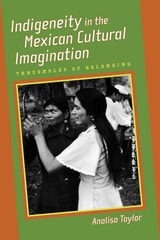
Indigeneity in the Mexican Cultural Imagination
Thresholds of BelongingAnalisa Taylor
University of Arizona Press, 2009
The book focuses on representations of indigenous peoples in post-revolutionary literary and intellectual history by examining key cultural texts. Using these analyses as a foundation, Analisa Taylor links her critique to national Indian policy, rights, and recent social movements in Southern Mexico. In addition, she moves beyond her analysis of indigenous peoples in general to take a gendered look at indigenous women ranging from the villainized Malinche to the highly romanticized and sexualized Zapotec women of the Isthmus of Tehuantepec.
The contradictory treatment of the Indian in Mexico’s cultural imagination is not unique to that country alone. Rather, the situation there is representative of a phenomenon seen throughout the world. Though this book addresses indigeneity in Mexico specifically, it has far-reaching implications for the study of indigenaety across Latin America and beyond. Much like the late Edward Said’s Orientalism, this book provides a glimpse at the very real effects of literary and intellectual discourse on those living in the margins of society.
This book’s interdisciplinary approach makes it an essential foundation for research in the fields of anthropology, history, literary critique, sociology, and cultural studies. While the book is ideal for a scholarly audience, the accessible writing and scope of the analysis make it of interest to lay audiences as well. It is a must-read for anyone seeking a deeper understanding of the politics of indigeneity in Mexico and beyond.
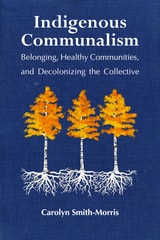
Indigenous Communalism
Belonging, Healthy Communities, and Decolonizing the CollectiveCarolyn Smith-Morris
Rutgers University Press, 2020
Told in vibrant detail, the narrative of the book conveys the importance of communalism as a value system present in all human groups and one at the center of Indigenous survival. Carolyn Smith-Morris draws on her work among the Akimel O'odham and the Wiradjuri to show how communal work and culture help these communities form distinctive Indigenous bonds. The results are not only a rich study of Indigenous relational lifeways, but a serious inquiry to the continuing acculturative atmosphere that Indigenous communities struggle to resist. Recognizing both positive and negative sides to the issue, she asks whether there is a global Indigenous communalism. And if so, what lessons does it teach about healthy communities, the universal human need for belonging, and the potential for the collective to do good?

Intimate Positions
Love, Belonging, and Sino-Italian WritingValentina Pedone
University of Westminster Press, 2027
Intimate Positions offers the first sustained study of Sino-Italian writing, foregrounding the ways in which cultural belonging is imagined through love. Beginning from the premise that intimacy is never merely private, the book examines literary works written in both Chinese and Italian by authors of Chinese origin living in Italy, showing how romantic and familial attachments become charged sites where wider social and political questions take shape. In dialogue with affect theory, Intimate Positions approaches intimacy as both a literary theme and a force that binds individuals to families, communities, nations, and inherited ideas of identity.
Across five chapters, Intimate Positions traces a movement from normative attachments towards increasingly unstable and transformative forms of belonging. Chapters examine works in which romantic intimacy reinforces collective and patriotic visions of Chineseness; working-class narratives in which precarious lives and fragile solidarities fracture the image of a unified Chinese community in Italy; family and marriage in writing by first- and second-generation authors; interracial relationships as unsettled spaces shaped by gendered power, desire, and inequality; and queer forms of self-representation, in which Chineseness and Italianness emerge as fluid positions that can be performed and remade.
At once an interdisciplinary contribution to Sinophone studies, Italian studies, cultural studies, and mobility studies, Intimate Positions combines close textual analysis with interviews with writers, artists, activists, and cultural mediators. It illuminates a field underexplored by scholarship, and offers a relational understanding of belonging as an ongoing process of affective positioning, continually made and remade through intimacy.