Results by title
330 books match the query 'Brazil' and 8 start with i

Imagining the Mulatta
Blackness in U.S. and Brazilian MediaJasmine Mitchell
University of Illinois Press, 2020
Jasmine Mitchell investigates the development and exploitation of the mulatta figure in Brazilian and U.S. popular culture. Drawing on a wide range of case studies, she analyzes policy debates and reveals the use of mixed-Black female celebrities as subjects of racial and gendered discussions. Mitchell also unveils the ways the media moralizes about the mulatta figure and uses her as an example of an ”acceptable” version of blackness that at once dreams of erasing undesirable blackness while maintaining the qualities that serve as outlets for interracial desire.

In Defense of Honor
Sexual Morality, Modernity, and Nation in Early-Twentieth-Century BrazilSueann Caulfield
Duke University Press, 2000
While some Brazilian elites used the issue of sexual purity to boast of their country’s moral superiority, others claimed that the veneration of such concepts as virginity actually frustrated efforts at modernization. Moreover, although individuals of all social classes invoked values they considered “traditional,” such as the confinement of women’s sexuality within marriage, these values were at odds with social practices—such as premarital sex, cohabitation, divorce, and female-headed households—that had been common throughout Brazil’s history. The persistence of these practices, together with post-World War I changes in both official and popular moral ideals, presented formidable obstacles to the Estado Novo’s renewed drive to define and enforce public morality and private family values in the late 1930s.
With sophisticated theoretical underpinnings, In Defense of Honor is written in a clear and lively manner, making it accessible to students and scholars in a variety of disciplines, including Brazilian and Latin American studies, gender studies, and legal history.

In Favor of Deceit
A Study of Tricksters in an Amazonian SocietyEllen B. Basso
University of Arizona Press, 1988
Ellen Basso's new study of these stories considers their relationship to other kinds of Kalapalo activities involving deception and features a unique collection of South American Indian narratives translated directly from performances by master storytellers in their original Carib language. Combining an ethnopoetic, performance-focused approach to storytelling with an action-oriented psychology, Basso arrives at an ethnographic understanding of Kalapalo trickster myths and Kalapalo ideas about deception.
The commentary on the translations considers matters of theme, discourse, narrative progression, and performance context. The dialogical, interactive nature of Kalapalo storytelling, the development of characters through their conversations with one another, and the many ways storytelling and ordinary life enrich one another are examined to reveal the complex psychology of trickster myths and the special tricksterish quality of day-to-day Kalapalo behavior.

In Search of the Amazon
Brazil, the United States, and the Nature of a RegionSeth Garfield
Duke University Press, 2013
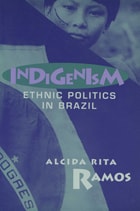
Indigenism
Ethnic Politics In BrazilAlcida Rita Ramos
University of Wisconsin Press, 1998
Based on her more than thirty years of fieldwork and activism on behalf of the Yanomami Indians, Ramos explains the complex ideology called indigenism. She evaluates its meaning through the relations of Brazilian Indians with religious and lay institutions, non-governmental organizations, official agencies such as the National Indian Foundation as well as the very discipline of anthropology. Ramos not only examines the imagery created by Brazilians of European descent—members of the Catholic church, government officials, the army and the state agency for Indian affairs—she also scrutinizes Indians' own self portrayals used in defending their ethnic rights against the Brazilian state.
Ramos’ thoughtful and complete analysis of the relation between indigenous people of Brazil and the state will be of great interest to lawmakers and political theorists, environmental and civil rights activists, developmental specialists and policymakers, and those concerned with human rights in Latin America.

Indigenous Struggle at the Heart of Brazil
State Policy, Frontier Expansion, and the Xavante Indians, 1937–1988Seth Garfield
Duke University Press, 2001
Garfield explains how state officials, eager to promote capital accumulation, social harmony, and national security on the western front, sought to delimit indigenous reserves and assimilate native peoples. Yet he also shows that state efforts to celebrate Indians as primordial Brazilians and nationalist icons simultaneously served to underscore and redefine ethnic difference. Garfield explores how various other social actors—elites, missionaries, military officials, intellectuals, international critics, and the Indians themselves—strove to remold this multifaceted project. Paying particular attention to the Xavante’s methods of engaging state power after experience with exile, territorial loss, and violence in the “white” world, Garfield describes how they emerged under military rule not as the patriotic Brazilians heralded by state propagandists but as a highly politicized ethnic group clamoring for its constitutional land rights and social entitlements.
Indigenous Struggle at the Heart of Brazil will interest not only historians and anthropologists but also those studying nationbuilding, Brazil, Latin America, comparative frontiers, race, and ethnicity.

Iron Will
Global Extractivism and Mining Resistance in Brazil and IndiaMarkus Kröger
University of Michigan Press, 2020
By drawing on a detailed field research and other sources, this book explains precisely which resistance strategies are able to influence both political and economic outcomes. Kröger expands the focus of traditionally Latin American extractivism research to other contexts such as India and the growing extractivist movement in the Global North. In addition, as the book is a multi-sited political ethnography, it will appeal to sociologists, political scientists, anthropologists, geographers, and others using field research among other methods to understand globalization and global political interactions. It is the most comprehensive book on the political economy and ecology of iron ore and steel. This is astonishing, given the fact that iron ore is the second-most important commodity in the world after oil.
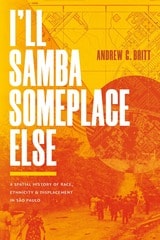
I’ll Samba Someplace Else
A Spatial History of Race, Ethnicity, and Displacement in São PauloAndrew G. Britt
Duke University Press, 2026