Results by title
332 books match the query 'Canada' and 21 start with i

Imagined Homes
Soviet German Immigrants in Two CitiesHans Werner
University of Manitoba Press, 2007
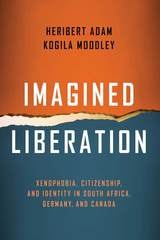
Imagined Liberation
Xenophobia, Citizenship, and Identity in South Africa, Germany, and CanadaHeribert Adam
Temple University Press, 2015
Why would a society that liberated itself in the name of human rights turn against people who escaped human rights violations or unlivable conditions at home? What happened to the expected African solidarity? Why do former victims become victimizers?
With porous borders, South Africa is incapable of upholding the blurred distinction between endangered refugees and economic migrants. Imagined Liberation asks what xenophobic societies can learn from other immigrant societies, such as Canada, that avoided the backlash against multiculturalism in Europe. Heribert Adam and Kogila Moodley stress an innovative teaching of political literacy that makes citizens aware as to why they hate.
Immigration, Trade, and the Labor Market
Edited by John M. Abowd and Richard B. Freeman
University of Chicago Press, 1991
Prompted by the growing internationalization of the U.S. labor market since the 1970s, contributors to Immigration, Trade, and the Labor Market provide an innovative and comprehensive analysis of the labor market impact of the international movements of people, goods, and capital. Their provocative findings are brought into perspective by studies of two other major immigrant-recipient countries, Canada and Australia. The differing experiences of each nation stress the degree to which labor market institutions and economic policies can condition the effect of immigration and trade on economic outcomes
Contributors trace the flow of immigrants by comparing the labor market and migration behavior of individual immigrants, explore the effects of immigration on wages and employment by comparing the composition of the work force in local labor markets, and analyze the impact of trade on labor markets in different industries. A unique data set was developed especially for this study—ranging from an effort to link exports/imports with wages and employment in manufacturing industries, to a survey of illegal Mexican immigrants in the San Diego area—which will prove enormously valuable for future research.

Implicating the System
Judicial Discourses in Sentencing of Indigenous WomenElspeth Kaiser-Derrick
University of Manitoba Press, 2019

Improper Advances
Rape and Heterosexual Conflict in Ontario, 1880-1929Karen Dubinsky
University of Chicago Press, 1993
Karen Dubinsky relies on criminal case files, a revealing but largely untapped source for social historians, to retell individual stories of sexual danger—crimes such as rape, abortion, seduction, murder, and infanticide. Her research supports many feminist analyses of sexual violence: that crimes are expressions of power, that courts are prejudiced by the victim's background, and that most assaults occur within the victims' homes and communities.
Dubinsky distinguishes herself from most feminist scholars, however, by refusing to view women solely as victims and sex as a tool of oppression. She finds that these women actively sought and took pleasure in sexuality, but they distinguished between wanted and unwanted sexual encounters and attempted to punish coercive sex despite obstacles in the court system and the community.
Confronting a number of key theoretical and historiographic controversies, including recent debates over sexuality in feminist theory and politics, she challenges current thinking on the history of women, gender, and sexuality.

In Defense of Free Speech in Universities
A Study of Three JurisdictionsAmy Lai
University of Michigan Press, 2023
In this book, Amy Lai examines the current free speech crisis in Western universities. She studies the origin, history, and importance of freedom of speech in the university setting, and addresses the relevance and pitfalls of political correctness and microaggressions on campuses, where laws on harassment, discrimination, and hate speech are already in place, along with other concepts that have gained currency in the free speech debate, including deplatforming, trigger warning, and safe space. Looking at numerous free speech disputes in the United Kingdom, the United States, and Canada, the book argues for the equal application of the free speech principle to all expressions to facilitate respectful debates. All in all, it affirms that the right to free expression is a natural right essential to the pursuit of truth, democratic governance, and self-development, and this right is nowhere more important than in the university.
In Good Relation
History, Gender, and Kinship in Indigenous FeminismsSarah Nickel
University of Manitoba Press, 2020
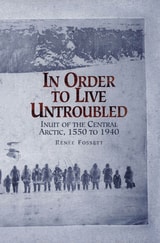
In Order to Live Untroubled
Inuit of the Central Artic 1550 to 1940Renee Fossett
University of Manitoba Press, 2001
Indians Playing Indian
Multiculturalism and Contemporary Indigenous Art in North AmericaMonika Siebert
University of Alabama Press, 2015
Explores how American Indian artists have responded to the pervasive misunderstanding of indigenous peoples as cultural minorities in the United States and Canada
Contemporary indigenous peoples in North America confront a unique predicament. While they are reclaiming their historic status as sovereign nations, mainstream popular culture continues to depict them as cultural minorities similar to other ethnic Americans. These depictions of indigenous peoples as “Native Americans” complete the broader narrative of America as a refuge to the world’s immigrants and a home to contemporary multicultural democracies, such as the United States and Canada. But they fundamentally misrepresent indigenous peoples, whose American history has been not of immigration but of colonization.
Monika Siebert’s Indians Playing Indian first identifies this phenomenon as multicultural misrecognition, explains its sources in North American colonial history and in the political mandates of multiculturalism, and describes its consequences for contemporary indigenous cultural production. It then explores the responses of indigenous artists who take advantage of the ongoing popular interest in Native American culture and art while offering narratives of the political histories of their nations in order to resist multicultural incorporation.
Each chapter of Indians Playing Indian showcases a different medium of contemporary indigenous art—museum exhibition, cinema, digital fine art, sculpture, multimedia installation, and literary fiction—and explores specific rhetorical strategies artists deploy to forestall multicultural misrecognition and recover political meanings of indigeneity. The sites and artists discussed include the National Museum of the American Indian in Washington, DC; filmmakers at Inuit Isuma Productions; digital artists/photographers Dugan Aguilar, Pamela Shields, and Hulleah Tsinhnahjinnie; sculptor Jimmie Durham; and novelist LeAnne Howe.
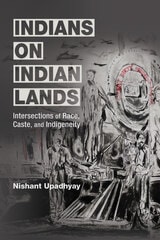
Indians on Indian Lands
Intersections of Race, Caste, and IndigeneityNishant Upadhyay
University of Illinois Press, 2024
Winner of a NWSA/University of Illinois Press First Book Prize
Nishant Upadhyay unravels Indian diasporic complicity in its ongoing colonialist relationship with Indigenous peoples, lands, and nations in Canada. Upadhyay examines the interwoven and simultaneous areas of dominant Indian caste complicity in processes of settler colonialism, antiblackness, capitalism, brahminical supremacy, Hindu nationalism, and heteropatriarchy. Resource extraction in British Columbia in the 1970s–90s and in present-day Alberta offer examples of spaces that illuminate the dispossession of Indigenous peoples and simultaneously reveal racialized, gendered, and casted labor formations. Upadhyay juxtaposes these extraction sites with examples of anticolonial activism and solidarities from Tkaronto. Analyzing silence on settler colonialism and brahminical caste supremacy, Upadhyay upends the idea of dominant caste Indian diasporas as racially victimized and shows that claiming victimhood denies a very real complicity in enforcing other power structures. Exploring stories of quotidian proximity and intimacy between Indigenous and South Asian communities, Upadhyay offers meditations on anticolonial and anti-casteist ways of knowledge production, ethical relationalities, and solidarities.Groundbreaking and ambitious, Indians on Indian Lands presents the case for holding Indian diasporas accountable for acts of violence within a colonial settler nation.
Indigenous Celebrity
Entanglements with FameJennifer Adese
University of Manitoba Press, 2021
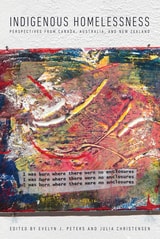
Indigenous Homelessness
Perspectives from Canada, Australia, and New ZealandEvelyn J. Peters
University of Manitoba Press, 2016
Indigenous Reparations and Settler Colonial Reckoning
Re-Braiding Rights and Redress in CanadaPauline Wakeham
University of Minnesota Press, 2026
How Indigenous communities are transforming the idea and practice of reparations through their laws and leadership
In recent decades, a growing number of Indigenous groups across Canada have initiated movements for colonial reparations. Too often, the settler state has responded by attempting to enfold their work into a narrative of reconciliation that consigns colonialism to “sad chapters” of history. In this book, Pauline Wakeham calls attention to the ways that Indigenous reparations movements exceed state reconciliatory frameworks and prompt a deeper reckoning with the enduring structures of settler colonialism.
To expose and redress colonial injustices, Indigenous reparations movements draw upon long local traditions of political organizing as well as transformations on the global stage since World War II. As international law formulated new instruments regarding gross human rights violations, atrocity crimes, and the reparative obligations of states, colonized peoples across the world have sought to mobilize these mechanisms in their struggles for decolonization and reparations. While international law has provided strategic tools for this work, the colonial foundations of the field continue to limit how it conceptualizes and shapes access to justice. Indigenous Reparations and Settler Colonial Reckoning traces the specific implications for Indigenous nations whose land is occupied by settler states—nations whose legal orders remain subordinated to both settler “domestic” and international legal systems.
Amid this complex multijurisdictional terrain, how are Indigenous peoples carving out space to articulate their own visions of justice? To answer this question, Wakeham learns from the Inuit-led Qikiqtani Truth Commission as well as reparations movements for residential schools and the High Arctic Relocations of 1953 and 1955. These movements offer powerful lessons about the importance of centering Indigenous leadership and laws in redress processes, thereby connecting reparations to the living enactment of Indigenous rights.
Retail e-book files for this title are screen-reader friendly with images accompanied by short alt text and/or extended descriptions.

Indigenous Screen Cultures in Canada
Sigurjon Baldur Hafsteinsson
University of Manitoba Press, 2010
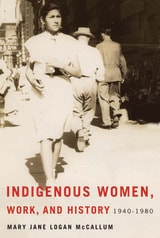
Indigenous Women, Work, and History
Mary Jane Logan McCallum
University of Manitoba Press, 2014
Injichaag
My Soul in Story: Anishinaabe Poetics in Art and WordsRene Meshake
University of Manitoba Press, 2019
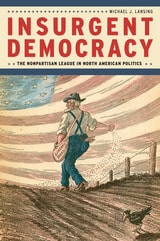
Insurgent Democracy
The Nonpartisan League in North American PoliticsMichael J. Lansing
University of Chicago Press, 2015
Michael J. Lansing aims to change that. Insurgent Democracy offers a new look at the Nonpartisan League and a new way to understand its rise and fall in the United States and Canada. Lansing argues that, rather than a spasm of populist rage that inevitably burned itself out, the story of the League is in fact an instructive example of how popular movements can create lasting change. Depicting the League as a transnational response to economic inequity, Lansing not only resurrects its story of citizen activism, but also allows us to see its potential to inform contemporary movements.

Interest Groups and Campaign Finance Reform in the United States and Canada
Robert G. Boatright
University of Michigan Press, 2011
In the early 2000s, the United States and Canada implemented new campaign finance laws restricting the ability of interest groups to make political contributions and to engage in political advertising. Whereas both nations' legislative reforms sought to reduce the role of interest groups in campaigns, these laws have had opposite results in the two nations. In the United States, interest groups remained influential by developing broad coalitions aimed at mobilizing individual voters and contributors. In Canada, interest groups largely withdrew from election campaigns, and, thus, important voices in elections have gone silent. Robert G. Boatright explains such disparate results by placing campaign finance reforms in the context of ongoing political and technological changes.
Robert G. Boatright is Associate Professor of Political Science at Clark University.
Cover photo: © iStockphoto.com / alfabravoalpharomeo
Inventing the Thrifty Gene
The Science of Settler ColonialismTravis Hay
University of Manitoba Press, 2021

Invisible Immigrants
The English in Canada since 1945Marilyn Barber
University of Manitoba Press, 2015
Invisible Lives
The Erasure of Transsexual and Transgendered PeopleViviane Namaste
University of Chicago Press, 2000
Invisible Lives is the first scholarly study of transgendered people—cross-dressers, drag queens and transsexuals—and their everyday lives.
Through combined theoretical and empirical study, Viviane K. Namaste argues that transgendered people are not so much produced by medicine or psychiatry as they are erased, or made invisible, in a variety of institutional and cultural settings. Namaste begins her work by analyzing two theoretical perspectives on transgendered people—queer theory and the social sciences—displaying how neither of these has adequately addressed the issues most relevant to sex change: everything from employment to health care to identity papers. Namaste then examines some of the rhetorical and semiotic inscriptions of transgendered figures in culture, including studies of early punk and glam rock subcultures, to illustrate how the effacement of transgendered people is organized in different cultural sites. Invisible Lives concludes with new research on some of the day-to-day concerns of transgendered people, offering case studies in violence, health care, gender identity clinics, and the law.