Results by title
788 books match the query 'Caribbean & Latin American' and 25 start with i
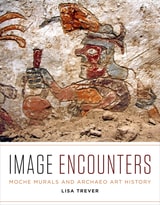
Image Encounters
Moche Murals and Archaeo Art HistoryLisa Trever
University of Texas Press, 2022
2022 Mr. and Mrs. Raymond J. Horowitz Book Prize, Bard Graduate Center
A landmark study of ancient Peruvian Moche mural art.
Moche murals of northern Peru represent one of the great, yet still largely unknown, artistic traditions of the ancient Americas. Created in an era without written scripts, these murals are key to understandings of Moche history, society, and culture. In this first comprehensive study on the subject, Lisa Trever develops an interdisciplinary methodology of “archaeo art history” to examine how ancient histories of art can be written without texts, boldly inverting the typical relationship of art to archaeology.
Trever argues that early coastal artistic traditions cannot be reduced uncritically to interpretations based in much later Inca histories of the Andean highlands. Instead, the author seeks the origins of Moche mural art, and its emphasis on figuration, in the deep past of the Pacific coast of South America. Image Encounters shows how formal transformations in Moche mural art, before and after the seventh century, were part of broader changes to the work that images were made to perform at Huacas de Moche, El Brujo, Pañamarca, and elsewhere in an increasingly complex social and political world. In doing so, this book reveals alternative evidentiary foundations for histories of art and visual experience.
Immaterial Archives
An African Diaspora Poetics of LossJenny Sharpe
Northwestern University Press, 2020
Imperial Decay
Literature, Autonomy, and the End of Modernization in the AmericasEmilio Sauri
Northwestern University Press, 2027
Demonstrating how art and literature remain vital to alternative imaginaries beyond the power of imperialism and modernization
Imperial Decay: Literature, Autonomy, and the End of Modernization in the Americas employs a dynamic, comparative approach to contemporary literature and visual art, showing how fiction, photography, poetry, and film from Latin America and the United States vividly illuminate the present. Focusing on the period from the end of the Cold War to the financial crisis of the late 2000s, Emilio Sauri contends that what brings these media together is not just the history of hemispheric connections but also, and more strikingly, the question of the artwork’s autonomy.
Elaborating on influential accounts that reveal how US hegemony in Latin America and the resistance it inspired throughout the region are bound up with the promise of modernization, Imperial Decay offers unique insights into the hollowing out of this promise at the end of the so-called American Century. Tracing this commitment back to the modernisms of the last century and forward to more recent works, this book casts canonical figures such as Ernest Hemingway, Walker Evans, and Gabriel García Márquez in a new and necessary light while developing a compelling interpretive framework for contemporary writers and artists from across the region, including Roberto Bolaño and Benjamin Kunkel, Alejandro Cartagena and Yvonne Venegas, and Kleber Mendonça Filho. Ultimately, Sauri shows why the work of art remains vital to the task of envisioning alternatives to the immiserations, ecological devastation, and degraded forms of life wrought by imperial decay.
Impunity, Human Rights, and Democracy
Chile and Argentina, 1990-2005By Thomas C. Wright
University of Texas Press, 2014
Universal human rights standards were adopted in 1948, but in the 1970s and 1980s, violent dictatorships in Argentina and Chile flagrantly defied the new protocols. Chilean general Augusto Pinochet and the Argentine military employed state terrorism in their quest to eradicate Marxism and other forms of “subversion.” Pinochet constructed an iron shield of impunity for himself and the military in Chile, while in Argentina, military pressure resulted in laws preventing prosecution for past human rights violations. When democracy was reestablished in both countries by 1990, justice for crimes against humanity seemed beyond reach.
Thomas C. Wright examines how persistent advocacy by domestic and international human rights groups, evolving legal environments, unanticipated events that impacted public opinion, and eventual changes in military leadership led to a situation unique in the world—the stripping of impunity not only from a select number of commanders of the repression but from all those involved in state terrorism in Chile and Argentina. This has resulted in trials conducted by national courts, without United Nations or executive branch direction, in which hundreds of former repressors have been convicted and many more are indicted or undergoing trial.
Impunity, Human Rights, and Democracy draws on extensive research, including interviews, to trace the erosion and collapse of the former repressors’ impunity—a triumph for human rights advocates that has begun to inspire authorities in other Latin American countries, including Peru, Uruguay, Brazil, and Guatemala, to investigate past human rights violations and prosecute their perpetrators.
In Order to Talk with the Dead
Selected Poems of Jorge TeillierBy Jorge Teillier
University of Texas Press, 1993
"In order to talk with the dead
you have to know how to wait:
they are fearful
like the first steps of a child.
But if we are patient
one day they will answer us
with a poplar leaf trapped in a broken mirror,
with a flame that suddenly revives in the fireplace,
with a dark return of birds
before the glance of a girl
who waits motionless on the threshold."
—from "In Order to Talk with the Dead"
Reared in the rainy forests of Chile's "La Frontera" region which had nurtured Pablo Neruda a generation earlier, Jorge Teillier has become one of Chile's leading contemporary poets, whose work is widely read in Latin America and Europe along with the poetry of his well-known contemporaries Nicanor Parra and Enrique Lihn. This English-Spanish bilingual anthology now introduces English-speaking readers to Teillier, with a representative selection of his best work from all phases of his career.
Carolyne Wright has translated poems from the volumes Muertes y maravillas (1971), Para un pueblo fantasma (1978), and Cartas para reinas de otras primaveras (1985). Avoiding the bravura effects of some of his contemporaries, Teillier writes from a life lived directly and simply, returning time and again in his poetry to the timeless and mythic South of his boyhood, the "Land of Nevermore."
In Plenty and in Time of Need
Popular Culture and the Remapping of Barbadian IdentityLia T. Bascomb
Rutgers University Press, 2020
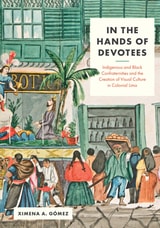
In the Hands of Devotees
Indigenous and Black Confraternities and the Creation of Visual Culture in Colonial LimaXimena A. Gómez
University of Texas Press, 2025
An exploration of how Indigenous and Black communities shaped religious imagery and navigated life in colonial Lima.
Colonial Lima was steeped in Christian devotional imagery. While Spaniards set the norms for these works, it was the city’s Black and Indigenous majority that engaged with them most. As members of lay societies of worshippers called confraternities, subalterns were Lima’s key promoters of religious art, surpassing the colonial hierarchy.
Ximena Gómez argues that, by commissioning and exhibiting sacred images—in chapels and urban processions, adorned with clothing and accessories—Indigenous and Black confraternities created Lima’s visual culture. In one case study, the Indigenous confraternity of the Virgin of Copacabana "invisibly" transforms a sculpture into an object that reflected its multiethnic Andean caretakers. Another case study, that of the confraternity of the Virgin of the Antigua, finds Black worshippers initially united in their interpretation of a Spanish image and later fracturing when some of its members applied a West African interpretive lens. Taking advantage of Lima’s rich documentary record, In the Hands of Devotees centers the ritual practices of Black and Indigenous people and opens possibilities for incorporating subalterns into the history of Lima’s art when limited extant visual evidence has survived.
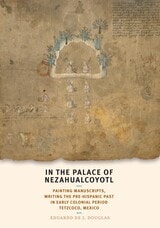
In the Palace of Nezahualcoyotl
Painting Manuscripts, Writing the Pre-Hispanic Past in Early Colonial Period Tetzcoco, MexicoBy Eduardo de J. Douglas
University of Texas Press, 2010
Around 1542, descendants of the Aztec rulers of Mexico created accounts of the pre-Hispanic history of the city of Tetzcoco, Mexico, one of the imperial capitals of the Aztec Empire. Painted in iconic script ("picture writing"), the Codex Xolotl, the Quinatzin Map, and the Tlohtzin Map appear to retain and emphasize both pre-Hispanic content and also pre-Hispanic form, despite being produced almost a generation after the Aztecs surrendered to Hernán Cortés in 1521. Yet, as this pioneering study makes plain, the reality is far more complex.
Eduardo de J. Douglas offers a detailed critical analysis and historical contextualization of the manuscripts to argue that colonial economic, political, and social concerns affected both the content of the three Tetzcocan pictorial histories and their archaizing pictorial form. As documents composed by indigenous people to assert their standing as legitimate heirs of the Aztec rulers as well as loyal subjects of the Spanish Crown and good Catholics, the Tetzcocan manuscripts qualify as subtle yet shrewd negotiations between indigenous and Spanish systems of signification and between indigenous and Spanish concepts of real property and political rights. By reading the Tetzcocan manuscripts as calculated responses to the changes and challenges posed by Spanish colonization and Christian evangelization, Douglas's study significantly contributes to and expands upon the scholarship on central Mexican manuscript painting and recent critical investigations of art and political ideology in colonial Latin America.
In the Shadow of Tungurahua
Disaster Politics in Highland EcuadorA.J. Faas
Rutgers University Press, 2023
Indigeneity in the Mexican Cultural Imagination
Thresholds of BelongingAnalisa Taylor
University of Arizona Press, 2009
The book focuses on representations of indigenous peoples in post-revolutionary literary and intellectual history by examining key cultural texts. Using these analyses as a foundation, Analisa Taylor links her critique to national Indian policy, rights, and recent social movements in Southern Mexico. In addition, she moves beyond her analysis of indigenous peoples in general to take a gendered look at indigenous women ranging from the villainized Malinche to the highly romanticized and sexualized Zapotec women of the Isthmus of Tehuantepec.
The contradictory treatment of the Indian in Mexico’s cultural imagination is not unique to that country alone. Rather, the situation there is representative of a phenomenon seen throughout the world. Though this book addresses indigeneity in Mexico specifically, it has far-reaching implications for the study of indigenaety across Latin America and beyond. Much like the late Edward Said’s Orientalism, this book provides a glimpse at the very real effects of literary and intellectual discourse on those living in the margins of society.
This book’s interdisciplinary approach makes it an essential foundation for research in the fields of anthropology, history, literary critique, sociology, and cultural studies. While the book is ideal for a scholarly audience, the accessible writing and scope of the analysis make it of interest to lay audiences as well. It is a must-read for anyone seeking a deeper understanding of the politics of indigeneity in Mexico and beyond.
Indigenous Journeys, Transatlantic Perspectives
Relational Worlds in Contemporary Native American LiteratureAnna M Brígido-Corachán
Michigan State University Press, 2023
Indigenous Movements, Self-Representation, and the State in Latin America
Edited by Kay B. Warren and Jean E. Jackson
University of Texas Press, 2003
Throughout Latin America, indigenous peoples are responding to state violence and pro-democracy social movements by asserting their rights to a greater measure of cultural autonomy and self-determination. This volume's rich case studies of movements in Colombia, Guatemala, and Brazil weigh the degree of success achieved by indigenous leaders in influencing national agendas when governments display highly ambivalent attitudes about strengthening ethnic diversity.
The contributors to this volume are leading anthropologists and indigenous activists from the United States and Latin America. They address the double binds of indigenous organizing and "working within the system" as well as the flexibility of political tactics used to achieve cultural goals outside the scope of state politics. The contributors answer questions about who speaks for indigenous communities, how indigenous movements relate to the popular left, and how conflicts between the national indigenous leadership and local communities play out in specific cultural and political contexts. The volume sheds new light on the realities of asymmetrical power relations and on the ways in which indigenous communities and their representatives employ Western constructions of subjectivity, alterity, and authentic versus counterfeit identity, as well as how they manipulate bureaucratic structures, international organizations, and the mass media to advance goals that involve distinctive visions of an indigenous future.
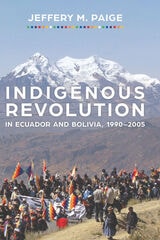
Indigenous Revolution in Ecuador and Bolivia, 1990–2005
Jeffery M. Paige
University of Arizona Press, 2020
Uprisings by indigenous peoples of Ecuador and Bolivia between 1990 and 2005 overthrew the five-hundred-year-old racial and class order inherited from the Spanish Empire. It started in Ecuador with the Great Indigenous Uprising, which was fought for cultural and economic rights. A few years later massive indigenous mobilizations began in Bolivia, culminating in 2005 with the election of Evo Morales, the first indigenous president.
Jeffrey M. Paige, an internationally recognized authority on the sociology of revolutionary movements, interviewed forty-five indigenous leaders who were actively involved in the uprisings. The leaders recount how peaceful protest and electoral democracy paved the path to power. Through the interviews, we learn how new ideologies of indigenous socialism drew on the deep commonalities between the communal dreams of their ancestors and the modern ideology of democratic socialism. This new discourse spoke to the people most oppressed by both withering racism and neoliberal capitalism.
Emphasizing mutual respect among ethnic groups (including the dominant Hispanic group), the new revolutionary dynamic proposes a communal worldview similar to but more inclusive than Western socialism because it adds indigenous cultures and nature in a spiritual whole. Although absent in the major revolutions of the past century, the themes of indigenous revolution—democracy, indigeneity, spirituality, community, and ecology—are critically important.
Paige’s interviews present the powerful personal experiences and emotional intensity of the revolutionary leadership. They share the stories of mass mobilization, elections, and indigenous socialism that created a new form of twenty-first-century revolution with far-reaching applications beyond the Andes.
Indigenous Visual Cultures in Latin America
Seeing, Being, and MeaningEdited by Tamara L. Bray and Carolyn Dean
University of Texas Press, 2026
Reframing the study of Indigenous visual cultures, this volume explores how images and objects generate affect and relation in non-Western contexts, foregrounding alternative modes of material engagement and meaning-making.
While traditional approaches to Indigenous visual cultures have often centered on iconography and representation, this volume turns toward other ways that images and objects act in the world. Indigenous Visual Cultures in Latin America explores how material productions function not merely as signs that point elsewhere but as agents that help shape relationships, environments, and affective experience.
Spanning Mesoamerica, the Andes, and Amazonia from 1500 BCE to the present, the chapters examine how meaning may reside in materials themselves; how making is a form of exchange between maker and matter; and how visual forms participate in configuring relations among humans, ancestors, deities, and place. These works are not passive containers of meaning, but charged presences—generative forces within ongoing worlds. Attuned to Indigenous ways of knowing and being, the volume invites readers to think beyond the frame, beyond the image, and beyond representation itself.
Industry, the State, and Public Policy in Mexico
By Dale Story
University of Texas Press, 1986
The industrialization process in Mexico began before that of any other nation in Latin America except Argentina, with the most rapid expansion of new industrial firms occurring in the 1930s and 1940s, and import substitution in capital goods evident as early as the late 1930s. Though Mexico’s trade relations have always been dependent on the United States, successive Mexican presidents in the postwar period attempted to control the penetration of foreign capital into Mexican markets.
In Industry, the State, and Public Policy in Mexico, Dale Story, recognizing the significance of the Mexican industrial sector, analyzes the political and economic role of industrial entrepreneurs in postwar Mexico. He uses two original data sets—industrial production data for 1929–1983 and a survey of the political attitudes of leaders of the two most important industrial organizations in Mexico—to address two major theoretical arguments relating to Latin American development: the meaning of late and dependent development and the nature of the authoritarian state. Story accepts the general relevance of these themes to Mexico but asserts that the country is an important variant of both.
With regard to the authoritarian thesis, the Mexican authoritarian state has demonstrated some crucial distinctions, especially between popular and elite sectors. The incorporation of the popular sector groups has closely fit the characteristics of authoritarianism, but the elite sectors have operated fairly independently of state controls, and the government has employed incentives or inducements to try to win their cooperation.
In short, industrialists have performed important functions, not only in accumulating capital and organizing economic enterprises but also by bringing together the forces of social change. Industrial entrepreneurs have emerged as a major force influencing the politics of growth, and the public policy arena has become a primary focus of attention for industrialists since the end of World War II.
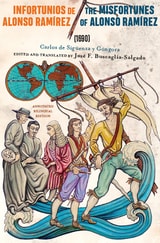
Infortunios de Alonso Ramirez / The Misfortunes of Alonso Ramirez (1690)
Annotated Bilingual EditionBuscaglia-Salgado, José F
Rutgers University Press, 2018
Inhabiting the Impossible
Dance and Experimentation in Puerto RicoSusan Homar and nibia pastrana santiago, Editors
University of Michigan Press, 2023
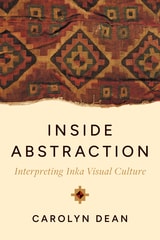
Inside Abstraction
Interpreting Inka Visual CultureCarolyn Dean
University of Texas Press, 2025
2026 PROSE Award for Art History And Criticism, Association of American Publishers
Illuminating the abstract art of the Inka, what it conveys about Inka values, and its relationship to those who view it.
Inka visual culture is unusual in its tendency toward abstraction. Public stonework, vessels used at state feasts, garments worn by the imperial elite—these objects announcing status and power are adorned with geometric designs that refuse figuration. After searching in vain for hidden referents, many scholars have largely given up the search for meaning.
Inside Abstraction develops a novel interpretation. Eminent art historian Carolyn Dean proposes that Inka geometries are neither ornamental nor coded depictions of other objects. Rather, Dean shows that in the Andean world, the designs were functionally self-aware, possessing perspectives of their own, quite literally looking back at and addressing viewers directly. Further, Dean contends that these agent-abstractions were teachers, conveying particular messages concerning social hierarchy: the relations among geometries and colors instructed viewers as to their own proper social relations. Inka designs thereby served imperial aims by wordlessly communicating the state’s values and demands for submission. Extensively illustrated and rigorously argued, Inside Abstraction is a dramatic step forward in our understanding of Inka art and political order.

Inside Tenement Time
Suss, Spirit, and SurveillanceKezia Page
Rutgers University Press, 2025
Inside Tenement Time is the first comprehensive treatment of literary and cultural texts on surveillance in the Caribbean. Covering the long historical arc of the twentieth to the twenty-first centuries, Inside Tenement Time uses Jamaica as a case study to examine moments of crisis and particular spaces, especially urban yard enclaves and their environs, in the Caribbean encounter with surveillance. Making the argument that the Caribbean situation reveals flexible hegemonies rather than provinces of exclusive control, the book demonstrates the countervailing force of sussveillance and spiritveillance, Afro-Indigenous variations on surveillance. Sussveillance and spiritveillance are exemplars of vernacular arts and sciences that operate at and within the frangible borders of state power, exposing the unique dynamics of surveillance in the region and marshalling the acts of imagination with which it contends. For example, the Smile Jamaica concert of 1976, headlined by reggae Superstar Bob Marley, and the reputedly US government-backed 2010 Tivoli Gardens incursion in West Kingston, both moments that have dramatic, even mythic residue in Caribbean and global memory, are among the real-life events brought into conversation with literary representations of this history.
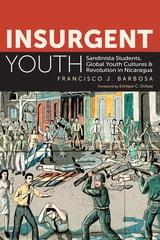
Insurgent Youth
Sandinista Students, Global Youth Cultures, and Revolution in NicaraguaFrancisco J. Barbosa
University Press of Colorado, 2026
This history of the Sandinista student movement is a window into the cultural milieu that produced a revolution where it seemed least likely to occur: among the youth of a country under the firm grip of a US-backed dictatorship whose power was secured by one of the best armed and most highly trained military forces in the region. By examining the articulation of political, gendered, and age-specific identities within the revolutionary process, Insurgent Youth sheds light on the everyday struggles of young Nicaraguans.
In the early 1970s a new emphasis on personal freedom and pleasure, under the influence of a global counterculture, challenged Sandinista gender ideology, especially masculinity, from within. This shift transformed the social world of Nicaraguan youth in general and Sandinista students in particular, eventually affecting the character of clandestine struggle and debates over revolutionary praxis within the Sandinista National Liberation Front (FSLN). Insurgent Youthshows how this new youth identity, which included the classic 1960s triumvirate of “sex, drugs, and rock ‘n’ roll,” constituted a social vernacular among young Nicaraguans of all classes—a common language and array of social practices that ultimately aided FSLN recruitment efforts among working-class youth. At the same time, this new identity posed a danger to the movement in that it embodied a tacit questioning of both mainstream and Sandinista notions of gender and the political, bringing threatening class and ideological contradictions present within the movement to the surface.
Insurgent Youth places what was happening in Nicaragua into the context of the worldwide student movement, challenging patriarchy and colonialism in Latin America and across the globe. This deep dive into the Nicaraguan revolution and the youth culture surrounding it provides a unique perspective on, and understanding of, modern Latin American history.
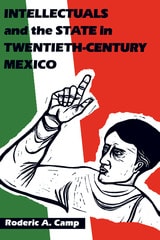
Intellectuals and the State in Twentieth-Century Mexico
By Roderic A. Camp
University of Texas Press, 1986
In developing countries, the extent to which intellectuals disengage themselves in state activities has widespread consequences for the social, political, and economic development of those societies. Roderic Camps’ examination of intellectuals in Mexico is the first study of a Latin American country to detail the structure of intellectual life, rather than merely considering intellectual ideas. Camp has used original sources, including extensive interviews, to provide new data about the evolution of leading Mexican intellectuals and their relationship to politics and politicians since 1920.
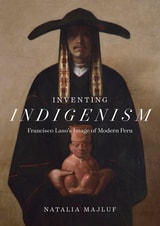
Inventing Indigenism
Francisco Laso's Image of Modern PeruNatalia Majluf
University of Texas Press, 2021
2023 ALAA Book Award, Association for Latin American Art/Arvey Foundation
A fascinating account of the modern reinvention of the image of the Indian in nineteenth-century literature and visual culture, seen through the work of Peruvian painter Francisco Laso.
One of the outstanding painters of the nineteenth century, Francisco Laso (1823–1869) set out to give visual form to modern Peru. His solemn and still paintings of indigenous subjects were part of a larger project, spurred by writers and intellectuals actively crafting a nation in the aftermath of independence from Spain. In this book, at once an innovative account of modern indigenism and the first major monograph on Laso, Natalia Majluf explores the rise of the image of the Indian in literature and visual culture. Reading Laso’s works through a broad range of sources, Majluf traces a decisive break in a long history of representations of indigenous peoples that began with the Spanish conquest. She ties this transformation to the modern concept of culture, which redefined both the artistic field and the notion of indigeneity. As an abstraction produced through indigenist discourse, an icon of authenticity, and a densely racialized cultural construct, the Indian would emerge as a central symbol of modern Andean nationalisms.
Inventing Indigenism brings the work and influence of this extraordinary painter to the forefront as it offers a broad perspective on the dynamics of art and visual culture in nineteenth-century Latin America.
Invisibility and Influence
A Literary History of AfroLatinidadesRegina Marie Mills
University of Texas Press, 2024
2026 Honorable Mention, Latinx Studies Section, Social Sciences Category, Latin American Studies Association (LASA)
A rich literary study of AfroLatinx life writing, this book traces how AfroLatinxs have challenged their erasure in the United States and Latin America over the last century.
Invisibility and Influence demonstrates how a century of AfroLatinx writers in the United States shaped life writing, including memoir, collective autobiography, and other formats, through depictions of a wide range of “Afro-Latinidades.” Using a woman-of-color feminist approach, Regina Marie Mills examines the work of writers and creators often excluded from Latinx literary criticism. She explores the tensions writers experienced in being viewed by others as only either Latinx or Black, rather than as part of their own distinctive communities. Beginning with Arturo (Arthur) Schomburg, who contributed to wider conversations about autobiographical technique, Invisibility and Influence examines a breadth of writers, including Jesús Colón; members of the Young Lords; Piri Thomas; Lukumi santera and scholar Marta Moreno Vega; and Black Mexican American poet Ariana Brown. Mills traces how these writers confront the distorted visions of AfroLatinxs in the United States, Latin America, and the Caribbean, and how they created and expressed AfroLatinx spirituality, politics, and self-identity, often amidst violence. Mapping how AfroLatinx writers create their own literary history, Mills reveals how AfroLatinx life writing shapes and complicates discourses on race and colorism in the Western Hemisphere.
Dialogues in AfroLatinidad Podcast:https://www.youtube.com/watch?v=FIhF-pdeW3A
Invisible Work
Borges and TranslationEfrain Kristal
Vanderbilt University Press, 2002
Between the age of ten, when he translated Oscar Wilde, and the end of his life, when he prepared a Spanish version of the Prose Edda , Borges transformed the work of Poe, Kafka, Hesse, Kipling, Melville, Gide, Faulkner, Whitman, Woolf, Chesterton, and many others. In a multitude of essays, lectures, and interviews Borges analyzed the versions of others and developed an engaging view about translation. He held that a translation can improve an original, that contradictory renderings of the same work can be equally valid, and that an original can be unfaithful to a translation.
Borges's bold habits as translator and his views on translation had a decisive impact on his creative process. Translation is also a recurrent motif in Borges's stories. In "The Immortal," for example, a character who has lived for many centuries regains knowledge of poems he had authored, and almost forgotten, by way of modern translations. Many of Borges's fictions include actual or imagined translations, and some of his most important characters are translators. In "Pierre Menard, author of the Quixote," Borges's character is a respected Symbolist poet, but also a translator, and the narrator insists that Menard's masterpiece-his "invisible work"-adds unsuspected layers of meaning to Cervantes's Don Quixote. George Steiner cites this short story as "the most acute, most concentrated commentary anyone has offered on the business of translation."
In an age where many discussions of translation revolve around the dichotomy faithful/unfaithful, this book will surprise and delight even Borges's closest readers and critics.
Italy to Argentina
Travel Writing and Emigrant ColonialismTullio Pagano
Amherst College Press, 2023
“Italy to Argentina shows meticulous bibliographic work and is attentive to both fundamental and marginal texts in a double task, on the one hand, of textual analysis, and on the other, of rescuing and recovering a corpus forgotten by critics even when it is highly significant. It is, then, a research work that addresses the Italian emigration to Argentina from an original point of view, linking texts that have not been studied or that have not been sufficiently analyzed.” —Fernanda Elisa Bravo Herrera, author of Huellas y recorridos de una utopía: La emigración italiana en la Argentina
"From Boccadasse to La Boca. Tullio Pagano complexifies the relationship between ‘diaspora’ and ‘colonialism’ in the context of Italian migration to South America. In six thematic chapters, Pagano explores the thought of authors on and off the canon. Such diverse voices lead the reader to a new approach to the study of emigrant colonialism and creole studies, towards a deeper, more realistic understanding of the ‘conquest of the desert’ that Italian emigrants wanted to perform in Argentina."—Giuseppe Gazzola, Stony Brook University