Results by title
99 books match the query 'Censorship' and 13 start with i
Iconoclasm
David Freedberg
University of Chicago Press, 2021
Freedberg combines fresh thinking with deep expertise to address the renewed significance of iconoclasm, its ideologies, and its impact. This volume also provides a supplement to Freedberg’s essay on idolatry and iconoclasm from his pathbreaking book, The Power of Images. Freedberg’s writings are of foundational importance to this discussion, and this volume will be a welcome resource for historians, museum professionals, international law specialists, preservationists, and students.
In Defense of Free Speech in Universities
A Study of Three JurisdictionsAmy Lai
University of Michigan Press, 2023
In this book, Amy Lai examines the current free speech crisis in Western universities. She studies the origin, history, and importance of freedom of speech in the university setting, and addresses the relevance and pitfalls of political correctness and microaggressions on campuses, where laws on harassment, discrimination, and hate speech are already in place, along with other concepts that have gained currency in the free speech debate, including deplatforming, trigger warning, and safe space. Looking at numerous free speech disputes in the United Kingdom, the United States, and Canada, the book argues for the equal application of the free speech principle to all expressions to facilitate respectful debates. All in all, it affirms that the right to free expression is a natural right essential to the pursuit of truth, democratic governance, and self-development, and this right is nowhere more important than in the university.
In the Spirit of H. Chandler Davis
Activism and the Struggle for Academic FreedomEdited by Michael Atzmon, John Cheney-Lippold , Gary D. Krenz, and Melanie S. Tanielian
Disobedience Press, 2026
The essays collected in this book honor H. Chandler Davis (1926-2022), a University of Michigan faculty member who became a symbol of principled dissent when suspended and fired in 1954 for refusing to testify about his political affiliations to the House Un-American Activities Committee. Invoking academic freedom and First Amendment protection, Davis was convicted of contempt of Congress. He served six months in prison before moving to Canada, where he established himself as a brilliant mathematician, prolific writer, and ardent and much beloved advocate for justice.
At a time when a new McCarthyism has come roaring back to threaten free inquiry everywhere, the 12 contributors to this book argue against censorship, the suppression of protest, the policed and surveilled campus, the self-silencing of "institutional neutrality," and other enemies of academic freedom. Also included in this volume is posthumously published work by Davis and by his late wife, the historian Natalie Zemon Davis, which reflects on the importance of facing, and not accepting, authoritarian threats.
Inspired by Chandler Davis’ courage, integrity, and devotion to the struggle against oppression, injustice, and the persecution of speech, these essays offer crucial insights into the importance of defending intellectual independence, institutional autonomy, and the right to free expression.
Contributors: Michael Bérubé, Juan Cole, H. Chandler Davis, Stefan Hanß, Marjorie Heins, Dima Khalidi, Gene Nichol, Henry Reichman, Ellen Schrecker, Joan Scott, Catharine R. Stimpson, Alan Wald, Silke-Maria Weineck, and Natalie Zemon Davis.
Indie Porn
Revolution, Regulation, and ResistanceZahra Stardust
Duke University Press, 2024
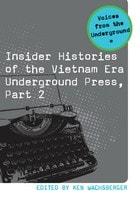
Insider Histories of the Vietnam Era Underground Press, Part 2
Ken Wachsberger
Michigan State University Press, 2011
This enlightening book offers a collection of histories of underground papers from the Vietnam Era as written and told by key staff members of the time. Their stories, building on those presented in Part 1, represent a wide range of publications: countercultural, gay, lesbian, feminist, Puerto Rican, Native American, Black, socialist, Southern consciousness, prisoners’ rights, New Age, rank-and-file, military, and more. Wachsberger notes that the underground press not only produced a few well-known papers but also was truly national and diverse in scope. His goal is to capture the essence of “the countercultural community.” This book will be a fundamental resource for anyone seeking a deeper understanding of a dramatic era in U.S. history, as well as offering a younger readership a glimpse into a generation of idealists who rose up to challenge and improve government and society.

Intellectual Freedom Manual
Trina Magi
American Library Association, 2015
Intellectual Freedom Manual
Trina Magi
American Library Association, 2021
The newest edition of the Intellectual Freedom Manual is more than simply an update of a foundational text that has served as a crucial resource for more than four decades. It is a living document that serves as the authoritative reference for day-to-day guidance on maintaining free and equal access to information for all people. Whether you’re developing or revising policies, on-boarding new staff or trustees, responding to challenges and controversies, or studying librarianship, you’ll find this an indispensable resource, with features such as
- ALA policy statements, approved by committees and Council, articulating core intellectual freedom principles and best practices;
- 8 new interpretations of the Library Bill of Rights, which address urgent issues like internet filtering, public performances, political activity, religion, and equity, diversity, and inclusion;
- “Issues at a Glance” sidebars which present key concepts, points of law, tips, and questions for reflection;
- expanded content about developing library policies that support intellectual freedom;
- updated information on censorship of library programs, displays, and databases;
- “Advocacy and Assistance,” a section offering concrete guidance when you’re called on to talk to the media or meet with legislators;
- Deeper Look essays which examine the laws related to library operations;
- advice on when to call the police, when not to, and how to handle personally identifiable information when they arrive; and
- an expanded glossary.
Intellectual Freedom Manual
American Library Association, 2006
Intellectual Freedom Manual
American Library Association, 2010
Intellectual Freedom Manual, Eleventh Edition
Erin Office for Intellectual Freedom
American Library Association, 2026
When someone faces a difficult intellectual freedom (IF) issue, they usually don’t have time to wade through dense text to find the answers they need. Designed as a real-world reference, OIF’s Intellectual Freedom Manual provides trusted, comprehensive guidance for every library worker, from the volunteer to the director, in plain language. Whether you’re developing or reviewing policies, on-boarding new staff or trustees, responding to challenges and controversies, or studying librarianship, you’ll find this a vital tool, with features such as
- contributions that center the voices of Black, Indigenous, and other People of Color (BIPOC) and LGBTQIA+ people, who are often targeted by censorship efforts;
- chapters that begin with an overview explaining the big ideas and offering reflection questions;
- an introduction to IF and why it matters, drawing on ALA's core IF documents and supported with adaptable policy worksheets;
- information and best practice guidance on key topics such as access, children and youth, censorship and internet filtering, collection development and management, copyright, meeting rooms and exhibit spaces, library programming, politics and religion, privacy, and visits and requests from law enforcement;
- stories from real people whose lives have been impacted by IF, showing how library policies shape culture, protect staff and users, and affect real people;
- concise breakdowns of IF issues from legal experts, helping you understand the laws and how they apply in real situations;
- practical advice on advocating for IF, getting help when challenges arise, lobbying, and working with your elected officials;
- a thorough index to help you quickly find the information you need; and
- a helpful glossary and selected bibliography of additional resources.
Intellectual Freedom Stories from a Shifting Landscape
Valerie Nye
American Library Association, 2020
Intellectual freedom is a complex concept that democracies and free societies around the world define in different ways but always strive to uphold. And ALA has long recognized the crucial role that libraries play in protecting this right. But what does it mean in practice? How do library workers handle the ethical conundrums that often accompany the commitment to defending it? Rather than merely laying out abstract policies and best practices, this important new collection gathers real-world stories of intellectual freedom in action to illuminate the difficulties, triumphs, and occasional setbacks of advocating for free and equal access to information for all people in a shifting landscape. Offering insight to LIS students and current practitioners on how we can advance the profession of librarianship while fighting censorship and other challenges, these personal narratives explore such formidable situations as
- presenting drag queen story times in rural America;
- a Black Lives Matter “die-in” at the undergraduate library of the University of Wisconsin-Madison;
- combating censorship at a prison library;
- hosting a moderated talk about threats to modern democracy that included a neo-Nazi spokesman;
- a provocative exhibition that triggered intimidating phone calls, emails, and a threat to burn down an art library;
- calls to eliminate non-Indigenous children’s literature from the collection of a tribal college library; and
- preserving patrons’ right to privacy in the face of an FBI subpoena.
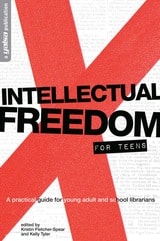
Intellectual Freedom for Teens
A Practical Guide for Young Adult & School LibrariansKristin Fletcher-Spear
American Library Association, 2014
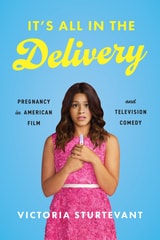
It's All in the Delivery
Pregnancy in American Film and Television ComedyVictoria Sturtevant
University of Texas Press, 2024
2025 John G. Cawelti Award for the Best Textbook/Primer, Popular Culture Association/American Culture Association (PCA/ACA)
2025 Longlist, Kraszna-Krausz Moving Image Book Award
How changing depictions of pregnancy in comedy from the start of the twentieth century to the present show an evolution in attitudes toward women’s reproductive roles and rights.
Some of the most groundbreaking moments in American film and TV comedy have centered on pregnancy, from Lucille Ball’s real-life pregnancy on I Love Lucy, to the abortion plot on Maude; Murphy Brown’s controversial single motherhood; Arnold Schwarzenegger’s pregnancy in Junior; or the third-trimester stand-up special Ali Wong: Baby Cobra.
In the first book-length study of pregnancy in popular comedy, Victoria Sturtevant examines the slow evolution of pregnancy tropes during the years of the Production Code; the sexual revolution and changing norms around nonmarital pregnancy in the 1960s and ‘70s; and the emphasis on biological clocks, infertility, adoption, and abortion from the 1980s to now.
Across this history, popular media have offered polite evasions and sentimentality instead of real candor about the physical and social complexities of pregnancy. But comedy has often led the way in puncturing these clichés, pointing an irreverent and satiric lens at the messy and sometimes absurd work of gestation. Ultimately, Sturtevant argues that comedy can reveal the distortions and lies that treat pregnancy as simple and natural “women’s work,” misrepresentations that rest at the heart of contemporary attacks on reproductive rights in the US.