444 books match the query 'Chemistry' and 14 start with i
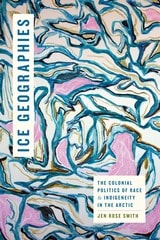
cover of Ice Geographies: The Colonial Politics of Race and Indigeneity in the Arctic

Ice Geographies

The Colonial Politics of Race and Indigeneity in the Arctic

Jen Rose Smith

Duke University Press, 2025
Ice animates the look and feel of climate change. It is melting faster than ever before, causing social upheaval among northern coastal communities and disrupting a more southern, temperate world as sea levels rise. Economic, academic, and activist stakeholders are increasingly focused on the unsettling potential of ice as they plan for a future shaped by rapid transformation. Yet, in Ice Geographies, Jen Rose Smith demonstrates that ice has always been at the center of making sense of the world. Ice as homeland is often at the heart of Arctic and sub-Arctic ontologies, cosmologies, and Native politics. Reflections on ice have also long been a constitutive element of Western political thought, but it often privileges a pristine or empty “nature” stripped of power relations. Smith centers ice to study race and indigeneity by investigating ice relations as sites and sources of analysis that are bound up with colonial and racial formations as well as ice geographies beyond those formations. Smith asks, How is ice a racialized geography and imaginary, and how does it also exceed those frameworks?
[more]
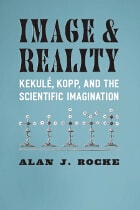
cover of Image and Reality: Kekulé, Kopp, and the Scientific Imagination

Image and Reality

Kekulé, Kopp, and the Scientific Imagination

Alan J. Rocke

University of Chicago Press, 2010

Nineteenth-century chemists were faced with a particular problem: how to depict the atoms and molecules that are beyond the direct reach of our bodily senses. In visualizing this microworld, these scientists were the first to move beyond high-level philosophical speculations regarding the unseen. In Image and Reality, Alan Rocke focuses on the community of organic chemists in Germany to provide the basis for a fuller understanding of the nature of scientific creativity. 

Arguing that visual mental images regularly assisted many of these scientists in thinking through old problems and new possibilities, Rocke uses a variety of sources, including private correspondence, diagrams and illustrations, scientific papers, and public statements, to investigate their ability to not only imagine the invisibly tiny atoms and molecules upon which they operated daily, but to build detailed and empirically based pictures of how all of the atoms in complicated molecules were interconnected. These portrayals of “chemical structures,” both as mental images and as paper tools, gradually became an accepted part of science during these years and are now regarded as one of the central defining features of chemistry.  In telling this fascinating story in a manner accessible to the lay reader, Rocke also suggests that imagistic thinking is often at the heart of creative thinking in all fields.

Image and Reality is the first book in the Synthesis series, a series in the history of chemistry, broadly construed, edited by Angela N. H. Creager, John E. Lesch, Stuart W. Leslie, Lawrence M. Principe, Alan Rocke, E.C. Spary, and Audra J. Wolfe, in partnership with the Chemical Heritage Foundation.
[more]
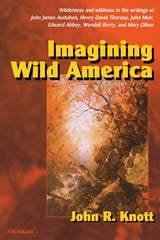
cover of Imagining Wild America

Imagining Wild America

John Knott

University of Michigan Press, 2002
At a time when the idea of wilderness is being challenged by both politicians and intellectuals, Imagining Wild America examines writing about wilderness and wildness and makes a case for its continuing value. The book focuses on works by John James Audubon, Henry David Thoreau, John Muir, Edward Abbey, Wendell Berry, and Mary Oliver, as each writer illustrates different stages and dimensions of the American fascination with wild nature. John Knott traces the emergence of a visionary tradition that embraces values consciously understood to be ahistorical, showing that these writers, while recognizing the claims of history and the interdependence of nature and culture, also understand and attempt to represent wild nature as something different, other.
A contribution to the growing literature of eco-criticism, the book is a response to and critique of recent arguments about the constructed nature of wilderness. Imagining Wild America demonstrates the richness and continuing importance of the idea of wilderness, and its attraction for American writers.
John R. Knott is Professor of English, University of Michigan. His previous books include The Huron River: Voices from the Watershed, coedited with Keith Taylor.
[more]
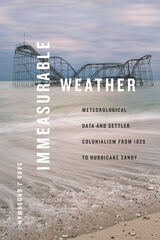
cover of Immeasurable Weather: Meteorological Data and Settler Colonialism from 1820 to Hurricane Sandy

Immeasurable Weather

Meteorological Data and Settler Colonialism from 1820 to Hurricane Sandy

Sara J. Grossman

Duke University Press, 2023
In Immeasurable Weather Sara J. Grossman explores how environmental data collection has been central to the larger project of settler colonialism in the United States. She draws on an extensive archive of historical and meteorological data spanning two centuries to show how American scientific institutions used information about the weather to establish and reinforce the foundations of a white patriarchal settler society. Grossman outlines the relationship between climate data and state power in key moments in the history of American weather science, from the nineteenth-century public data-gathering practices of settler farmers and teachers and the automation of weather data during the Dust Bowl to the role of meteorological satellites in data science’s integration into the militarized state. Throughout, Grossman shows that weather science reproduced the natural world as something to be measured, owned, and exploited. This data gathering, she contends, gave coherence to a national weather project and to a notion of the nation itself, demonstrating that weather science’s impact cannot be reduced to a set of quantifiable phenomena.
[more]
cover of Impasse Poetics at the Nordic Oil Coast: Contemporary Petrofiction from Denmark and Norway

Impasse Poetics at the Nordic Oil Coast

Contemporary Petrofiction from Denmark and Norway

Karl Emil Rosenbaek Reetz

West Virginia University Press, 2026
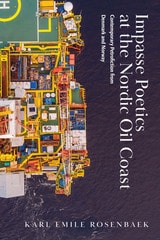
The first major study of contemporary Nordic petrofiction. Through a variety of cultural texts, including the Nordic noir mystery Smila’s Sense of Snow, Rosenbaek Reetz exposes the cultural, political, and environmental tensions in which green frontier ideas must coexist with the ongoing reliance on oil and gas and critiques the paradox of Nordic nations positioning themselves as climate leaders while remaining deeply tied to fossil fuel economies.
[more]
cover of In Search of the Amazon: Brazil, the United States, and the Nature of a Region

In Search of the Amazon

Brazil, the United States, and the Nature of a Region

Seth Garfield

Duke University Press, 2013
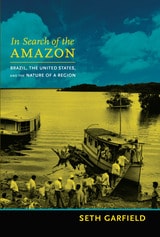
Chronicling the dramatic history of the Brazilian Amazon during the Second World War, Seth Garfield provides fresh perspectives on contemporary environmental debates. His multifaceted analysis explains how the Amazon became the object of geopolitical rivalries, state planning, media coverage, popular fascination, and social conflict. In need of rubber, a vital war material, the United States spent millions of dollars to revive the Amazon's rubber trade. In the name of development and national security, Brazilian officials implemented public programs to engineer the hinterland's transformation. Migrants from Brazil's drought-stricken Northeast flocked to the Amazon in search of work. In defense of traditional ways of life, longtime Amazon residents sought to temper outside intervention. Garfield's environmental history offers an integrated analysis of the struggles among distinct social groups over resources and power in the Amazon, as well as the repercussions of those wartime conflicts in the decades to come.
[more]
cover of In Search of the Rain Forest

In Search of the Rain Forest

Candace Slater, ed.

Duke University Press, 2004

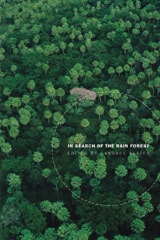
The essays collected here offer important new reflections on the multiple images of and rhetoric surrounding the rain forest. The slogan “Save the Rain Forest!”—emblazoned on glossy posters of tall trees wreathed in vines and studded with monkeys and parrots—promotes the popular image of a marvelously wild and vulnerable rain forest. Although representations like these have fueled laudable rescue efforts, in many ways they have done more harm than good, as these essays show. Such icons tend to conceal both the biological variety of rain forests and the diversity of their human inhabitants. They also frequently obscure the specific local and global interactions that are as much a part of today’s rain forests as are the array of plants and animals. In attending to these complexities, this volume focuses on specific portrayals of rain forests and the consequences of these characterizations for both forest inhabitants and outsiders.

From diverse disciplines—history, archaeology, sociology, literature, law, and cultural anthropology—the contributors provide case studies from Latin America, Asia, and Africa. They point the way toward a search for a rain forest that is both a natural entity and a social history, an inhabited place and a shifting set of ideas. The essayists demonstrate how the single image of a wild and yet fragile forest became fixed in the popular mind in the late twentieth century, thereby influencing the policies of corporations, environmental groups, and governments. Such simplistic conceptions, In Search of the Rain Forest shows, might lead companies to tout their “green” technologies even as they try to downplay the dissenting voices of native populations. Or they might cause a government to create a tiger reserve that displaces peaceful peasants while opening the doors to poachers and bandits. By encouraging a nuanced understanding of distinctive, constantly evolving forests with different social and natural histories, this volume provides an important impetus for protection efforts that take into account the rain forest in all of its complexity.

Contributors. Scott Fedick, Alex Greene, Paul Greenough, Nancy Peluso, Suzana Sawyer, Candace Slater, Charles Zerner

[more]
cover of In the Shadow of the Palms: More-Than-Human Becomings in West Papua

In the Shadow of the Palms

More-Than-Human Becomings in West Papua

Sophie Chao

Duke University Press, 2022

With In the Shadow of the Palms, Sophie Chao examines the multispecies entanglements of oil palm plantations in West Papua, Indonesia, showing how Indigenous Marind communities understand and navigate the social, political, and environmental demands of the oil palm plant. As Chao notes, it is no secret that the palm oil sector has destructive environmental impacts: it greatly contributes to tropical deforestation and is a major driver of global warming. Situating the plant and the transformations it has brought within the context of West Papua’s volatile history of colonization, ethnic domination, and capitalist incursion, Chao traces how Marind attribute environmental destruction not just to humans, technologies, and capitalism but also to the volition and actions of the oil palm plant itself. By approaching cash crops as both drivers of destruction and subjects of human exploitation, Chao rethinks capitalist violence as a multispecies act. In the process, Chao centers how Marind fashion their own changing worlds and foreground Indigenous creativity and decolonial approaches to anthropology.
[more]
cover of Instabilities, Bifurcations, and Fluctuations in Chemical Systems

Instabilities, Bifurcations, and Fluctuations in Chemical Systems

Edited by L. E. Reichl and W. C. Schieve

University of Texas Press, 1982

Twentieth-century research in the field of chemical pattern formation saw extraordinary progress due to the pathbreaking contributions of Nobel laureate Ilya Prigogine and his co-workers. Evidence exists that the dissipative structures studied by Prigogine and his colleagues may play a dominant role in the processes of self-organization of biological systems, the fundamental phenomena that govern all life forms.

Brought together in this valuable volume are topical papers from the this research. Important aspects of nonlinear chemical pattern formation—dissipative structures—in chemical, biochemical, and geological systems are surveyed by leading scientists in the field of nonlinear chemistry. Topics covered include experimental observations of pattern formation in a variety of systems, bifurcation theory and analysis of nonlinear chemical rate equations, and the stochastic theory of nonlinear chemical reactions. Of particular interest are the studies of the effects of electric fields on the determination of nonequilibrium states of chemical systems.

[more]
cover of International Environmental Policy: From the Twentieth to the Twenty-First Century

International Environmental Policy

From the Twentieth to the Twenty-First Century

Lynton Keith Caldwell

Duke University Press, 1996
In this newly revised and expanded edition of the award-winning International Environmental Policy, Lynton Keith Caldwell updates his comprehensive survey of the global international movement for protection of the environment. Serving as a history of international cooperation on environmental issues, this book focuses primarily on the development of international agreements and institutional arrangements—both governmental and nongovernmental—along with the impact of science, technology, trade, and communication on environmental policy. With implications for multinational commerce, population policy, agriculture, energy issues, biological and cultural diversity, transnational equity, ideology, and education, this book takes a broad view of the policy outcomes of what may be the most important social movement of the 20th century, and addresses the events and politics that have significantly affected the movement over the last twenty years and will continue to affect it into the next century.
[more]
cover of International Law, Sustainable Development and Water Management

International Law, Sustainable Development and Water Management

Antoinette Hildering

Eburon Academic Publishers, 2005
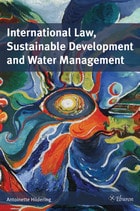
Water covers about three-fourths of the earth's surface. Still, over one billion people do not have access to clean drinking water—a problem that many governments across the globe seem unable to redress. International Law, Sustainable Development and Water Management explores the political issues inherent in global water management, analysing water as a social, economic, and ecological good, and then applying the principles of international law to resource development policies. Antoinette Hildering's proposed framework for change, "Guardianship Over Water," offers policymakers practical guidelines for water management at a local, national, and international level.
[more]
cover of Inventing Chemistry: Herman Boerhaave and the Reform of the Chemical Arts

Inventing Chemistry

Herman Boerhaave and the Reform of the Chemical Arts

John C. Powers

University of Chicago Press, 2012
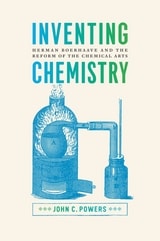
In Inventing Chemistry, historian John C. Powers turns his attention to Herman Boerhaave (1668–1738), a Dutch medical and chemical professor whose work reached a wide, educated audience and became the template for chemical knowledge in the eighteenth century. The primary focus of this study is Boerhaave’s educational philosophy, and Powers traces its development from Boerhaave’s early days as a student in Leiden through his publication of the Elementa chemiae in 1732. Powers reveals how Boerhaave restructured and reinterpreted various practices from diverse chemical traditions (including craft chemistry, Paracelsian medical chemistry, and alchemy), shaping them into a chemical course that conformed to the pedagogical and philosophical norms of Leiden University’s medical faculty. In doing so, Boerhaave gave his chemistry a coherent organizational structure and philosophical foundation and thus transformed an artisanal practice into an academic discipline. Inventing Chemistry is essential reading for historians of chemistry, medicine, and academic life.
[more]
cover of Inventing Global Ecology: Tracking the Biodiversity Ideal in India, 1947–1997

Inventing Global Ecology

Tracking the Biodiversity Ideal in India, 1947–1997

Michael L. Lewis

Ohio University Press, 2004

Blue jeans, MTV, Coca-Cola, and… ecology? We don't often think of conservation sciences as a U.S. export, but in the second half of the twentieth century an astounding array of scientists and ideas flowed out from the United States into the world, preaching the gospel of conservation-oriented ecology.

Inventing Global Ecology grapples with how we should understand the development of global ecology in the twentieth century—a science that is held responsible for, literally, saving the world. Is the spread of ecology throughout the globe a subtle form of cultural imperialism, as some claim? Or is it a manifestation of an increasingly globalized world, where ideas, people, and things move about with greater freedom than ever before?

Using India as the case study, Professor Michael Lewis considers the development of conservation policies and conservation sciences since the end of World War II and the role of United States scientists, ideas, and institutions in this process. Was India subject to a subtle form of Americanization, or did Indian ecologists develop their own agenda, their own science, and their own way of understanding (and saving) the natural world? Does nationality even matter when doing ecology?

This readable narrative will carry you through the first fifty years of independent India, from the meadows of the Himalayan Mountains to the rainforests of southern India, from Gandhi and Nehru to Project Tiger. Of equal interest to the general reader, to scientists, and to scholars of history and globalization, Inventing Global Ecology combines ethnographic fieldwork and oral history conducted in India and the United States, as well as traditional archival research.
[more]
cover of Inventing Pollution: Coal, Smoke, and Culture in Britain since 1800

Inventing Pollution

Coal, Smoke, and Culture in Britain since 1800

Peter Thorsheim

Ohio University Press, 2006

Britain's supremacy in the nineteenth century depended in large part on its vast deposits of coal. This coal not only powered steam engines in factories, ships, and railway locomotives but also warmed homes and cooked food. As coal consumption skyrocketed, the air in Britain's cities and towns became filled with ever-greater and denser clouds of smoke.

In this far-reaching study, Peter Thorsheim explains that, for much of the nineteenth century, few people in Britain even considered coal smoke to be pollution. To them, pollution meant miasma: invisible gases generated by decomposing plant and animal matter. Far from viewing coal smoke as pollution, most people considered smoke to be a valuable disinfectant, for its carbon and sulfur were thought capable of rendering miasma harmless.

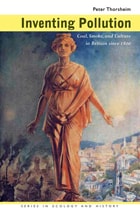
Inventing Pollution examines the radically new understanding of pollution that emerged in the late nineteenth century, one that centered not on organic decay but on coal combustion. This change, as Peter Thorsheim argues, gave birth to the smoke-abatement movement and to new ways of thinking about the relationships among humanity, technology, and the environment.

[more]