Results by title
86 books match the query 'Chile' and 4 start with i
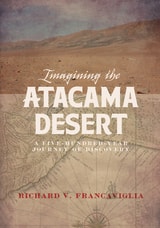
Imagining the Atacama Desert
A Five-Hundred-Year Journey of DiscoveryRichard V. Francaviglia
University of Utah Press, 2018
Beginning with the indigenous Atacameño peoples at the southern edge of the Incan empire, the volume moves through five hundred years of history, sharing accounts written by Spanish, French, German, Dutch, British, American, and other travelers—pirates, scientists, explorers, and entrepreneurs among them. The Atacama’s austere landscape hides many secrets, including vast mineral wealth, the world's oldest mummies, and the more recent remains of dissidents murdered by the regime of former Chilean dictator Augusto Pinochet in the early 1970s. Today numerous observatories operate under the Atacama’s clear night skies, astronauts train on the rugged desert floor, and tourists flock there for inspiration.
In addition to a rich set of narratives, the book features 115 images—historical maps, photographs, and natural history illustrations, most in full color—to tell a more complete and compelling story. Imagining the Atacama Desert shows how what was once a wilderness at the edges of empire became one of South America's most iconic regions, one that continues to lure those seeking adventure and the unknown.
Immigration and Nationalism
Argentina and Chile, 1890–1914By Carl Solberg
University of Texas Press, 1970
“Dirtier than the dogs of Constantinople.” “Waves of human scum thrown upon our beaches by other countries.” Such was the vitriolic abuse directed against immigrant groups in Chile and Argentina early in the twentieth century. Yet only twenty-five years earlier, immigrants had encountered a warm welcome. This dramatic change in attitudes during the quarter century preceding World War I is the subject of Carl Solberg’s study. He examines in detail the responses of native-born writers and politicians to immigration, pointing out both the similarities and the significant differences between the situations in Argentina and Chile.
As attitudes toward immigration became increasingly nationalistic, the European was no longer pictured as a thrifty, industrious farmer or as an intellectual of superior taste and learning. Instead, the newcomer commonly was regarded as a subversive element, out to destroy traditional creole social and cultural values. Cultural phenomena as diverse as the emergence of the tango and the supposed corruption of the Spanish language were attributed to the demoralizing effects of immigration.
Drawing his material primarily from writers of the pre–World War I period, Solberg documents the rise of certain forms of nationalism in Argentina and Chile by examining the contemporary press, journals, literature, and drama. The conclusions that emerge from this study also have obvious application to the situation in other countries struggling with the problems of assimilating minority groups.

Impunity, Human Rights, and Democracy
Chile and Argentina, 1990-2005By Thomas C. Wright
University of Texas Press, 2014
Universal human rights standards were adopted in 1948, but in the 1970s and 1980s, violent dictatorships in Argentina and Chile flagrantly defied the new protocols. Chilean general Augusto Pinochet and the Argentine military employed state terrorism in their quest to eradicate Marxism and other forms of “subversion.” Pinochet constructed an iron shield of impunity for himself and the military in Chile, while in Argentina, military pressure resulted in laws preventing prosecution for past human rights violations. When democracy was reestablished in both countries by 1990, justice for crimes against humanity seemed beyond reach.
Thomas C. Wright examines how persistent advocacy by domestic and international human rights groups, evolving legal environments, unanticipated events that impacted public opinion, and eventual changes in military leadership led to a situation unique in the world—the stripping of impunity not only from a select number of commanders of the repression but from all those involved in state terrorism in Chile and Argentina. This has resulted in trials conducted by national courts, without United Nations or executive branch direction, in which hundreds of former repressors have been convicted and many more are indicted or undergoing trial.
Impunity, Human Rights, and Democracy draws on extensive research, including interviews, to trace the erosion and collapse of the former repressors’ impunity—a triumph for human rights advocates that has begun to inspire authorities in other Latin American countries, including Peru, Uruguay, Brazil, and Guatemala, to investigate past human rights violations and prosecute their perpetrators.
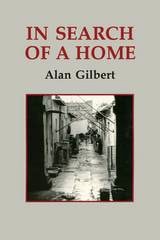
In Search of a Home
Rental and Shared Housing in Latin AmericaAlan Gilbert
University of Arizona Press, 1993