208 books match the query 'Christian Church' and 8 start with i
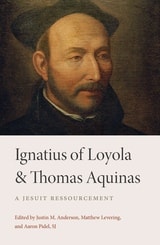
cover of Ignatius of Loyola and Thomas Aquinas: A Jesuit Ressourcement

Ignatius of Loyola and Thomas Aquinas

A Jesuit Ressourcement

Justin M. Anderson

Catholic University of America Press, 2023

Though the relationship between Jesuits and Dominicans has historically been marked by theological controversy, Ignatius of Loyola, the founder of the Jesuits, shows remarkable affinity for the Thomistic tradition, the tradition advanced above all by the Dominican order. When writing the Jesuit Constitutions, in fact, Ignatius made Thomas Aquinas’s Summa Theologiae the primary textbook for Jesuit theological formation. The contributions to this volume—originating from Jesuits, Dominicans, and lay scholars alike—explore different aspects of the complex yet illuminating relationship between Ignatius and Thomas. The themes range from the general relationship between the early Jesuits and scholastic theology to the attempts by Francisco de Toledo, the first Jesuit cardinal, to apply Thomistic reasoning to the religious and legal status of Jewish converts to Christianity. Other contributions compare Ignatius and Thomas on topics of significant interest for dogmatic, sacramental, and spiritual theology: spiritual experience, the ordering of the passions, the use of the imagination, prudence and discernment of spirits, frequent communion, Mariology, the “hierarchical church,” and the limits of obedience. Students of Ignatius of Loyola, Thomas Aquinas, second scholasticism, Christian-Jewish relations, and spiritual theology in general will find this volume an invaluable contribution.
[more]
cover of In quibus visitabit nobis, oriens ex alto: Studies Offered in Honor of Father Robert J. Kaslyn, SJ (1956-2019)

In quibus visitabit nobis, oriens ex alto

Studies Offered in Honor of Father Robert J. Kaslyn, SJ (1956-2019)

Kurt Martens

Catholic University of America Press, 2025
On March 13, 2019, five years ago, Fr. Robert Kaslyn S.J., passed away. He was a dear friend, colleague, mentor and so much more to many. In honor of him, his colleagues, former students, and friends from the academy and beyond honor him and his legacy with a festschrift dedicated to him. Because his outreach went beyond the field of canon law, the contributions in this volume go also beyond the strict canon law and include contributions from other fields, such as law and social work. Each of the contributors have written an academic article on a topic of their choice in honor of their friend. The contributors are, in alphabetical order: Nancy Bauer, John Beal, Philip Brown, William Daniel, Zabrina Decker, Eileen Dombo, Sarah Duggin, Robert Geisinger, Eduard Giurgi, Mary Graw Leary, William King, John Chrysostom Kozlowski, Jeannine Marino, Kurt Martens, Rose McDermott, Robert Oliver, Ladislas Orsy, Roch Pagé, Kenneth Pennington, Sean Sheridan, Patrick Valdrini.
[more]
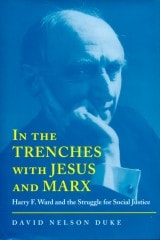
cover of In the Trenches with Jesus and Marx: Harry F. Ward and the Struggle for Social Justice

In the Trenches with Jesus and Marx

Harry F. Ward and the Struggle for Social Justice

David Duke

University of Alabama Press, 2006

The story of a Social Gospel leader who brought faith, activism, and social justice into the heart of modern American politics.

Radical religious and political leader Harry F. Ward started life quietly enough in a family of Methodist shopkeepers and butchers in London. But his relentless pursuit of social justice would lead him to the United States and a long career of religious activism. Ward served as professor of Christian ethics at the Union Theological Seminary and chairman of the board of the American Civil Liberties Union for two decades. He also became a leader in labor groups, Protestant activist organizations, and New York intellectual circles. 

David Duke builds his comprehensive story of this fiery leader from extensive archival sources, including FBI files and private correspondence, sermons, class notes, and other unpublished material. Duke skillfully charts Ward's rise from an idealistic Methodist minister in a Chicago stockyard parish to a prominent national religious leader and influential political figure. Ultimately, Ward's lifelong attempt to synthesize the beliefs of Jesus and Marx and his role as an admirer of the Soviet Union put him on a collision course with McCarthyism in Cold War America. Viewed by some as a prophet and by others as a heretic, traitor, and communist, Ward became increasingly marginalized as he stubbornly maintained his radical positions. Even in his own circle, he went from being a figure of unquestioned integrity who eloquently spoke his convictions to a tragically short-sighted idealogue whose unwavering pro-Soviet agenda blinded him to the horrors of Stalinist oppression. 

Harry Ward's long, colorful career intersected nearly every intellectual current in American culture for more than a half century. This biography will be important for scholars of American religious history, students of liberalism and politics, social Christians, and general readers who enjoy a compelling tour into the private and public lives of notable figures of history. 
 

[more]
cover of Incarnate Meaning: Lonergan on Newman

Incarnate Meaning

Lonergan on Newman

Richard M. Liddy

Catholic University of America Press, 2027
How is our fundamental vision of the world rooted in our own self-knowledge? Excellent answers to this question can be found in these two great writers – John Henry Newman (1801-1890) and Bernard Lonergan (1904-1984). To a great extent Lonergan found the answer to his question in Newman’s 1870 Grammar of Assent – the most philosophical and psychologically oriented of Newman’s writings. He went on from Newman to subsequently study Plato, Augustine and especially Aquinas, and then the modern sciences in preparation for his 1957 Insight: A Study of Human Understanding. He subsequently went on to study modern historical consciousness in preparation his 1971 Method in Theology. Through it all, he called Newman “my fundamental mentor and guide.” Incarnate Meaning traces Newman’s influence throughout Lonergan’s life and suggests how that influence can be discerned in the general orientation of Lonergan’s thought as well as in specific areas. Lonergan’s concern for the basic structure of our knowing as well as its historical unfolding mirrored Newman’s interests in his Grammar of Assent and in his other writings. Lonergan’s concern for concrete history as distinct from abstract classsicist tendencies mirrored Newman’s interest in the concrete history of early Christianity. Eventually Lonergan would root the various concerns of the Second Vatican Council in Newman’s thought: a concern for preaching the Good News to the poor, a willingness to dialogue with all peoples and religions and even with atheism. In all of this he repeatedly calls attention to Newman’s brilliance in communication. He called him “a terrific rhetorician” and would often repeat Newman’s motto when made a Cardinal, cor ad cor loquitur – “heart speaks to heart.” All this provided much of the background for Lonergan’s own methodological and theological achievements in the twentieth century. Both writers together constitute a wonderful background for Christian and Catholic thought facing the future. In a world in which humanity is tempted to seek answers in AI, Newman and Lonergan represent humanity’s openness to the divine and what Lonergan called “the spark in our clod, our native orientation to the divine.”
[more]
cover of Interpreting the Gospel of John in Antioch and Alexandria

Interpreting the Gospel of John in Antioch and Alexandria

Miriam DeCock

SBL Press, 2020

A nuanced study of early Christian exegesis

Miriam DeCock analyzes four important early Christian treatments of the Gospel of John, including commentaries by Origen and Cyril from the Alexandrian tradition and the homilies of John Chrysostom and the commentary of Theodore of Mopsuestia, which represent Antiochian traditions. DeCock maintains that the traditional distinction between nonliteral and literal interpretations in these two early Christian centers remains helpful despite recent challenges to the paradigm. She argues that a major and abiding distinction between the two schools lies in the manner in which Alexandrian and Antiochian authors apply the gospel text to their respective communities. DeCock demonstrates that the Antiochenes find primarily literal moral examples and doctrinal teachings in John's Gospel, whereas the Alexandrians find both these and nonliteral teachings concerning the immediate situation of the church and of its individual members.

Features

  • An examination of each author's interpretations of a selection of texts
  • Focused explorations of John 2; 4; and 9-11 in early Christian exegesis
  • A study of early literal non-literal interpretations of John's Gospel
[more]
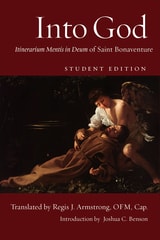
cover of Into God, student edition: Itinerarium Mentis in Deum of Saint Bonaventure

Into God, student edition

Itinerarium Mentis in Deum of Saint Bonaventure

Regis J. Armstrong

Catholic University of America Press, 0
[more]
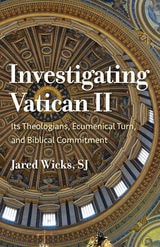
cover of Investigating Vatican II: Its Theologians, Ecumenical Turn, and Biblical Commitment

Investigating Vatican II

Its Theologians, Ecumenical Turn, and Biblical Commitment

Jared Wicks

Catholic University of America Press, 2018
Investigating Vatican II is a collection of Fr. Jared Wicks’ recent articles on Vatican II, and presents the Second Vatican Council as an event to which theologians contributed in major ways and from which Catholic theology can gain enormous insigh
[more]
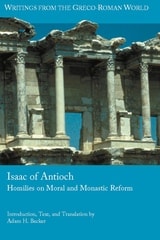
cover of Isaac of Antioch: Homilies on Moral and Monastic Reform

Isaac of Antioch

Homilies on Moral and Monastic Reform

Adam H. Becker

SBL Press, 2024

This volume offers a critical edition and annotated translation of twenty metrical homilies attributed to Isaac of Antioch, a late fifth-century CE Syriac poet. The works in this collection, the majority of which are examples of the Syriac rebuke genre, are aimed at the moral reformation of the Syrian Christian community. The introduction, which provides the first detailed study of the manuscript tradition of the corpus as a whole, identifies four different Isaacs whose writings were intermingled already in late antiquity and develops criteria for distinguishing among their works. Scholars and students of church history will find this a valuable resource for the study of Syriac poetry and homiletics, Christian ideas of moral reform, and late antique monastic and lay devotional culture.

[more]