496 books match the query 'Christian Theology' and 20 start with i
cover of Iberian Fathers, Volume 1

Iberian Fathers, Volume 1

Catholic University of America Press, 1969
No description available
[more]
cover of Iberian Fathers, Volume 2

Iberian Fathers, Volume 2

Claude W. Braulio of Saragossa

Catholic University of America Press, 1969
In this second volume of translations from the Iberian Fathers appear the works of two seventh-century writers. From the first of these, bishop Braulio of Saragossa, a figure in Visigothic literature second only to St. Isidore of Seville, comes an extensive collection of letters. These are variously addressed to Isidore himself, to other ecclesiastics, to Pope Honorius, and to King Receswinth; friends and relatives were the recipients of seven letters of consolation. Braulio's letters are joined by the Life of a near contemporary, St. Emilian, and by a valuable list of the writings of Isidore, under whom Braulio studied. Fructuousus of Braga is represented by two monastic rules. The first of these was composed for Compludo, a foundation made by Fructousus himself; the other rule is a general or common one. Two other writings dealing with monastic practice accompany these rules, together with a letter to King Receswinth.
[more]
cover of Iberian Fathers, Volume 3

Iberian Fathers, Volume 3

Catholic University of America Press, 1999
No description available
[more]
cover of Icon of the Kingdom of God: An Orthodox Ecclesiology

Icon of the Kingdom of God

An Orthodox Ecclesiology

Radu Bordeianu

Catholic University of America Press, 2023
What is the Church? Some would answer this question by studying the Scriptures, the history of the Church, and contemporary theologians, thus addressing the theological nature of the Church. Others would answer based on statistics, interviews, and personal observation, thus focusing on the experience of the Church. These theological and experiential perspectives are in tension, or at times even opposed. Whereas the first might speak about the local church as the diocese gathered in the Liturgy presided over by its bishop, the latter would describe the local church as the parish community celebrating the Liturgy together with the parish priest, never experiencing a sole liturgy that gathers an entire diocese around its bishop. Whereas a theologian might abstractly describe the Church as a reflection of the Trinity, a regular church-member might concretely experience the Church as a community that manifests the Kingdom of God in its outreach ministries. Radu Bordeianu attempts to bring these two perspectives together, starting from the concrete experience of the Church, engaging this experience with the theological tradition of the Church, extracting ecclesiological principles from this combined approach, and then highlighting concrete situations that reflect those standards or proposing correctives, when necessary. Without pretending to be a complete Orthodox ecclesiology, Icon of the Kingdom of God addresses the most important topics related to the Church. It progresses according to one’s experience of the Church from baptism, to the family, parish, Liturgy, and priesthood, followed by analyses of synodality and nationality. Arguing that the Church is an icon of the Kingdom of God, this volume brings together the past theological heritage and the present experience of the Church while having three methodological characteristics: experiential, Kingdom-centered, and ecumenical.
[more]
cover of Ignatius of Loyola Speaks

Ignatius of Loyola Speaks

Karl Rahner

St. Augustine's Press, 2013
[more]
cover of Ignatius of Loyola and Thomas Aquinas: A Jesuit Ressourcement

Ignatius of Loyola and Thomas Aquinas

A Jesuit Ressourcement

Justin M. Anderson

Catholic University of America Press, 2023
Though the relationship between Jesuits and Dominicans has historically been marked by theological controversy, Ignatius of Loyola, the founder of the Jesuits, shows remarkable affinity for the Thomistic tradition, the tradition advanced above all by the Dominican order. When writing the Jesuit Constitutions, in fact, Ignatius made Thomas Aquinas’s Summa Theologiae the primary textbook for Jesuit theological formation. The contributions to this volume—originating from Jesuits, Dominicans, and lay scholars alike—explore different aspects of the complex yet illuminating relationship between Ignatius and Thomas. The themes range from the general relationship between the early Jesuits and scholastic theology to the attempts by Francisco de Toledo, the first Jesuit cardinal, to apply Thomistic reasoning to the religious and legal status of Jewish converts to Christianity. Other contributions compare Ignatius and Thomas on topics of significant interest for dogmatic, sacramental, and spiritual theology: spiritual experience, the ordering of the passions, the use of the imagination, prudence and discernment of spirits, frequent communion, Mariology, the “hierarchical church,” and the limits of obedience. Students of Ignatius of Loyola, Thomas Aquinas, second scholasticism, Christian-Jewish relations, and spiritual theology in general will find this volume an invaluable contribution.
[more]
cover of Imago Dei

Imago Dei

Thomas Albert Howard

Catholic University of America Press, 2013
Imago Dei will serve as an indispensable resource for those wishing to deepen their grasp of the theological bases for Christian views of human dignity, as well as for those who believe that Christ's words "that they be one" (John 17:21) remain a theological imperative today
[more]
cover of In Reasonable Hope: Philosophical Reflections on Ultimate Meaning

In Reasonable Hope

Philosophical Reflections on Ultimate Meaning

Patrick Masterson

Catholic University of America Press, 2021
In Reasonable Hope considers three foundational responses to this quest for some understanding of the existence, meaning, and value of everything. Other approaches can be considered as combinations or variations of these. Firstly, there is the approach which claims that it is our humanity, exercising its unique intelligent subjectivity, that is the source and measure of all possible meaning and value. Nothing can be thought of as existing, meaningful or of value apart from a thinking human subject. This is a broadly Humanist approach to ultimate meaning. Man is the measure of all things. Secondly, there is the approach of Scientism. This claims that an ultimate understanding of the world and ourselves must be sought, less anthropocentrically, in terms of the findings of basic empirical sciences such as physics and chemistry. We live in a world ever-increasingly dominated by the autonomous system of science and technology. Such Scientism implies an explicitly reductionist and materialist conception of the meaning and value of everything. Thirdly, there is the approach of Theism which maintains that, in the final analysis, the meaning and value of everything, insofar as this can be known, is to be explained in terms of a transcendent infinitely perfect personal being we call God. The first two approaches are carefully considered. However, it is the third to which most attention is devoted. Consideration is given to the traditional impersonal metaphysical approach to questions about the existence and nature of God. The alternative approaches of linguistic philosophy and phenomenology, which reject such metaphysical speculation are also discussed. These various approaches are judged to be complementary rather than strict alternatives. In the latter half of the book is devoted to a more personal and self-involving discussion of the relevance of an affirmation of the existence of God. It explores the implications of a rational commitment to live one's life in accordance with the requirements of values which transcend explanation in purely physical terms, such as truth, goodness, beauty, and especially love. It provides a personal and existential development of the rational hope that such values are ultimately more objectively real and dependable than the eventual universal material chaos predicted by empirical science. It argues that the existence of God as the infinite expression and source of these values is the necessary and sufficient condition of this rational hope in their enduring significance. Finally, there is an account of how the Christian Revelation illuminates and transforms our rational hope in the enduring significance of love of God and neighbor.
[more]
cover of In Search of the Triune God: The Christian Paths of East and West

In Search of the Triune God

The Christian Paths of East and West

Eugene Webb

University of Missouri Press, 2013

Under the broad umbrella of the Christian religion, there exists a great divide between two fundamentally different ways of thinking about key aspects of the Christian faith. Eugene Webb explores the sources of that divide, looking at how the Eastern and Western Christian worlds drifted apart due both to the different ways they interpreted their symbols and to the different roles political power played in their histories. Previous studies have focused on historical events or on the history of theological ideas. In Search of the Triune God delves deeper by exploring how the Christian East and the Christian West have conceived the relation between symbol and experience.

Webb demonstrates that whereas for Western Christianity discussion of the doctrine of the Trinity has tended toward speculation about the internal structure of the Godhead, in the Eastern tradition the symbolism of the Triune God has always been closely connected to religious experience. In their approaches to theology, Western Christianity has tended toward a speculative theology, and Eastern Christianity toward a mystical theology.

This difference of focus has led to a large range of fundamental differences in many areas not only of theology but also of religious life. Webb traces the history of the pertinent symbols (God as Father, Son of God, Spirit of God, Messiah, King, etc.) from the Hebrew Bible and New Testament through patristic thinkers and the councils that eventually defined orthodoxy. In addition, he shows how the symbols, interpreted through the different cultural lenses of the East and the West, gradually took on meanings that became the material of very different worldviews, especially as the respective histories of the Eastern and Western Christian worlds led them into different kinds of entanglement with ambition and power.

Through this incisive exploration, Webb offers a dramatic and provocative new picture of the history of Christianity.

[more]
cover of In quibus visitabit nobis, oriens ex alto: Studies Offered in Honor of Father Robert J. Kaslyn, SJ (1956-2019)

In quibus visitabit nobis, oriens ex alto

Studies Offered in Honor of Father Robert J. Kaslyn, SJ (1956-2019)

Kurt Martens

Catholic University of America Press, 2025
On March 13, 2019, five years ago, Fr. Robert Kaslyn S.J., passed away. He was a dear friend, colleague, mentor and so much more to many. In honor of him, his colleagues, former students, and friends from the academy and beyond honor him and his legacy with a festschrift dedicated to him. Because his outreach went beyond the field of canon law, the contributions in this volume go also beyond the strict canon law and include contributions from other fields, such as law and social work. Each of the contributors have written an academic article on a topic of their choice in honor of their friend. The contributors are, in alphabetical order: Nancy Bauer, John Beal, Philip Brown, William Daniel, Zabrina Decker, Eileen Dombo, Sarah Duggin, Robert Geisinger, Eduard Giurgi, Mary Graw Leary, William King, John Chrysostom Kozlowski, Jeannine Marino, Kurt Martens, Rose McDermott, Robert Oliver, Ladislas Orsy, Roch Pagé, Kenneth Pennington, Sean Sheridan, Patrick Valdrini.
[more]
cover of In the School of the Word: Biblical Interpretation from the New to the Old Testament

In the School of the Word

Biblical Interpretation from the New to the Old Testament

Carlos Granados

Saint Paul Seminary Press, 2021

Carlos Granados and Luis Sánchez-Navarro propose reading the Bible with Christian faith, not as one approach among many, but as a disposition demanded by the New Testament for proper interpretation of both the Old and the New. Even so, the authors’ faith never leads them to dismiss history or to discard the tools of the historical-critical method. On the contrary, these sciences allow the faithful reader to take a holistic approach to biblical truth. When the reader also takes full account of the ecclesial reality in which the Bible was formed and transmitted, and in which it must be read still today, he or she encounters the word proclaimed by the text. Indeed, the words of Holy Writ ultimately proclaim the Word (Logos), Jesus Christ, in whose Spirit they were written. This book’s thirteen essays are grouped into three parts. Part I, “The Church, Living Subject of Sacred Scripture,” takes up a foundational theme of the whole book: sacred Scripture calls for a reading within the community of the People of God under the guidance of the Holy Spirit, and the same People constitute the living subject of Scripture. In Part II, “Christ, Exegete of the Fulfillment,” the authors focus on the relationship between the two biblical testaments. They argue that the Christian can both respect and venerate the Old Testament on its own terms, even as they find in Jesus, as presented in the New Testament and encountered in faith, the key for unlocking the Old Testament’s deepest meaning. The third and final part of this book, “The Teaching in Benedict XVI’s Verbum Domini,” examines Pope Benedict XVI’s 2010 post-synodal apostolic exhortation on the word of God in the life and mission of the Church. The authors’ years of shared prayer, study, conversation, and ministry have led to this coauthored book bearing witness to that ongoing unity that they live as confreres. Not surprisingly, they frequently reference the same theologians, especially Brevard Childs, Paul Beauchamp, SJ, and Pope Benedict XVI.
[more]
cover of Incarnate Meaning: Lonergan on Newman

Incarnate Meaning

Lonergan on Newman

Richard M. Liddy

Catholic University of America Press, 2027
How is our fundamental vision of the world rooted in our own self-knowledge? Excellent answers to this question can be found in these two great writers – John Henry Newman (1801-1890) and Bernard Lonergan (1904-1984). To a great extent Lonergan found the answer to his question in Newman’s 1870 Grammar of Assent – the most philosophical and psychologically oriented of Newman’s writings. He went on from Newman to subsequently study Plato, Augustine and especially Aquinas, and then the modern sciences in preparation for his 1957 Insight: A Study of Human Understanding. He subsequently went on to study modern historical consciousness in preparation his 1971 Method in Theology. Through it all, he called Newman “my fundamental mentor and guide.” Incarnate Meaning traces Newman’s influence throughout Lonergan’s life and suggests how that influence can be discerned in the general orientation of Lonergan’s thought as well as in specific areas. Lonergan’s concern for the basic structure of our knowing as well as its historical unfolding mirrored Newman’s interests in his Grammar of Assent and in his other writings. Lonergan’s concern for concrete history as distinct from abstract classsicist tendencies mirrored Newman’s interest in the concrete history of early Christianity. Eventually Lonergan would root the various concerns of the Second Vatican Council in Newman’s thought: a concern for preaching the Good News to the poor, a willingness to dialogue with all peoples and religions and even with atheism. In all of this he repeatedly calls attention to Newman’s brilliance in communication. He called him “a terrific rhetorician” and would often repeat Newman’s motto when made a Cardinal, cor ad cor loquitur – “heart speaks to heart.” All this provided much of the background for Lonergan’s own methodological and theological achievements in the twentieth century. Both writers together constitute a wonderful background for Christian and Catholic thought facing the future. In a world in which humanity is tempted to seek answers in AI, Newman and Lonergan represent humanity’s openness to the divine and what Lonergan called “the spark in our clod, our native orientation to the divine.”
[more]
cover of Intersexual Persons and Theology of the Body: A Limit Case for John Paul II's Theological Anthropology

Intersexual Persons and Theology of the Body

A Limit Case for John Paul II's Theological Anthropology

Beth Zagrobelny Lofgren

Catholic University of America Press, 2026
Intersexual Persons and Theology of the Body offers an interpretation of John Paul II’s theology of the body that demonstrates how it can encompass intersexual bodies. Intersexuality has been used to challenge binary anthropologies, such as the late pope’s. Beth Zagrobelny Lofgren theorizes that John Paul II’s anthropology answers the “frequency dilemma,” by learning from male and female bodies while respecting the humanity of people with ambiguous bodies. To argue this, Intersexual Persons and Theology of the Body offers biological, psychological, and theological literature on intersexuality (focusing on the anthropologies of Susannah Cornwall and Megan DeFranza), followed by the late pope’s anthropology (focusing on original solitude, the spousal meaning of the body, and the semiotic meanings of the body). This volume demonstrate that intersexual bodies have a spousal meaning, although obscured, and use original solitude to show that John Paul II attributes to the human body meaning not dependent on sexual difference: the first man learns from his solitary body that he is relational. This relationality is fundamental to the imago Dei and undergirds the imago Dei found in communion. Intersexual bodies share human nature and thus the bodily call to relationship. Finally, Lofgren argues that John Paul II’s eschatology involves a transformation of humankind that fulfills the semiotic value of the body. The sign gives way to the mystery: the person fully realized as self-gift. Because the mystery does not depend on the sign, this vision includes intersexual bodies. This discussion leads to a brief consideration of celibacy and marriage for persons with intersexual conditions. This is currently the only application of John Paul II’s theology of the body to these complex situations.
[more]
cover of Introducation to Mariology

Introducation to Mariology

Manfred Hauke

Catholic University of America Press, 2020
In Introduction to Mariology, Fr. Manfred Hauke provides a synthesis of Mariology and the biblical fundaments and development of Marian doctrine. While it works as a comprehensive introduction suitable for courses on the subject, it is in reality a panoramic view on the entire Marian doctrine, and as such will be essential for the theological formation of seminarians, priests, theologians, and all kinds of educated Catholics. With an unparalleled bibliographic citation of Marian literature across a dozen languages, it is also a perfect gateway to further research on the subject. It begins with Biblical doctrine, which is important especially for the dialogue with Protestant denominations: Catholic Mariology can be traced in its “embryonic” state already in Holy Scripture. From there Hauke presents a historical overview of the whole development of Marian doctrine, before developing further historical details in the subsequent chapters dedicated to systematic issues. The first systematic step approaches the figure of Mary through her role in the mystery of the Covenant between God and redeemed humanity; her being “Mother of God” and companion of the Redeemer is the “fundamental principle.” Then the four established Marian dogmas are presented: divine maternity, virginity, Immaculate Conception (in a chapter on Mary’s holiness more broadly), and bodily Assumption. A close look is given to maternal mediation which includes a part dedicated to the “Mater Unitatis”. A stand alone chapter is dedicated to Marian apparitions; authentic apparitions are presented as a part of prophetic charisma. The last chapter presents the basics on Marian devotion which culminates in the consecration to Mary (as a response to her maternal mediation). Already available in Spanish, Italian, Portugese, and Korean, this landmark work is published here for the first time in English.
[more]
cover of Introduction to Moral Theology (Catholic Moral Thought, Volume 1)

Introduction to Moral Theology (Catholic Moral Thought, Volume 1)

Romanus Cessario, O.P.

Catholic University of America Press, 2001
The present volume, the first in the new Catholic Moral Thought series, responds to the need for a new introduction to the basic and central elements of Catholic moral theology written in the light of Veritatis splendor.
[more]
cover of Introduction to Sacramental Theology: Signs of Christ in the Flesh

Introduction to Sacramental Theology

Signs of Christ in the Flesh

Jose Granados

Catholic University of America Press, 2021
Introduction to Sacramental Theology presents a complete overview of sacramental theology from the viewpoint of the body. This viewpoint is supported, in the first place, by Revelation, for which the sacraments are the place where we enter into contact with the body of the risen Jesus. It is a viewpoint, secondly, which is firmly rooted in our concrete human bodily experience, thus allowing for a strong connection between faith and life, creation and redemption. From this point of view, the treatise on the sacraments occupies a strategic role. For the sacraments appear, not as the last of a series of topics (after dealing with Creation, Christ, the Church), but as the original place in which to stand in order to contemplate the entire Christian mystery. This point of view of the body, which resonates with contemporary philosophy, sheds fruitful light on classical themes, such as the relationship of the sacraments with creation, the composition of the sacramental sign, the efficacy of the sacraments, the sacramental character, the role of the minister, or the relationship of the sacrament with the Church as a sacrament. As a result of this approach, the Eucharist takes on a central role, since this is the sacrament where the body of Jesus is made present. The rest of the sacraments are seen as prolongations of the eucharistic body, so as to fill all the time and space of the faithful. This foundation of the theology of the sacraments in eucharistic theology is supported by an analysis of the patristic and medieval tradition. In order to support its conclusions, Introduction to Sacramental Theology examines the doctrine of Scripture (especially St. John and St. Paul), the main patristic and medieval authors (St. Augustine, Hugh of St. Victor, St. Bonaventure, St. Thomas Aquinas), the response of Trent to the protestant challenges, up to modern authors such as Scheeben, Rahner, Ratzinger, or Chauvet, including the teaching of Vatican II about the Church as a kind of sacrament.
[more]
cover of Introduction to Scholastic Theology

Introduction to Scholastic Theology

Ulrich G. Leinsle

Catholic University of America Press, 2010
With this book, distinguished historian of philosophy Ulrich Leinsle offers the first comprehensive introduction to scholastic theology -- a textbook for both Protestant and Catholic students.
[more]
cover of Isaac of Antioch: Homilies on Moral and Monastic Reform

Isaac of Antioch

Homilies on Moral and Monastic Reform

Adam H. Becker

SBL Press, 2024

This volume offers a critical edition and annotated translation of twenty metrical homilies attributed to Isaac of Antioch, a late fifth-century CE Syriac poet. The works in this collection, the majority of which are examples of the Syriac rebuke genre, are aimed at the moral reformation of the Syrian Christian community. The introduction, which provides the first detailed study of the manuscript tradition of the corpus as a whole, identifies four different Isaacs whose writings were intermingled already in late antiquity and develops criteria for distinguishing among their works. Scholars and students of church history will find this a valuable resource for the study of Syriac poetry and homiletics, Christian ideas of moral reform, and late antique monastic and lay devotional culture.
[more]
cover of Isaac, Iphigeneia, and Ignatius: Martyrdom and Human Sacrifice

Isaac, Iphigeneia, and Ignatius

Martyrdom and Human Sacrifice

Monika Pesthy-Simon

Central European University Press, 2017
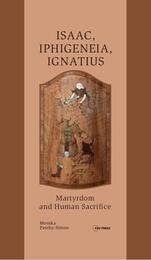
What is the meaning of the martyr’s sacrifice? Is it true that the martyr imitates Christ? After the “one and eternal” sacrifice of Jesus why are from time to time new (and often quite numerous) sacrifices necessary? What is the underlying concept concerning the divinity? How do these ideas survive in present times? These are the kind of questions behind the inquiries in this monograph. The author investigates martyrdom as a (voluntary) human sacrifice and wishes to demonstrate how human sacrifice has been turned into martyrdom. The two emblematic figures of this transformation are Iphigeneia and Isaac. Pesthy argues that all the peoples in the environment in which Christianity came into being are characterized by a very ambiguous and hypocritical attitude toward human sacrifice: while in theory they condemn it as barbarian and belonging to bygone times, in concrete cases they accept, admire and practice it. The same attitude survives in Christianity in which martyrs replace the human sacrifice of olden days: they are real sacrifices, not symbolical ones. Our feelings about martyrs can be very different: we may admire their unbending courage and heroism or be irritated by their stubbornness, or even feel disgusted at the fanaticism with which they strove for death. But whatever our feelings may be, we must admit that a very strong motivation is needed to accept voluntarily or even seek death (and, in the majority of cases, a very painful death at that).
[more]
cover of It is the Spirit Who Gives Life: New Directions in Pneumatology

It is the Spirit Who Gives Life

New Directions in Pneumatology

Radu Bordeianu

Catholic University of America Press, 2022

Who is the Holy Spirit? What is the Holy Spirit? The answers to these questions were so obvious in the first centuries of Christian history, that the New Testament and the earliest Christian writers did not feel the need to deliberately address the identity of the Spirit. The more stringent question was this: what does the Spirit do in the Hebrew Scriptures, in the life of Jesus, in the community of disciples, in the Church, and in the world? These same questions, however, did not have the same obvious answers to subsequent generations. Writing in the fourth century, Gregory of Nazianzus observed a slow progress of better understanding the identity and mission of the Holy Spirit throughout the centuries; his opponents still referred to the Spirit as a “strange,” “unscriptural,” and “interpolated” God (Or. 31). One would expect that today, centuries later, pneumatology would be exponentially further developed than in the patristic era. And yet, contemporary theology only rarely asks who the Spirit is and what the Spirit does. That is where the present volume attempts to bring a contribution, by addressing early Pneumatologies reflected in the Scriptures and the age of the martyrs, historical developments in patristic literature and spiritual writings, and contemporary pneumatological themes, as they relate to ecumenism, ecology, science, ecclesiology, and missions. The present volume gathers essays authored by eleven world-renowned theologians. Each contribution originated as a public lecture addressed to theologians and an educated general audience, followed by a private colloquium in which the lecturers conferred with scholars who are experts in the field. Thus, the present volume offers a multifaceted approach to Pneumatology, in an ecumenical spirit.
[more]