Results by title
121 books match the query 'Cinema' and 2 start with i
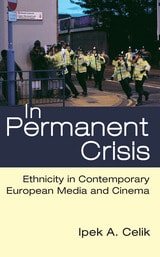
In Permanent Crisis
Ethnicity in Contemporary European Media and CinemaIpek A. Celik
University of Michigan Press, 2015
Refugees, migrants, and minorities of migrant origin frequently appear in European mainstream news in emergency situations: victims of human trafficking, suspects of terrorism, “bogus” asylum seekers. Through analysis of work by established filmmakers Michael Haneke, Fatih Akin, and Alfonso Cuarón, In Permanent Crisis contemplates the way mass media depictions become invoked by film to frame ethnic and racial Otherness in Europe as adornments of catastrophe. Special attention is given to European auteur films in which riots, terrorism, criminal activities, and honor killings bring Europe’s minorities to the forefront of public visibility only to reduce them to perpetrators or victims of violence.
[more]
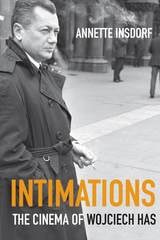
Intimations
The Cinema of Wojciech HasAnnette Insdorf
Northwestern University Press, 2017
In this first study in English of a master of Polish cinema, Annette Insdorf explores Has’s thirteen feature films with the same deep insight of her groundbreaking book on Krzysztof Kieslowski, Double Lives, Second Chances (Northwestern, 2013).
Wojciech Has’s films are still less known outside of his native Poland than those of his countrymen Andrzej Wajda, Krzysztof Zanussi, and Krzysztof Kieslowski. Yet thanks to his singular vision, many critics rank Has among the masters of world cinema. Some of his movies have developed a cult following, notably The Saragossa Manuscript, the favorite film of the Grateful Dead’s Jerry Garcia, which has been praised by directors such as Luis Buñuel, Francis Ford Coppola, and Roman Polanski.
Has’s films reveal the inner lives of his characters, which he portrays by giving free rein to his own wildly creative imagination. In addition toThe Saragossa Manuscript, his diverse and innovative filmography includes The Hourglass Sanatorium, a vividly surreal depiction of Hassidic life in Poland between the world wars; The Noose, a stark poetic drama about a lucid alcoholic who knows he will not be able to kick the habit; and How to Be Loved, in which an actress remembers her wartime past.
Has made disparate but formally striking movies infused with European strains of existentialism and the avant-garde. With many of his films being restored and rereleased, new generations of film lovers are discovering his artistic genius. Intimations: The Cinema of Wojciech Has is the definitive guide in English to his work.
[more]