205 books match the query 'City' and 10 start with i
cover of I Speak of the City: Mexico City at the Turn of the Twentieth Century

I Speak of the City

Mexico City at the Turn of the Twentieth Century

Mauricio Tenorio-Trillo

University of Chicago Press, 2013

In this dazzling multidisciplinary tour of Mexico City, Mauricio Tenorio-Trillo focuses on the period 1880 to 1940, the decisive decades that shaped the city into what it is today. 
 
Through a kaleidoscope of expository forms, I Speak of the City connects the realms of literature, architecture, music, popular language, art, and public health to investigate the city in a variety of contexts: as a living history textbook, as an expression of the state, as a modernist capital, as a laboratory, and as language. Tenorio’s formal imagination allows the reader to revel in the free-flowing richness of his narratives, opening startling new vistas onto the urban experience.
 
From art to city planning, from epidemiology to poetry, this book challenges the conventional wisdom about both Mexico City and the turn-of-the-century world to which it belonged. And by engaging directly with the rise of modernism and the cultural experiences of such personalities as Hart Crane, Mina Loy, and Diego Rivera, I Speak of the City will find an enthusiastic audience across the disciplines.

[more]
cover of Imaging the City: Art, Creative Practices and Media Speculations

Imaging the City

Art, Creative Practices and Media Speculations

Edited by Steve Hawley, Edward Clift, and Kevin O'Brien

Intellect Books, 2016
Imaging the City brings together the work of designers, artists, dancers, and media specialists who cross the borders of design and artistic practices to investigate how we perceive the city; how we imagine it; how we experience it; and how we might better design it. Breaking disciplinary boundaries, editors Steve Hawley, Edward Clift, and Kevin O’Brien provocatively open up the field of urban analysis and thought to the perspectives of creative professionals from non-urban disciplines. With a cast of contributors from across the globe, Imaging the City offers international insight for engaging with—and forecasting the future for—our cities.
[more]
cover of Imagining Los Angeles: A City In Fiction

Imagining Los Angeles

A City In Fiction

David Fine

University of Nevada Press, 2004
The literary image of Los Angeles has evolved since the 1880s from promotional literature that hyped the region as a New Eden to contemporary visions of the city as a perplexing, sometimes corrupt, even apocalyptic place that reflects all that is wrong with America. In Imagining Los Angeles, the first literary history of the city in more than fifty years, critic David Fine traces the history and mood of the place through the work of writers as diverse as Helen Hunt Jackson, Mary Austin, Norman Mailer, Raymond Chandler, Joan Didion, Carolyn See, and many others. His lively and engaging text focuses on the way these writers saw Los Angeles and used the image of the city as an element in their work, and on how that image has changed as the city itself became ever larger, more complex, and more socially and ethnically diverse. This is essential reading for anyone interested in the literature and changing image of Southern California.
[more]
cover of In Service to the City: A History of the University of Cincinnati

In Service to the City

A History of the University of Cincinnati

David Stradling

University of Minnesota Press, 2018

With roots reaching back to 1819, the University of Cincinnati has long been at the frontier of higher education in the Ohio Valley. While it has aspired to fulfill its mission to serve the public good, some residents, particularly those living near campus, have wondered how university decisions benefited the city at large. Long a municipal university, UC struggled to serve a broad diverse population, even as Cincinnati itself struggled in the late twentieth century. Through it all, the university has maintained its importance to the city and its alumni.

In Service to the City: A History of the University of Cincinnati, the first history of the university written in over fifty years, explores the evolving, complex relationship between UC and the city of Cincinnati. In Service to the City casts an unvarnished lens on the details of student demographics, faculty research, curricular changes, and athletic controversy to challenges associated with campus architecture and planning, neighborhood relations, regional and national consequences of urban decline, and the roles of municipal, state, and federal governments within American higher education.

Urban, environmental historian David Stradling traces UC’s story through starts and stops, growth and contraction. In the 1870s the institution began its transformation into a comprehensive, municipal university located in America’s thriving heartland. Expansion continued through mergers with Cincinnati College-Conservatory of Music and Cincinnati Medical College, among others. In 1977, University President Warren Bennis and Governor Jim Rhodes signed papers ending UC’s municipal status while securing its future as part of the state university system of Ohio.

UC maintains its strong relationship with Cincinnati, pioneering countless community and regionally oriented programs, from its expanding co-op education system, the first in the nation, to the Niehoff Urban Studio. Stradling describes the social and political activism of UC students and faculty—front and center in the civil rights and women’s rights movements, as well as the public health and environmental movements. Often they struggled to change the culture within their own institution, which at times appeared conservative or reactionary.

Drawing on archival research, Stradling recounts in lively prose and through dozens of illustrations, two-hundred years of UC history, setting the story in the context of changes within higher education in the United States.
With the cost of higher education on the minds of legislators and the public, questions first posed by Daniel Drake in 1819 upon the founding of Cincinnati College remain relevant. Who should the college serve? What and how should students learn? How can we pay for it? In Service to the City encourages readers to consider how the University of Cincinnati—with a history so entwined with its city—can balance its urban-serving tradition with its aspiration to be a leader global research university.
 
[more]
cover of In the City of Smoking Mirrors

In the City of Smoking Mirrors

Albino Carrillo

University of Arizona Press, 2004

Huitzilopochtli has returned. Aztec destroyer, god of sun and war. He of the hummingbird. Son of Coatlique, Our Lady of the Serpent Skin. But you can call him H. H. is reborn in the sprawling suburbs of an American metroplex in the late twentieth century, a place where "the future is a cartoon of the future." Life in suburbia is hard for an Aztec god: H. falls in and out of love, works downtown as an oficinista, raises children, and learns to command the awesome power of modern electronic media. Then one indifferent summer's day H. is seriously wounded by the police—in a case of mistaken identity, of course—and faces death once more.

In the City of Smoking Mirrors relates H.'s adventures as he hovers between life and death, revisiting his homeland and ancestors. He issues letters and edicts—to the faithful, to his dead amigos—and chronicles his circumnavigation of the Land of the Dead and "what he saw there that made him write this book." In tantalizing verse that walks the edge of dream, Albino Carrillo takes readers on a lyrical exploration of a dark netherworld, a quest for hope in a universe overshadowed by impending doom—a place where "The demons you'll have to defeat on your inward journey / Are like so many little yellow hornets buzzing about / Window screens in summer, angry but looking / For anything sweet, any way out . . . ." Through the unforgettable persona of Huitzilopochtli, Carrillo shows us the transitory nature of our passions and wounds as he chisels a new headstone for our times.
[more]
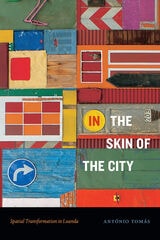
cover of In the Skin of the City: Spatial Transformation in Luanda

In the Skin of the City

Spatial Transformation in Luanda

António Tomás

Duke University Press, 2022
With In the Skin of the City, António Tomás traces the history and transformation of Luanda, Angola, the nation’s capital as well as one of the oldest settlements founded by the European colonial powers in the Southern Hemisphere. Drawing on ethnographic and archival research alongside his own experiences growing up in Luanda, Tomás shows how the city’s physical and social boundaries—its skin—constitute porous and shifting interfaces between center and margins, settler and Native, enslaver and enslaved, formal and informal, and the powerful and the powerless. He focuses on Luanda’s “asphalt frontier”—the (colonial) line between the planned urban center and the ad hoc shantytowns that surround it—and the ways squatters are central to Luanda’s historical urban process. In their relationship with the state and their struggle to gain rights to the city, squatters embody the process of negotiating Luanda’s divisions and the sociopolitical forces that shape them. By illustrating how Luanda emerges out of the continual redefinition of its skin, Tomás offers new ways to understand the logic of urbanization in cities across the global South.
[more]
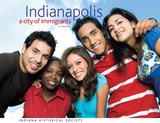
cover of Indianapolis: A City of Immigrants

Indianapolis

A City of Immigrants

M. Teresa Baer

Indiana Historical Society Press, 2012
The booklet opens with the Delaware Indians prior to 1818. White Americans quickly replaced the natives. Germanic people arrived during the mid-nineteenth century. African American indentured servants and free blacks migrated to Indianapolis. After the Civil War, southern blacks poured into the city. Fleeing war and political unrest, thousands of eastern and southern Europeans came to Indianapolis. Anti-immigration laws slowed immigration until World War II. Afterward, the city welcomed students and professionals from Asia and the Middle East and refugees from war-torn countries such as Vietnam and poor countries such as Mexico. Today, immigrants make Indianapolis more diverse and culturally rich than ever before.
[more]
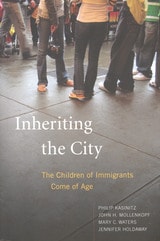
cover of Inheriting the City: The Children of Immigrants Come of Age

Inheriting the City

The Children of Immigrants Come of Age

Philip Kasinitz

Russell Sage Foundation, 2008
The United States is an immigrant nation—nowhere is the truth of this statement more evident than in its major cities. Immigrants and their children comprise nearly three-fifths of New York City's population and even more of Miami and Los Angeles. But the United States is also a nation with entrenched racial divisions that are being complicated by the arrival of newcomers. While immigrant parents may often fear that their children will "disappear" into American mainstream society, leaving behind their ethnic ties, many experts fear that they won't—evolving instead into a permanent unassimilated and underemployed underclass. Inheriting the City confronts these fears with evidence, reporting the results of a major study examining the social, cultural, political, and economic lives of today's second generation in metropolitan New York, and showing how they fare relative to their first-generation parents and native-stock counterparts. Focused on New York but providing lessons for metropolitan areas across the country, Inheriting the City is a comprehensive analysis of how mass immigration is transforming life in America's largest metropolitan area. The authors studied the young adult offspring of West Indian, Chinese, Dominican, South American, and Russian Jewish immigrants and compared them to blacks, whites, and Puerto Ricans with native-born parents. They find that today's second generation is generally faring better than their parents, with Chinese and Russian Jewish young adults achieving the greatest education and economic advancement, beyond their first-generation parents and even beyond their native-white peers. Every second-generation group is doing at least marginally—and, in many cases, significantly—better than natives of the same racial group across several domains of life. Economically, each second-generation group earns as much or more than its native-born comparison group, especially African Americans and Puerto Ricans, who experience the most persistent disadvantage. Inheriting the City shows the children of immigrants can often take advantage of policies and programs that were designed for native-born minorities in the wake of the civil rights era. Indeed, the ability to choose elements from both immigrant and native-born cultures has produced, the authors argue, a second-generation advantage that catalyzes both upward mobility and an evolution of mainstream American culture. Inheriting the City leads the chorus of recent research indicating that we need not fear an immigrant underclass. Although racial discrimination and economic exclusion persist to varying degrees across all the groups studied, this absorbing book shows that the new generation is also beginning to ease the intransigence of U.S. racial categories. Adapting elements from their parents' cultures as well as from their native-born peers, the children of immigrants are not only transforming the American city but also what it means to be American.
[more]
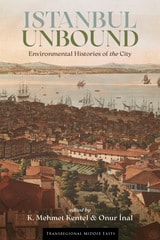
cover of Istanbul Unbound: Environmental Histories of the City

Istanbul Unbound

Environmental Histories of the City

K. Mehmet Kentel and Onur Inal

University of Utah Press, 2026

Inaugural volume in the new series Transregional Middle Easts

As Istanbul faces mounting ecological pressures—from the recently proclaimed “death” of the Marmara Sea to deforestation driven by mega-infrastructure, rising sea levels, and the threat of a major earthquake—this volume argues that environmental history is essential to understanding the city’s predicaments. Coedited by K. Mehmet Kentel and Onur İnal, it bridges urban and environmental history, foregrounding nonhuman actors, ecological processes, and material landscapes, while challenging how the concept of “the City” has been defined and contested. Appropriately the first volume in the series Transregional Middle Easts, Istanbul Unbound integrates environmental dynamics, recognizes fluid boundaries, and centers nonhuman agents in urban transformation, revealing the inseparable entanglement of urban life and regional environmental change in one of the world’s most dynamic metropolises.
[more]
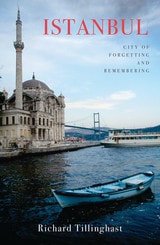
cover of Istanbul: City of Forgetting and Remembering

Istanbul

City of Forgetting and Remembering

Richard Tillinghast

Haus Publishing, 2017

With its varied and glorious history, Istanbul remains one of the world’s perennially fascinating cities. Richard Tillinghast, who first visited Istanbul in the early 1960s and has watched it transform over the decades into a vibrant metropolis, explores its rich art and architecture, culture, cuisine, and much more in this book.

Istanbul was known in Byzantine times as the “Queen of Cities” and to the Ottoman Turks as the “Abode of Felicity.” Steeped in Istanbul’s history, Tillinghast takes his readers on a voyage of discovery through this storied cultural hub, and he is as comfortable talking about Byzantine mosaics and dervish ceremonies as Iznik ceramics and the imperial mosques. His lyrical writing brings Istanbul alive on the page as he accompanies readers to cafés, palaces, and taverns, perfectly conjuring the atmospheric delights, sounds, and senses of the city. Illuminating Istanbul’s great buildings with tales that bring Ottoman and Byzantine history to life, Tillinghast is adept at discovering both what the city remembers and what it chooses to forget.
[more]