Results by title
440 books match the query 'Colonialism & Post-Colonialism' and 15 start with i
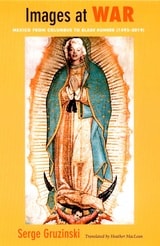
Images at War
Mexico From Columbus to Blade Runner (1492–2019)Serge Gruzinski
Duke University Press, 2001
Although the baroque image played a decisive role in many arenas, especially that of conquest and New World colonization, its powerful resonance in the sphere of religion is a focal point of Gruzinski’s study. In his analysis of how images conveyed meaning across linguistic barriers, he uncovers recurring themes of false images, less-than-perfect replicas, the uprooting of peoples and cultural memories, and the violence of iconoclastic destruction. He shows how various ethnic groups—Indians, blacks, Europeans—left their distinct marks on images of colonialism and religion, coopting them into expressions of identity or instruments of rebellion. As Gruzinski’s story unfolds, he tells of Aztec idols, the cult of the Virgin of Guadalupe, conquistadors, Franciscans, and neoclassical attempts to repress the baroque. In the final chapter he discusses the political and religious implications of contemporary imagery—such as that in Mexican soap operas—and speculates about the future of images in Latin America.
Originally written in French, this work makes available to an English audience a seminal study of Mexico and the role of the image in the New World.
Imagining Our Americas
Toward a Transnational FrameSandhya Shukla and Heidi Tinsman, eds.
Duke University Press, 2007
Scholars of literature, ethnic studies, and regional studies as well as of anthropology and history, the contributors focus on the Americas as a broadly conceived geographic, political, and cultural formation. Among the essays are explorations of the varied histories of African Americans’ presence in Mexican and Chicano communities, the different racial and class meanings that the Colombian musical genre cumbia assumes as it is absorbed across national borders, and the contrasting visions of anticolonial struggle embodied in the writings of two literary giants and national heroes: José Martí of Cuba and José Rizal of the Philippines. One contributor shows how a pidgin-language mixture of Japanese, Hawaiian, and English allowed second-generation Japanese immigrants to critique Hawaii’s plantation labor system as well as Japanese hierarchies of gender, generation, and race. Another examines the troubled history of U.S. gay and lesbian solidarity with the Cuban Revolution. Building on and moving beyond previous scholarship, this collection illuminates the productive intellectual and political lines of inquiry opened by a focus on the Americas.
Contributors. Rachel Adams, Victor Bascara, John D. Blanco, Alyosha Goldstein, Héctor Fernández L’Hoeste, Ian Lekus, Caroline F. Levander, Susan Y. Najita, Rebecca Schreiber, Sandhya Shukla, Harilaos Stecopoulos, Michelle Stephens, Heidi Tinsman, Nick Turse, Rob Wilson

Imagining the Tropics
Women, Romance, and the Making of Modern TourismElizabeth S. Manley
Rutgers University Press, 2025
Imperial Entanglements of Policing
Julian Go and Stuart Schrader
Duke University Press, 2026

Imperial Israel and the Palestinians
The Politics of ExpansionNur Masalha
Pluto Press, 2000
Masalha argues that the heart of the conflict between Zionist immigrants/settlers and the native Palestinians has always been about land, territory, demography and water. He documents how Israeli policy has made it a priority to expel the Palestinians, either by war or peaceful measures. But these imperialist tendencies are not restricted to extremist zealots. The author uncovers the expansionist policies found in Labour Zionism and Kookist ideology.
Chapters cover the Whole Land of Israel Movement, Zionist Revisionism and the Likud Party, Gush Emunim and the religious fundamentalists, parties and movements of the far right and the evolution of Israeli Jewish public attitudes since 1967.

Imperial Rule
Alfred J. Rieber
Central European University Press, 2004
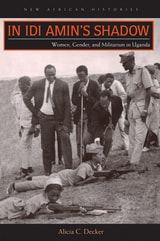
In Idi Amin’s Shadow
Women, Gender, and Militarism in UgandaAlicia C. Decker
Ohio University Press, 2014
Finalist for the 2015 Aidoo-Snyder Prize
In Idi Amin’s Shadow is a rich social history examining Ugandan women’s complex and sometimes paradoxical relationship to Amin’s military state. Based on more than one hundred interviews with women who survived the regime, as well as a wide range of primary sources, this book reveals how the violence of Amin’s militarism resulted in both opportunities and challenges for women. Some assumed positions of political power or became successful entrepreneurs, while others endured sexual assault or experienced the trauma of watching their brothers, husbands, or sons “disappeared” by the state’s security forces. In Idi Amin’s Shadow considers the crucial ways that gender informed and was informed by the ideology and practice of militarism in this period. By exploring this relationship, Alicia C. Decker offers a nuanced interpretation of Amin’s Uganda and the lives of the women who experienced and survived its violence.
Each chapter begins with the story of one woman whose experience illuminates some larger theme of the book. In this way, it becomes clear that the politics of military rule were highly relevant to women and gender relations, just as the politics of gender were central to militarism. By drawing upon critical security studies, feminist studies, and violence studies, Decker demonstrates that Amin’s dictatorship was far more complex and his rule much more strategic than most observers have ever imagined.

In the Mood for Texture
The Revival of Bangkok as a Chinese CityArnika Fuhrmann
Duke University Press, 2026
Indians on Indian Lands
Intersections of Race, Caste, and IndigeneityNishant Upadhyay
University of Illinois Press, 2024
Winner of a NWSA/University of Illinois Press First Book Prize
Nishant Upadhyay unravels Indian diasporic complicity in its ongoing colonialist relationship with Indigenous peoples, lands, and nations in Canada. Upadhyay examines the interwoven and simultaneous areas of dominant Indian caste complicity in processes of settler colonialism, antiblackness, capitalism, brahminical supremacy, Hindu nationalism, and heteropatriarchy. Resource extraction in British Columbia in the 1970s–90s and in present-day Alberta offer examples of spaces that illuminate the dispossession of Indigenous peoples and simultaneously reveal racialized, gendered, and casted labor formations. Upadhyay juxtaposes these extraction sites with examples of anticolonial activism and solidarities from Tkaronto. Analyzing silence on settler colonialism and brahminical caste supremacy, Upadhyay upends the idea of dominant caste Indian diasporas as racially victimized and shows that claiming victimhood denies a very real complicity in enforcing other power structures. Exploring stories of quotidian proximity and intimacy between Indigenous and South Asian communities, Upadhyay offers meditations on anticolonial and anti-casteist ways of knowledge production, ethical relationalities, and solidarities.Groundbreaking and ambitious, Indians on Indian Lands presents the case for holding Indian diasporas accountable for acts of violence within a colonial settler nation.
Indigenous Reparations and Settler Colonial Reckoning
Re-Braiding Rights and Redress in CanadaPauline Wakeham
University of Minnesota Press, 2026
How Indigenous communities are transforming the idea and practice of reparations through their laws and leadership
In recent decades, a growing number of Indigenous groups across Canada have initiated movements for colonial reparations. Too often, the settler state has responded by attempting to enfold their work into a narrative of reconciliation that consigns colonialism to “sad chapters” of history. In this book, Pauline Wakeham calls attention to the ways that Indigenous reparations movements exceed state reconciliatory frameworks and prompt a deeper reckoning with the enduring structures of settler colonialism.
To expose and redress colonial injustices, Indigenous reparations movements draw upon long local traditions of political organizing as well as transformations on the global stage since World War II. As international law formulated new instruments regarding gross human rights violations, atrocity crimes, and the reparative obligations of states, colonized peoples across the world have sought to mobilize these mechanisms in their struggles for decolonization and reparations. While international law has provided strategic tools for this work, the colonial foundations of the field continue to limit how it conceptualizes and shapes access to justice. Indigenous Reparations and Settler Colonial Reckoning traces the specific implications for Indigenous nations whose land is occupied by settler states—nations whose legal orders remain subordinated to both settler “domestic” and international legal systems.
Amid this complex multijurisdictional terrain, how are Indigenous peoples carving out space to articulate their own visions of justice? To answer this question, Wakeham learns from the Inuit-led Qikiqtani Truth Commission as well as reparations movements for residential schools and the High Arctic Relocations of 1953 and 1955. These movements offer powerful lessons about the importance of centering Indigenous leadership and laws in redress processes, thereby connecting reparations to the living enactment of Indigenous rights.
Retail e-book files for this title are screen-reader friendly with images accompanied by short alt text and/or extended descriptions.
Infrastructural Attachments
Austerity, Sovereignty, and Expertise in KenyaEmma Park
Duke University Press, 2024
Inter/Nationalism
Decolonizing Native America and PalestineSteven Salaita
University of Minnesota Press, 2016
“The age of transnational humanities has arrived.” According to Steven Salaita, the seemingly disparate fields of Palestinian Studses and American Indian studies have more in common than one may think. In Inter/Nationalism, Salaita argues that American Indian and Indigenous studies must be more central to the scholarship and activism focusing on Palestine.
Salaita offers a fascinating inside account of the Boycott, Divestment, and Sanctions (BDS) movement—which, among other things, aims to end Israel’s occupation of Palestinian land. In doing so, he emphasizes BDS’s significant potential as an organizing entity as well as its importance in the creation of intellectual and political communities that put Natives and other colonized peoples such as Palestinians into conversation. His discussion includes readings of a wide range of Native poetry that invokes Palestine as a theme or symbol; the speeches of U.S. President Andrew Jackson and early Zionist thinker Ze’ev Jabotinsky; and the discourses of “shared values” between the United States and Israel.
Inter/Nationalism seeks to lay conceptual ground between American Indian and Indigenous studies and Palestinian studies through concepts of settler colonialism, indigeneity, and state violence. By establishing Palestine as an indigenous nation under colonial occupation, this book draws crucial connections between the scholarship and activism of Indigenous America and Palestine.
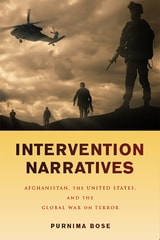
Intervention Narratives
Afghanistan, the United States, and the Global War on TerrorPurnima Bose
Rutgers University Press, 2020
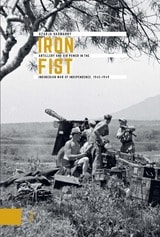
Iron Fist
Artillery and Air Power in the Indonesian War of Independence, 1945-1949Azarja Harmanny
Amsterdam University Press, 2026
Israel
Politics, Myths and Identity CrisesAkiva Orr
Pluto Press, 1994