Results by title
355 books match the query 'Communism, Post-Communism & Socialism' and 13 start with i
I Want to Believe
Posadism, UFOs and Apocalypse CommunismA.M. Gittlitz
Pluto Press, 2020
Advocating nuclear war, attempting communication with dolphins, and taking an interest in the paranormal and UFOs, there is perhaps no greater (or stranger) cautionary tale for the Left than that of Posadism. Named after the Argentine Trotskyist J. Posadas, the movement’s journey through the fractious and sectarian world of mid-20th century revolutionary socialism was unique. This book is a “dumpster dive” into the weird and wonderful world of the Posadists.
Although at times significant, Posadas' movement was ultimately a failure. As it disintegrated, it increasingly grew to resemble a bizarre cult, detached from the working class it sought to liberate. The renewed interest in Posadism today, especially for its more outlandish fixations, speaks to both a cynicism towards the past and nostalgia for the earnest belief that a better world is possible. Chapters include:
*Revolutionary Youth or Patriotic Youth
*The Death Throes of Capitalism
*The Origins of Posadism
*Flying Saucers, the Process of Matter and Energy, Science, the Revolutionary and Working-Class Stuggle, and the Socialist Future of Mankind
*What Exists Cannot be True
*Why Don’t Extraterrestrials Make Public Contact
*UFOs to the People
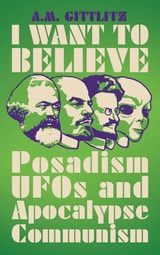
In the Introduction, A.M. Gittlitz writes, “Insurrection or first contact could come any day, Marxists and ufologists both tell us, but both are far more likely if we desire them, embracing a sentiment enigmatically expressed in a meme come before its time, a poster on the wall of rouge FBI agent Fox Mulder in the ‘90s sci-fi noir The X-Files: hovering alongside a granny image of a comically unconvincingly flying saucer and the words I WANT TO BELIEVE".
Drawing on considerable archival research, and numerous interviews with ex- and current Posadists, I Want to Believe tells the fascinating story of this most unusual socialist movement and considers why it continues to capture the imaginations of leftists today.

Icons of the Left
Benjamin and Eisenstein, Picasso and Kafka after the Fall of CommunismOtto Karl Werckmeister
University of Chicago Press, 1999
Focusing on some of the most celebrated instances of traditional "Western Marxism," Werckmeister shows how such "icons of the Left" have been progressively detached from their political roots in communist activism to the safe distance of utopian or revolutionary speculations. He assesses some recent critiques of "Western Marxism" in popular culture such as Soderbergh's film Kafka, pointing out the historic fallacies that underlie such wholesale repudiations. With this analysis, Werckmeister seeks to clear the ground for a coherent cultural policy of the Left that responds to the continuing crisis of society.
Ideological Storms
Intellectuals, Dictators, and the Totalitarian TemptationBogdan C. Iacob
Central European University Press, 2019
This volume gathers authors who wrote important works in the fields of the history of ideologies, the comparative study of dictatorships, and intellectual history. The book is a state of the art reassessment and analysis of the ideological commitments of intellectuals and their relationships with dictatorships during the twentieth century. The contributions focus on turning points or moments of breakage as well as on the continuities. Though its focus is on an East–West comparison in Europe, there are texts also dealing with Latin America, China, and the Middle East giving the book a global outlook.
The first part of the book deals with intellectuals' involvement with communist regimes or parties; the second looks at the persistence of utopianism in the trajectory of intellectuals who had been associated earlier in their lives with either communism or fascism; the third tackles intellectuals' role in national imaginations from either the left or the right; and, the fourth ties late twentieth century phenomena to current phenomena such as the persistence of anti-Semitism in the West, the slow erosion of the values upon which the EU is built, the quagmire in Iraq, and China's rise in the post-Cold War era. The collection provides a comprehensive big-picture of intellectual genealogies and dictatorial developments.

Ideology and Superstructure in Historical Materialism
Franz Jakubowski
Pluto Press, 2002
In the same period, only Lukacs and Korsch attempted to deal systemically with these problems, and it is they who are generally recognised as the main inspiration behind what is called Western Marxism, yet Franz Jakubowski is a key figure in the development of Marxist thought. And, unlike the others, Jakubowski was also an activist, and for this reason avoids the unnecessarily dense language of his fellow theoreticians.
Ideology and Superstructure is rare in that it successfully conveys complex problems in a simple and straightforward form. At a time when the literature on Marx has become excessively obscuranist, Jakubowski's work serves as a useful antidote, and is an ideal text for introducing novices to the basics of Marxist theory.
Illusive Utopia
Theater, Film, and Everyday Performance in North KoreaSuk-Young Kim
University of Michigan Press, 2010
"North Korea is not just a security or human rights problem (although it is those things) but a real society. This book gets us closer to understanding North Korea beyond the usual headlines, and does so in a richly detailed, well-researched, and theoretically contextualized way."
---Charles K. Armstrong, Director, Center for Korean Research, Columbia University
"One of this book's strengths is how it deals at the same time with historical, geographical, political, artistic, and cultural materials. Film and theatre are not the only arts Kim studies---she also offers an excellent analysis of paintings, fashion, and what she calls 'everyday performance.' Her analysis is brilliant, her insights amazing, and her discoveries and conclusions always illuminating."
---Patrice Pavis, University of Kent, Canterbury
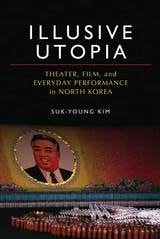
No nation stages massive parades and collective performances on the scale of North Korea. Even amid a series of intense political/economic crises and international conflicts, the financially troubled country continues to invest massive amounts of resources to sponsor unflinching displays of patriotism, glorifying its leaders and revolutionary history through state rituals that can involve hundreds of thousands of performers. Author Suk-Young Kim explores how sixty years of state-sponsored propaganda performances---including public spectacles, theater, film, and other visual media such as posters---shape everyday practice such as education, the mobilization of labor, the gendering of social interactions, the organization of national space, tourism, and transnational human rights. Equal parts fascinating and disturbing, Illusive Utopia shows how the country's visual culture and performing arts set the course for the illusionary formation of a distinctive national identity and state legitimacy, illuminating deep-rooted cultural explanations as to why socialism has survived in North Korea despite the fall of the Berlin Wall, the collapse of the Soviet Union, and China's continuing march toward economic prosperity. With over fifty striking color illustrations, Illusive Utopia captures the spectacular illusion within a country where the arts are not only a means of entertainment but also a forceful institution used to regulate, educate, and mobilize the population.
Suk-Young Kim is Associate Professor in the Department of Theater and Dance at the University of California, Santa Barbara, and coauthor with Kim Yong of Long Road Home: A Testimony of a North Korean Camp Survivor.
In Contempt
Defending Free Speech, Defeating HUACEd Yellin and Jean Fagan Yellin
University of Michigan Press, 2022
So began a decade of hardship for Ed and Jean Yellin and their three young children as the repressive weight of the U.S. government, caught up in the throes of McCarthyism, crashed down upon their careers, their daily household budget, and their relationships to colleagues, neighbors, and their country. In Contempt is a faithful, factual testament to the enduring quality of patriotic dissent in our evolving democracy—and a loving reconstruction of what it meant to be labeled “unAmerican” for defending the Constitution.
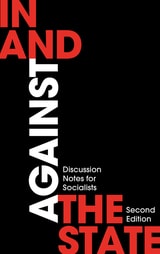
In and Against the State
London Edinburgh Weekend Return Group
Pluto Press, 2021
Originally published as a pamphlet in 1979 and again by Pluto in 1980, In and Against the State brought together questions of working-class struggle and state power, exploring how revolutionary socialists might reconcile working in the public sector with their radical politics. Informed by autonomist political ideas and practices that were central to the protests of 1968, the book’s authors spoke to a generation of activists wrestling with the question of where to place their energies.
Forty years have passed, yet the questions it posed are still to be answered. As the eclipse of Corbynism and the onslaught of the global pandemic have demonstrated with brutal clarity, a renewed socialist strategy is needed more urgently than ever.
This edition includes a new introduction by Seth Wheeler and an interview with John McDonnell that reflect on the continuing relevance of In and Against the State and the questions it raises.
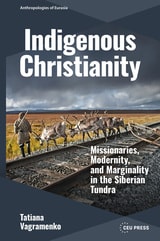
Indigenous Christianity
Missionaries, Modernity, and Marginality in the Siberian TundraTatiana Vagramenko
Central European University Press, 2026
Nenets nomads, long shaped by Russian colonialism and Soviet modernization, experienced sweeping conversions in the mid-1990s, culminating in the creation of a tundra church tied to a radical evangelical movement. Amid Putin’s tightening control—when indigenous peoples and minority faiths faced renewed surveillance and harassment—the book follows Nenets and missionaries whose encounters across the tundra sparked tensions between converts and non-converts, faith and state. Through stories of hope, loss, and resilience, it reveals how global evangelical Christianity intersects with local traditions, reshaping kinship, belonging, and modernity in the Siberian tundra.

Institutional trust and economic policy Lessons from the history of the Euro
Lessons from the history of the EuroDóra Gyorffy
Central European University Press, 2013

Intellectuals and Politics in Central Europe
Ivan Bernik
Central European University Press, 1999

International Trotskyism, 1929-1985
A Documented Analysis of the MovementRobert J. Alexander
Duke University Press, 1991
Renowned scholar Robert J. Alexander has amassed, from disparate sources, an unprecedented amount of primary and secondary material to provide a documentary history of the origins, development, and nature of the Trotskyist movement around the world. Drawing on interviews and correspondence with Trotskyists, newspaper reports and pamphlets, historical writings including the annotated writings of Trotsky in both English and French, historical memoirs of Trotskyist leaders, and documents of the Fourth International, Alexander recounts the history of the movement since Trotsky’s exile from the Soviet Union in 1929.
Organized alphabetically in a double-column, country-by-country format this book charts the formation and growth of Trotskyism in more than sixty-five countries, providing biographic information about its most influential leaders, detailed accounts of Trotsky’s personal involvement in the development of the movement in each country, and thorough reports of its various factions and splits. Multiple chapters are reserved for countries where the movement was more active or fully developed and various chapters are organized around crucial thematic issues, such as the Fourth International. The chapters are followed by extensive name, organization, publication, and subject indexes, which provide optimal access to the wealth of information contained in the main body of the work.
Isonomia and the Origins of Philosophy
Kojin Karatani
Duke University Press, 2017