Results by title
198 books match the query 'Community' and 10 start with i
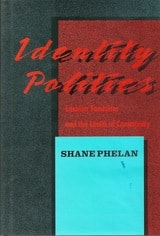
Identity Politics
Lesbian Feminism and the Limits of CommunityShane Phelan
Temple University Press, 1991
"Lesbian feminism began and has fueled itself with the rejection of liberalism.... In this rejection, lesbian feminists were not alone. They were joined by the New Left, by many blacks in the civil rights movement, by male academic theorists.... What all these groups shared was an intense awareness of the ways in which liberalism fails to account for the social reality of the world, through a reliance upon law and legal structure to define membership, through individualism, through its basis in a particular conception of rationality."
In tracing how lesbian feminism came to be defined in uneasy relationships with the Women’s Movement and gay rights groups, Shane Phelan explores the tension between liberal ideals of individual rights and tolerance and communitarian ideals of solidarity. The debate over lesbian sado-masochism—an expression of individual choice or pornographic, anti-feminist behavior?—is considered as a test case.
Phelan addresses the problems faced by "the woman-identified woman" in a liberal society that presumes heterosexuality as the biological, psychological, and moral standard. Often silenced by laws defining their sexual behavior as criminal and censured by a medical establishment that persists in defining homosexuality as perversion, lesbians, like blacks and other groups, have fought to have the same rights as others in their communities and even in their own homes. Lesbian feminists have also sought to define themselves as a community that would be distinctly different, a community that would disavow the traditional American obsession with individual advancement in the world as it is.
In this controversial study of political philosophy and the women’s movement, Phelan argues that "the failure to date to produce a satisfying theory and program for lesbian action is reflective of the failure of modern political thinking to produce a compelling, nonsuspect alternative to liberalism."
In the series Women in the Political Economy, edited by Ronnie J. Steinberg.
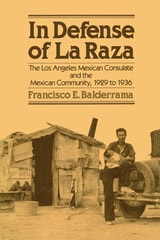
In Defense of La Raza
The Los Angeles Mexican Consulate and the Mexican Community, 1929 to 1936Francisco E. Balderrama
University of Arizona Press, 1982
Los Angeles’s consulate was confronted with the country’s largest concentration of Mexican Americans, for whom the consuls often assumed a position of community leadership. Whether helping the unemployed secure repatriation and relief or intervening in labor disputes, consuls uniquely adapted their roles in international diplomacy to the demands of local affairs.
In the Name of El Pueblo
Place, Community, and the Politics of History in YucatánPaul K. Eiss
Duke University Press, 2010
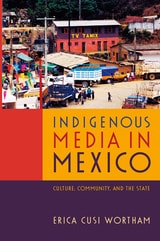
Indigenous Media in Mexico
Culture, Community, and the StateErica Cusi Wortham
Duke University Press, 2013
Drawing on her in-depth ethnographic research among indigenous mediamakers in Mexico, Wortham traces their shifting relationship with Mexican cultural agencies; situates their work within a broader, hemispheric network of indigenous media producers; and complicates the notion of a unified, homogeneous indigenous identity. Her analysis of projects from community-based media initiatives in Oaxaca to the transnational Chiapas Media Project highlights variations in cultural identity and autonomy based on specific histories of marginalization, accommodation, and resistance.
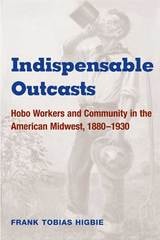
Indispensable Outcasts
Hobo Workers and Community in the American Midwest, 1880-1930Frank Tobias Higbie
University of Illinois Press, 2003
Often overlooked in labor history, the hoboes who rode the rails in search of seasonal work nevertheless secured a place in the American imagination. Frank Tobias Higbie weaves together history, anthropology, gender studies, and literary analysis to reposition these workers at the center of Progressive Era debates over class, race, manly responsibility, community, and citizenship. Combining incisive cultural criticism with labor history, Higbie illustrates how these so-called marginal figures were in fact integral to communities and to cultural conflicts over class, masculinity, and sexuality. He draws from life histories, the investigations of social reformers, and the organizing materials of the Industrial Workers of the World to present a complex portrait of hobo life, from its often violent and dangerous working conditions to its ethic of “transient mutuality” that enabled survival and resistance on the road.
Frank and compelling,Indispensable Outcasts examines hoboes within the sprawling story of American labor while meditating on writing history from the bottom up and the ways a fascination with personal narrative can color a historian's work.

Individual and Community
Variations on a Theme in American FictionKenneth H. Baldwin and David Kirby, eds.
Duke University Press, 1975
The essays are intended to point to the continuity of an important theme in American fiction and to offer insight into the variety of philosophical and literary strategies utilized in significant works of significant authors in dealing with the question of the individual and the community.
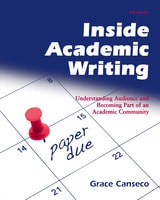
Inside Academic Writing
Understanding Audience and Becoming Part of an Academic CommunityGrace Canseco
University of Michigan Press, 2010
Inside Academic Writing is designed to prepare students in any academic discipline for graduate-level writing. The text situates students within their writing communities by prioritizing the steps of learning; students are directed to use common threads of academic writing across disciplines. The goal of Inside Academic Writing is to give students the opportunity to write for a variety of audiences and to develop the knowledge necessary to recognize how to write for different audiences and purposes.
Inside Academic Writing allows students to examine basic assumptions about writing before they learn specific strategies for targeting the audience or mapping the flow of information. Through the material in this textbook, students will create a portfolio of writings that includes a biographical statement and a research interest essay—important pieces of writing that are rarely taught in courses. Other types of writing featured are a summary, a problem-solution text, a comparative structure paper, and a commentary.
Other textbooks prepare students for graduate writing, but Inside Academic Writing was designed to bridge the gap between non-academic writing and the writing required within an academic community, with one’s peers, colleagues, and field experts. In addition, Inside Academic Writing offers guidance on writing materials for grants, fellowships, conferences, and publication.
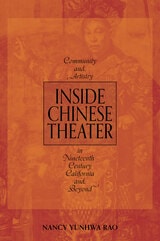
Inside Chinese Theater
Community and Artistry in Nineteenth-Century California and BeyondNancy Yunhwa Rao
University of Illinois Press, 2025
In the mid-nineteenth century, Chinese opera theater arrived as one of the significant performing art forms in California. Nancy Yunhwa Rao excavates and contextualizes the important history of Chinese Opera Theater, bringing to light the ways it became woven into the financial, political, social, and family life in California and beyond.
Chinese opera theater found brick-and-mortar homes with San Francisco theaters like the Hing Chuen Yuen and the Donn Qui Yuen. But troupes had already followed Chinese immigrants to mining and railroad towns, and across the American West. As Chinese theater became part of California and San Francisco culture, popular Chinese actors advocated for their art alongside appeals for civil rights. Rao draws on personal diaries, newspapers and artifacts to place Chinese theater within the everyday lives of San Francisco. She also examines the costumes, singing, staging, and storytelling that impacted mainstream reception and influenced how Chinese communities saw themselves.
Illustrated with seventy photographs, Inside Chinese Theater is an expert and eloquent journey into the early decades of Chinese opera in America.
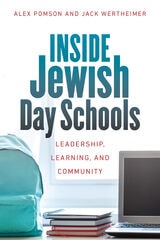
Inside Jewish Day Schools
Leadership, Learning, and CommunityAlex Pomson and Jack Wertheimer
Brandeis University Press, 2021
This book takes readers inside Jewish day schools to observe what happens day to day, as well as what the schools mean to their students, families, and communities. Many different types of Jewish day schools exist, and the variations are not well understood, nor is much information available about how day schools function. Inside Jewish Day Schools proves a vital guide to understanding both these distinctions and the everyday operations of these contemporary schools.
Insurgent Identities
Class, Community, and Protest in Paris from 1848 to the CommuneRoger V. Gould
University of Chicago Press, 1995
The difference was due to Baron Haussmann's massive urban renovation projects between 1852 and 1868, which dispersed workers from Paris's center to newly annexed districts on the outskirts of the city. In these areas, residence rather than occupation structured social relations. Drawing on evidence from trail documents, marriage records, reports of police spies, and the popular press, Gould demonstrates that this fundamental rearrangement in the patterns of social life made possible a neighborhood insurgent movement; whereas the insurgents of 1848 fought and died in defense of their status as workers, those in 1871 did so as members of a besieged urban community.
A valuable resource for historians and scholars of social movements, this work shows that collective identities vary with political circumstances but are nevertheless constrained by social networks. Gould extends this argument to make sense of other protest movements and to offer predictions about the dimensions of future social conflict.