Results by title
141 books match the query 'Developing countries' and 5 start with i

Imperial Encounters
The Politics of Representation in North-South RelationsRoxanne Doty
University of Minnesota Press, 1996
Offers a fresh perspective on power relationships in global politics.
“Developed/underdeveloped,” “first world/third world,” “modern/traditional”-although there is nothing inevitable, natural, or arguably even useful about such divisions, they are widely accepted as legitimate ways to categorize regions and peoples of the world. In Imperial Encounters, Roxanne Lynn Doty looks at the way these kinds of labels influence North-South relations, reflecting a history of colonialism and shaping the way national identity is constructed today.
Employing a critical, poststructuralist perspective, Doty examines two “imperial encounters” over time: between the United States and the Philippines and between Great Britain and Kenya. The history of these two relationships demonstrates that not only is the more powerful member allowed to construct “reality,” but this construction of reality bears an important relationship to actual practice. Doty is particularly interested in the way in which the South has been represented by policymakers, scholars, and journalists, and how these representations have influenced specific encounters. Doty also uses the insights of Edward Said to argue that the power dynamic that allows the North to define the global identity of nations in the South ultimately tells us more about northern powers than about their southern neighbors. Doty then considers the persistence of representational practices, particularly with regard to Northern views of human rights in the South and contemporary social science discourses on North-South relations. She ends with the argument that the discipline of international relations needs to be reformed by broadening the repertoire of theoretical and analytical tools available to scholars studying global politics. Important and timely, Imperial Encounters brings a fresh perspective to the debate over the past-and the future-of global politics.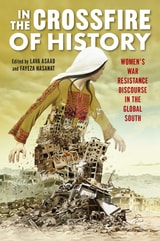
In the Crossfire of History
Women's War Resistance Discourse in the Global SouthLava Asaad
Rutgers University Press, 2022
The transformative mode of these examples expands the definition of heroism and defiance. To prevent these types of heroism from slipping into the abyss of history, this collection brings forth and celebrates women’s fortitude in conflict zones. In the Crossfire of History shines a light onwomen across the globe who are resisting the sociopolitical and economic injustices in their nation-states.

International Capital Flows in Calm and Turbulent Times
The Need for New International ArchitectureStephany Griffith-Jones, Ricardo Gottschalk, and Jacques Cailloux, Editors
University of Michigan Press, 2003
The book is unique in its scrutiny of the type of lenders and investors that triggered and deepened the crises, focusing particularly on institutional investors and banks; allocation of their assets; the criteria used in this process; and the impact of the nature of the investor on the volatility of different types of capital flow. It addresses such questions as: What determines or triggers massive changes in perceptions and sentiment by different investors and leaders? To what extent does contagion spread not just among countries but between actors? What are the policy implications of this analysis? The book concludes by examining the asymmetries in the financial architecture discussions and implementation and by offering policy proposals.

International Differences in Entrepreneurship
Edited by Josh Lerner and Antoinette Schoar
University of Chicago Press, 2010
Often considered one of the major forces behind economic growth and development, the entrepreneurial firm can accelerate the speed of innovation and dissemination of new technologies, thus increasing a country's competitive edge in the global market. As a result, cultivating a strong culture of entrepreneurial thinking has become a primary goal throughout the world.
Surprisingly, there has been little systematic research or comparative analysis to show how the growth of entrepreneurship differs among countries in various stages of development. International Differences in Entrepreneurship fills this void by explaining how a country's institutional differences, cultural considerations, and personal characteristics can affect the role that entrepreneurs play in its economy. Developing an understanding of the origins of entrepreneurs as well as the choices they make and the complexity of their activities across countries and industries are of central importance to this volume. In addition, contributors consider how environmental factors of individual economies, such as market regulation, government subsidies for banks, and support for entrepreneurial culture affect the industry and the impact that entrepreneurs have on growth in developing nations.

Investment in Women's Human Capital
Edited by T. Paul Schultz
University of Chicago Press, 1995
Section I considers the experiences of high-income countries, examining the limitations of industrialization for the advancement of women; returns to secondary education for women; and state control of women's education and labor market productivity through the design of tax systems and the public subsidy of children.
The remaining four sections investigate health, education, household structure and labor markets, and measurement issues in low-income countries, including the effect of technological change on transfers of wealth to and from children in India; women's and men's responses to the costs of medical care in Kenya; the effects of birth order and sex on educational attainment in Taiwan; wage returns to schooling in Indonesia and in Cote d'Ivoire; and the increasing prevalence of female-headed households and the correlates of gender differences in wages in Brazil.