Results by title
69 books match the query 'Digital Age' and 8 start with i
Image Ethics In The Digital Age
Larry Gross
University of Minnesota Press, 2003
Over the past quarter century, dramatic technological advances in the production, manipulation, and dissemination of images have transformed the practices of journalism, entertainment, and advertising as well as the visual environment itself. From digital retouching to wholesale deception, the media world is now beset by an unprecedented range of moral, ethical, legal, and professional challenges. Image Ethics in the Digital Age brings together leading experts in the fields of journalism, media studies, and law to address these challenges and assess their implications for personal and societal values and behavior.
Among the issues raised are the threat to journalistic integrity posed by visual editing software; the monopolization of image archives by a handful of corporations and its impact on copyright and fair use laws; the instantaneous electronic distribution of images of dubious provenance around the world; the erosion of privacy and civility under the onslaught of sensationalistic twenty-four-hour television news coverage and entertainment programming; and the increasingly widespread use of surveillance cameras in public spaces. This volume of original essays is vital reading for anyone concerned with the influence of the mass media in the digital age.
Contributors: Howard S. Becker; Derek Bousé, Eastern Mediterranean U, Cyprus; Hart Cohen, U of Western Sydney; Jessica M. Fishman; Paul Frosh, Hebrew U of Jerusalem; Faye Ginsburg, New York U; Laura Grindstaff, U of California, Davis; Dianne Hagaman; Sheldon W. Halpern, Ohio State U; Darrell Y. Hamamoto, U of California, Davis; Marguerite Moritz, U of Colorado, Boulder; David D. Perlmutter, Louisiana State U; Dona Schwartz, U of Minnesota; Matthew Soar, Concordia University; Stephen E. Weil, Smithsonian Institution’s Center for Education and Museum Studies.
Indian Country
Telling a Story in a Digital AgeVictoria L. LaPoe
Michigan State University Press, 2017

Information Literacy Programs in the Digital Age
Educating College and University Students OnlineAlice Daugherty
Assoc of College & Research Libraries, 2011
Information Literacy Programs in the Digital Age
Educating College and University Students OnlineAlice Daugherty
Assoc of College & Research Libraries, 2011

Informational Peripheries
Rethinking the Urban in a Digital AgeEdited by Ayona Datta and Fenna Imara Hoefsloot
University College London, 2025
Moving beyond current scholarship in urban and regional studies, this volume presents a case for “informational peripheries” as an analytical lens to understand the uneven, fragmented, and disconnected geographies of urban peripheries in the Global South. While this concept is parallel to and overlaps with the urban periphery, the circulation—or restriction—of information has taken on additional significance with the coming of a digital age. The periphery is no longer confined to the slums or suburbia at a city's edge; it now also encompasses uneven and fragmented digital infrastructures.
Providing empirical and theoretical contributions from cities in the Global South, this book advances scholarship in Southern urbanism, smart cities, and peripheral urbanization, conceptualizing the diverse ways in which informational peripheries are resisted, adapted, complied with, and lived in.
Interpreter Education in the Digital Age
Innovation, Access, and ChangeSuzanne Ehrlich
Gallaudet University Press, 2015
Initiatives described in this collection range from the implementation of on-demand interpreting using iPad technology to create personalized, small-group, multidimensional models suited to digital media for 160 languages; introducing students to interpreting in a 3D world through an IVY virtual environment; applying gaming principles to interpreter education; assessing the amenability of the digital pen in the hybrid mode of interpreting; developing multimedia content for both open access and structured interpreter education environments; to preparing interpreting students for interactions in social media forums, and more. Interpreter Education in the Digital Age provides a context for the application of technologies in interpreter education from an international viewpoint across languages and modalities.
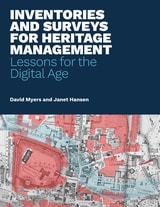
Inventories and Surveys for Heritage Management
Lessons for the Digital AgeDavid Myers
J. Paul Getty Trust, The, 2024
A critical first step in the conservation of cultural heritage is to identify and understand the places we want to protect. Inventories and surveys are essential tools in this effort, and their use in managing national, regional, and local heritage is mandated in heritage-related legislation across the globe. Despite the widespread understanding of the importance of inventories and surveys, however, practical, up-to-date guidance on how they should be created, implemented, and maintained has been substantially lacking—until now.
This publication draws from the Getty Conservation Institute’s ongoing work with heritage inventories and on the Los Angeles Office of Historic Resources’ experience with SurveyLA. It provides technical advice, guidance, and lessons learned for employing inventories and surveys as tools for heritage conservation and management.
The free online edition of this open-access publication is available at www.getty.edu/publications/inventories-and-surveys. Also available are free PDF and EPUB downloads of the book.

Islam in the Digital Age
E-Jihad, Online Fatwas and Cyber Islamic EnvironmentsGary R. Bunt
Pluto Press, 2003
The Internet is an increasingly important source of information for many people in the Muslim world. Many Muslims in majority and minority contexts rely on the Internet -- including websites and e-mail -- as a primary source of news, information and communication about Islam. As a result, a new media culture is emerging which is having a significant impact on areas of global Muslim consciousness. Post-September 11th, this phenomenon has grown more rapidly than ever.
Gary R. Bunt provides a fascinating account of the issues at stake, identifying two radical new concepts:
Firstly, the emergence of e-jihad ('Electronic Jihad') originating from diverse Muslim perspectives -- this is described in its many forms relating to the different definitions of 'jihad', including on-line activism (ranging from promoting militaristic activities to hacking, to co-ordinating peaceful protests) and Muslim expression post 9/11.
Secondly, he discusses religious authority on the Internet -- including the concept of on-line fatwas and their influence in diverse settings, and the complexities of conflicting notions of religious authority.