117 books match the query 'Digital media' and 6 start with i
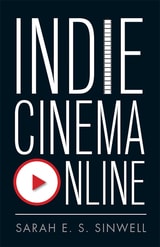
cover of Indie Cinema Online

Indie Cinema Online

Sarah E.S. Sinwell

Rutgers University Press, 2020
Indie Cinema Online investigates the changing nature of contemporary American independent cinema in an era of media convergence. Focusing on the ways in which modes of production, distribution, and exhibition are shifting with the advent of online streaming, simultaneous release strategies, and web series, this book analyzes sites such as SundanceTV, YouTube, Netflix, Hulu, and other online spaces as a means of redefining independent cinema in a digital era. Analyzing the intersections among cinema studies, cultural studies, and new media studies within contemporary convergence culture, author Sarah E.S. Sinwell looks at sites of media convergence that are often ignored within most studies of digital media. Emphasizing the ways in which the forms and technologies of media culture have changed during the age of convergence, this book analyzes contemporary production, distribution, and exhibition practices as a means of examining the changing meanings of independent cinema within digital culture.
[more]
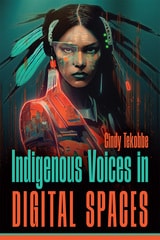
cover of Indigenous Voices in Digital Spaces

Indigenous Voices in Digital Spaces

Cindy Tekobbe

Utah State University Press, 2024

Indigenous Voices in Digital Spaces applies Indigenous frameworks and epistemologies to online cultural movements through four case studies, including hashtags, memes, cryptocurrency, and digital artistry, and develops decolonizing practices for digital rhetoric, online identity work, and digital literacy practices.
 
Tekobbe’s methods for analyzing and understanding Indigenous knowledges online center Indigenous storytelling and “thick” (broad, deep, and complex) Indigenous meaning-making. Employing this thickness to interpret Indigenous knowledge ways resists the settler-colonial logics that tend to flatten complex Indigenous concepts into one-note representations of racial stereotypes. Native Americans’ use of social media and digital platforms to support social movements uniquely constructs Indigenous identities as living, producing, and culture-making people, which confronts the commonplace, one-dimensional narrative that Indigenous North Americans either live in isolation or are people of history resigned to the long-forgotten past. Tekobbe’s methods are applicable to additional online research to break through Western paradigms of oppositional critique, the colonial power matrix embedded in hierarchical and taxonomical classification systems, and participant objectification.
 
Indigenous Voices in Digital Spaces offers new methodological and epistemological opportunities to explore digital communities and technologies, problematizing conventional Western critique. This book is useful to instructors in Indigenous studies, internet studies, digital literacies, cultural studies, and communications, as well as Indigenous and internet studies researchers.

 
 
[more]
cover of Information Activism: A Queer History of Lesbian Media Technologies

Information Activism

A Queer History of Lesbian Media Technologies

Cait McKinney

Duke University Press, 2020
For decades, lesbian feminists across the United States and Canada have created information to build movements and survive in a world that doesn't want them. In Information Activism Cait McKinney traces how these women developed communication networks, databases, and digital archives that formed the foundation for their work. Often learning on the fly and using everything from index cards to computers, these activists brought people and their visions of justice together to organize, store, and provide access to information. Focusing on the transition from paper to digital-based archival techniques from the 1970s to the present, McKinney shows how media technologies animate the collective and unspectacular labor that sustains social movements, including their antiracist and trans-inclusive endeavors. By bringing sexuality studies to bear on media history, McKinney demonstrates how groups with precarious access to control over information create their own innovative and resourceful techniques for generating and sharing knowledge.
[more]
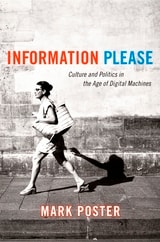
cover of Information Please: Culture and Politics in the Age of Digital Machines

Information Please

Culture and Politics in the Age of Digital Machines

Mark Poster

Duke University Press, 2006

Information Please advances the ongoing critical project of the media scholar Mark Poster: theorizing the social and cultural effects of electronically mediated information. In this book Poster conceptualizes a new relation of humans to information machines, a relation that avoids privileging either the human or the machine but instead focuses on the structures of their interactions. Synthesizing a broad range of critical theory, he explores how texts, images, and sounds are made different when they are mediated by information machines, how this difference affects individuals as well as social and political formations, and how it creates opportunities for progressive change.

Poster’s critique develops through a series of lively studies. Analyzing the appearance of Sesame Street’s Bert next to Osama Bin Laden in a New York Times news photo, he examines the political repercussions of this Internet “hoax” as well as the unlimited opportunities that Internet technology presents for the appropriation and alteration of information. He considers the implications of open-source licensing agreements, online personas, the sudden rise of and interest in identity theft, peer-to-peer file sharing, and more. Focusing explicitly on theory, he reflects on the limitations of critical concepts developed before the emergence of new media, particularly globally networked digital communications, and he argues that, contrary to the assertions of Michael Hardt and Antonio Negri, new media do not necessarily reproduce neoimperialisms. Urging a rethinking of assumptions ingrained during the dominance of broadcast media, Poster charts new directions for work on politics and digital culture.
[more]
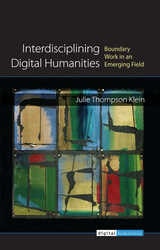
cover of Interdisciplining Digital Humanities: Boundary Work in an Emerging Field

Interdisciplining Digital Humanities

Boundary Work in an Emerging Field

Julie Thompson Klein

University of Michigan Press, 2015
Interdisciplining Digital Humanities sorts through definitions and patterns of practice over roughly sixty-five years of work, providing an overview for specialists and a general audience alike. It is the only book that tests the widespread claim that Digital Humanities is interdisciplinary. By examining the boundary work of constructing, expanding, and sustaining a new field, it depicts both the ways this new field is being situated within individual domains and dynamic cross-fertilizations that are fostering new relationships across academic boundaries. It also accounts for digital reinvigorations of “public humanities” in cultural heritage institutions of museums, archives, libraries, and community forums.
[more]
cover of Interface Frictions: How Digital Debility Reshapes Our Bodies

Interface Frictions

How Digital Debility Reshapes Our Bodies

Neta Alexander

Duke University Press, 2025

In Interface Frictions, Neta Alexander explores how ubiquitous design features in digital platforms reshape, condition, and break our bodies. She shows that while features such as refresh, playback speed, autoplay, and night mode are convenient, they can lead to “digital debility”—the slow and often invisible ways that technologies may harm human bodies. These features all assume an able-bodied user and at the same time push users to ignore their bodily limitations like the need for rest, nourishment, or movement. Building on the lived experiences of people with disabilities, Alexander explores alternative design solutions that arise from a multisensorial approach to communication. She demonstrates what can be gained from centering the nonaverage user, such as blind people who pioneered ways to control the playback speed of media, and Netflix subscribers with invisible disabilities like PTSD who successfully pushed the company to redesign its previews autoplay feature. Drawing on artworks, video games, and creative hacking by users with disabilities, Alexander challenges our understanding of media consumption, the attention economy, and the digital interface.
[more]