Results by title
204 books match the query 'Direction & Production' and 10 start with i
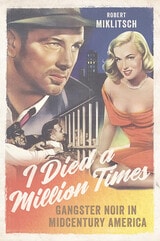
I Died a Million Times
Gangster Noir in Midcentury AmericaRobert Miklitsch
University of Illinois Press, 2020
With the Senate's organized crime hearings and the brighter-than-bright myth of the American Dream as a backdrop, Miklitsch examines the style and history, and the production and cultural politics, of classic pictures from The Big Heat and The Asphalt Jungle to lesser-known gems like 711 Ocean Drive and post-Fifties movies like Ocean’s Eleven. Miklitsch pays particular attention to trademark leitmotifs including the individual versus the collective, the family as a locus of dissension and rapport, the real-world roots of the heist picture, and the syndicate as an octopus with its tentacles deep into law enforcement, corporate America, and government. If the memes of gangster noir remain prototypically dark, the look of the films becomes lighter and flatter, reflecting the influence of television and the realization that, under the cover of respectability, crime had moved from the underworld into the mainstream of contemporary everyday life.
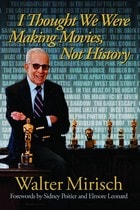
I Thought We Were Making Movies, Not History
Walter Mirisch
University of Wisconsin Press, 2008
This is a moving, star-filled account of one of Hollywood’s true golden ages as told by a man in the middle of it all. Walter Mirisch’s company has produced some of the most entertaining and enduring classics in film history, including West Side Story, Some Like It Hot, In the Heat of the Night, and The Magnificent Seven. His work has led to 87 Academy Award nominations and 28 Oscars. Richly illustrated with rare photographs from his personal collection, I Thought We Were Making Movies, Not History reveals Mirisch’s own experience of Hollywood and tells the stories of the stars—emerging and established—who appeared in his films, including Natalie Wood, John Wayne, Peter Sellers, Sidney Poitier, Steve McQueen, Marilyn Monroe, and many others.
With hard-won insight and gentle humor, Mirisch recounts how he witnessed the end of the studio system, the development of independent production, and the rise and fall of some of Hollywood’s most gifted (and notorious) cultural icons. A producer with a passion for creative excellence, he offers insights into his innovative filmmaking process, revealing a rare ingenuity for placating the demands of auteur directors, weak-kneed studio executives, and troubled screen sirens.
From his early start as a movie theater usher to the presentation of such masterpieces as The Apartment, Fiddler on the Roof, and The Great Escape, Mirisch tells the inspiring life story of his climb to the highest echelon of the American film industry. This book assures Mirisch’s legacy—as Elmore Leonard puts it—as “one of the good guys.”
Best Books for Special Interests, selected by the American Association of School Librarians, and Best Books for General Audiences, selected by the Public Library Association
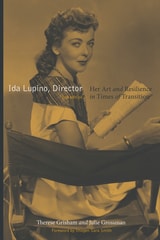
Ida Lupino, Director, 2nd edition
Her Art and Resilience in Times of TransitionTherese Grisham
Rutgers University Press, 2026
The updated edition of Ida Lupino, Director: Her Art and Resilience in Times of Transition, an in-depth exploration of Lupino’s film and television directing work, provides close readings of the films and TV episodes Lupino directed and accounts for the history of Lupino’s reception, continuing into the mid-2020s, in media and film scholarship. The book gives readers a fuller understanding of Lupino’s major contribution to the history of American cinema and media. The revisions update this book, the first on Lupino’s directing, to address recent scholarship on Lupino’s work and reinforce her abiding relevance for cinephiles and film scholars. It incorporates scholarly and popular culture references to Lupino in the last seven years. Updates include a foreword by writer and film critic Imogen Sara Smith, whose work in film scholarship and the public arena has drawn attention to Lupino and the importance of gender to film noir. Authors Therese Grisham and Julie Grossman have added a complete list of the TV episodes Lupino directed in the 1950s and '60s, as well as an updated epilogue.
This new edition addresses how our views of Lupino’s innovative cinema and her prodigious contributions to classic television have been taken up by others, proving that Lupino, whose reputation has waxed and waned since the middle of the twentieth century, is here to stay as a major figure in the history of American media.
Ida Lupino, Director
Her Art and Resilience in Times of TransitionGrisham, Therese
Rutgers University Press, 2017
The first in-depth study devoted to Lupino’s directorial work, this book makes a strong case for her as a trailblazing feminist auteur, a filmmaker with a clear signature style and an abiding interest in depicting the plights of postwar American women. Ida Lupino, Director not only examines her work as a cinematic auteur, but also offers a serious consideration of her diverse and long-ranging career, getting her start in Hollywood as an actress in her teens and twenties, directing her first films in her early thirties, and later working as an acclaimed director of television westerns, sitcoms, and suspense dramas. It also demonstrates how Lupino fused generic elements of film noir and the social problem film to create a distinctive directorial style that was both highly expressionistic and grittily realistic. Ida Lupino, Director thus shines a long-awaited spotlight on one of our greatest filmmakers.
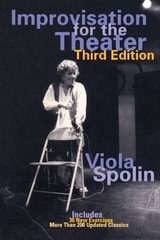
Improvisation for the Theater
A Handbook of Teaching and Directing TechniquesViola Spolin
Northwestern University Press, 1999
The thoroughly revised third edition of the bible of improvisational theater.
Viola Spolin's improvisational techniques changed the very nature and practice of modern theater. The first two editions of Improvisation for the Theater sold more than 100,000 copies and inspired actors, directors, teachers, and writers in theater, television, film. These techniques have also influenced the fields of education, mental health, social work, and psychology.
The revised edition features:
- 30 new exercises, including introductions (Slow/Fast/Normal; Extended Sound; Mirror Speech; Unrelated Conversation)
- More than 200 updated classic exercises
- new section of traditional theater games for warm-up use
- “Paul Sills' Sayings of Viola Spolin”
- New glossary of side-coaching phrases, with definitions of their meaning and value
- Alphabetical list of all games and exercises
Improvisation for the Theater
A Handbook of Teaching and Directing TechniquesViola Spolin
Northwestern University Press, 1983
In Force, Drive, Desire, Rudolf Bernet develops a philosophical foundation of psychoanalysis focusing on human drives. Rather than simply drawing up a list of Freud’s borrowings from Schopenhauer and Nietzsche, or Lacan’s from Hegel and Sartre, Bernet orchestrates a dialogue between philosophy and psychoanalysis that goes far beyond what these eminent psychoanalysts knew about philosophy. By relating the writings of Freud, Lacan, and other psychoanalysts to those of Aristotle, Leibniz, Schopenhauer, Nietzsche, Husserl, Heidegger, and, more tacitly, Bergson and Deleuze, Bernet brings to light how psychoanalysis both prolongs and breaks with the history of Western metaphysics and philosophy of nature.
Rereading the long history of metaphysics (or at least a few of its key moments) in light of psychoanalytic inquiries into the nature and function of drive and desire also allows for a rewriting of the history of philosophy. Specifically, it allows Bernet to bring to light a different history of metaphysics, one centered less on Aristotelian substance (ousia) and more on the concept of dunamis—a power or potentiality for a realization toward which it strives with all its might. Relating human drives to metaphysical forces also bears fruit for a renewed philosophy of life and subjectivity.
In the Name of National Security
Hitchcock, Homophobia, and the Political Construction of Gender in Postwar AmericaRobert J. Corber
Duke University Press, 1993
As Corber shows, throughout the 1950s a cast of mind known as the Cold War consensus prevailed in the United States. Promoted by Cold War liberals--that is, liberals who wanted to perserve the legacies of the New Deal but also wished to separate liberalism from a Communist-dominated cultural politics--this consensus was grounded in the perceived threat that Communists, lesbians, and homosexuals posed to national security. Through an analysis of the films of Alfred Hitchcock, combined with new research on the historical context in which these films were produced, Corber shows how Cold War liberals tried to contain the increasing heterogeneity of American society by linking questions of gender and sexual identity directly to issues of national security, a strategic move that the films of Hitchcock both legitimated and at times undermined. Drawing on psychoanalytic and Marxist theory, Corber looks at such films as Rear Window, Strangers on a Train, and Psycho to show how Hitchcock manipulated viewers' attachments and identifications to foster and reinforce the relationship between homophobia and national security issues.
A revisionary account of Hitchcock's major works, In the Name of National Security is also of great interest for what it reveals about the construction of political "reality" in American history.

Inclusive Musical Theatre
Tools and Curriculum for Rehearsal and PerformanceJamie Cacciola-Price
Intellect Books, 2025
A comprehensive guide to creating inclusive and accessible musical theater at the high school level.
This book is a comprehensive guide that presents a research-backed curriculum and strategies for creating an inclusive and accessible musical theater rehearsal and performance process for high schoolers. It draws on the author's doctoral research and extensive teaching experience to provide practical tools, assessments, and process modifications to support students of all learning needs and backgrounds.
The book begins by exploring the historical context and legal frameworks surrounding special education in public schools, as well as the intersection of drama education and disability studies. It then delves into an in-depth analysis of traditional actor training methods, highlighting their ableist origins and the need for adaptations to foster radical inclusion.
The core of the text outlines a twenty-nine-week rehearsal and performance curriculum, broken into three distinct phases, that is designed to scaffold skill development, promote ensemble collaboration, and empower diverse learners. Accompanying the unit plans are detailed assignments, assessments, and grading rubrics that align with national and state arts standards. Additionally, the author provides a wealth of supporting documents, such as student contracts, production resources, and a sample warm-up guide.
By championing inclusive practices rooted in the principles of Universal Design for Learning and culturally responsive pedagogy, this book equips drama educators with the tools to create transformative theatrical experiences for all students.
Interchangeable Parts
Acting, Industry, and Technology in US TheaterVictor Holtcamp
University of Michigan Press, 2019
Victor Holtcamp explores the invocations of scientific and industrial rhetoric and philosophy in the founding of the first schools of acting, and echoes of that rhetoric in playwriting, production, and the cinema, as Hollywood in particular embraced this industrially infected model of acting. In their divergent approaches to performance, the major US acting teachers (Lee Strasberg, Stella Adler, and Sanford Meisner) demonstrated strong rhetorical affinities for the language of industry, illustrating the pervasive presence of these industrial roots. The book narrates the story of how actors learned to learn to act, and what that process, for both stage and screen, owed to the interchangeable parts and mass production revolutions.
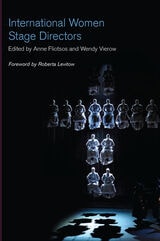
International Women Stage Directors
Edited by Anne Fliotsos and Wendy Vierow
University of Illinois Press, 2013
A fascinating study of women in the arts, International Women Stage Directors is a comprehensive examination of women directors in twenty-four diverse countries. Organized by country, chapters provide historical context and emphasize how social, political, religious, and economic factors have impacted women's rise in the theatre, particularly in terms of gender equity. Contributors tell the stories of their home country's pioneering women directors and profile the most influential women directors practicing today, examining their career paths, artistry, and major achievements.
Contributors are Ileana Azor, Dalia Basiouny, Kate Bredeson, Mirenka Cechová, Marié-Heleen Coetzee, May Farnsworth, Anne Fliotsos, Laura Ginters, Iris Hsin-chun Tuan, Maria Ignatieva, Adam J. Ledger, Roberta Levitow, Jiangyue Li, Lliane Loots, Diana Manole, Karin Maresh, Gordon McCall, Erin B. Mee, Ursula Neuerburg-Denzer, Claire Pamment, Magda Romanska, Avra Sidiropoulou, Margaretta Swigert-Gacheru, Alessandra Vannucci, Wendy Vierow, Vessela S. Warner, and Brenda Werth.