230 books match the query 'Doctrines' and 12 start with i
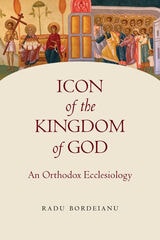
cover of Icon of the Kingdom of God: An Orthodox Ecclesiology

Icon of the Kingdom of God

An Orthodox Ecclesiology

Radu Bordeianu

Catholic University of America Press, 2023
What is the Church? Some would answer this question by studying the Scriptures, the history of the Church, and contemporary theologians, thus addressing the theological nature of the Church. Others would answer based on statistics, interviews, and personal observation, thus focusing on the experience of the Church. These theological and experiential perspectives are in tension, or at times even opposed. Whereas the first might speak about the local church as the diocese gathered in the Liturgy presided over by its bishop, the latter would describe the local church as the parish community celebrating the Liturgy together with the parish priest, never experiencing a sole liturgy that gathers an entire diocese around its bishop. Whereas a theologian might abstractly describe the Church as a reflection of the Trinity, a regular church-member might concretely experience the Church as a community that manifests the Kingdom of God in its outreach ministries. Radu Bordeianu attempts to bring these two perspectives together, starting from the concrete experience of the Church, engaging this experience with the theological tradition of the Church, extracting ecclesiological principles from this combined approach, and then highlighting concrete situations that reflect those standards or proposing correctives, when necessary. Without pretending to be a complete Orthodox ecclesiology, Icon of the Kingdom of God addresses the most important topics related to the Church. It progresses according to one’s experience of the Church from baptism, to the family, parish, Liturgy, and priesthood, followed by analyses of synodality and nationality. Arguing that the Church is an icon of the Kingdom of God, this volume brings together the past theological heritage and the present experience of the Church while having three methodological characteristics: experiential, Kingdom-centered, and ecumenical.
[more]
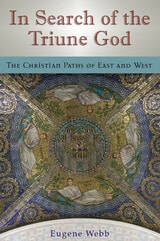
cover of In Search of the Triune God: The Christian Paths of East and West

In Search of the Triune God

The Christian Paths of East and West

Eugene Webb

University of Missouri Press, 2013

Under the broad umbrella of the Christian religion, there exists a great divide between two fundamentally different ways of thinking about key aspects of the Christian faith. Eugene Webb explores the sources of that divide, looking at how the Eastern and Western Christian worlds drifted apart due both to the different ways they interpreted their symbols and to the different roles political power played in their histories. Previous studies have focused on historical events or on the history of theological ideas. In Search of the Triune God delves deeper by exploring how the Christian East and the Christian West have conceived the relation between symbol and experience.

Webb demonstrates that whereas for Western Christianity discussion of the doctrine of the Trinity has tended toward speculation about the internal structure of the Godhead, in the Eastern tradition the symbolism of the Triune God has always been closely connected to religious experience. In their approaches to theology, Western Christianity has tended toward a speculative theology, and Eastern Christianity toward a mystical theology.

This difference of focus has led to a large range of fundamental differences in many areas not only of theology but also of religious life. Webb traces the history of the pertinent symbols (God as Father, Son of God, Spirit of God, Messiah, King, etc.) from the Hebrew Bible and New Testament through patristic thinkers and the councils that eventually defined orthodoxy. In addition, he shows how the symbols, interpreted through the different cultural lenses of the East and the West, gradually took on meanings that became the material of very different worldviews, especially as the respective histories of the Eastern and Western Christian worlds led them into different kinds of entanglement with ambition and power.

Through this incisive exploration, Webb offers a dramatic and provocative new picture of the history of Christianity.
[more]
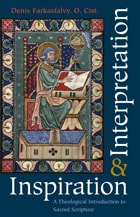
cover of Inspiration and Interpretation: A Theological Introduction to Sacred Scripture

Inspiration and Interpretation

A Theological Introduction to Sacred Scripture

Denis Farkasfalvy

Catholic University of America Press, 2010
Inspiration and Interpretation provides readers with a much needed general theological introduction to the study of Sacred Scripture.
[more]
cover of Interpretations: Reading the Present in Light of the Past

Interpretations

Reading the Present in Light of the Past

Jude P. Dougherty

Catholic University of America Press, 2018

Interpretations is a collection of essays produced by the distinguished philosopher Jude Dougherty over the past decade, written to inform or to provide commentary on contemporary issues. In probing the past to interpret the present they draw upon a perspective that one may call classical, the perspective of Plato, Aristotle, the Stoics, and their followers across the ages, notably Thomas Aquinas, and his modern disciples, such as Etienne Gilson and Jacques Maritain.

The first part of Interpretations is an attempt to understand modernity’s break with the past, the repudiation of Scholasticism and the classical tradition. Dougherty does this by referencing the dominant preoccupations of the Middle Ages, of the Renaissance, of the Reformation, of eighteenth-century British empiricism, and of nineteenth-century German philosophy, drawing upon the readings of Remi Brague, Pierre Manent, and others. What unifies these reflections is the role of religion (both in Christianity and Islam) in society and its impact on the culture, as well as looking at what is called “modernity” where this role becomes reduced or absent.

The second part of the volume examines selected addresses by Pope Emeritus Benedict XVI from a philosophical point of view. Benedict, like others through the course of history, has recognized the role of religion in producing cultural unity. These essays are an appreciation primarily of the subtlety of the former pontiff’s thought.

The third part of Interpretations collects essays and addresses on the practice and nature of philosophy that Dean Dougherty has given throughout his career at The Catholic University of America, and reflects the trajectory of his career and the development of his thought.
[more]
cover of Intersexual Persons and Theology of the Body: A Limit Case for John Paul II's Theological Anthropology

Intersexual Persons and Theology of the Body

A Limit Case for John Paul II's Theological Anthropology

Beth Zagrobelny Lofgren

Catholic University of America Press, 2026
Intersexual Persons and Theology of the Body offers an interpretation of John Paul II’s theology of the body that demonstrates how it can encompass intersexual bodies. Intersexuality has been used to challenge binary anthropologies, such as the late pope’s. Beth Zagrobelny Lofgren theorizes that John Paul II’s anthropology answers the “frequency dilemma,” by learning from male and female bodies while respecting the humanity of people with ambiguous bodies. To argue this, Intersexual Persons and Theology of the Body offers biological, psychological, and theological literature on intersexuality (focusing on the anthropologies of Susannah Cornwall and Megan DeFranza), followed by the late pope’s anthropology (focusing on original solitude, the spousal meaning of the body, and the semiotic meanings of the body). This volume demonstrate that intersexual bodies have a spousal meaning, although obscured, and use original solitude to show that John Paul II attributes to the human body meaning not dependent on sexual difference: the first man learns from his solitary body that he is relational. This relationality is fundamental to the imago Dei and undergirds the imago Dei found in communion. Intersexual bodies share human nature and thus the bodily call to relationship. Finally, Lofgren argues that John Paul II’s eschatology involves a transformation of humankind that fulfills the semiotic value of the body. The sign gives way to the mystery: the person fully realized as self-gift. Because the mystery does not depend on the sign, this vision includes intersexual bodies. This discussion leads to a brief consideration of celibacy and marriage for persons with intersexual conditions. This is currently the only application of John Paul II’s theology of the body to these complex situations.
[more]
cover of Into God, student edition: Itinerarium Mentis in Deum of Saint Bonaventure

Into God, student edition

Itinerarium Mentis in Deum of Saint Bonaventure

Regis J. Armstrong

Catholic University of America Press, 0
[more]
cover of Into God: An Annotated Translation of Saint Bonaventure's Itinerarium Mentis in Deum

Into God

An Annotated Translation of Saint Bonaventure's Itinerarium Mentis in Deum

Cap. Regis J. Armstrong,OFM

Catholic University of America Press, 2020

An annotated translation of Bonaventure’s Itinerarium mentis in Deum presenting both the Latin text side-by-side with a new English translation which attempts to avoid the use of Latin cognates while remaining critically faithful to Bonaventure’s text. Using endnotes to open the text, Regis Armstrong opens each chapter from the perspective of historical theology referring the reader to authors prior to Bonaventure, e.g. Augustine, the Victorines, Philip the Chancellor, Avicenna, as well as first-and-second-generation Franciscan authors. While maintaining Bonaventure’s architectonic approach, Armstrong studies each chapter as Bonaventure does by focusing on its unique character, e.g. by means of cosmology, epistemology, biblical theology, mystical theology. In a same way, the translator attempts to explain his translation of certain cognates into Anglo-Saxon English by citing contemporary linguistic tools, e.g., Brepolis Latin Texts.
[more]
cover of Intro Summa Theologiae Thomas Aquinas: John Of St. Thomas

Intro Summa Theologiae Thomas Aquinas

John Of St. Thomas

John Of St. Thomas

St. Augustine's Press, 2004
[more]
cover of Introduction to Moral Theology (Catholic Moral Thought, Volume 1)

Introduction to Moral Theology (Catholic Moral Thought, Volume 1)

Romanus Cessario, O.P.

Catholic University of America Press, 2001
The present volume, the first in the new Catholic Moral Thought series, responds to the need for a new introduction to the basic and central elements of Catholic moral theology written in the light of Veritatis splendor.
[more]
cover of Introduction to Moral Theology, revised edition

Introduction to Moral Theology, revised edition

Romanus Cessario

Catholic University of America Press, 2013
Originally published in 2001, Introduction to Moral Theology responded to the need for a new introduction to the basic and central elements of Catholic moral theology written in the light of Veritatis splendor. Since then, it has become a standard text for students and a reputable resource on such topics as moral theology and the good of the human person created in God's image; natural law; principles of human action; determination of the moral good through objects, ends, and circumstances; and the virtues, gifts of the Holy Spirit, and the Beatitudes.
[more]
cover of Introduction to the Mystery of the Church

Introduction to the Mystery of the Church

Benoit-Dominique de La Soujeole, OP

Catholic University of America Press, 2014
An ecclesiological survey presenting a doctrinal synthesis of the church.
[more]
cover of Islam: Origin and Belief

Islam

Origin and Belief

By Emory C. Bogle

University of Texas Press, 1998

Islam is the fastest-growing religion in the world today. An understanding of its beliefs and practices has become essential knowledge not only for religious and political leaders but also for ordinary citizens who increasingly interact with Muslims as neighbors, coworkers, and schoolmates.

This book is designed to offer the general public a concise overview of the origins, basic beliefs, and common practices of Islam, as well as the reasons for its dramatic resurgence in recent times. Emory Bogle details the life mission of the prophet Muhammad and describes the spread of Islam after his death. He accounts for the rise and contemporary influence of Shi'i Islam, a topic of particular interest to Western readers. Bogle also explains the basic beliefs ("The Five Pillars") of Islam, as well as the role played by the Qur'an (Islam's scriptures), the hadith (the words and behavior of Muhammad), and the shari'a (Islamic law).

[more]