Results by title
347 books match the query 'Early works to 1800' and 10 start with i
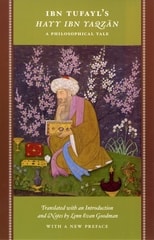
Ibn Tufayl's Hayy Ibn Yaqzan
A Philosophical TaleIbn Tufayl
University of Chicago Press, 2009
The Arabic philosophical fable Hayy Ibn Yaqzan is a classic of medieval Islamic philosophy. Ibn Tufayl (d. 1185), the Andalusian philosopher, tells of a child raised by a doe on an equatorial island who grows up to discover the truth about the world and his own place in it, unaided—but also unimpeded—by society, language, or tradition. Hayy’s discoveries about God, nature, and man challenge the values of the culture in which the tale was written as well as those of every contemporary society.
Goodman’s commentary places Hayy Ibn Yaqzan in its historical and philosophical context. The volume features a new preface and index, and an updated bibliography.
“One of the most remarkable books of the Middle Ages.”—Times Literary Supplement
“An enchanting and puzzling story. . . . The book transcends all historical and cultural environments to settle upon the questions of human life that perpetually intrigue men.”—Middle East Journal
“Goodman has done a service to the modern English reader by providing a readable translation of a philosophically significant allegory.”—Philosophy East and West
“Add[s] bright new pieces to an Islamic mosaic whose general shape is already known.”—American Historical Review
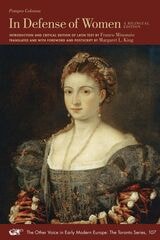
In Defense of Women
A Bilingual EditionPompeo Colonna
Iter Press, 2024
Pompeo Colonna’s In Defense of Women (1530), presented in this volume in Latin and English translation, is one of several important defenses of women composed in the fifteenth and sixteenth centuries by male advocates of women’s moral and intellectual worth. Known as a cardinal and a warrior, but also as an active participant in sixteenth-century Italian literary circles, Colonna addresses the work to his cousin Vittoria Colonna, the most renowned Italian woman poet of the era, who, he writes, had urged him to undertake it. His Defense not only refutes arguments of women’s inferiority and incapacity but, remarkably, asserts their ability to hold political office and govern. It contains original Latin text and a critical introduction by Franco Minonzio. It also features a foreword by Margaret L. King, as well as a postscript by King, tracing the separate male-authored and female-authored Renaissance defenses of women.
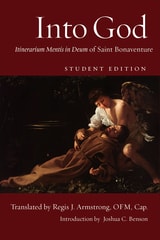
Into God, student edition
Itinerarium Mentis in Deum of Saint BonaventureRegis J. Armstrong
Catholic University of America Press, 0
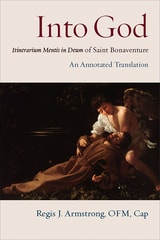
Into God
An Annotated Translation of Saint Bonaventure's Itinerarium Mentis in DeumCap. Regis J. Armstrong,OFM
Catholic University of America Press, 2020
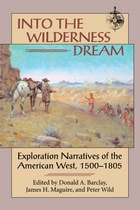
Into The Wilderness Dream
Donald A Barclay
University of Utah Press, 1994
Not just an exploration of our early Western European roots, these rich chronicles read as literature, first-person narratives of the greatest exploration adventures in historic times.
From the Platonic vision of Atlantis to Arthur’s Avalon, pre-Columbus Europeans imagined fabulous lands to the west—and after 1492, initial reports of a new world filled with golden El Dorados, warrior queens, and Fountains of Youth merely provided confirmation.
Although these dreams were soon tempered by reality, explorers continued to set off with expectation that shaped what they say, how they saw, and how they reacted. This complex of attitudes continues to affect the way we view our world, and these accounts provide an excellent source for insight into the metaphorical systems that have permeated European and American writing about the West since the Sixteenth century.
Into the Wilderness Dreams draws from the best of three dozen accounts by the Spanish, French, English, and American explorers who came before Lewis and Clark, and explores the roots of present Western Euro-American culture.

Intro Summa Theologiae Thomas Aquinas
John Of St. ThomasJohn Of St. Thomas
St. Augustine's Press, 2004
Islam Translated
Literature, Conversion, and the Arabic Cosmopolis of South and Southeast AsiaRonit Ricci
University of Chicago Press, 2011
In Islam Translated, Ronit Ricci uses the Book of One Thousand Questions—from its Arabic original to its adaptations into the Javanese, Malay, and Tamil languages between the sixteenth and twentieth centuries—as a means to consider connections that linked Muslims across divides of distance and culture. Examining the circulation of this Islamic text and its varied literary forms, Ricci explores how processes of literary translation and religious conversion were historically interconnected forms of globalization, mutually dependent, and creatively reformulated within societies making the transition to Islam.
Isocrates I
Translated by David C. Mirhady and Yun Lee Too
University of Texas Press, 2000
This is the fourth volume in the Oratory of Classical Greece series. Planned for publication over several years, the series will present all of the surviving speeches from the late fifth and fourth centuries B.C. in new translations prepared by classical scholars who are at the forefront of the discipline. These translations are especially designed for the needs and interests of today's undergraduates, Greekless scholars in other disciplines, and the general public.
Classical oratory is an invaluable resource for the study of ancient Greek life and culture. The speeches offer evidence on Greek moral views, social and economic conditions, political and social ideology, and other aspects of Athenian culture that have been largely ignored: women and family life, slavery, and religion, to name just a few.
This volume contains works from the early, middle, and late career of the Athenian rhetorician Isocrates (436-338). Among the translated works are his legal speeches, pedagogical essays, and his lengthy autobiographical defense, Antidosis. In them, he seeks to distinguish himself and his work, which he characterizes as "philosophy," from that of the sophists and other intellectuals such as Plato. Isocrates' identity as a teacher was an important mode of political activity, through which he sought to instruct his students, foreign rulers, and his fellow Athenians. He was a controversial figure who championed a role for the written word in fourth-century politics and thought.
Isocrates II
Translated by Terry L. Papillon
University of Texas Press, 2004
This is the seventh volume in the Oratory of Classical Greece. This series presents all of the surviving speeches from the late fifth and fourth centuries BC in new translations prepared by classical scholars who are at the forefront of the discipline. These translations are especially designed for the needs and interests of today's undergraduates, Greekless scholars in other disciplines, and the general public.
Classical oratory is an invaluable resource for the study of ancient Greek life and culture. The speeches offer evidence on Greek moral views, social and economic conditions, political and social ideology, law and legal procedure, and other aspects of Athenian culture that have been largely ignored: women and family life, slavery, and religion, to name just a few. The Athenian rhetorician Isocrates (436-338) was one of the leading intellectual figures of the fourth century. This volume contains his orations 4, 5, 6, 8, 12, and 14, as well as all of his letters. These are Isocrates' political works. Three of the discourses—Panathenaicus, On the Peace, and the most famous, Panegyricus—focus on Athens, Isocrates' home. Archidamus is written in the voice of the Spartan prince to his assembly, and Plataicus is in the voice of a citizen of Plataea asking Athens for aid, while in To Philip, Isocrates himself calls on Philip of Macedon to lead a unified Greece against Persia.
Italian Art 1500–1600
Sources and DocumentsRobert Klein and Henri Zerner
Northwestern University Press, 1966