Results by title
679 books match the query 'Ecology' and 21 start with i
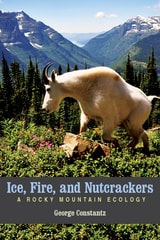
Ice, Fire, and Nutcrackers
A Rocky Mountain EcologyGeorge Constantz
University of Utah Press, 2014
These provocative accounts of birds, insects, rodents, predators, trees, and flowers are sure to stir the reader’s curiosity. Who wouldn’t be intrigued by a rattlesnake’s ability to hunt in total darkness by detecting the infrared radiation emitted by a mouse? Or how white-tailed ptarmigan thrive in their high, treeless alpine environments -- even through the winter? The narratives, often brought home with a counterintuitive twist, invite readers to make new connections and broaden perspectives of a favorite outdoor place.

Ignoring Nature No More
The Case for Compassionate ConservationEdited by Marc Bekoff
University of Chicago Press, 2013
This collection of diverse essays is the first book devoted to compassionate conservation, a growing global movement that translates discussions and concerns about the well-being of individuals, species, populations, and ecosystems into action. Written by leading scholars in a host of disciplines, including biology, psychology, sociology, social work, economics, political science, and philosophy, as well as by locals doing fieldwork in their own countries, the essays combine the most creative aspects of the current science of animal conservation with analyses of important psychological and sociocultural issues that encourage or vex stewardship. The contributors tackle topics including the costs and benefits of conservation, behavioral biology, media coverage of animal welfare, conservation psychology, and scales of conservation from the local to the global. Taken together, the essays make a strong case for why we must replace our habits of domination and exploitation with compassionate conservation if we are to make the world a better place for nonhuman and human animals alike.
Imperial Gullies
Soil Erosion and Conservation in LesothoKate B. Showers
Ohio University Press, 2005
Once the grain basket for South Africa, much of Lesotho has become a scarred and degraded landscape. The nation’s spectacular erosion and gullying have concerned environmentalists and conservationists for more than half a century. In Imperial Gullies: Soil Erosion and Conservation in Lesotho, Kate B. Showers documents the truth behind this devastation.
Showers reconstructs the history of the landscape, beginning with a history of the soil. She concludes that Lesotho’s distinctive erosion chasms, called dongas—often cited as an example of destructive land-use practices by African farmers—actually were caused by colonial and postcolonial interventions. The residents of Lesotho emerge as victims of a failed technology. Their efforts to mitigate or resist implementation of destructive soil conservation engineering works were thwarted, and they were blamed for the consequences of policies promoted by international soil conservationists since the 1930s.
Imperial Gullies calls for an observational, experimental, and, most important, a fully consultative and participatory approach to address Lesotho’s serious contemporary problems of soil erosion. The first book to bring to center stage the historical practice of colonial soil science—and a cautionary tale of western science in unfamiliar terrain—it will interest a broad, interdisciplinary audience in African and environmental studies, social sciences, and history.
In Order to Live Untroubled
Inuit of the Central Artic 1550 to 1940Renee Fossett
University of Manitoba Press, 2001
In Pursuit of Giants
One Man's Global Search for the Last of the Great FishMatt Rigney
University Press of New England, 2017
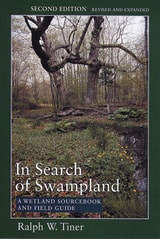
In Search of Swampland
A Wetland Sourcebook and Field GuideRalph W. Tiner
Rutgers University Press, 2005
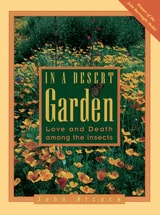
In a Desert Garden
Love and Death among the InsectsJohn Alcock
University of Arizona Press, 1999
As Alcock studies the plants in his yard, he shares thoughts on planting, weeding, and pruning that any gardener will appreciate. And when commenting on the mating rituals of spiders and beetles or marveling at the camouflage of grasshoppers and caterpillars, he uses humor and insight to detail the lives of the insects that live in his patch of desert. Celebrating the virtues of even aphids and mosquitoes, Alcock draws the reader into the intricacies of desert life to reveal the complex interactions found in this unique ecosystem. In a Desert Garden combines meticulous science with contemplations of nature and reminds us that a world of wonder lies just outside our own doors.

In the Rainforest
Report from a Strange, Beautiful, Imperiled WorldCatherine Caufield
University of Chicago Press, 1986
"I recommend In the Rainforest as scientific journalism at its best, and [Caufield's] book as the one to read to become informed about the tropical crisis. Caufield traveled the world, went to the difficult places, sometimes beautiful and often dispiriting, mastered the important ideas, and talked to an impressive number of people on all sides of the issues. . . . There are villains in abundance: corrupt government agents who aid in the destruction of native tribes, greedy caballero landowners, and even the governmental planners who with the best of intentions rush heedlessly toward the environmental degradation of their own countries."—E. O. Wilson, Science
"The whole book is filled with amazing facts. . . . Moving and informative."—Ellen W. Chu, New York Times Book Review

Indigenous Knowledge and the Environment in Africa and North America
David M. Gordon
Ohio University Press, 2012
Indigenous knowledge has become a catchphrase in global struggles for environmental justice. Yet indigenous knowledges are often viewed, incorrectly, as pure and primordial cultural artifacts. This collection draws from African and North American cases to argue that the forms of knowledge identified as “indigenous” resulted from strategies to control environmental resources during and after colonial encounters.
At times indigenous knowledges represented a “middle ground” of intellectual exchanges between colonizers and colonized; elsewhere, indigenous knowledges were defined through conflict and struggle. The authors demonstrate how people claimed that their hybrid forms of knowledge were communal, religious, and traditional, as opposed to individualist, secular, and scientific, which they associated with European colonialism.
Indigenous Knowledge and the Environment offers comparative and transnational insights that disturb romantic views of unchanging indigenous knowledges in harmony with the environment. The result is a book that informs and complicates how indigenous knowledges can and should relate to environmental policy-making.
Contributors: David Bernstein, Derick Fay, Andrew H. Fisher, Karen Flint, David M. Gordon, Paul Kelton, Shepard Krech III, Joshua Reid, Parker Shipton, Lance van Sittert, Jacob Tropp, James L. A. Webb, Jr., Marsha Weisiger
Indigenous Political Ecology
Clint Carroll
University of Minnesota Press, 2027
Advancing Indigenous and allied voices to address urgent environmental questions at the crossroads of Indigenous and settler state sovereignty
Authored by a group of majority Indigenous scholars from across Canada and the United States, this collection enacts a radical intervention into colonial impulses in traditional political ecology scholarship and its examination of state power in environmental conflicts. Centering the human–nature relationality of Indigenous cosmologies, this book confronts the terms by which land and water degradation, climate change, and other disastrous effects of extractive capitalism are understood.
Drawing on family histories, storytelling, autoethnography, and community-grounded research, Indigenous Political Ecology showcases a deeply self-reflexive examination of intergenerational struggles over land rights and attempts to resist settler colonial dynamics, including struggles over knowledge itself. Contributors recount the fraught history of Bears Ears National Monument, decades of Seminole-led efforts to restore the Everglades ecosystem, the creation of land education programs advancing Cherokee sovereignty, the impact of mining development on Mushkegowuk homelands in the Ring of Fire, and many other ongoing stories in which the “ecological” and “political” are being redefined.
Through its collectively led efforts and transdisciplinary approach, Indigenous Political Ecology models a new type of environmental scholarship that considers its modes of production integral to its contributors’ broader ethical and political commitments. Rooted in Indigenous sovereignty and self-determination, this groundbreaking volume sets forth a powerful blueprint for a more just and sustainable path through the field of political ecology.
Contributors: Nicholas A. Brown, Jessica R. Catellino, Andrew Curley, Michelle Daigle, Jean Dennison, Ashley Nichole Lewis, Beth Rose Middleton Manning, Teresa Montoya, Dana E. Powell, Kyle Powys Whyte, Jen Rose Smith, Lisa Wilson.
Retail e-book files for this title are screen-reader friendly with images accompanied by short alt text and/or extended descriptions.
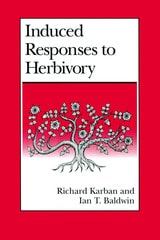
Induced Responses to Herbivory
Richard Karban and Ian T. Baldwin
University of Chicago Press, 1997
Over the past fifteen years, research on these induced responses to herbivory has flourished, and here Richard Karban and Ian T. Baldwin present the first comprehensive evaluation and synthesis of this rapidly developing field. They provide state-of-the-discipline reviews and highlight areas where new research will be most productive. Their comprehensive overview will be welcomed by a wide variety of theoretical and applied researchers in ecology, evolutionary biology, plant biology, entomology, and agriculture.
Infinite Nature
R. Bruce Hull
University of Chicago Press, 2006
In this impassioned and judicious work, R. Bruce Hull argues that environmentalism will never achieve its goals unless it sheds its fundamentalist logic. The movement is too bound up in polarizing ideologies that pit humans against nature, conservation against development, and government regulation against economic growth. Only when we acknowledge the infinite perspectives on how people should relate to nature will we forge solutions that are respectful to both humanity and the environment.
Infinite Nature explores some of these myriad perspectives, from the scientific understandings proffered by anthropology, evolution, and ecology, to the promise of environmental responsibility offered by technology and economics, to the designs of nature envisioned in philosophy, law, and religion. Along the way, Hull maintains that the idea of nature is social: in order to reach the common ground where sustainable and thriving communities are possible, we must accept that many natures can and do exist.
Incisive, heartfelt, and brimming with practical solutions, Infinite Nature brings a much-needed and refreshing voice to the table of environmental reform.
Inland Fishes of the Greater Southwest
Chronicle of a Vanishing BiotaW. L. Minckley and Paul C. Marsh
University of Arizona Press, 2009
Many native fish species are unique to the Southwest. They possess interesting and unusual adaptations to the challenges of the region, able to survive silt-laden floods as well as extreme water temperatures and highly fluctuating water flows ranging from very low levels to flash floods. However, in spite of being well-adapted, many of the fish described here are threatened or endangered, often due to the acts of humans who have altered the natural habitat. For that reason, Inland Fishes of the Greater Southwest presents a vast amount of information about the ecological relationships between the fishes it describes and their environments, paying particular attention to the ways in which human interactions have modified aquatic ecosystems—and to how humans might work to ensure the survival of rapidly disappearing native species.
Interaction and Coevolution
John N. Thompson
University of Chicago Press, 1982
Interwoven
Junipers and the Web of BeingKristen Rogers-Iversen
University of Utah Press, 2017
Throughout prehistory and history, junipers have influenced ecosystems, cultures, mythologies, economics, politics, and environmental controversies. In terms of their effects on human lives the juniper may be the most significant tree in the interior West. Interwoven explores these interconnecting aspects of junipers. Ghost beads, biotic communities, gin, tree masticators, Puebloan diapers, charcoal, folklore, historic explorers, spiral grain, tree life cycles, spirituality, packrat middens, climate changes, wildfire, ranching, wilderness, and land management policies are among the many different threads the book follows. These and other topics shed light on a fascinating organism, but the book is more than a compilation of facts. At once a scientific, experiential, historical, and metaphorical walk among junipers and their interrelationships, Interwoven may change readers’ experiences with these trees and the natural world.
Finalist for the Utah State Historical Society Best Book Award.
Finalist for the 2019 ASLE Book Award for excellence in ecocriticism and environmental creative writing.
Named a “notable book” by the prize committee of the 2018 Sigurd F. Olson Nature Writing Award.
Invasive Exotic Species in the Sonoran Region
Edited by Barbara Tellman
University of Arizona Press, 2002
The book brings together contributors from academia, government, and nonprofit organizations, including such experts as Gary Paul Nabhan, Richard Mack, and Alberto Búrquez-Montijo. They review historic and even prehistoric origins of non-native species—not only exotic plants, amphibians, and mammals but also insects, fish, and birds. They then examine significant problems in each major subregion and ecosystem and discuss control efforts. The volume contains the first compiled list of more than 500 naturalized exotic species in the Sonoran region. Invasive species issues are rapidly emerging as major environmental concerns both locally and worldwide. This book assists professionals—ecologists, conservation biologists, and policy makers—involved in invasive species control in the Southwest and will be a rich resource for all concerned with protecting native species and their habitats.
Invasive Species in a Globalized World
Ecological, Social, and Legal Perspectives on PolicyEdited by Reuben P. Keller, Marc W. Cadotte, and Glenn Sandiford
University of Chicago Press, 2014
Yet even though ecological research has led to public conversation and policy recommendations, those recommendations have frequently been ignored, and the efforts to counter invasive species have been largely unsuccessful. Recognizing the need to engage experts across the life, social, and legal sciences as well as the humanities, the editors of this volume have drawn together a wide variety of ecologists, historians, economists, legal scholars, policy makers, and communications scholars, to facilitate a dialogue among these disciplines and understand fully the invasive species phenomenon. Aided by case studies of well-known invasives such as the cane toad of Australia and the emerald ash borer, Asian carp, and sea lampreys that threaten US ecosystems, Invasive Species in a Globalized World offers strategies for developing and implementing anti-invasive policies designed to stop their introduction and spread, and to limit their effects.
Inventing Global Ecology
Tracking the Biodiversity Ideal in India, 1947–1997Michael L. Lewis
Ohio University Press, 2004
Blue jeans, MTV, Coca-Cola, and… ecology? We don't often think of conservation sciences as a U.S. export, but in the second half of the twentieth century an astounding array of scientists and ideas flowed out from the United States into the world, preaching the gospel of conservation-oriented ecology.
Inventing Global Ecology grapples with how we should understand the development of global ecology in the twentieth century—a science that is held responsible for, literally, saving the world. Is the spread of ecology throughout the globe a subtle form of cultural imperialism, as some claim? Or is it a manifestation of an increasingly globalized world, where ideas, people, and things move about with greater freedom than ever before?
Using India as the case study, Professor Michael Lewis considers the development of conservation policies and conservation sciences since the end of World War II and the role of United States scientists, ideas, and institutions in this process. Was India subject to a subtle form of Americanization, or did Indian ecologists develop their own agenda, their own science, and their own way of understanding (and saving) the natural world? Does nationality even matter when doing ecology?
This readable narrative will carry you through the first fifty years of independent India, from the meadows of the Himalayan Mountains to the rainforests of southern India, from Gandhi and Nehru to Project Tiger. Of equal interest to the general reader, to scientists, and to scholars of history and globalization, Inventing Global Ecology combines ethnographic fieldwork and oral history conducted in India and the United States, as well as traditional archival research.
Island Bats
Evolution, Ecology, and ConservationEdited by Theodore H. Fleming and Paul A. Racey
University of Chicago Press, 2010
The second largest order of mammals, Chiroptera comprises more than one thousand species of bats. Because of their mobility, bats are often the only native mammals on isolated oceanic islands, where more than half of all bat species live. These island bats represent an evolutionarily distinctive and ecologically significant part of the earth’s biological diversity.
Island Bats is the first book to focus solely on the evolution, ecology, and conservation of bats living in the world’s island ecosystems. Among other topics, the contributors to this volume examine how the earth’s history has affected the evolution of island bats, investigate how bat populations are affected by volcanic eruptions and hurricanes, and explore the threat of extinction from human disturbance. Geographically diverse, the volume includes studies of the islands of the Caribbean, the Western Indian Ocean, Micronesia, Indonesia, the Philippines, and New Zealand.
With its wealth of information from long-term studies, Island Bats provides timely and valuable information about how this fauna has evolved and how it can be conserved.
Island Life
Or, the Phenomena and Causes of Insular Faunas and Floras, Including a Revision and Attempted Solution of the Problem of Geological ClimatesAlfred Russel Wallace
University of Chicago Press, 2013
Island of Grass
Ellen E. Wohl
University Press of Colorado, 2009