Results by title
728 books match the query 'Economic aspects' and 33 start with i
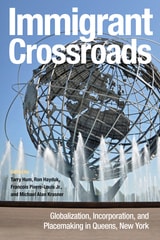
Immigrant Crossroads
Globalization, Incorporation, and Placemaking in Queens, New YorkEdited by Tarry Hum, Ron Hayduk, Francois Pierre-Louis Jr., and Michael Alan Krasner
Temple University Press, 2021
Nearly half the 2.3 million residents of Queens, New York are foreign-born. Immigrants in Queens hail from more than 120 countries and speak more than 135 languages. As an epicenter of immigrant diversity, Queens is an urban gateway that exemplifies opportunities and challenges in shaping a multi-racial democracy.
The editors and contributors to Immigrant Crossroads examine the social, spatial, economic, and political dynamics that stem from this fast-growing urbanization. The interdisciplinary chapters examine residential patterns and neighborhood identities, immigrant incorporation and mobilizations, and community building and activism.
Essays combine qualitative and quantitative research methods to address globalization and the unprecedented racial and ethnic diversity as a result of international migration. Chapters on incorporation focus on immigrant participation and representation in electoral politics, and advocacy for immigrant inclusion in urban governance and service provision. A section of Immigrant Crossroads concerns placemaking, focusing on the production of neighborhood spaces and identities as well as immigrant activism and community development and control.
Based on engaged and robust analysis, Immigrant Crossroads highlights the dynamics of this urban gateway.

Immigrants and Boomers
Forging a New Social Contract for the Future of AmericaDowell Myers
Russell Sage Foundation, 2007
Immigration and Opportuntity
Race, Ethnicity, and Employment in the United StatesFrank D. Bean
Russell Sage Foundation, 1999
Impure Cultures
University Biology and the World of CommerceDaniel Lee Kleinman
University of Wisconsin Press, 2003
How are the worlds of university biology and commerce blurring? Many university leaders see the amalgamation of academic and commercial cultures as crucial to the future vitality of higher education in the United States. In Impure Cultures, Daniel Lee Kleinman questions the effect of this blending on the character of academic science.
Using data he gathered as an ethnographic observer in a plant pathology lab at the University of Wisconsin–Madison, Kleinman examines the infinite and inescapable influence of the commercial world on biology in academia today. Contrary to much of the existing literature and common policy practices, he argues that the direct and explicit relations between university scientists and industrial concerns are not the gravest threat to academic research. Rather, Kleinman points to the less direct, but more deeply-rooted effects of commercial factors on the practice of university biology. He shows that to truly understand research done at universities today, it is first necessary to explore the systematic, pervasive, and indirect effects of the commercial world on contemporary academic practice.
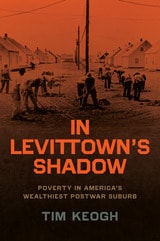
In Levittown’s Shadow
Poverty in America’s Wealthiest Postwar SuburbTim Keogh
University of Chicago Press, 2023
There is a familiar narrative about American suburbs: after 1945, white residents left cities for leafy, affluent subdivisions and the prosperity they seemed to embody. In Levittown’s Shadow tells us there’s more to this story, offering an eye-opening account of diverse, poor residents living and working in those same neighborhoods. Tim Keogh shows how public policies produced both suburban plenty and deprivation—and why ignoring suburban poverty doomed efforts to reduce inequality.
Keogh focuses on the suburbs of Long Island, home to Levittown, often considered the archetypal suburb. Here military contracts subsidized well-paid employment welding airplanes or filing paperwork, while weak labor laws impoverished suburbanites who mowed lawns, built houses, scrubbed kitchen floors, and stocked supermarket shelves. Federal mortgage programs helped some families buy orderly single-family homes and enter the middle class but also underwrote landlord efforts to cram poor families into suburban attics, basements, and sheds. Keogh explores how policymakers ignored suburban inequality, addressing housing segregation between cities and suburbs rather than suburbanites’ demands for decent jobs, housing, and schools.
By turning our attention to the suburban poor, Keogh reveals poverty wasn’t just an urban problem but a suburban one, too. In Levittown’s Shadow deepens our understanding of suburbia’s history—and points us toward more effective ways to combat poverty today.
In Pursuit of Leviathan
Technology, Institutions, Productivity, and Profits in American Whaling, 1816-1906Lance E. Davis, Robert E. Gallman, and Karin Gleiter
University of Chicago Press, 1997
Providing a wealth of historical information, In Pursuit of Leviathan is a classic industry study that will provide intriguing reading for anyone interested in the history of whaling.

In Search of the Amazon
Brazil, the United States, and the Nature of a RegionSeth Garfield
Duke University Press, 2013

InDEBTed to Intervene
Critical Lessons in Debt, Communication, Art, and Theoretical PracticeOliver Vodeb and Nikola Janovic Kolenc
Intellect Books, 2013

Indie Porn
Revolution, Regulation, and ResistanceZahra Stardust
Duke University Press, 2024

Inequality and the Global Economic Crisis
Douglas Dowd
Pluto Press, 2009
Inequality, per se, has been with us for millennia. With the creation, growth and deepening of Capitalism across the globe, inequalities take on new dimensions, unknown in previous eras. As Capitalism has spread its wings across the globe over the last 200 or so years, so inequalities have deepened and widened, both inside Nation Sates, between nation States. These inequalities are of income, wealth and of power.
This book, written by the widely respected economic historian Douglas Dowd at the age of 90, is notable for his own experience and vivid memory, of the 1929-31 recession. Since the 1980s, and the predominance of the present neo-liberal ideology, all of the inequalities that the book presents have grown rapidly. Written as a critique of the counter-productivity of growing economic inequality and vindicated by the present world banking crisis, Dowd presents a strong argument against capitalist expansion, exploitation and oligarchic rule.
Dowd's conclusions, that the globalization and growth of the financial sector will impact painfully upon hundreds of millions of people, unknown to most of us in our lifetime, Dowd's book deals with these issues from the unique perspective of inequality. Presenting both a history of the current crisis and an overview of it's, Inequality will appeal to both a broad general readership, and provides an extremely useful reference point for students of political economy, economic history, contemporary economics and global politics.
Inglorious Artists
Art World Satire and the Emergence of a Capitalist Art Market in Paris, 1750-1850Kathryn Desplanque
University of Delaware Press, 2025
This book is also freely available online as an open access digital edition.

Inheritance of Loss
China, Japan, and the Political Economy of Redemption after EmpireYukiko Koga
University of Chicago Press, 2016
Inheritance of Loss chronicles these sites of colonial inheritance––tourist destinations, corporate zones, and mustard gas exposure sites––to illustrate attempts by ordinary Chinese and Japanese to reckon with their shared yet contested pasts. In her explorations of everyday life, Koga directs us to see how the violence and injustice that occurred after the demise of the Japanese Empire compound the losses that later generations must account for, and inevitably inherit.
Innovation Equity
Assessing and Managing the Monetary Value of New Products and ServicesElie Ofek, Eitan Muller, and Barak Libai
University of Chicago Press, 2016
In Innovation Equity, Elie Ofek, Eitan Muller, and Barak Libai analyze how a vast array of past innovations performed in the marketplace—from their launch to the moment they became everyday products to the phase where consumers moved on to the “next big thing.” They identify key patterns in how consumers adopt innovations and integrate these with marketing scholarship on how companies manage their customer base by attracting new customers, keeping current customers satisfied, and preventing customers from switching to competitors’ products and services. In doing so, the authors produce concrete models that powerfully predict how the marketplace will respond to innovations, providing a much more authoritative way to estimate their potential monetary value, as well as a framework for making it possible to achieve that value.
Innovation and Public Policy
Austan Goolsbee and Benjamin F. Jones
University of Chicago Press, 2021
In advanced economies like the United States, innovation has long been recognized as a central force for increasing economic prosperity and human welfare. Today, the US government promotes innovation through various mechanisms, including tax credits for private-sector research, grant support for basic and applied research, and institutions like the Small Business Innovation Research Program of the National Science Foundation. Drawing on the latest empirical and conceptual research, Innovation and Public Policy surveys the key components of innovation policy and the social returns to innovation investment. It examines mechanisms that can advance the pace of invention and innovative activity, including expanding the research workforce through schooling and immigration policy and funding basic research. It also considers scientific grant systems for funding basic research, including those at institutions like the National Institutes of Health and the National Science Foundation, and investigates the role of entrepreneurship policy and of other institutions that promote an environment conducive to scientific breakthroughs.
Inquiries in the Economics of Aging
Edited by David A. Wise
University of Chicago Press, 1998
Within the next twenty years, an unprecedented proportion of Americans will be over sixty-five. New research in the economics of aging is an essential element of understanding what the future holds for this aging population. Inquiries in the Economics of Aging presents both empirical papers that consider questions that are fundamental to public policy and more theoretical contributions that lay new groundwork for future research in the economics of aging.
Inquiries in the Economics of Aging provides a timely overview of some of the most important questions facing researchers on aging and outlines new techniques and models that may help to answer these questions. This important volume will be of great interest to specialists and policy makers as it paves the way for future analysis.

Inside Colombia
Drugs, Democracy, and WarLivingstone, Grace
Rutgers University Press, 2004
The South American nation of Colombia has seen more than forty years of unrest, conflict, and civil war. It is a country in which social violence and warfare are intricately intertwined. Colombia is also notorious for its drug trade, being one of the leading producers of cocaine in the world, and for its central role as a staging ground for the U.S. “war on drugs.” Since 9/11 the Bush administration has sought to draw political links between the Colombian drug trade, guerrilla organizations, and terrorism.
Inside Colombia offers a valuable introduction and quick reference guide to this complex nation. With chapters devoted to history, human rights issues, the economy, drugs, the controversial antidrug intervention known as Plan Colombia, and relations with the United States, the book offers an easily accessible and comprehensive overview. Readers will learn about the major players in the conflicts, significant political figures, how Colombia’s economy has fared in the twentieth century, how the country’s geography influences its politics and economy, and how U.S. intervention shapes Colombia’s political scene.

Inside Pitch and More
Baseball's Business and the Public TrustGENE A. BUDIG
West Virginia University Press, 2004
The Inside Pitch and More: Baseball’s Business and the Public Trust, written by former American League President Gene Budig, investigates the human and corporate sides of our nation’s pastime. Throughout the course of this book, the author systematically engages the myriad concerns of Major League Baseball, past, present, and future.
In The Inside Pitch and More, baseball’s economic prosperity is examined, as well as issues that hinder and threaten that perpetuity. Lately, baseball has been increasingly menaced by the popularity of other athletic venues - basketball, football, etc. Budig goes through the proposed methods of revitalizing the game of baseball. He emphasizes the need for a reevaluation of the relationship between the sport and its fan base so that the baseball will resume its role as America’s favorite pastime.
Based on his six years as president of the American League, Budig has composed a fascinating book, which is written to be enjoyed by the casual baseball fan as well as the serious student of this sport or sports management in general. The book is unique in that it is the first work to really dissect the sport of baseball by a retired high-ranking official with a wealth of information on the subject.
Inside the Teaching Machine
Rhetoric and the Globalization of the U.S. Public Research UniversityCatherine Chaput
University of Alabama Press, 2008
An incisive critique of the corporatized university, tracing the entanglement of academic missions with economic, political, and cultural systems.
Advocates of higher education have long contended that universities should operate above the crude material negotiations of economics and politics. Such arguments, ignore the historical reality that the American university system emerged through, and in service to, a capitalist political economy that unevenly combines corporate, state, and civil interests.
As the corporatization of U.S. universities becomes nearly impossible to deny, the common response from many academics has been a superior stand against the contamination of the professional ideal by tainted corporate interests. Inside the Teaching Machine proposes a correction to this view through the lens of historical materialism.
Chaput argues that the U.S. public research university has always been a vital component of the capitalist political economy. While conventional narratives of public higher education emphasize civic preparation and upward mobility, Chaput demonstrates that supposedly egalitarian policies like the Morrill Land-Grant Act and the G.I. Bill served the changing interests of capitalism much as education, creating a professional class that supports the capitalist political economy. Chaput also focuses on the relationship between American universities and globalization, showing how the trend toward professionalization contributes to the production of surplus value, and the ways that the American university model circulates outside the United States. Chaput concludes by advocating rhetorical strategies for the professional who opposes the capitalist logic of the global university system, proposing concrete options for engaging and redirecting globalization within the university system.
Institutional Change, Discretion, and the Making of Modern Congress
An Economic InterpretationGlenn R. Parker
University of Michigan Press, 1992

Insufficient Funds
Savings, Assets, Credit, and Banking Among Low-Income HouseholdsRebecca M. Blank
Russell Sage Foundation, 2009

Insurgent Visions
Feminism, Justice, SolidarityChandra Talpade Mohanty
Duke University Press, 2025
Intellectual Property
Trade, Competition, and Sustainable Development The World Trade Forum, Volume 3Thomas Cottier and Petros C. Mavroidis, Editors
University of Michigan Press, 2003
Largely a victory for OECD countries, the present state of intellectual property rights has important implications for developing countries. The incorporation of intellectual property rights into the WTO system will eventually change the relationship of trade, competition, and intellectual property. It will equally have to assist in providing equitable sharing of benefits in the use of plant genetic resources. All of these issues are essential for the revision of exclusions from patenting in TRIPs. This volume offers insights into how this difficult task could and should be approached in a balanced manner and will be essential reading for economists and trade and intellectual property lawyers interested in the subject. Moreover, the volume will be relevant to agricultural economists as it addresses complex problems in the interstices of trade, intellectual property, plant genetic resources, and sustainable development.
Thomas Cottier is Professor of European and International Economic Law, University of Bern, and Managing Director, World Trade Institute, University of Bern.
Petros C. Mavroidis is Professor of Law, University of Neuchâtel. He formerly worked in the Legal Affairs Division of the World Trade Organization.
Marion Panizzon is Research Fellow, University of Bern.
Simon Lacey is Research Fellow, University of Bern.
International Comparisons of Household Saving
Edited by James M. Poterba
University of Chicago Press, 1994
Each of the six chapters examines micro data sets of household saving within a particular country and summarizes statistics on patterns of saving by age, income, and other demographic factors. The authors provide age-earning profiles and analyses of the accumulation of wealth over the lifetime in a clear way that allows quick comparisons between earning, consumption, and saving in the six countries.
Designed as a companion to Public Policies and Household Saving (1994), which addresses saving policies in the G-7 nations, this volume offers detailed descriptions of saving behavior in all G-7 nations except France.

International Financial Markets
The Challenge of GlobalizationEdited by Leonardo Auernheimer
University of Chicago Press, 2003
After a guided tour by the editor and a historical exploration, some of the world's leading theorists and policy analysts examine the benefits and pitfalls of capital movements and controls. In the second portion, papers examine the recent experiences of Argentina and Mexico, with Charles Calomiris—whose proposals for a new world financial architecture have elicited wide attention—contributing a response. The volume concludes with a roundtable discussion of the report of the International Financial Institutions Advisory Commission, in which the chair of the commission, Allan H. Meltzer, both comments on the report and responds to questions about it.
The material presented here will become a standard reference for analysts, policymakers, and the interested general public.
Contributors:
Leonardo Auernheimer, Matthew Bishop, Michael D. Bordo, Charles Calomiris, Guillermo A. Calvo, Augustin Carstens, Michael P. Dooley, Pablo E. Guidotti, T. Britton Harris, John P. Lipsky, Guillermo Ortiz Martinez, Allan H. Meltzer, Andrew Powell, Rene Stulz, Carl E. Walsh

International Trade in East Asia
Edited by Takatoshi Ito and Andrew K. Rose
University of Chicago Press, 2005
Comprised of twelve fascinating studies, International Trade in East Asia highlights many of the trading practices between countries within the region as well as outside of it. The contributors bring into focus some of the region's endemic and external barriers to international trade and discuss strategies for improving productivity and fostering trade relationships. Studies on some of the factors that drive exports, the influence of research and development, the effects of foreign investment, and the ramifications of different types of protectionism will particularly resonate with the financial and economic communities who are trying to keep pace with this dramatically altered landscape.

Intricate Relations
Sexual and Economic Desire in American Fiction, 1789-1814Karen A. Weyler
University of Iowa Press, 2005
Intricate Relations charts the development of the novel in and beyond the early republic in relation to these two thematic and intricately connected centers: sexuality and economics. By reading fiction written by Americans between 1789 and 1814 alongside medical theory, political and economic tracts, and pedagogical literature of all kinds, Karen Weyler recreates and illuminates the larger, sometimes opaque, cultural context in which novels were written, published, and read.
In 1799, the novelist Charles Brockden Brown used the evocative phrase “intricate relations” to describe the complex imbrication of sexual and economic relations in the early republic. Exploring these relationships, he argued, is the chief job of the “moral historian,” a label that most novelists of the era embraced. In a republic anxious about burgeoning individualism in the 1790s and the first two decades of the nineteenth century, the novel foregrounded sexual and economic desires and explored ways to regulate the manner in which they were expressed and gratified.
In Intricate Relations, Weyler argues that understanding how these issues underlie the novel as a genre is fundamental to understanding both the novels themselves and their role in American literary culture. Situating fiction amid other popular genres illuminates how novelists such as Charles Brockden Brown, Hannah Foster, Samuel Relf, Susanna Rowson, Rebecca Rush, and Sally Wood synthesized and iterated many of the concerns expressed in other forms of public discourse, a strategy that helped legitimate their chosen genre and make it a viable venue for discussion in the decades following the revolution.
Weyler’s passionate and persuasive study offers new insights into the civic role of fiction in the early republic and will be of great interest to literary theorists and scholars in women’s and American studies.

Investigations in the Economics of Aging
Edited by David A. Wise
University of Chicago Press, 2012
One of the most well-established relationships in the economics of aging is that between health and wealth. Yet this relationship is also changing in conjunction with a rapidly aging population as well as a broad evolution in how people live later in life.
Building on findings from earlier editions in this National Bureau of Economic Research series, Investigations in the Economics of Aging focuses on the changing financial circumstances of the elderly and the relationship of these circumstances to health and health care. Among the topics addressed are the significance of out-of-pocket health care costs, the effects of inflation on social security, and the impact of the recent financial crisis on Americans’ well-being. Encompassing new data and advances in research methodology, the developments presented in this volume will have important implications for economies worldwide.
Investing in the Homeland
Migration, Social Ties, and Foreign FirmsBenjamin A.T. Graham
University of Michigan Press, 2019
Graham’s analysis draws on new data from face-to-face interviews with the managers of over 450 foreign firms operating in two developing countries: Georgia and the Philippines. Diaspora-owned and diaspora-managed firms are better connected than other foreign firms and they use social ties to resolve disputes and influence government policy. At the same time, Graham shows that diaspora-affiliated firms are no more socially responsible than their purely foreign peers—at root, they are profit-seeking enterprises, not development NGOs. Graham identifies implications for policymakers seeking to capture the development potential of diaspora investment and for managers of multinational firms who want to harness diasporans as a source of sustained competitive advantage.
Investment, Profit, and Tenancy
The Jurists and the Roman Agrarian EconomyDennis P. Kehoe
University of Michigan Press, 1997
In Investment, Profit, and Tenancy Dennis P. Kehoe defines the economic mentality of upper-class Romans by analyzing the assumptions that Roman jurists in the Digest of Justinian made about investment and profit in agriculture as they addressed legal issues involving private property. In particular the author analyzes the duties of guardians in managing the property of their wards, and the bequeathing of agricultural property. He bases his analysis on Roman legal sources, which offer a comprehensive picture of the economic interests of upper-class Romans. Farm tenancy was crucial to these interests, and Kehoe carefully examines how Roman landowners contended with the legal, social, and economic institutions surrounding farm tenancy as they pursued security from their agricultural investments.
Kehoe argues that Roman jurists offer a consistent picture of agriculture as a form of investment that was grounded in upper-class conceptions of the Roman economy. In the eyes of the jurists, agriculture represented the only form of investment capable of providing upper-class Romans with economic security, and this situation had important implications for the relationship between landowners and tenants. Landowners who sought economic stability from their agricultural holdings preferred to simplify the task of managing their estates by delegating the work and costs to their tenants. This tended to make landowners depend on the expertise and resources of tenants, which in turn gave the tenants significant bargaining power. This dynamic relationship is traced in the jurists' regulation of farm tenancy, as the jurists adapted Roman law to the economic realities of the Roman empire.
Investment, Profit, and Tenancy will be of interest to classicists as well as to scholars of preindustrial comparative economics.
Dennis P. Kehoe is Professor of Classical Studies, Tulane University.
Issues in Law and Economics
Harold Winter
University of Chicago Press, 2017
Issues in the Economics of Aging
Edited by David A. Wise
University of Chicago Press, 1990
Issues in the Economics of Immigration
Edited by George J. Borjas
University of Chicago Press, 2000
This collection offers new insights into the kinds of economic opportunities and outcomes that immigrant populations might expect for themselves and future generations.
Ivy and Industry
Business and the Making of the American University, 1880-1980Christopher Newfield
Duke University Press, 2003
Newfield views management as neither inherently good nor bad, but rather as a challenge to and tool for negotiating modern life. In Ivy and Industry he integrates business and managerial philosophies from Taylorism through Tom Peters’s “culture of excellence” with the speeches and writings of leading university administrators and federal and state education and science policies. He discusses the financial dependence on industry and government that was established in the university’s early years and the equal influence of liberal arts traditions on faculty and administrators. He describes the arrival of a managerial ethos on campus well before World War II, showing how managerial strategies shaped even fields seemingly isolated from commerce, like literary studies. Demonstrating that business and the humanities have each had a far stronger impact on higher education in the United States than is commonly thought, Ivy and Industry is the dramatic story of how universities have approached their dual mission of expanding the mind of the individual while stimulating economic growth.