Results by title
295 books match the query 'Ecosystems & Habitats' and 8 start with i
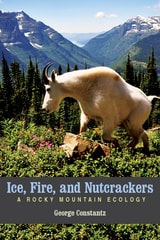
Ice, Fire, and Nutcrackers
A Rocky Mountain EcologyGeorge Constantz
University of Utah Press, 2014
These provocative accounts of birds, insects, rodents, predators, trees, and flowers are sure to stir the reader’s curiosity. Who wouldn’t be intrigued by a rattlesnake’s ability to hunt in total darkness by detecting the infrared radiation emitted by a mouse? Or how white-tailed ptarmigan thrive in their high, treeless alpine environments -- even through the winter? The narratives, often brought home with a counterintuitive twist, invite readers to make new connections and broaden perspectives of a favorite outdoor place.
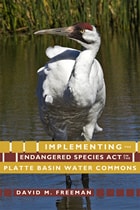
Implementing the Endangered Species Act on the Platte Basin Water Commons
David M. Freeman
University Press of Colorado, 2010
Implementing the Endangered Species Act on the Platte Basin Water Commons tells of the negotiations among the U.S. Department of the Interior, the environmental community, and the states of Wyoming, Colorado, and Nebraska that took place from the mid-1970s to 2006. Ambitious talks among rival water users, environmentalists, state authorities, and the Department of the Interior finally resulted in the Platte River Habitat Recovery Program.
Documenting how organizational interests found remedies within the conditions set by the Endangered Species Act, describing how these interests addressed habitat restoration, and advancing sociological propositions under which water providers transcended self-interest and produced an agreement benefiting the environment, this book details the messy process that took place over more than thirty years. Presenting important implications for the future of water management in arid and semi-arid environments, this book will be of interest to anyone involved in water management, as well as academics interested in the social organization of common property.
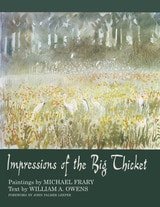
Impressions of the Big Thicket
Michael Frary
University of Texas Press, 1973
Before the establishment of the Big Thicket Nature Preserve, the Big Thicket of Texas became a symbol of nature's last stand against encroaching civilization. Here, in a mingling of ecological zones, come together plants, animals, and birds—many of them rare—the flora and fauna of north and south, east and west. Northern maples and beeches stand not too great a distance from cypresses and Southern magnolias. American hollies grow large and orchids bloom among Northern ferns. Mesquite and tumbleweed, plants of the Western desert, survive where the annual rainfall averages sixty inches. On a major flyway, the Big Thicket is a stopping place for many birds in passage as well as home to a wide variety. Beavers build their dams there, and an occasional coyote yips in the night.
Because of its great beauty and rich natural resources, use of the Big Thicket was the object of a forty-year struggle involving financiers, politicians, conservationists, and countless Thicket lovers. Each group viewed the Thicket from a different perspective and foresaw its future in different terms.
This book records the impressions of two Thicket lovers. Michael Frary's paintings and drawings of woods and water, of birds in flight and strange plants growing close to the moist earth are pictures of a place, a time, a mood caught today—and not the same if left until tomorrow. The qualities of gentleness and violence are constant, but often hidden—there to be brought out by human need or human greed.
William Owens writes of the people who have lived their lives in the Big Thicket, who have stirred its stillness with whoop and holler across the waters, who have taken in its stillness and explosive beauty until they themselves are made up of gentleness and violence.
Together the impressions show what the Big Thicket was and is. What it will be—that is the chief concern of the book.
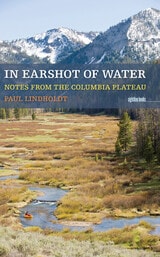
In Earshot of Water
Notes from the Columbia PlateauPaul Lindholdt
University of Iowa Press, 2011
p.MsoNormal, li.MsoNormal, div.MsoNormal { margin: 0in 0in 0.0001pt; font-size: 12pt; font-family: "Times New Roman"; }div.Section1 { page: Section1; }
Whether the subject is the plants that grow there, the animals that live there, the rivers that run there, or the people he has known there, Paul Lindholdt’s In Earshot of Water illuminates the Pacific Northwest in vivid detail. Lindholdt writes with the precision of a naturalist, the critical eye of an ecologist, the affection of an apologist, and the self-revelation and self-awareness of a personal essayist in the manner of Annie Dillard, Loren Eiseley, Derrick Jensen, John McPhee, Robert Michael Pyle, and Kathleen Dean Moore.
Exploring both the literal and literary sense of place, with particular emphasis on environmental issues and politics in the far Northwest, Lindholdt weds passages from the journals of Lewis and Clark, the log of Captain James Cook, the novelized memoir of Theodore Winthrop, and Bureau of Reclamation records growing from the paintings that the agency commissioned to publicize its dams in the 1960s and 1970s, to tell ecological and personal histories of the region he knows and loves.
In Lindholdt’s beautiful prose, America’s environmental legacies—those inherited from his blood relatives as well as those from the influences of mass culture—and illuminations of the hazards of neglecting nature’s warning signs blur and merge and reemerge in new forms. Themes of fathers and sons layer the book, as well—the narrator as father and as son—interwoven with a call to responsible social activism with appeals to reason and emotion. Like water itself, In Earshot of Water cascades across boundaries and blends genres, at once learned and literary.
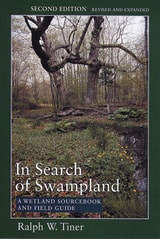
In Search of Swampland
A Wetland Sourcebook and Field GuideRalph W. Tiner
Rutgers University Press, 2005
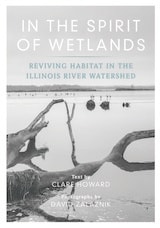
In the Spirit of Wetlands
Reviving Habitat in the Illinois River WatershedText by Clare Howard. Photographs by David Zalaznik
University of Illinois Press, 2022
An inspiring document of passion and advocacy, In the Spirit of Wetlands reveals the transformative power of restoration.
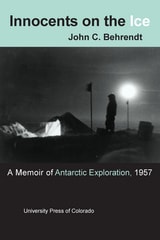
Innocents on the Ice
A Memoir of Antarctic Exploration, 1957John C. Behrendt
University Press of Colorado, 1998
"Adventures in the Antarctic only happen when someone makes a mistake.”
—From the Preface
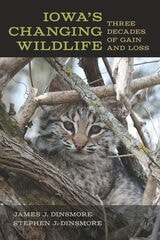
Iowa's Changing Wildlife
Three Decades of Gain and LossJames J. Dinsmore
University of Iowa Press, 2023