Results by title
218 books match the query 'Education, Higher' and 12 start with i
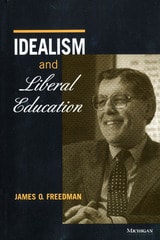
Idealism and Liberal Education
James O. Freedman
University of Michigan Press, 2001

Identity Papers
Literacy and Power in Higher Educationedited by Bronwyn T. Williams
Utah State University Press, 2006
How do definitions of literacy in the academy, and the pedagogies that reinforce such definitions, influence and shape our identities as teachers, scholars, and students? The contributors gathered here reflect on those moments when the dominant cultural and institutional definitions of our identities conflict with our other identities, shaped by class, race, gender, sexual orientation, location, or other cultural factors.
These writers explore the struggle, identify the sources of conflict, and discuss how they respond personally to such tensions in their scholarship, teaching, and administration. They also illustrate how writing helps them and their students compose alternative identities that may allow the connection of professional identities with internal desires and senses of self. They emphasize how identity comes into play in education and literacy and how institutional and cultural power is reinforced in the pedagogies and values of the writing classroom and writing profession.

Impure Cultures
University Biology and the World of CommerceDaniel Lee Kleinman
University of Wisconsin Press, 2003
How are the worlds of university biology and commerce blurring? Many university leaders see the amalgamation of academic and commercial cultures as crucial to the future vitality of higher education in the United States. In Impure Cultures, Daniel Lee Kleinman questions the effect of this blending on the character of academic science.
Using data he gathered as an ethnographic observer in a plant pathology lab at the University of Wisconsin–Madison, Kleinman examines the infinite and inescapable influence of the commercial world on biology in academia today. Contrary to much of the existing literature and common policy practices, he argues that the direct and explicit relations between university scientists and industrial concerns are not the gravest threat to academic research. Rather, Kleinman points to the less direct, but more deeply-rooted effects of commercial factors on the practice of university biology. He shows that to truly understand research done at universities today, it is first necessary to explore the systematic, pervasive, and indirect effects of the commercial world on contemporary academic practice.

In Defense of Free Speech in Universities
A Study of Three JurisdictionsAmy Lai
University of Michigan Press, 2023
In this book, Amy Lai examines the current free speech crisis in Western universities. She studies the origin, history, and importance of freedom of speech in the university setting, and addresses the relevance and pitfalls of political correctness and microaggressions on campuses, where laws on harassment, discrimination, and hate speech are already in place, along with other concepts that have gained currency in the free speech debate, including deplatforming, trigger warning, and safe space. Looking at numerous free speech disputes in the United Kingdom, the United States, and Canada, the book argues for the equal application of the free speech principle to all expressions to facilitate respectful debates. All in all, it affirms that the right to free expression is a natural right essential to the pursuit of truth, democratic governance, and self-development, and this right is nowhere more important than in the university.
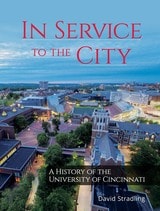
In Service to the City
A History of the University of CincinnatiDavid Stradling
University of Minnesota Press, 2018
In Service to the City: A History of the University of Cincinnati, the first history of the university written in over fifty years, explores the evolving, complex relationship between UC and the city of Cincinnati. In Service to the City casts an unvarnished lens on the details of student demographics, faculty research, curricular changes, and athletic controversy to challenges associated with campus architecture and planning, neighborhood relations, regional and national consequences of urban decline, and the roles of municipal, state, and federal governments within American higher education.
Urban, environmental historian David Stradling traces UC’s story through starts and stops, growth and contraction. In the 1870s the institution began its transformation into a comprehensive, municipal university located in America’s thriving heartland. Expansion continued through mergers with Cincinnati College-Conservatory of Music and Cincinnati Medical College, among others. In 1977, University President Warren Bennis and Governor Jim Rhodes signed papers ending UC’s municipal status while securing its future as part of the state university system of Ohio.
UC maintains its strong relationship with Cincinnati, pioneering countless community and regionally oriented programs, from its expanding co-op education system, the first in the nation, to the Niehoff Urban Studio. Stradling describes the social and political activism of UC students and faculty—front and center in the civil rights and women’s rights movements, as well as the public health and environmental movements. Often they struggled to change the culture within their own institution, which at times appeared conservative or reactionary.
Drawing on archival research, Stradling recounts in lively prose and through dozens of illustrations, two-hundred years of UC history, setting the story in the context of changes within higher education in the United States.
With the cost of higher education on the minds of legislators and the public, questions first posed by Daniel Drake in 1819 upon the founding of Cincinnati College remain relevant. Who should the college serve? What and how should students learn? How can we pay for it? In Service to the City encourages readers to consider how the University of Cincinnati—with a history so entwined with its city—can balance its urban-serving tradition with its aspiration to be a leader global research university.
In the Company of Scholars
The Struggle for the Soul of Higher EducationBy Julius G. Getman
University of Texas Press, 1992
"I began this book to articulate my sense of disappointment and alienation from the status I had fought so hard to achieve." A remarkable admission from an alumnus of Harvard Law School who has held tenured professorships in the law schools of Yale and Stanford and has taught in the law schools of Harvard and Chicago.
In this personal reflection on the status of higher education, Julius Getman probes the tensions between status and meaning, elitism and egalitarianism, that challenge the academy and academics today. He shows how higher education creates a shared intellectual community among people of varied races and classes—while simultaneously dividing people on the basis of education and status.
In the course of his explorations, Getman touches on many of the most current issues in higher education today, including the conflict between teaching and research, challenges to academic freedom, the struggle over multiculturalism, and the impact of minority and feminist activism. Getman presents these issues through relevant, often humorous anecdotes, using his own and others' experiences in coping with the constantly changing academic landscape.
Written from a liberal perspective, the book offers another side of the story told in such works as Allan Bloom's The Closing of the American Mind and Roger Kimball's Tenured Radicals.
Inside Academia
Professors, Politics, and PoliciesCahn, Steven M
Rutgers University Press, 2019
Inside Academia uses real cases to illustrate how faculty members, deans, and provosts often do not serve the best interests of schools or students. Yet the book also highlights efforts of those who have committed themselves and their institutions to the pursuit of academic excellence.
Inside the Teaching Machine
Rhetoric and the Globalization of the U.S. Public Research UniversityCatherine Chaput
University of Alabama Press, 2008
An incisive critique of the corporatized university, tracing the entanglement of academic missions with economic, political, and cultural systems.
Advocates of higher education have long contended that universities should operate above the crude material negotiations of economics and politics. Such arguments, ignore the historical reality that the American university system emerged through, and in service to, a capitalist political economy that unevenly combines corporate, state, and civil interests.
As the corporatization of U.S. universities becomes nearly impossible to deny, the common response from many academics has been a superior stand against the contamination of the professional ideal by tainted corporate interests. Inside the Teaching Machine proposes a correction to this view through the lens of historical materialism.
Chaput argues that the U.S. public research university has always been a vital component of the capitalist political economy. While conventional narratives of public higher education emphasize civic preparation and upward mobility, Chaput demonstrates that supposedly egalitarian policies like the Morrill Land-Grant Act and the G.I. Bill served the changing interests of capitalism much as education, creating a professional class that supports the capitalist political economy. Chaput also focuses on the relationship between American universities and globalization, showing how the trend toward professionalization contributes to the production of surplus value, and the ways that the American university model circulates outside the United States. Chaput concludes by advocating rhetorical strategies for the professional who opposes the capitalist logic of the global university system, proposing concrete options for engaging and redirecting globalization within the university system.
Institutional Literacies
Engaging Academic IT Contexts for Writing and CommunicationStuart A. Selber
University of Chicago Press, 2020
Institutional Literacies argues that writing and communication teachers and program directors should collaborate more closely and engage more deeply with IT staff as technology projects are planned, implemented, and expanded. Teachers need to both analyze how their institutions approach information technologies and intervene in productive ways as active university citizens with relevant expertise. To help them do so, the book offers a three-part heuristic, reflecting the reality that academic IT units are complex and multilayered, with historical, spatial, and textual dimensions. It discusses six ways teachers can intervene in the academic IT work of their own institutions: maintaining awareness, using systems and services, mediating for audiences, participating as user advocates, working as designers, and partnering as researchers. With these strategies in hand, educators can be proactive in helping institutional IT approaches align with the professional values and practices of writing and communication programs.

Intentional Tech
Principles to Guide the Use of Educational Technology in College TeachingDerek Bruff
West Virginia University Press, 2019
Chalkboards and projectors are familiar tools for most college faculty, but when new technologies become available, instructors aren’t always sure how to integrate them into their teaching in meaningful ways. For faculty interested in supporting student learning, determining what’s possible and what’s useful can be challenging in the changing landscape of technology.
Arguing that teaching and learning goals should drive instructors’ technology use, not the other way around, Intentional Tech explores seven research-based principles for matching technology to pedagogy. Through stories of instructors who creatively and effectively use educational technology, author Derek Bruff approaches technology not by asking “How to?” but by posing a more fundamental question: “Why?”
Ivory Towers and Nationalist Minds
Universities, Leadership, and the Development of the American StateMark R. Nemec
University of Michigan Press, 2006
"A wonderful, learned, and original work, full of present-day relevance. Essential reading for anyone interested in the history of higher education and its relation to professionalism and the growth of the modern state."
--Geoffrey Kabaservice, author of The Guardians: Kingman Brewster, His Circle, and the Rise of the Liberal Establishment
"Ivory Towers and Nationalist Minds contributes greatly to our understanding of the influence of the American university on public life, including the development of the modern American state. Nemec focuses on the universities working in concert to enhance their own influence and that of the state. This is not only a historical issue of interest-it has contemporary resonance. Institutions today compete intensely while cooperating regularly. And public universities like Michigan and California are expected, perhaps more than ever before, to contribute directly to the welfare of their states, especially in economic development."
--J. Douglas Toma, Associate Professor, Institute of Higher Education, University of Georgia
"Ivory Towers and Nationalist Minds fills an important void in the study of American political development and its relationship to the evolution of American higher education. Numerous historical case studies provide vivid evidence of how universities emerged as sources of national expertise and state-building at a critical juncture in our nation's history. Nemec demonstrates that such contributions were not historical inevitabilities, but the product of strategic actors seeking to simultaneously strengthen universities and serve a greater national purpose."
--Scott W. Allard, Brown University
Mark R. Nemec is a Vice President with Forrester Research in Cambridge, Massachusetts. He holds a BA from Yale, and both an MA in Education and a PhD in Political Science from the University of Michigan. He has served on the faculty of Davidson College and as a Senior Director of the Advisory Board Company in Washington, DC.
Ivy and Industry
Business and the Making of the American University, 1880-1980Christopher Newfield
Duke University Press, 2003
Newfield views management as neither inherently good nor bad, but rather as a challenge to and tool for negotiating modern life. In Ivy and Industry he integrates business and managerial philosophies from Taylorism through Tom Peters’s “culture of excellence” with the speeches and writings of leading university administrators and federal and state education and science policies. He discusses the financial dependence on industry and government that was established in the university’s early years and the equal influence of liberal arts traditions on faculty and administrators. He describes the arrival of a managerial ethos on campus well before World War II, showing how managerial strategies shaped even fields seemingly isolated from commerce, like literary studies. Demonstrating that business and the humanities have each had a far stronger impact on higher education in the United States than is commonly thought, Ivy and Industry is the dramatic story of how universities have approached their dual mission of expanding the mind of the individual while stimulating economic growth.