Results by title
313 books match the query 'Environmental policy' and 12 start with i
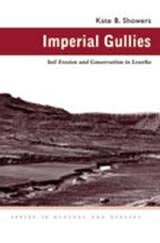
Imperial Gullies
Soil Erosion and Conservation in LesothoKate B. Showers
Ohio University Press, 2005
Once the grain basket for South Africa, much of Lesotho has become a scarred and degraded landscape. The nation’s spectacular erosion and gullying have concerned environmentalists and conservationists for more than half a century. In Imperial Gullies: Soil Erosion and Conservation in Lesotho, Kate B. Showers documents the truth behind this devastation.
Showers reconstructs the history of the landscape, beginning with a history of the soil. She concludes that Lesotho’s distinctive erosion chasms, called dongas—often cited as an example of destructive land-use practices by African farmers—actually were caused by colonial and postcolonial interventions. The residents of Lesotho emerge as victims of a failed technology. Their efforts to mitigate or resist implementation of destructive soil conservation engineering works were thwarted, and they were blamed for the consequences of policies promoted by international soil conservationists since the 1930s.
Imperial Gullies calls for an observational, experimental, and, most important, a fully consultative and participatory approach to address Lesotho’s serious contemporary problems of soil erosion. The first book to bring to center stage the historical practice of colonial soil science—and a cautionary tale of western science in unfamiliar terrain—it will interest a broad, interdisciplinary audience in African and environmental studies, social sciences, and history.
In Defense of Public Lands
The Case against Privatization and TransferSteven Davis
Temple University Press, 2018
Debates continue to rage over the merits or flaws of public land and whether or not it should be privatized—or at least, radically reconfigured in some way. In Defense of Public Lands offers a comprehensive refutation of the market-oriented arguments. Steven Davis passionately advocates that public land ought to remain firmly in the public’s hands. He reviews empirical data and theoretical arguments from biological, economic, and political perspectives in order to build a case for why our public lands are an invaluable and irreplaceable asset for the American people.
In Defense of Public Lands briefly lays out the history and characteristics of public lands at the local, state, and federal levels while examining the numerous policy prescriptions for their privatization or, in the case of federal lands, transfer. He considers the dimensions of environmental health; markets and valuation of public land, the tensions between collective values and individual preferences, the nature and performance of bureaucratic management, and the legitimacy of interest groups and community decision-making. Offering a fair, good faith overview of the privatizers’ best arguments before refuting them, this timely book contemplates both the immediate and long-term future of our public lands.
In the Shadows of the State
Indigenous Politics, Environmentalism, and Insurgency in Jharkhand, IndiaAlpa Shah
Duke University Press, 2010
Indian Water in the New West
Thomas R. McGuire
University of Arizona Press, 1993
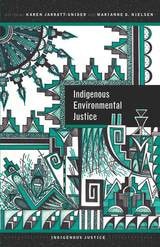
Indigenous Environmental Justice
Edited by Karen Jarratt-Snider and Marianne O. Nielsen
University of Arizona Press, 2020
With focused essays on important topics such as the uranium mining on Navajo and Hopi lands, the Dakota Access Pipeline dispute on the Standing Rock Indian Reservation, environmental cleanup efforts in Alaska, and many other pertinent examples, this volume offers a timely view of the environmental devastation that occurs in Indian Country. It also serves to emphasize the importance of self-determination and sovereignty in victories of Indigenous environmental justice.
The book explores the ongoing effects of colonization and emphasizes Native American tribes as governments rather than ethnic minorities. Combining elements of legal issues, human rights issues, and sovereignty issues, Indigenous Environmental Justice creates a clear example of community resilience in the face of corporate greed and state indifference.

Indigenous Knowledge and the Environment in Africa and North America
David M. Gordon
Ohio University Press, 2012
Indigenous knowledge has become a catchphrase in global struggles for environmental justice. Yet indigenous knowledges are often viewed, incorrectly, as pure and primordial cultural artifacts. This collection draws from African and North American cases to argue that the forms of knowledge identified as “indigenous” resulted from strategies to control environmental resources during and after colonial encounters.
At times indigenous knowledges represented a “middle ground” of intellectual exchanges between colonizers and colonized; elsewhere, indigenous knowledges were defined through conflict and struggle. The authors demonstrate how people claimed that their hybrid forms of knowledge were communal, religious, and traditional, as opposed to individualist, secular, and scientific, which they associated with European colonialism.
Indigenous Knowledge and the Environment offers comparative and transnational insights that disturb romantic views of unchanging indigenous knowledges in harmony with the environment. The result is a book that informs and complicates how indigenous knowledges can and should relate to environmental policy-making.
Contributors: David Bernstein, Derick Fay, Andrew H. Fisher, Karen Flint, David M. Gordon, Paul Kelton, Shepard Krech III, Joshua Reid, Parker Shipton, Lance van Sittert, Jacob Tropp, James L. A. Webb, Jr., Marsha Weisiger
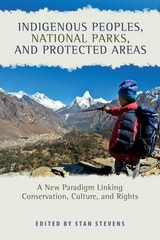
Indigenous Peoples, National Parks, and Protected Areas
A New Paradigm Linking Conservation, Culture, and RightsEdited by Stan Stevens
University of Arizona Press, 2014
Indigenous Peoples, National Parks, and Protected Areas integrates wide-ranging, multidisciplinary intellectual perspectives with detailed analyses of new kinds of protected areas in diverse parts of the world. Eleven geographers and anthropologists contribute nine substantive fieldwork-based case studies. Their contributions offer insights into experience with new conservation approaches in an array of countries, including Australia, Canada, Guatemala, Honduras, Nepal, Nicaragua, Peru, South Africa, and the United States.
This book breaks new ground with its in-depth exploration of changes in conservation policies and practices—and their profound ramifications for Indigenous peoples, protected areas, and social reconciliation.
International Environmental Policy
From the Twentieth to the Twenty-First CenturyLynton Keith Caldwell
Duke University Press, 1996
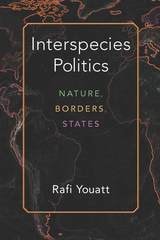
Interspecies Politics
Nature, Borders, StatesRafi Youatt
University of Michigan Press, 2020
This book explores the ways that international politics is a form of interspecies politics, one that involves the interactions, ideas, and practices of multiple species, both human and nonhuman, to generate differences and create commonalities. While we frequently think of having an international politics “of” the environment, a deep and thoroughgoing anthropocentrism guides our idea of what political life can be, which prevents us from thinking about a politics “with” the environment. This anthropocentric assumption about politics drives both ecological degradation and deep forms of interhuman injustice and hierarchy.
Interspecies Politics challenges that assumption, arguing that a truly ecological account of interstate life requires us to think about politics as an activity that crosses species lines. It therefore explores a postanthropocentric account of international politics, focusing on a series of cases and interspecies practices in the American borderlands, ranging from the US-Mexico border in southern Texas, to Guantánamo Bay in Cuba, to Isle Royale, near the US-Canadian border. The book draws on international relations, environmental political theory, anthropology, and animal studies, to show how key international dimensions of states—sovereignty, territory, security, rights—are better understood as forms of interspecies assemblage that both generate new forms of multispecies inclusion, and structure forms of violence and hierarchy against human and nonhuman alike.
Inventing Global Ecology
Tracking the Biodiversity Ideal in India, 1947–1997Michael L. Lewis
Ohio University Press, 2004
Blue jeans, MTV, Coca-Cola, and… ecology? We don't often think of conservation sciences as a U.S. export, but in the second half of the twentieth century an astounding array of scientists and ideas flowed out from the United States into the world, preaching the gospel of conservation-oriented ecology.
Inventing Global Ecology grapples with how we should understand the development of global ecology in the twentieth century—a science that is held responsible for, literally, saving the world. Is the spread of ecology throughout the globe a subtle form of cultural imperialism, as some claim? Or is it a manifestation of an increasingly globalized world, where ideas, people, and things move about with greater freedom than ever before?
Using India as the case study, Professor Michael Lewis considers the development of conservation policies and conservation sciences since the end of World War II and the role of United States scientists, ideas, and institutions in this process. Was India subject to a subtle form of Americanization, or did Indian ecologists develop their own agenda, their own science, and their own way of understanding (and saving) the natural world? Does nationality even matter when doing ecology?
This readable narrative will carry you through the first fifty years of independent India, from the meadows of the Himalayan Mountains to the rainforests of southern India, from Gandhi and Nehru to Project Tiger. Of equal interest to the general reader, to scientists, and to scholars of history and globalization, Inventing Global Ecology combines ethnographic fieldwork and oral history conducted in India and the United States, as well as traditional archival research.
Inventing Pollution
Coal, Smoke, and Culture in Britain since 1800Peter Thorsheim
Ohio University Press, 2006
Britain's supremacy in the nineteenth century depended in large part on its vast deposits of coal. This coal not only powered steam engines in factories, ships, and railway locomotives but also warmed homes and cooked food. As coal consumption skyrocketed, the air in Britain's cities and towns became filled with ever-greater and denser clouds of smoke.
In this far-reaching study, Peter Thorsheim explains that, for much of the nineteenth century, few people in Britain even considered coal smoke to be pollution. To them, pollution meant miasma: invisible gases generated by decomposing plant and animal matter. Far from viewing coal smoke as pollution, most people considered smoke to be a valuable disinfectant, for its carbon and sulfur were thought capable of rendering miasma harmless.
Inventing Pollution examines the radically new understanding of pollution that emerged in the late nineteenth century, one that centered not on organic decay but on coal combustion. This change, as Peter Thorsheim argues, gave birth to the smoke-abatement movement and to new ways of thinking about the relationships among humanity, technology, and the environment.
Inventing Pollution
Coal, Smoke, and Culture in Britain since 1800Peter Thorsheim
Ohio University Press, 2017
Going as far back as the thirteenth century, Britons mined and burned coal. Britain’s supremacy in the nineteenth century depended in large part on its vast deposits of coal, which powered industry, warmed homes, and cooked food. As coal consumption skyrocketed, the air in Britain’s cities and towns filled with ever-greater and denser clouds of smoke. Yet, for much of the nineteenth century, few people in Britain even considered coal smoke to be pollution.
Inventing Pollution examines the radically new understanding of pollution that emerged in the late nineteenth century, one that centered not on organic decay but on coal combustion. This change, as Peter Thorsheim argues, gave birth to the smoke-abatement movement and to new ways of thinking about the relationships among humanity, technology, and the environment.
Even as coal production in Britain has plummeted in recent decades, it has surged in other countries. This reissue of Thorsheim’s far-reaching study includes a new preface that reveals the book’s relevance to the contentious national and international debates—which aren’t going away anytime soon—around coal, air pollution more generally, and the grave threat of human-induced climate change.