101 books match the query 'Environmentalism' and 3 start with i
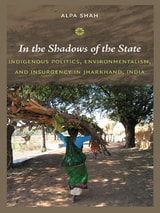
cover of In the Shadows of the State: Indigenous Politics, Environmentalism, and Insurgency in Jharkhand, India

In the Shadows of the State

Indigenous Politics, Environmentalism, and Insurgency in Jharkhand, India

Alpa Shah

Duke University Press, 2010

In the Shadows of the State suggests that well-meaning indigenous rights and development claims and interventions may misrepresent and hurt the very people they intend to help. It is a powerful critique based on extensive ethnographic research in Jharkhand, a state in eastern India officially created in 2000. While the realization of an independent Jharkhand was the culmination of many years of local, regional, and transnational activism for the rights of the region’s culturally autonomous indigenous people, Alpa Shah argues that the activism unintentionally further marginalized the region’s poorest people. Drawing on a decade of ethnographic research in Jharkhand, she follows the everyday lives of some of the poorest villagers as they chase away protected wild elephants, try to cut down the forests they allegedly live in harmony with, maintain a healthy skepticism about the revival of the indigenous governance system, and seek to avoid the initial spread of an armed revolution of Maoist guerrillas who claim to represent them. Juxtaposing these experiences with the accounts of the village elites and the rhetoric of the urban indigenous-rights activists, Shah reveals a class dimension to the indigenous-rights movement, one easily lost in the cultural-based identity politics that the movement produces. In the Shadows of the State brings together ethnographic and theoretical analyses to show that the local use of global discourses of indigeneity often reinforces a class system that harms the poorest people.
[more]
cover of Intersectional Activism in Environmental Communication: Changemakers Respond to Ecological Crises

Intersectional Activism in Environmental Communication

Changemakers Respond to Ecological Crises

Emma Frances Bloomfield

Michigan State University Press, 2025
Intersectional Activism in Environmental Communication explores the representation of environmental activism around the world. Exploring issues from Indigenous women’s activism in Brazil and India to energy protests in South Korea, to the Dakota Access pipeline construction on Standing Rock Sioux territory, to the contours of the internet, this collection offers critical reflection points for the representation of environmental activism and theorizes the various channels and audiences for embodied and mediated environmental communication. The intersectional approach reflected in this work explores circumstances where powerful interests distract, dissuade, and undermine emergent voices and the ecological values they articulate. This volume addresses how intersectional environmental activism can effectively challenge systems and practices that perpetuate ecological degradation and environmental injustices.
[more]
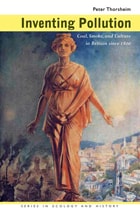
cover of Inventing Pollution: Coal, Smoke, and Culture in Britain since 1800

Inventing Pollution

Coal, Smoke, and Culture in Britain since 1800

Peter Thorsheim

Ohio University Press, 2006

Britain's supremacy in the nineteenth century depended in large part on its vast deposits of coal. This coal not only powered steam engines in factories, ships, and railway locomotives but also warmed homes and cooked food. As coal consumption skyrocketed, the air in Britain's cities and towns became filled with ever-greater and denser clouds of smoke.

In this far-reaching study, Peter Thorsheim explains that, for much of the nineteenth century, few people in Britain even considered coal smoke to be pollution. To them, pollution meant miasma: invisible gases generated by decomposing plant and animal matter. Far from viewing coal smoke as pollution, most people considered smoke to be a valuable disinfectant, for its carbon and sulfur were thought capable of rendering miasma harmless.

Inventing Pollution examines the radically new understanding of pollution that emerged in the late nineteenth century, one that centered not on organic decay but on coal combustion. This change, as Peter Thorsheim argues, gave birth to the smoke-abatement movement and to new ways of thinking about the relationships among humanity, technology, and the environment.

[more]