Results by title
151 books match the query 'Exhibitions' and 6 start with i
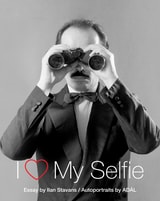
I Love My Selfie
Essay by Ilan Stavans / Auto-Portraits by ADÁL
Duke University Press, 2017
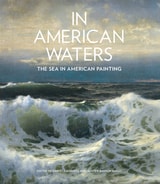
In American Waters
The Sea in American PaintingDaniel Finamore
University of Arkansas Press, 2021
In American Waters is the catalog of an exhibition co-organized by Crystal Bridges Museum of American Art in Bentonville, Arkansas, and Peabody Essex Museum in Salem, Massachusetts.
The exhibition and this associated catalog invite visitors to discover the sea as an expansive way to reflect on American culture and environment, learn how coastal and maritime symbols moved inland across the United States, and question what it means to be “in American waters.” Work by Georgia O’Keeffe, Amy Sherald, Kay WalkingStick, Norman Rockwell, Hale Woodruff, Paul Cadmus, Thomas Hart Benton, Jacob Lawrence, Valerie Hegarty, Stuart Davis, and many others is included, along with essays from scholars, critics, and the curators.
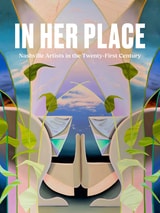
In Her Place
Nashville Artists in the Twenty-First CenturyKathryn E. Delmez
Vanderbilt University Press, 2025
But isn’t that what it is to be Southern? Hasn’t life in the American South been a quagmire of contradictions from the very start?
The South has always been defined as much by what it isn’t as what it is, in much the same way that women have been defined by how they are not like men. The standard for an American artist—and perhaps for a person in general—seems to be a white, straight, cisgender man of vaguely Northern residence. Anything that deviates from that criteria needs to be justified, pointed out, turned into something exceptional in order to simply be visible. It is refreshing, then, that this exhibition does not wallow in the stagnant waters of Southern stereotypes. The artists of In Her Place are legion. They include a Tehran-born sculptor making vessels out of Tennessee red clay, an artist from Arkansas working with cardboard and references to unsettling histories, and a Nashville-born painter whose images of civil rights–era sit-ins read just as poignantly in 2026 as they would have in 1960.
If anything ties these artists together, it is not their gender or their location. It is their shared ingenuity and the comfort with which they subvert.
In Search of a Lost Avant-Garde
An Anthropologist Investigates the Contemporary Art MuseumMatti Bunzl
University of Chicago Press, 2014
Bunzl’s ethnography is designed to show how a commitment to the avant-garde can come into conflict with an imperative for growth, leading to the abandonment of the new and difficult in favor of the entertaining and profitable. Jeff Koons, whose massive retrospective debuted during Bunzl's research, occupies a central place in his book and exposes the anxieties caused by such seemingly pornographic work as the infamous Made in Heaven series. Featuring cameos by other leading artists, including Liam Gillick, Jenny Holzer, Karen Kilimnik, and Tino Sehgal, the drama Bunzl narrates is palpable and entertaining and sheds an altogether new light on the contemporary art boom.
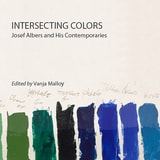
Intersecting Colors
Josef Albers and His ContemporariesVanja Malloy, editor
Amherst College Press, 2015
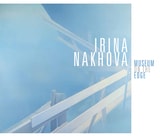
Irina Nakhova
Museum on the EdgeJane A. Sharp
Rutgers University Press, 2019
Released in conjunction with Nakhova’s first museum retrospective exhibition in the United States, this book includes many full-color illustrations of her work, spanning the entirety of her forty-year career and demonstrating her facility with a variety of media. It also includes essays by a variety of world-renowned curators and art historians, each cataloging Nakhova’s artistic innovations and exploring how she deals with themes of everyday life, memory, viewer engagement, and moral responsibility. It concludes with a new interview with Nakhova herself, giving new insight into her creative process and artistic goals. Irina Nakhova: Museum on the Edge provides a vivid look at the work of a visionary artist. Published in partnership with the Zimmerli Museum.