Results by title
455 books match the query 'Feminism' and 13 start with i
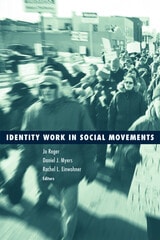
Identity Work in Social Movements
Jo Reger
University of Minnesota Press, 2008
This volume offers new scholarship that explores issues of diversity and uniformity among social movement participants. Featuring case studies that range widely—from Jewish resistance fighters in Nazi-occupied Poland to antigay Christian movements in the United States to online white supremacy groups—the essays show how participants set aside issues of personal identity in order to merge together and how these processes affect mobilization and the attainment of goals.
Contributors: Mary Bernstein, Kimberly B. Dugan, Elizabeth Kaminski, Susan Munkres, Kevin Neuhouser, Benita Roth, Silke Roth, Todd Schroer, Verta Taylor, Jane Ward.

In Good Relation
History, Gender, and Kinship in Indigenous FeminismsSarah Nickel
University of Manitoba Press, 2020

In an Abusive State
How Neoliberalism Appropriated the Feminist Movement against Sexual ViolenceKristin Bumiller
Duke University Press, 2008
Drawing on archival research, individual case studies, testimonies of rape victims, and interviews with battered women, Bumiller raises fundamental concerns about the construction of sexual violence as a social problem. She describes how placing the issue of sexual violence on the public agenda has polarized gender- and race-based interests. She contends that as the social welfare state has intensified regulation and control, the availability of services for battered women and rape victims has become increasingly linked to their status as victims and their ability to recognize their problems in medical and psychological terms. Bumiller suggests that to counteract these tendencies, sexual violence should primarily be addressed in the context of communities and in terms of its links to social disadvantage. In an Abusive State is an impassioned call for feminists to reflect on how the co-optation of their movement by the neoliberal state creates the potential to inadvertently harm impoverished women and support punitive and racially based crime control efforts.
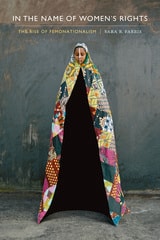
In the Name of Women's Rights
The Rise of FemonationalismSara R. Farris
Duke University Press, 2017

Innocent Subjects
Feminism and WhitenessTerese Jonsson
Pluto Press, 2020
Despite a rich history of Black and postcolonial critiques of racist and imperial feminist politics, racism still exists within contemporary British feminism. To explain why, Terese Jonsson examines the history of feminism over the last forty years. She argues that Black feminism's role in shaping the movement has been marginalised through narratives which repeatedly position white women at the centre of the story, from the women's liberation movement in the 1970s to today.
Analysing the ways in which whiteness continues to pervade feminist literature, as well as feminist debates in the liberal media, Jonsson demonstrates that, despite an increased attention to race, intersectionality and difference, stories told by white feminists are shaped by their desire to maintain an 'innocent' position towards racism.

Inside Agitators
Australian Femocrats and the StateHester Eisenstein
Temple University Press, 1996
Insurgent Visions
Feminism, Justice, SolidarityChandra Talpade Mohanty
Duke University Press, 2025
Interrogating Gendered Pathologies
Erin A. Clark
Utah State University Press, 2020
These chapters engage common narratives about the ways in which gender in healthcare is secondary and highlights the stories of people who have battled to prioritize their own bodies through extraordinary difficulties. Employing a multiplicity of voices, the book represents a number of different perspectives on what it might look like to return health and medical data to embodied experience, to consider the effects of gendered and intersectional biomedical norms on lived realities, and to subvert the power of institutions in ways that move us toward biomedical justice.
This collection contributes to the burgeoning field of health and medical rhetorics by rhetorically and theoretically intervening in what are often seen as objective and neutral decisions related to the body and to scientific and medical data about bodies. Interrogating Gendered Pathologies will be of interest to feminist scholars in the field of rhetoric and writing studies, specifically those in the rhetorics of health and medicine, as well as scholars of technical communication, feminist studies, gender studies, technoscience studies, and bioethics.
Contributors: Leslie Anglesey, Mary Assad, Beth Boser, Lillian Campbell, Marleah Dean, Lori Beth De Hertogh, Leandra Hernandez, Elizabeth Horn-Walker, Caitlin Leach, Jordan Liz, Miriam Mara, Cathryn Molloy, Kerri Morris, Maria Novotny, Sage Perdue, Colleen Reilly
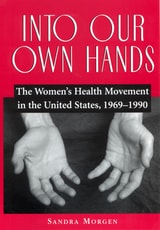
Into Our Own Hands
The Women's Health Movement in the United States, 1969–1990Morgen, Sandra
Rutgers University Press, 2002
Recent history has witnessed a revolution in womens health care. Beginning in the late 1960s, women in communities across the United States challenged medical and male control over womens health. Few people today realize the extent to which these grassroots efforts shifted power and responsibility from the medical establishment into womens hands as health care consumers, providers, and advocates.
Into Our Own Hands traces the womens health care movement in the United States. Richly documented, this study is based on more than a decade of research, including interviews with leading activists; documentary material from feminist health clinics and advocacy organizations; a survey of womens health movement organizations in the early 1990s; and ethnographic fieldwork. Sandra Morgen focuses on the clinics born from this movement, as well as how the movements encounters with organized medicine, the state, and ascendant neoconservative and neoliberal political forces of the 1970s to the1980s shaped the confrontations and accomplishments in womens health care. The book also explores the impact of political struggles over race and class within the movement organizations.

Introducing Don DeLillo
Frank Lentricchia
Duke University Press, 1991
Diversity is the key to this striking assemblage of cultural criticism edited by Frank Lentricchia. Special features include an expanded version of the Rolling Stone interview with the author (“An Outsider in this Society”) and the extraordinary tenth chapter of DeLillo’s Ratner’s Star. Accessibly written and entertaining, the collection will be of great interest to both students and scholars of contemporary American literature as well as to general readers interested in DeLillo’s work.
Contributors. Frank Lentricchia, Anthony Decurtis, Daniel Aaron, Hal Crowther, John A. McClure, Eugene Goodheart, Charles Molesworth, Dennis A. Foster, and John Frow

Invisibility by Design
Women and Labor in Japan's Digital EconomyGabriella Lukács
Duke University Press, 2020

Israeli Feminist Scholarship
Gender, Zionism, and DifferenceEdited by Esther Fuchs
University of Texas Press, 2014
The last two decades have given rise to a proliferation of scholarship by Israeli feminists working in diverse fields, ranging from sociology to literature, anthropology, and history. As the Israeli feminist movement continually decentralizes and diversifies, it has become less Eurocentric and heterocentric, making way for pluralistic concerns. Collecting fifteen previously published essays that give voice to this diversity, Israeli Feminist Scholarship showcases articles on Ashkenazi, Mizrahi, Palestinian, and lesbian identities as well as on Israeli women’s roles as mothers, citizens and activists, and soldiers.
Citing evidence that these scholars have redefined their object of inquiry as an open site of contested and constructed identity, luminary Esther Fuchs traces the history of Israeli feminism. Among the essays are Jewish historian Margalit Shilo’s study of the New Hebrew Woman, sociologist Ronit Lentin’s analysis of gendered representations of the Holocaust in Israeli culture, peace activist Erella Shadmi on lesbianism as a nonissue in Israel, and cultural critic Nitza Berkovitch’s examination of womanhood as constructed in Israeli legal discourse.
Creating a space for a critical examination of the relationship between disparate yet analogous discourses within feminism and Zionism, this anthology reclaims the mobilizing, inclusive role of these multifaceted discourses beyond the postmodern paradigm.

Israeli Women's Studies
A ReaderEdited by Esther Fuchs
Rutgers University Press, 2005
Israeli women do not enjoy the equality, status, and power often attributed to them by the media and popular culture. Despite significant achievements and progress, as a whole they continue to earn less than their male counterparts, are less visible and influential in the political arena, do not share equal responsibilities or privileges in the military, have unequal rights and freedoms in family life and law, and are less influential in shaping the nation's self image and cultural orientation.
Bringing together classic essays by leading scholars of Israeli culture, this reader exposes the hidden causes of ongoing discrimination and links the restrictions that Israeli women experience to deeply entrenched structures, including colonial legacies, religious traditions, capitalism, nationalism, and ongoing political conflict. In contrast, the essays also explore how women act creatively to affect social change and shape public discourse in less ostensible ways.
Providing balanced perspectives from the social sciences and the humanities, this comprehensive reader reflects both an emerging consensus and exciting diversity in the field. It is the definitive text for courses in Israeli women's studies.