77 books match the query 'Fieldwork' and 5 start with i
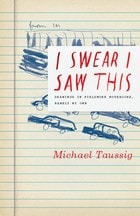
cover of I Swear I Saw This: Drawings in Fieldwork Notebooks, Namely My Own

I Swear I Saw This

Drawings in Fieldwork Notebooks, Namely My Own

Michael Taussig

University of Chicago Press, 2011
I Swear I Saw This records visionary anthropologist Michael Taussig’s reflections on the fieldwork notebooks he kept through forty years of travels in Colombia. Taking as a starting point a drawing he made in Medellin in 2006—as well as its caption, “I swear I saw this”—Taussig considers the fieldwork notebook as a type of modernist literature and the place where writers and other creators first work out the imaginative logic of discovery.
 
Notebooks mix the raw material of observation with reverie, juxtaposed, in Taussig’s case, with drawings, watercolors, and newspaper cuttings, which blend the inner and outer worlds in a fashion reminiscent of Brion Gysin and William Burroughs’s surreal cut-up technique. Focusing on the small details and observations that are lost when writers convert their notes into finished pieces, Taussig calls for new ways of seeing and using the notebook as form. Memory emerges as a central motif in I Swear I Saw This as he explores his penchant to inscribe new recollections in the margins or directly over the original entries days or weeks after an event. This palimpsest of afterthoughts leads to ruminations on Freud’s analysis of dreams, Proust’s thoughts on the involuntary workings of memory, and Benjamin’s theories of history—fieldwork, Taussig writes, provokes childhood memories with startling ease.
 
I Swear I Saw This exhibits Taussig’s characteristic verve and intellectual audacity, here combined with a revelatory sense of intimacy. He writes, “drawing is thus a depicting, a hauling, an unraveling, and being impelled toward something or somebody.” Readers will exult in joining Taussig once again as he follows the threads of a tangled skein of inspired associations.
[more]
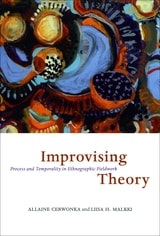
cover of Improvising Theory: Process and Temporality in Ethnographic Fieldwork

Improvising Theory

Process and Temporality in Ethnographic Fieldwork

Allaine Cerwonka and Liisa H. Malkki

University of Chicago Press, 2007

Scholars have long recognized that ethnographic method is bound up with the construction of theory in ways that are difficult to teach. The reason, Allaine Cerwonka and Liisa H. Malkki argue, is that ethnographic theorization is essentially improvisatory in nature, conducted in real time and in necessarily unpredictable social situations. In a unique account of, and critical reflection on, the process of theoretical improvisation in ethnographic research, they demonstrate how both objects of analysis, and our ways of knowing and explaining them, are created and discovered in the give and take of real life, in all its unpredictability and immediacy.

Improvising Theory centers on the year-long correspondence between Cerwonka, then a graduate student in political science conducting research in Australia, and her anthropologist mentor, Malkki. Through regular e-mail exchanges, Malkki attempted to teach Cerwonka, then new to the discipline, the basic tools and subtle intuition needed for anthropological fieldwork. The result is a strikingly original dissection of the processual ethics and politics of method in ethnography.
[more]
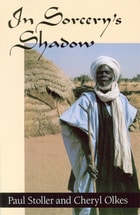
cover of In Sorcery's Shadow: A Memoir of Apprenticeship among the Songhay of Niger

In Sorcery's Shadow

A Memoir of Apprenticeship among the Songhay of Niger

Paul Stoller and Cheryl Olkes

University of Chicago Press, 1989
The tale of Paul Stoller's sojourn among sorcerors in the Republic of Niger is a story of growth and change, of mutual respect and understanding that will challenge all who read it to plunge deeply into an alien world.
[more]
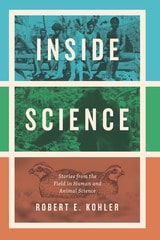
cover of Inside Science: Stories from the Field in Human and Animal Science

Inside Science

Stories from the Field in Human and Animal Science

Robert E. Kohler

University of Chicago Press, 2019

Context and situation always matter in both human and animal lives. Unique insights can be gleaned from conducting scientific studies from within human communities and animal habitats. Inside Science is a novel treatment of this distinctive mode of fieldwork. Robert E. Kohler illuminates these resident practices through close analyses of classic studies: of Trobriand Islanders, Chicago hobos, corner boys in Boston’s North End, Jane Goodall’s chimpanzees of the Gombe Stream Reserve, and more. Intensive firsthand observation; a preference for generalizing from observed particulars, rather than from universal principles; and an ultimate framing of their results in narrative form characterize these inside stories from the field.
 
Resident observing takes place across a range of sciences, from anthropology and sociology to primatology, wildlife ecology, and beyond. What makes it special, Kohler argues, is the direct access it affords scientists to the contexts in which their subjects live and act. These scientists understand their subjects not by keeping their distance but by living among them and engaging with them in ways large and small. This approach also demonstrates how science and everyday life—often assumed to be different and separate ways of knowing—are in fact overlapping aspects of the human experience. This story-driven exploration is perfect for historians, sociologists, and philosophers who want to know how scientists go about making robust knowledge of nature and society.
[more]
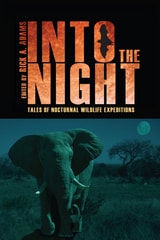
cover of Into the Night

Into the Night

Rick Adams

University Press of Colorado, 2013

This entertaining collection of essays from professional scientists and naturalists provides an enlightening look at the lives of field biologists with a passion for the hidden world of nocturnal wildlife. Into the Night explores the harrowing, fascinating, amusing, and largely unheard personal experiences of scientists willing to forsake the safety of daylight to document the natural history of these uniquely adapted animals.

Contributors tell of confronting North American bears, cougars, and rattlesnakes; suffering red ctenid spider bites in the tropical rain forest; swimming through layers of feeding-frenzied hammerhead sharks in the Galapagos; evading the wrath of African bull elephants in South Africa; and delighting in the curious and gentle nature of foxes and unconditional acceptance by a family of owls. They describe “fire in the sky” across a treeless tundra, a sea ablaze with bioluminescent algae, nighttime earthquakes on the Pacific Rim, and hurricanes and erupting volcanoes on a Caribbean island.

Into the Night reveals rare and unexpected insights into nocturnal field research, illuminating experiences, discoveries, and challenges faced by intrepid biologists studying nature’s nightly marvels across the globe. This volume will be of interest to scientists and general readers alike.

[more]