Results by title
87 books match the query 'Fire' and 8 start with i
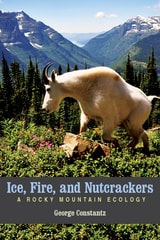
Ice, Fire, and Nutcrackers
A Rocky Mountain EcologyGeorge Constantz
University of Utah Press, 2014
These provocative accounts of birds, insects, rodents, predators, trees, and flowers are sure to stir the reader’s curiosity. Who wouldn’t be intrigued by a rattlesnake’s ability to hunt in total darkness by detecting the infrared radiation emitted by a mouse? Or how white-tailed ptarmigan thrive in their high, treeless alpine environments -- even through the winter? The narratives, often brought home with a counterintuitive twist, invite readers to make new connections and broaden perspectives of a favorite outdoor place.
In Case of Fire in a Foreign Land
New and Collected Poems from Two LanguagesAriel Dorfman
Duke University Press, 2002
Indians, Fire, and the Land in the Pacific Northwest
Robert Boyd
Oregon State University Press, 1999
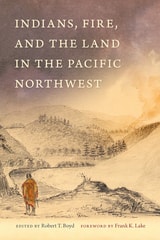
Indians, Fire, and the Land in the Pacific Northwest
Robert Boyd
Oregon State University Press, 2021
Instead of discovering a land blanketed by dense forests, early explorers of the Pacific Northwest encountered a varied landscape including open woods, meadows, and prairies. Far from a pristine wilderness, much of the Northwest was actively managed and shaped by the hands of its Native American inhabitants. Their primary tool was fire.
This volume takes an interdisciplinary approach to one of the most important issues concerning Native Americans and their relationship to the land. Over more than 10,000 years, Native Americans in the Northwest learned the intricacies of their local environments and how to use fire to create desired effects, mostly in the quest for food.
Drawing on historical journals, Native American informants, and ethnobotanical and forestry studies, this book’s contributors describe local patterns of fire use in eight ecoregions, representing all parts of the Native Northwest, from southwest Oregon to British Columbia and from Puget Sound to the Northern Rockies. Their essays provide glimpses into a unique understanding of the environment, one that draws on traditional ecological knowledge. Together, these writings also offer historical perspective on the contemporary debate over “prescribed burning” and management of public lands.
This updated edition includes a foreword by Frank K. Lake and a new epilogue by editor Robert T. Boyd. Contributors include Stephen Arno, Stephen Barrett, Theresa Ferguson, David French, Eugene Hunn, Leslie Johnson, Jeff LaLande, Estella Leopold, Henry Lewis, Helen H. Norton, Reg Pullen, William Robbins, John Ross, Nancy Turner, and Richard White.
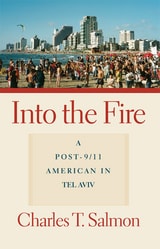
Into the Fire
A Post-9/11 American in Tel AvivCharles T. Salmon
Michigan State University Press, 2003
In the fall of 2001 Charles Salmon had a Fulbright fellowship in Israel. He was due to depart on September 12. Arriving in Israel a few weeks later, speaking no Hebrew and largely unfamiliar with Judaism and Israeli customs, he immersed himself in Israeli culture.
This collection of correspondence began as a weekly report to friends and was designed to offer an alternative to mainstream media. With the excitement of a tourist and the eagerness of an anthropologist, Salmon emerges as a modern Candide. He describes historical sites and a supermarket in Tel Aviv, discusses the differences between university students in Israel and America, and negotiates the purchase of food and the vagaries of the weather with humor and passion. The letters also discuss Israeli–Palestinian relations, and details terrorist events and responses to them.
This unique book focuses on how everyday hopes and fears transcend geopolitical boundaries and provides valuable lessons on how to thrive in these new and uncertain times.
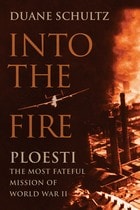
Into the Fire
Ploesti, the Most Fateful Mission of World War IIDuane Schultz
Westholme Publishing, 2007
A detailed and vivid account of the World War II disaster."—Booklist
"Into the Fire shimmers with historical parallels and modern resonances. . . . Schultz combed an impressive body of material for this account." —Washington Times
"This bittersweet tale of arrogance, wishful thinking, sacrifice, and heroism is recounted with grace and empathy." —Military.com
"Schultz combines a historian's meticulous research and a novelist's hypnotic prose to produce this memorable popular history... Shultz's intimate account of this controversial episode is a timely reminder of the horrors of war and a moving tribute to Ploestl's heroes." —Publishers Weekly
"We knew it was a disaster and knew that in the flames shooting up from those refineries we might be burned to death. But we went right in." —Lt. Norman Whalen
"We were dragged through the mouth of hell."—from a Ploesti Mission debriefing report
Planned by Winston Churchill, authorized by Dwight D. Eisenhower, and executed by five specially trained American bomber units, the attack on the oil refineries of Ploesti, Romania, was among the most daring and dangerous missions of World War II. If the raid succeeded, the Nazi war machine would suffer a devastating blow. On August 1, 1943, nearly two hundred B-24 bombers flew from Benghazi, North Africa, with directions to descend on Ploesti at treetop level, bomb the refineries, and return. The low-level bombers could evade enemy radar and were thought to be more difficult to shoot down. But despite warnings that a German heavy flak train had been moved into the area and that the secrecy of their mission had been compromised, the bombers were sent out. Minutes from the target, one of the commanders made a wrong turn, leading the formations away from Ploesti. Recovering from this mistake, most of the bombers relocated the refineries, but the mission was doomed. The ensuing air-ground battle claimed dozens of the bombers, and many of those that survived the ordeal were forced to ditch in the ocean or in remote areas due to lack of fuel or structural damage.
In Into the Fire: Ploesti, The Most Fateful Mission of World War II, Duane Schultz re-creates this great battle, combining original research and interviews with survivors in order to capture the tension, drama, and heroics of the warring sides. More Medals of Honor were awarded for this mission than any other aerial combat enterprise in the history of the United States. But the medals are bittersweet testimony to the courage of the 1,726 young men who risked all on a fateful attempt to cut off the Nazi supply of "black gold.
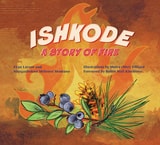
Ishkode
A Story of FireEvan Larson
University of Minnesota Press, 0
Igniting connection with the forests of the Great Lakes region through Indigenous teachings
When an invitation arrives from the forest, what will you hear? What will you learn? How will you respond? Ishkode: A Story of Fire brings readers into a beautiful stand of ancient red pines where Aanikoobijigan, a grandmother red pine, guides a young woman, Animikiimiikanikwe, toward healing and renewal through fire. Embracing the power of memory, storytelling, and restoration, this lyrical narrative is a celebration of hope, healing, and the lessons we can learn from the land.
Including an Ojibwe pronunciation guide and glossary, this book weaves Anishinaabe teachings with the science of tree rings to reveal the deep, enduring relationships between people, fire, pines, and the wider web of ecosystems in the Great Lakes region. Ishkode highlights the role of fire in the environment, bringing to light the connections between ecological restoration, cultural revival, and reciprocal stewardship.
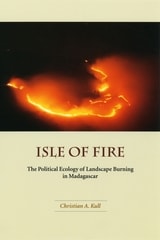
Isle of Fire
The Political Ecology of Landscape Burning in MadagascarChristian A. Kull
University of Chicago Press, 2004